

Rochester has become a shorthand in the Northeast for a certain kind of city: mid sized, proudly blue collar, quietly creative, and in the middle of a comeback. Visitors come for its museums, festivals, and waterfalls, but stay for its neighborhoods, breweries, and year round cultural calendar. If you love that blend of industry and arts, brick and water, you will find the same spirit in a handful of other under the radar cities scattered across the Northeast.
What Makes a City “Like Rochester” in the Northeast
When travelers say they are looking for another city like Rochester, they are rarely looking for a carbon copy. More often they mean a place that feels manageable in size but big in personality, with historic architecture, accessible neighborhoods, and a sense of civic pride. These are cities where old factory buildings have been repurposed into lofts, galleries, and taprooms, where the arts scene grows out of local communities rather than big corporate venues, and where four true seasons shape the rhythm of life.
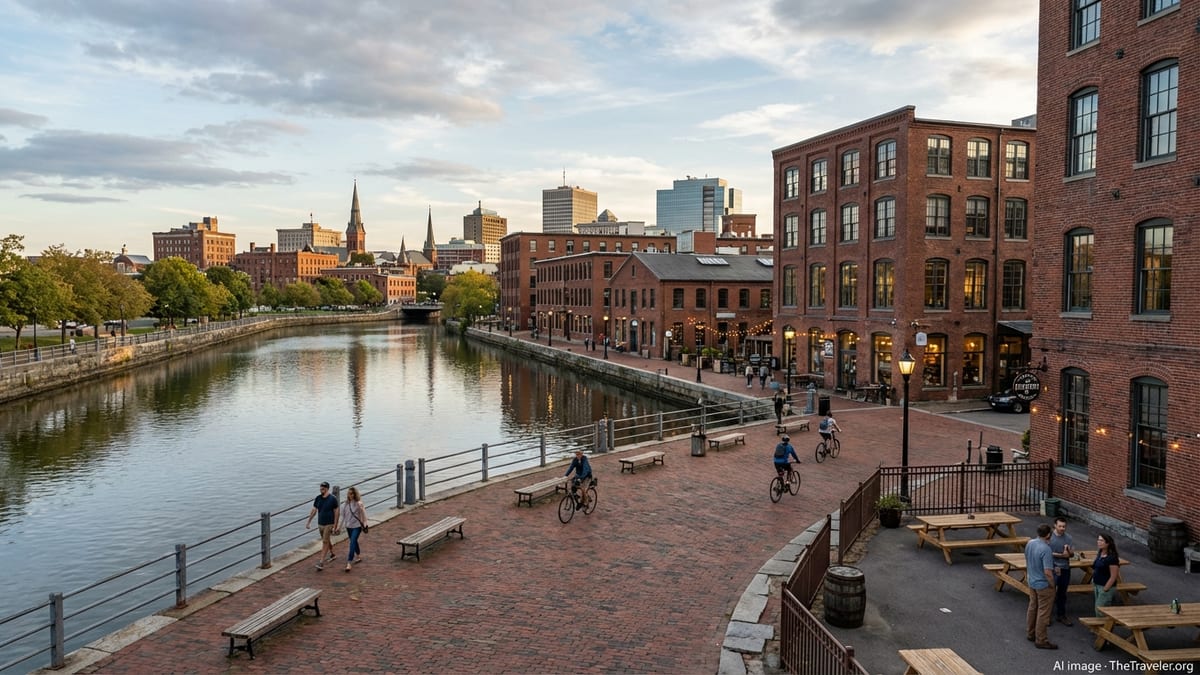
Rochester’s story is rooted in water, mills, photography, and music. Similar cities across the Northeast tend to share at least a few of those threads: a river or canal that once powered industry and now frames waterfront parks; a legacy of manufacturing that left behind handsome brick warehouses and worker housing; and a young, often college fueled creative class that treats those spaces as a playground for new ideas. Affordability, at least relative to coastal hubs like Boston or New York, is another key part of the equation.
All of the cities highlighted here sit within a broad Northeastern arc from upstate New York to coastal New England. Each is easy to pair with a larger gateway city for a long weekend. Each offers enough museums, parks, and distinctive food to fill at least two days without feeling rushed. And each is far enough from the major interstate tourism circuits that you are still likely to be rubbing shoulders with locals rather than tour buses.
As with Rochester, visiting these places is as much about atmosphere as about individual attractions. Plan to walk, linger in coffee shops and breweries, and leave room in your schedule to wander side streets. These are cities that reveal themselves slowly, block by block.
Buffalo, New York: Big Water, Big Architecture, Familiar Soul
If Rochester speaks to you, Buffalo will feel like an older, bigger cousin with many of the same strengths. It shares Lake Erie and canal heritage, a snow belt climate, and a culture shaped by immigration and industry. Over the past decade, Buffalo has poured energy into its waterfront and neighborhoods, turning the long neglected inner harbor into Canalside, a lively district with skating in winter, outdoor concerts in summer, and a growing mix of public art, restaurants, and event spaces. Recent plans call for further expansion of Canalside with new residential and retail development, signaling that the momentum is very much ongoing.
A short walk away, the city’s Downtown Waterfront Improvements Plan lays out a strategy to connect parks, bike paths, and public spaces along the lake and river. You can feel that vision on the ground in the form of new promenades, family friendly programming, and easier access to the water. For Rochester visitors used to Genesee River views and High Falls, the broad horizon of Lake Erie and the restored canals will feel at once different and familiar, with the same impulse to reclaim industrial shoreline for public use.
Buffalo’s architecture sets it apart even within the Northeast. Here, grand early 20th century commercial blocks and civic buildings mingle with leafy parkways planned by Frederick Law Olmsted. Lovers of Rochester’s preserved row houses and Kodak era landmarks will appreciate Buffalo’s City Hall, art deco detail, and handsome neighborhoods such as Elmwood Village. Many former warehouses and grain elevators now host cultural events, breweries, or light installations, echoing Rochester’s trend toward adaptive reuse.
Food in Buffalo is similarly unpretentious and satisfying. Beyond the famous wings, look for Polish bakeries, Italian red sauce classics, and a flourishing craft beer scene. Like Rochester, this is a town where corner taverns still matter, and where independent coffee roasters sit comfortably beside century old family businesses. It is a place that rewards repeat visits and deeper exploration beyond the headline attractions.
Syracuse, New York: Snow Belt Grit and Creative Energy
Syracuse lies a short drive east of Rochester and shares many of its defining characteristics: heavy lake effect snow in winter, a downtown ringed by distinct neighborhoods, and a strong relationship with nearby universities. In recent years, its compact center has seen renewed life, particularly around Armory Square. Once a district of red brick warehouses, it now holds boutiques, restaurants, lofts, and bars that draw students, young professionals, and visitors in equal measure.
For travelers who appreciate Rochester’s blend of old industry and new ideas, Syracuse offers a similar chemistry. The former salt and manufacturing town still wears its history clearly in its brick streetscapes and rail lines, yet the cultural life is surprisingly broad for a city of its size. You will find regional theaters, independent galleries, and seasonal markets filling public squares. Syracuse University’s presence just uphill adds a steady stream of performances, exhibitions, and lectures open to the public, much as the University of Rochester and Rochester Institute of Technology contribute to their home city’s calendar.
Outdoor access is another shared strength. While Rochester looks toward the Genesee and Lake Ontario, Syracuse serves as a jumping off point for the Finger Lakes to the south and the eastern reaches of Lake Ontario to the north. In town, the Onondaga Creekwalk and revitalized Onondaga Lake shoreline provide urban trails with skyline views and places to watch birdlife reclaiming waters that were once heavily polluted. The city’s ongoing environmental restoration gives it the same sense of work in progress that many visitors appreciate in Rochester.
Syracuse is particularly appealing for food focused travelers. The city has seen a wave of small, chef driven restaurants and breweries move into historic spaces, often with menus that lean into Central New York produce and comfort food. Like Rochester’s beloved garbage plate, Syracuse has its own local specialties anchored in diner culture and sports fandom. Exploring these places reveals the region’s layered immigrant stories, from Italian enclaves to newer Asian and Middle Eastern communities that have brought their cuisines to city streets.
Lowell, Massachusetts: Mill City Turned Outdoor Museum
Set along the Merrimack River north of Boston, Lowell feels instantly recognizable to anyone who knows Rochester’s High Falls district or Brown’s Race. This is a city where canals, brick mill complexes, and worker housing run in tight formation, all within walking distance of a small downtown core. Today, Lowell National Historical Park ties those pieces together into what amounts to an open air museum of the Industrial Revolution, complete with restored mills, a working streetcar line, and exhibits that bring textile production to life.
The park links more than a dozen historic sites, from the Boott Cotton Mill and museum complex to canal walks lined with interpretive signs. Visitors can tour boardinghouses that once housed young mill workers, ride heritage trolleys that trace former rail routes, and take boat tours that navigate locks and gatehouses. The effect is immersive but not over scripted. Much like walking through Rochester’s old factory districts, you are constantly aware of the city’s industrial past even as you drop into a contemporary cafe or gallery housed in the same brick walls.
Lowell’s cultural life reaches well beyond its museum pieces. The city has developed a reputation for festivals, including a free multi day folk festival that draws performers and visitors from across the country in midsummer. Smaller events fill the calendar through warmer months, showcasing everything from Cambodian dance to contemporary art. The presence of the University of Massachusetts Lowell and a sizable immigrant population contributes to a creative energy that will feel familiar to Rochester fans used to neighborhood arts trails and community theater.
On a practical level, Lowell’s scale makes it ideal for the kind of low key, curiosity driven visit that suits Rochester’s temperament. The streets are walkable, the canal system provides natural orientation, and a cluster of small museums, from textile focused collections to specialty institutions, rewards slow exploration. Day trippers from Boston are increasingly discovering the city, but it still retains the unpolished edges and lived in feel that Rochester travelers often seek.
Portland, Maine: Waterfront Neighborhoods and Everyday Creativity
Portland, Maine, is smaller and more coastal than Rochester, but the comparison comes up often among travelers who value walkable neighborhoods and a relaxed, unpretentious food scene. Both cities pair working waterfronts with converted industrial spaces and a strong community of artists and makers. In Portland, that legacy is visible in the Old Port’s cobbled streets and brick warehouses, many of which now hold galleries, studios, and independent shops alongside cafes and bars.
What makes Portland feel especially “Rochester like” is its balance between tourism and everyday life. Yes, cruise ships call during peak season and summer weekends can be busy, but step a few blocks inland and you are quickly in residential streets lined with triple deckers and small parks. Neighborhood business districts such as those on the East End or in the West End have the same local first ethos as Rochester corridors like Park Avenue or South Wedge, with coffee roasters, bookstores, and corner markets serving both regulars and visitors.
Culturally, Portland punches far above its weight. The city supports a symphony, small theaters, and a dense concentration of galleries and music venues. A strong food scene built originally on seafood has broadened in recent years to include creative vegetarian cooking, bakeries, and global flavors, often housed in reclaimed garages or warehouse bays. That willingness to experiment within old industrial shells mirrors the way Rochester’s breweries, eateries, and makers have moved into former factories and machine shops.
Seasonality is also part of the kinship between the two cities. Winters can be long and snowy, springs slow to arrive, summers short and glorious. Locals respond with a festival calendar skewed heavily toward warm months and a habit of making the most of sunny days on porches, piers, and park lawns. For visitors who enjoy Rochester’s festivals and summer along the river, Portland’s mix of waterfront promenades, harbor ferries, and neighborhood parks feels like a natural extension, just with salty air and working fishing boats in the frame.
Portsmouth, New Hampshire: Compact, Historic, and Surprisingly Lively
Portsmouth may seem an unlikely match for Rochester at first glance. It is smaller, more colonial in its architecture, and set on a tidal river near the Atlantic rather than on a Great Lake. Yet the two cities share several important traits that matter to travelers: a compact, walkable core filled with independent businesses, a steady arts and theater presence, and a waterfront shaped as much by work as by play.
The heart of Portsmouth is a grid of 18th and 19th century brick and clapboard buildings, many now restored and repurposed. Visitors can wander from bookstores to coffee shops to small museums in minutes, never far from views of the Piscataqua River or the brick chimneys of preserved historic homes. This environment will resonate with Rochester visitors who enjoy strolling through the East End’s older streets or exploring the preserved architecture around Corn Hill and the St. Paul Quarter.
Despite its size, Portsmouth maintains an impressive cultural scene. Multiple theaters, music venues, and galleries program events year round, often supported by a mix of tourists and locals from surrounding towns. Outdoor concerts and waterfront festivals fill the harborfront in summer, much like the seasonal programming that now anchors Rochester’s riverfront and parks. Nearby, the working shipyard and tugboats keep the city from feeling like a stage set. There is a real, ongoing maritime economy just beyond the postcard views.
Portsmouth’s dining scene also mirrors what many people enjoy about Rochester: a preference for independently owned restaurants over chains, a mix of casual and ambitious kitchens, and a willingness to highlight local produce and seafood. You are as likely to find a tiny cafe roasting its own beans as a chef driven dining room overlooking the water. Combined with a handful of breweries and craft cocktail bars in brick lined alleys, it all adds up to a place that feels lively but not overwhelming.
How to Plan a Rochester Style City Break in the Northeast
Choosing a city like Rochester is as much about how you want to travel as where you go. These are destinations best approached on foot, with a flexible plan and a willingness to look beyond marquee attractions. Instead of trying to see everything, pick one or two neighborhoods and give yourself time to sit in parks, linger over coffee, and browse small shops. The texture of daily life is part of the appeal in places such as Buffalo, Syracuse, Lowell, Portland, and Portsmouth.
Consider timing carefully. Like Rochester, many of these cities shine between late spring and early fall, when outdoor seating appears, festivals return, and waterfronts feel animated. Winter brings its own charm, particularly for travelers who do not mind snow and enjoy quieter museums and cozy restaurants, but reduced hours and early nightfall can change the rhythm of a visit. Check local events calendars before you go, especially if you would like to experience festivals, concert series, or seasonal markets that often reflect local character more vividly than any single attraction.
Transportation is straightforward for most of these destinations. Buffalo and Syracuse sit along major interstate and rail routes across upstate New York. Lowell is accessible by commuter rail from Boston, while Portland and Portsmouth lie along the main highway corridor connecting Boston with northern New England. For travelers used to driving between Rochester and the Finger Lakes or Lake Ontario, the distances and road conditions will feel familiar, with similar weather considerations in winter.
Most importantly, arrive with the same curiosity you might bring to a weekend in Rochester. Ask locals where they go for a relaxed drink or a favorite sandwich, pay attention to community noticeboards and posters, and do not be afraid to step into a church hall bake sale or neighborhood street fair if you come across one. These cities are proud of their histories but more interested in what comes next, and visitors who meet them on those terms tend to be warmly welcomed.
The Takeaway
For travelers who have fallen for Rochester’s blend of industrial heritage, creative reinvention, and approachable scale, the Northeast offers a handful of kindred cities worth adding to the list. Buffalo, Syracuse, Lowell, Portland, and Portsmouth each echo aspects of Rochester’s personality, from waterfront revival and mill architecture to neighborhood focused food and arts scenes.
None of them are finished products, and that is part of their appeal. Streetscapes are still evolving, new uses are being found for old factories, and communities are actively debating how to balance growth with character. Visiting now means seeing that process in motion, much as you do in Rochester’s own transforming districts.
Whether you are planning a road trip or looking to branch out from a familiar Northeast hub, considering cities in the Rochester mold is a way to find destinations that feel grounded, authentic, and human in scale. You may arrive for a weekend and leave with a shortlist of neighborhoods you would happily call home, which is perhaps the strongest compliment a traveler can pay.
FAQ
Q1. What makes a city feel similar to Rochester for visitors?
For most visitors, cities that feel like Rochester combine historic brick architecture, a walkable downtown, a strong arts and food scene, and ongoing neighborhood level revitalization more than blockbuster attractions.
Q2. Which city on this list is the closest match to Rochester’s vibe?
Buffalo probably feels the most similar overall, thanks to its industrial roots, major waterfront revival, strong architecture, and a down to earth culture centered on neighborhoods and local institutions.
Q3. Are these Rochester like cities affordable to visit?
Generally yes, especially compared with major coastal hubs. Lodging, dining, and parking in Buffalo, Syracuse, and Lowell in particular often cost less than in larger Northeast destinations, though waterfront hotspots in Portland and Portsmouth can be pricier in peak season.
Q4. Do these cities work for car free travelers?
It is possible, but easier in some places than others. Lowell, Portland, and Portsmouth have especially walkable cores and decent regional transit links, while Buffalo and Syracuse are more comfortable with at least occasional rideshares or limited car use.
Q5. What is the best season to visit cities like Rochester in the Northeast?
Late spring through early fall offers the most pleasant weather, open waterfronts, and full festival calendars. Winter trips can be rewarding too, but plan for snow, cold, and shorter opening hours, especially in smaller cities.
Q6. How many days should I spend in each city?
Two to three full days is usually enough for a relaxed first visit, allowing time to explore a couple of neighborhoods, visit a few museums, and sample the local food and nightlife without rushing.
Q7. Are these destinations family friendly?
Yes. Waterfront parks, interactive museums, and modest driving distances make them good options for families. As in Rochester, you will find playgrounds, casual dining, and frequent outdoor events suited to a wide range of ages.
Q8. How do these cities compare in winter to Rochester?
Buffalo and Syracuse experience similar or heavier snow than Rochester, while Lowell, Portland, and Portsmouth tend to be somewhat milder but still wintry. Expect cold temperatures, occasional storms, and a cozier, more indoor focused travel experience.
Q9. Can I combine several of these cities in one trip?
Yes. Buffalo, Rochester, and Syracuse form an easy upstate New York circuit, while Lowell, Portland, and Portsmouth can be linked in a New England road or rail itinerary starting from Boston.
Q10. What should I prioritize if I only have a weekend?
Pick one or two neighborhoods with strong local character, spend time on the waterfront or canal system if there is one, visit one signature museum, and then leave plenty of unscheduled time simply to walk, eat, and explore at street level.