

More news on this day
Travelers moving through Germany’s aviation network faced fresh disruption this week after regional carrier Cityjet abruptly suspended three contracted flights, sending delays and cancellations rippling through Frankfurt and Hamburg, two of the country’s most important gateways.
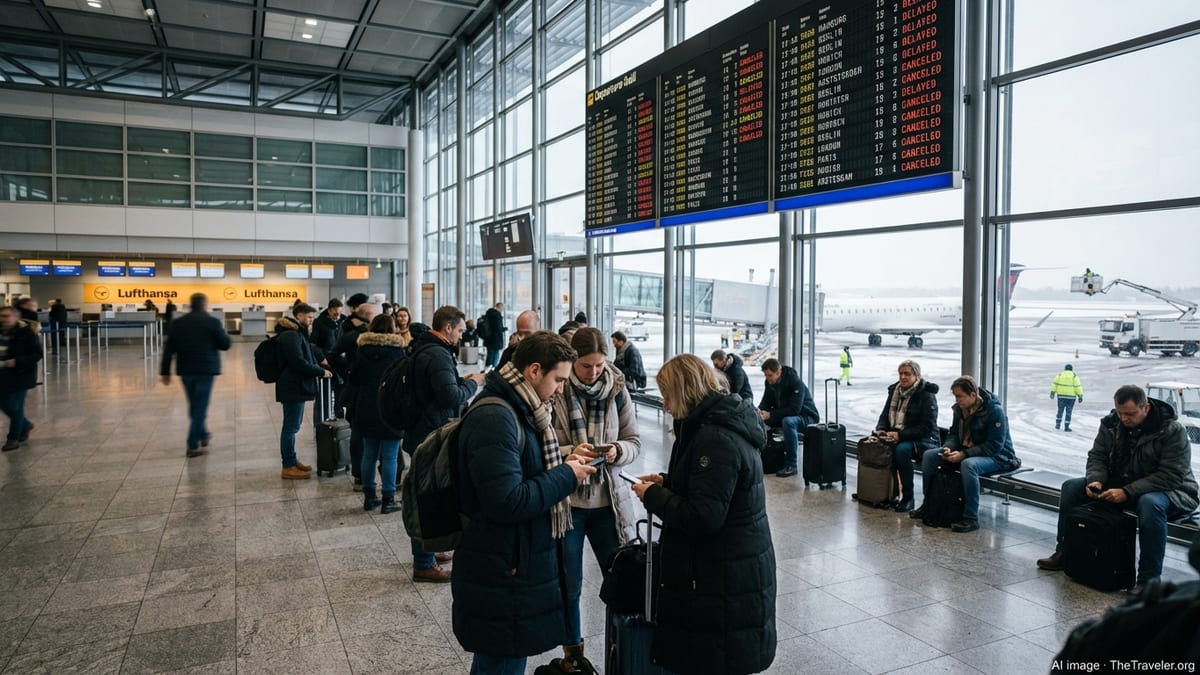
Regional Shock to Germany’s Busy Winter Skies
The suspension of three Cityjet operated services, used on behalf of larger network carriers, landed at a sensitive moment for Germany’s already stretched aviation system. With winter weather still complicating operations and airport capacity finely balanced, the loss of even a handful of rotations on core business routes was enough to trigger visible knock on effects in Frankfurt and Hamburg.
Cityjet, a specialist in regional and wet lease flying, has for years supplied aircraft and crews to major European groups on dense short haul corridors. Industry data shows the airline has frequently appeared on feeder routes linking hubs such as Frankfurt with secondary cities, typically flying under the brand of its client rather than its own colors. When several of those services are pulled with little notice, duty managers at hub airports are forced to reshuffle aircraft assignments and passenger loads at speed.
At Frankfurt, Germany’s busiest airport by passenger volume, the suspension immediately translated into a tightened schedule on select morning and evening departures. Airport operations staff reported higher transfer volumes funneled onto remaining flights, particularly on routes where Cityjet had been providing smaller regional jets to complement larger mainline aircraft. In Hamburg, where regional connectivity is crucial for business and cruise traffic, passengers reported sudden rebookings and revised departure times as airlines scrambled to consolidate services.
While only three flights were formally suspended, the impact spread well beyond those individual services. In a hub and spoke system that relies on precise timing to feed long haul departures, any regional gap can have outsized consequences, especially during peak hours when spare capacity is limited.
Frankfurt Feeling the Strain of Winter and Capacity Limits
The Cityjet disruption arrived just as Frankfurt was battling a difficult winter pattern, with heavy snowfall and ice already forcing dozens of cancellations and delays in recent days. Ground handlers and airport authorities have been working with expanded de icing teams and rotating runway closures, seeking to keep traffic flowing despite weather that has repeatedly pushed the hub to its limits.
For travelers, this has meant longer queues at check in, security and boarding gates, as well as a growing reliance on rebooked itineraries. When wet lease partners like Cityjet withdraw capacity, even temporarily, airlines must juggle already tight rosters of aircraft and crew. Some Frankfurt routes have seen larger jets substituted in place of smaller regional aircraft, a strategy that helps carry more passengers but can reduce schedule frequency and squeeze connection windows.
Frankfurt’s role as a primary transfer point for both intra European and intercontinental travel makes such disruptions particularly visible. A missed morning feeder from a German or neighboring city can cause travelers to misconnect with long haul flights to North America, Asia or the Middle East. With winter weather already causing rolling delays, Cityjet’s suspension of three services effectively removed a pressure valve from an already overworked system.
Airport officials have urged passengers to monitor their bookings closely on the day of travel and to arrive early, especially when flying on itineraries that previously relied on smaller regional aircraft. They have also cautioned that schedule adjustments may continue as airlines assess how best to cover the lost rotations in the coming days.
Hamburg’s Regional Links Tested as Flights Vanish
In Hamburg, where air travel demand is driven by a mix of corporate traffic, maritime industry links and growing leisure flows, the temporary loss of Cityjet flights has quickly been felt across the terminal. Regional partners play an outsized role at this northern gateway, filling in gaps between flagship services and ensuring frequent links to major hubs such as Frankfurt.
With three services removed from the schedule, airlines operating at Hamburg have begun consolidating departures, in some cases merging loads from canceled flights onto surviving services later in the day. While this can limit outright cancellations, it also reduces flexibility for travelers who depend on precise timings to make same day meetings or onward connections.
Travel agents in the city report an uptick in calls from passengers seeking clarity on whether their tickets involve aircraft and crews supplied by Cityjet or other wet lease providers. Because many such flights are sold under the branding of the contracting airline, affected customers are often unaware that their service is operated by a subcontractor until irregular operations occur.
Hamburg airport has so far avoided the widespread weather related shutdowns seen at other European hubs this winter, but the combination of staffing pressures, higher operating costs and the sudden absence of Cityjet rotations has highlighted how finely tuned its schedule has become. Any further disruption, whether from weather or industrial action, could force more extensive rescheduling.
How a Small Carrier Casts a Large Shadow
Although Cityjet is far smaller than Europe’s flagship groups, its role as a capacity provider means it can strongly influence reliability across key routes. By operating aircraft and crew on behalf of larger airlines, often at off peak times or on thinner routes, it helps maintain the frequencies that business travelers expect between major cities like Frankfurt and Hamburg.
When such a provider suspends flights, even on a limited scale, client airlines must decide whether to replace the lost legs with their own aircraft, seek another subcontractor or temporarily accept fewer frequencies. Each option involves trade offs. Deploying mainline jets can strain fleets already committed to other routes, while hunting for alternative wet lease partners in the middle of the winter travel season is challenging given Europe wide demand for regional capacity.
Similar tensions have surfaced across the continent as regional and wet lease operators navigate tight financial margins, rising operating costs and stricter performance requirements from the major airline groups. In recent months, several carriers have seen contracts restructured or terminated, prompting sudden shifts in who operates which flights. Cityjet’s latest suspension underscores how fragile these arrangements can be and how quickly a localized adjustment can reverberate through Germany’s broader air travel network.
For passengers, the complexity behind the scenes often remains invisible until something goes wrong. Tickets may show only the marketing carrier’s name, with a small note indicating that the flight is “operated by” a partner such as Cityjet. As the current disruption shows, understanding that relationship can be crucial when planning time sensitive travel.
Passenger Experiences: Missed Meetings and Last Minute Scrambles
The practical fallout from Cityjet’s suspended services has been most keenly felt by travelers caught mid journey. At Frankfurt, business passengers connecting from regional German cities reported being rebooked on later departures, sometimes adding several hours to itineraries that were designed around tight same day schedules. Some described sprinting between terminals searching for alternative options as departure boards filled with revised times.
In Hamburg, passengers bound for hub connections or returning from work trips faced similar uncertainty. While airlines have generally offered rebookings at no extra cost, replacement flights are not always available at convenient times, especially where capacity was already stretched by winter weather disruptions. For some, this meant overnight stays in airport hotels or hastily arranged rail journeys as a backup.
Families traveling for holidays or to visit relatives have also been caught up in the turmoil, particularly those relying on multi leg journeys that begin or end with a regional hop. Travel insurers report a rising number of calls from customers asking whether delays caused by subcontractor suspensions are covered in the same way as traditional cancellations.
Consumer groups in Germany have renewed calls for clearer communication around which company actually operates each flight and for more proactive updates when a wet lease carrier like Cityjet makes internal changes that could affect passengers. They argue that better transparency would allow travelers to adapt more quickly when disruptions appear on the horizon.
Airlines and Airports Race to Contain the Disruption
Behind the scenes, network planners and operations teams at the affected airlines have been working to contain the knock on effects of losing three Cityjet services. One immediate step has been to rotate aircraft from less time critical routes into the suspended slots, thereby restoring at least some of the lost capacity between Frankfurt, Hamburg and other regional points.
Where feasible, carriers have deployed larger aircraft on flights that remain in the schedule, hoping to absorb passengers who were booked on canceled Cityjet operated legs. This strategy is particularly visible at Frankfurt, where busy domestic and European routes have seen occasional upgauging to larger jets in order to keep overall passenger flows moving.
Airport authorities have coordinated closely with airlines to reassign gates and update departure information swiftly, trying to avoid congestion in already crowded terminals. Frankfurt, which has spent recent years refining its winter operations protocols, has leaned on those procedures to sequence de icing and runway usage even as schedulers reshuffle short haul traffic.
Hamburg, with a more compact terminal footprint, has focused on managing queues and providing clear signage for rebooked flights. Information desks and call centers have been reinforced during peak hours, with staff trained to explain the role of wet lease carriers and what passengers can expect in the coming days.
What Travelers Should Do if Their Flight Is Affected
With schedules still in flux, travelers planning to fly into or out of Frankfurt and Hamburg are being urged to check their flight status repeatedly in the 24 hours before departure. Airline apps and direct notifications remain the fastest way to learn whether a service is among those previously operated by Cityjet or subject to last minute changes.
Passengers booked on tight connections, especially those linking regional German flights to long haul departures, should consider allowing extra time or booking earlier feeders where possible. Travel experts suggest that, in the current environment, choosing slightly longer connection windows can reduce the risk of misconnecting if a regional segment is retimed or consolidated.
Those whose flights are canceled outright should document all communications with airlines and keep receipts for any additional expenses, such as meals or hotels, in case they are eligible for reimbursement under European passenger rights rules. While compensation depends on the specific cause of the disruption, having a clear record of events helps when filing claims.
For future trips, travelers may wish to pay closer attention to small print indicating who actually operates each flight. While it is not always possible to avoid subcontracted services, understanding how wet lease arrangements work can guide decisions about connection times, travel insurance and contingency planning when flying through Germany’s major hubs in periods of heightened operational stress.
Broader Questions for Germany’s Regional Aviation Model
The turbulence triggered by Cityjet’s suspension of three services is prompting broader questions about the resilience of Germany’s regional aviation model. As major airline groups continue to rely on a patchwork of smaller operators to supply capacity, the system’s robustness increasingly hinges on the financial and operational stability of those partners.
Recent winters have underscored how sensitive hub and spoke networks are to simultaneous shocks, from extreme weather to staffing shortages and contract disputes. With airports like Frankfurt and Hamburg already under pressure, even modest shifts in subcontracted capacity can have a cascading impact, especially when they coincide with peak travel periods or infrastructure constraints.
Industry analysts note that Germany is not alone in facing these challenges. Across Europe, national carriers have been reassessing their dependence on regional partners, sometimes bringing more flying back in house or diversifying the pool of wet lease providers to spread risk. Yet these adjustments take time, and passengers often feel the effects long before structural solutions are in place.
For now, Cityjet’s suspended flights serve as a reminder that travelers moving through Europe’s busiest hubs are connected not just to the airline on their ticket, but to a complex web of partners behind the scenes. How that web is managed in the months ahead will help determine whether Germany’s aviation network can weather the next round of shocks without repeating this week’s travel turmoil.