

More news on this day
India’s Ministry of Civil Aviation has intensified real-time monitoring of air traffic to and from West Asia as regional tensions continue to disrupt international routes and sharpen global concerns over the safety of flight operations through conflict-affected airspace.
Get the latest news straight to your inbox!
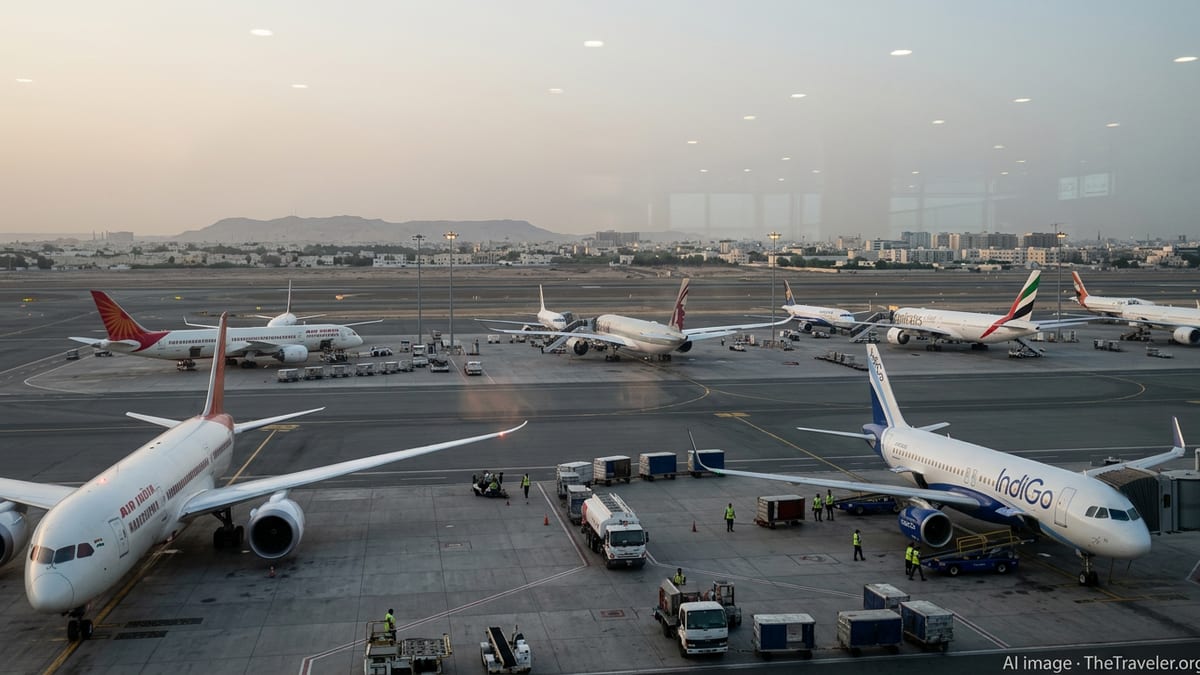
Heightened Surveillance as Tensions Reshape Air Corridors
The Ministry confirmed this week that it is closely tracking developments across West Asia and their potential impact on routes linking India with the Gulf and broader Middle East, amid an evolving security situation that has already forced thousands of flight cancellations worldwide. Civil aviation officials say they are in continuous contact with airlines and air navigation authorities to assess risks along key corridors used by long-haul services between Asia, Europe and North America.
According to recent ministry statements, Indian carriers operated 45 inbound flights from West Asia carrying just over 7,000 passengers on March 9, underscoring how crucial these routes remain even as operators adjust flight paths and schedules to maintain safety and reliability. Airlines have been asked to review routings on a rolling basis, with a particular focus on avoiding airspace where active military activity or advanced air defence systems could pose hazards to civil aircraft.
Officials emphasise that while air services remain largely operational, strategic oversight has been significantly tightened. This includes real-time monitoring of flight tracking data, security briefings, and coordination with international partners to ensure that risk assessments reflect the latest intelligence and regulatory bulletins.
Airlines Rework Schedules to Keep Passengers Moving
Carriers serving India–West Asia sectors are responding with a mix of additional flights, retimed services, and alternative routings designed to keep passengers moving while steering clear of higher-risk skies. Government sources indicate that domestic airlines have planned dozens of inbound flights from the region on peak days, even as they build in flexibility to divert or reschedule services at short notice if conditions change.
Some operators have consolidated frequencies or upgauged aircraft on select routes to accommodate travellers affected by cancellations elsewhere in the network. Others are adding temporary capacity from major Gulf hubs back to Indian metros on days when demand spikes, particularly for passengers connecting onward to other international destinations.
The Ministry has also advised new entrants to the Gulf market to align launch plans with prevailing operational conditions. One carrier slated to begin services on the Mumbai–Riyadh sector, for example, has been asked to coordinate its start-up schedule with regulators and air navigation authorities to ensure that inaugural flights operate only once risk assessments and contingency plans are fully in place.
Global Frameworks Guide Conflict-Zone Risk Management
India’s stepped-up monitoring comes as international aviation bodies reiterate guidance on flying near conflict zones. The International Civil Aviation Organization has reminded member states that they bear primary responsibility for assessing risks to civil aircraft in their airspace and for issuing necessary restrictions or advisories when military activity could endanger routine operations.
In parallel, the European Union Aviation Safety Agency has extended its Conflict Zone Information Bulletin for parts of the Middle East, maintaining a high-risk classification where advanced weapons systems and ongoing hostilities are present. Such bulletins are closely scrutinised by airlines worldwide, including Indian carriers, which factor them into daily decisions about routings, altitudes and contingency fuel for potential diversions.
Industry groups note that the current realignments echo earlier crises in which large portions of regional airspace were temporarily avoided, leading to longer flight times and higher operating costs on some intercontinental sectors. Despite the added complexity, regulators and airlines stress that safety margins remain non-negotiable, even if that means detours, delays or limited capacity on popular routes.
Ministry Prioritises Passenger Safety and Clear Communication
The Civil Aviation Ministry has repeatedly underlined that passenger safety and orderly conduct of flight operations are its primary considerations as the West Asia situation evolves. Officials say they are working with airlines to ensure robust contingency planning, including predefined diversion airports, crew rest arrangements and ground handling support in case services need to be rerouted at short notice.
Travellers have been urged to remain in close contact with their airlines for the latest updates on flight timings and travel requirements. Authorities caution against relying on unverified social media posts, encouraging passengers instead to consult official airline channels and government advisories for accurate, real-time information.
Airport operators in major Indian hubs are also on alert, coordinating with carriers and air traffic control to manage potential bunching of arrivals or departures if diverted flights converge on the same gateways. Ground staff have been instructed to prioritise transit passengers affected by disruptions, including through rebooking support and, where necessary, overnight accommodation.
Implications for Global Travel and Future Planning
While the immediate focus remains on safely managing current operations, aviation analysts say the heightened monitoring of West Asia airspace is likely to influence longer-term route planning and risk modelling. Carriers may look to diversify routings and hub choices to reduce exposure to any single conflict-prone corridor, even if that entails marginally longer sectors or more complex network structures.
Insurance premiums, overflight charges and fuel planning are all being reassessed as airlines weigh the financial cost of detours against the operational imperative of maintaining wide safety buffers around active conflict zones. For travellers, this may translate into modestly longer flight times or occasional schedule changes on certain routes linking Europe and Asia via the Gulf.
For now, India’s Civil Aviation Ministry is signalling that it intends to stay ahead of developments by sustaining intensive oversight, frequent briefings with operators, and close coordination with international regulators. As global air traffic continues to rebound, authorities are keen to demonstrate that even amid geopolitical uncertainty, every decision on West Asia routings will be filtered through a single lens: keeping passengers and crews safe while preserving the vital air links that connect India to the wider world.