

More news on this day
Online travel platform Cleartrip has rolled out a new real-time live flight status feature, positioning the tool as a critical buffer for passengers facing a sharp rise in global aviation delays and last minute schedule disruptions.
Get the latest news straight to your inbox!
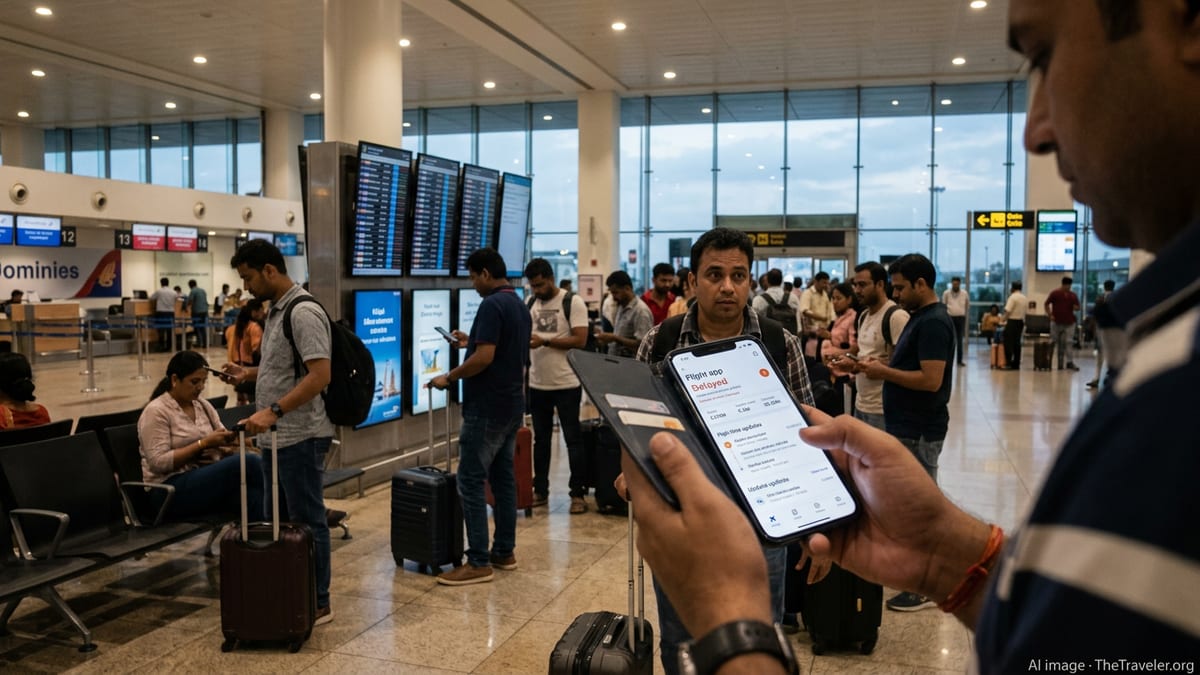
Cleartrip Targets Growing Volatility in Air Travel
Cleartrip’s latest product update arrives at a moment when air travelers are grappling with an unsettled operating environment. Weather extremes, congested airspace, tight crew rosters and airport infrastructure constraints have combined to make last minute changes a regular feature of flying rather than an exception. For many passengers, especially in fast growing markets across India and the Middle East, uncertainty around departure times, gate changes and missed connections has become one of the most stressful aspects of travel planning.
By introducing live flight status across its platform, Cleartrip is aiming to shift from being purely a booking utility to becoming a real time trip companion. Instead of forcing customers to juggle airline apps, airport displays and third party trackers, the company wants Cleartrip to serve as a single source of truth for key operational updates tied directly to a user’s itinerary. The move aligns with a broader industry trend in which travel intermediaries are investing in post booking tools to retain engagement and build loyalty.
The new capability is being framed internally as part of a reliability agenda that runs alongside Cleartrip’s pricing and promotional strategy. As competition intensifies, particularly from super apps and digital wallets that can also sell airline tickets, Cleartrip is betting that dependable, timely information will be as important to repeat usage as discounts or cashbacks.
How the Real Time Live Flight Status Feature Works
Cleartrip’s live status experience is built around the bookings customers already manage inside the app and on the web. Once a flight is ticketed through Cleartrip, the itinerary is automatically enrolled for operational tracking, pulling in real time data on departure and arrival times, gate assignments, terminal changes and estimates of delay. For travelers who book elsewhere, Cleartrip is offering manual flight search and tracking so they can still monitor status through the same interface.
On mobile, the company is emphasizing immediacy and clarity. Status tiles within the trip view surface whether a flight is on time, delayed, departed or cancelled, with color coded cues designed to make changes obvious at a glance. Where supported by airline and airport feeds, users can see rolling estimated departure and arrival times that refresh as operations shift. Push notifications are sent when there is a material change such as a delay beyond a defined threshold, a gate swap, or a cancellation that may require rebooking.
Cleartrip is also working to make the feature useful before the day of travel. In the 24 to 48 hours leading up to a flight, the app tracks schedule adjustments, aircraft swaps and creeping delays that often emerge well before boarding time. By surfacing these early signals, the platform aims to give customers a longer runway to adjust plans, whether that means leaving for the airport earlier, re arranging ground transport, or exploring alternative flights.
Integrating Disruption Insights With Trip Management
While real time status is the headline, Cleartrip is trying to fold disruption information into the rest of its trip management tools. Within an affected booking, users can jump directly from a delay or cancellation alert into available options, including checking fare rules, exploring alternate departures on the same carrier, or comparing new flights on other airlines. The company says this tight coupling between alerts and actions is intended to reduce the friction that typically comes with moving between multiple apps or call centers when plans go wrong.
For multi segment itineraries and international connections, the live status feature attempts to highlight downstream risk. If an initial domestic leg is running significantly late, Cleartrip flags the likelihood of a missed onward flight and encourages customers to review options while they are still at the origin airport. In practice, that can be the difference between securing a workable re routing and being stranded when capacity is already constrained.
Customer support teams are also being plugged into the new data stream. When travelers contact Cleartrip via chat or phone, agents can see live status information from the same back end feeds that power the app, allowing them to offer contextually relevant assistance rather than generic scripts. This includes guiding customers through refund eligibility, advising on airline policies around meals and accommodation, and clarifying documentation needed when delays disrupt visas or onward rail connections.
Responding to Shifting Expectations Around Transparency
The launch of Cleartrip’s live flight status feature reflects a broader shift in what travelers now expect from digital travel brands. In the wake of high profile disruption events and capacity crunches, customers are demanding not only competitive fares but also transparency before and during their journeys. Being informed promptly about irregular operations has become a baseline expectation rather than a premium add on.
Technology providers across the ecosystem are racing to respond, from airlines building AI driven trip companions to independent flight tracker apps focused solely on real time operations. Cleartrip’s decision to embed live status inside its core booking product underscores how central operational reliability has become to the travel value proposition. For intermediaries in particular, owning more of the customer relationship after purchase is critical to differentiating themselves from pure price comparison engines.
Industry observers note that success will depend not just on aggregating data but on presenting it in ways that feel trustworthy and actionable. If Cleartrip can consistently surface timely, accurate information about changing flight conditions and pair that with intuitive next steps, it stands to strengthen its brand among frequent flyers who have no patience left for opaque delays. If the data proves inconsistent or confusing, however, travelers are likely to revert to airline channels and specialist trackers.
Implications for Travelers in an Era of Persistent Disruptions
For travelers, the practical upside of Cleartrip’s move lies in reducing uncertainty at the margins. Live status alerts cannot prevent a storm, equipment issue or air traffic control restriction from upending a schedule, but they can compress the time between an operational decision and a passenger’s awareness of it. In an environment where alternative seats disappear quickly, those extra minutes can matter.
The feature may also have a cumulative impact on how people plan trips. As more passengers grow accustomed to seeing live operational data inside their booking app, they may be more willing to schedule tighter connections at familiar hubs, or conversely, to add buffer time at airports where historical performance is weaker. Over time, this feedback loop could influence which routes and airlines Cleartrip’s most engaged users gravitate toward.
Ultimately, the new live flight status capability signals that Cleartrip is betting on reliability and transparency as key differentiators in a crowded travel marketplace. By investing in tools that keep passengers informed when conditions deteriorate, the company is attempting to turn a structural weakness in modern aviation into an opportunity for deeper customer trust, even when journeys do not go according to plan.