

More news on this day
A cascading wave of disruptions at Cleveland Hopkins International Airport has triggered a wider travel nightmare across the United States, with reports indicating scores of passengers stranded or rerouted in Las Vegas, Tampa, Atlanta and Houston after around 80 flights were canceled and more than 60 delayed.
Get the latest news straight to your inbox!
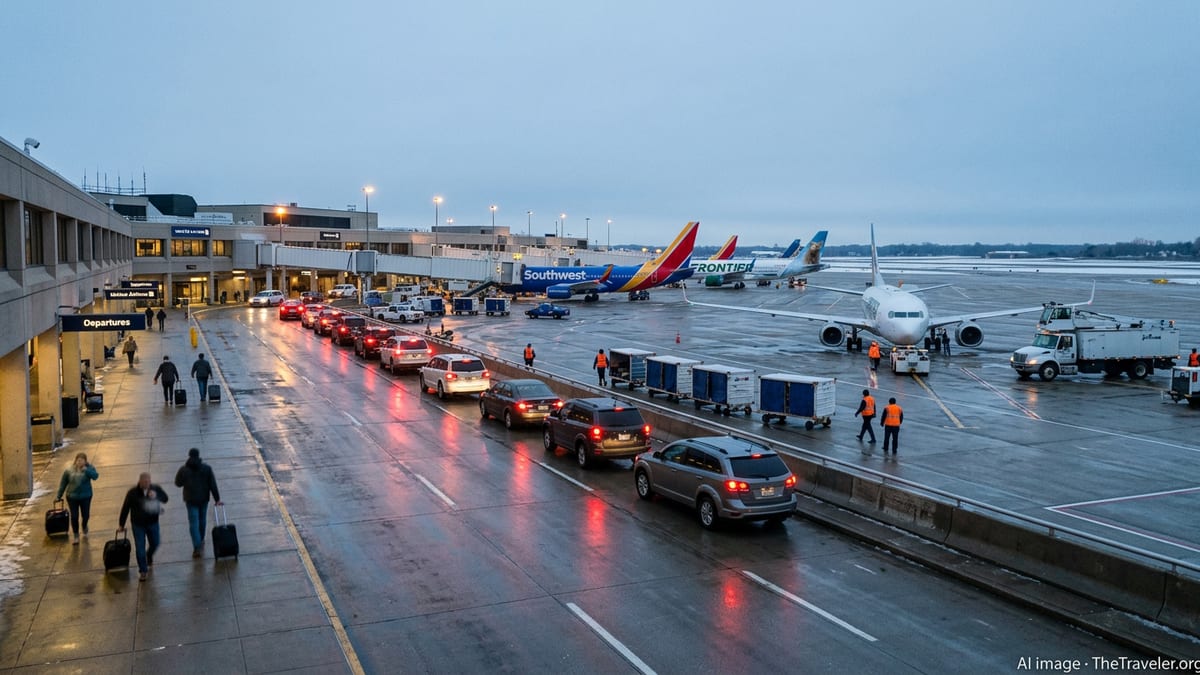
Widespread Disruption Centered on Cleveland Hopkins
Publicly available flight tracking data and airport status pages on March 15 indicate that Cleveland Hopkins International Airport has been hit by a sharp spike in operational problems, with around 80 departures and arrivals canceled and approximately 66 delayed. The disruption has rippled far beyond northeast Ohio, snarling connections and leaving travelers facing long waits and missed itineraries across the national network.
Reports from major airline and flight status dashboards show that the cancellations at Cleveland are affecting both domestic and connecting routes, with knock-on effects particularly visible at large hub and leisure destinations including Las Vegas, Tampa, Atlanta and Houston. Passengers connecting through Cleveland to reach those cities have seen flights scrubbed or heavily delayed, while inbound jets destined for Hopkins have been held or diverted.
Travelers checking departure boards on Saturday encountered clusters of red "canceled" and "delayed" markers, with some carriers consolidating multiple services into single departures and others suspending certain rotations altogether. The disruption has been severe enough that rebooking options have tightened throughout the day, especially for those hoping to salvage weekend trips.
While specific causes can vary by carrier and route, the scale of the disruptions at a single midwestern airport underscores how concentrated operational strains can quickly cascade across the wider United States aviation system, particularly during busy travel periods and unsettled spring weather.
Las Vegas, Tampa, Atlanta and Houston Feel the Fallout
Downline cities most exposed to Cleveland connections have begun to feel the strain. In Las Vegas, a popular leisure gateway for passengers originating in the Midwest and East, publicly accessible flight boards show a series of delayed arrivals and schedule gaps attributed to late or canceled aircraft from the Cleveland rotation. Travelers expecting midday connections have instead reported multi-hour waits and missed hotel check-in windows.
In Tampa, where spring travel demand is elevated by beach tourism and seasonal residents, reduced feed from Cleveland has left some flights operating with delayed departure times or swapped aircraft types. According to widely circulated airline updates, passengers whose Cleveland legs were canceled are being rerouted through other hubs such as Chicago and Charlotte, adding extra connections and travel time to what would normally be a single-stop itinerary.
Atlanta and Houston, two of the country’s largest connecting hubs, are also seeing indirect pressure from the situation at Hopkins. Published schedules and day-of-travel updates indicate that Cleveland-originating flights into both cities have faced cancellations or rolling delays, limiting onward options for travelers and tightening seating availability on remaining services. As aircraft and crews arrive out of position, airlines in these hubs have been forced to reshuffle gates and adjust departure banks.
With all four cities acting as critical nodes in the domestic network, the disruption emanating from Cleveland has multiplied quickly. Even passengers who never planned to set foot in Ohio are finding their journeys affected, discovering only at check-in or via app alerts that their original routes depended on aircraft cycling through Hopkins earlier in the day.
Weather, Congestion and Staffing Challenges Intersect
The exact mix of drivers behind Saturday’s instability at Cleveland Hopkins has not been fully detailed, but publicly available information across aviation platforms points to a familiar combination of weather sensitivity, airspace congestion and ongoing staffing challenges. Recent days have brought bouts of strong winds and unsettled conditions across northern Ohio, contributing to slower arrival rates, more stringent spacing between aircraft and occasional go-arounds.
In such conditions, even modest slowdowns at a single airport can quickly compound when layered onto a national system already operating near capacity. Airlines across the United States continue to navigate tight pilot and crew availability, as well as limits in air traffic control staffing that federal agencies and industry groups have acknowledged in previous public reports. When a round of delays hits early bank departures in the Midwest, aircraft and crews can fall out of sync for the rest of the day.
Operational planners often respond by preemptively canceling flights to prevent more severe downstream issues, such as extensive tarmac holds or overnight crew misplacements. While these tactics are intended to stabilize the network, they can feel brutal on affected passengers, particularly those in smaller markets like Cleveland who have fewer alternative flights or carriers to choose from on short notice.
Published analyses of recent U.S. air travel seasons have shown that spring can be especially fragile, with volatile weather intersecting with ramped-up leisure travel demand and a still-recovering aviation workforce. The difficulties seen at Hopkins on March 15 fit within that broader pattern, revealing how little slack remains in the system when multiple factors converge.
Stranded Passengers Confront Long Lines and Limited Options
As cancellations mounted in Cleveland, the passenger experience quickly deteriorated. Social posts and traveler reports from the terminal describe dense crowds around airline service counters, long queues for customer assistance and passengers sitting on the floor near power outlets to keep phones charged as they refreshed rebooking options.
Travelers attempting to arrange same-day alternatives have found that seats on remaining departures to Las Vegas, Tampa, Atlanta and Houston are scarce, with some only available in premium cabins or at elevated last-minute fares. Others are being offered next-day or two-day-later itineraries, a difficult proposition for those traveling for weddings, business meetings or time-sensitive family events.
Published consumer guidance from travel advocacy organizations notes that passengers affected by cancellations tied to operational decisions may be eligible for refunds on unused segments, but compensation policies for hotels and meals vary significantly by airline. In practice, stranded travelers in Cleveland and across the affected network are mixing airline assistance with out-of-pocket spending on nearby hotels, rideshare trips and extra meals during extended layovers.
Some passengers facing missed connections in Atlanta and Houston are reportedly choosing to abandon their original routes entirely, booking one-way alternatives on other carriers or turning to overnight buses and rental cars to complete the last legs of their journeys. The result is a patchwork of disrupted travel stories radiating from a single morning’s operational strain at Hopkins.
What Travelers Can Do During Systemwide Disruptions
While large-scale breakdowns like the one tied to Cleveland Hopkins on March 15 can feel overwhelming, travel experts who publish regular consumer advice point to several strategies that can help limit the damage. Passengers are urged to monitor airline apps closely in the 24 hours before departure, as early signs of trouble such as equipment swaps or creeping delays on incoming aircraft can foreshadow later cancellations.
Having backup routing ideas in mind, particularly through alternative hubs, can also speed rebooking when lines are long and agents are under pressure. During widespread disruptions, same-day change tools in airline apps and chat functions can sometimes secure a new seat faster than waiting at a physical counter, especially when inventory is changing by the minute.
Consumer advocates additionally suggest keeping receipts for unexpected expenses such as hotels, meals and ground transport, in case carriers later offer travel credits or reimbursements. Travel insurance policies may provide partial relief as well, though coverage details differ widely and often exclude weather-related events.
For now, passengers caught up in the Cleveland-linked disruption are left to navigate a maze of delays, cancellations and improvised connections. The episode offers another reminder that despite ongoing investments in new terminals, upgraded fleets and digital tools, the U.S. air travel system remains vulnerable to sudden shocks that can turn a single airport’s bad day into a nationwide travel ordeal.