

More news on this day
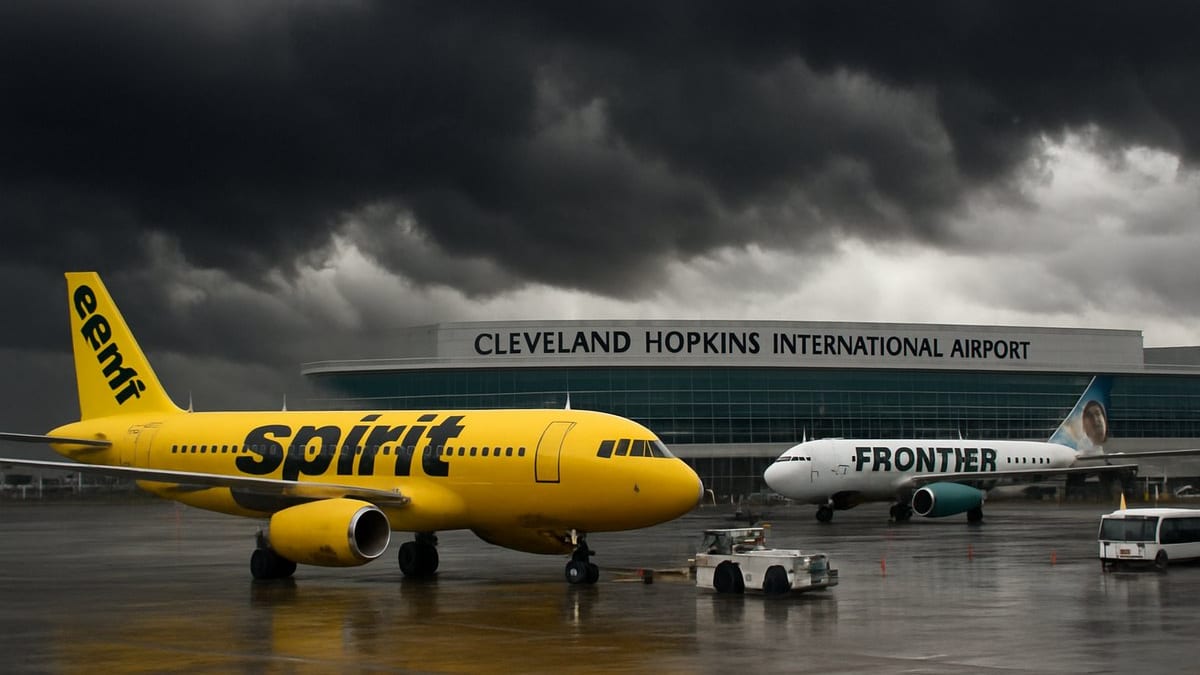
Cleveland Hopkins International Airport is confronting a turbulent spring as route cuts, airline exits and mounting delays converge into a disruptive shake up for low cost carriers Spirit Airlines and Frontier Airlines, leaving travelers grappling with fewer options and greater uncertainty.
Get the latest news straight to your inbox!
Spring Shock: Spirit’s Exit Amplifies Operational Strain
Publicly available information shows that Spirit Airlines is preparing to end operations at Cleveland Hopkins International Airport in mid April 2026, removing a key ultra low cost player from the region’s air travel mix. The carrier’s withdrawal follows a prolonged period of capacity reductions at the airport in which Spirit had already slashed seats on multiple routes.
Airport data released over the past year indicates that Spirit accounted for the largest share of seat cuts at Cleveland, sharply reducing service to leisure destinations such as Orlando and other sun markets. These reductions translated into a measurable decline in passenger volumes at Hopkins, underscoring the extent to which local travelers had come to rely on low cost capacity for affordable getaways and family visits.
As Spirit moves toward a complete pullout from Cleveland, passengers with spring and summer plans are being forced to rebook, often at higher fares on legacy competitors or on a limited number of remaining budget flights. Travel forums and consumer reports point to growing concern that the disappearance of one of the field’s main ultra low cost brands will translate into higher average ticket prices and fewer nonstop choices.
The timing compounds existing disruption associated with Spirit’s broader network restructuring after its recent bankruptcy process, in which numerous routes around the United States have been thinned or cut outright. For Cleveland based travelers, those corporate level decisions are now materializing as a local operational blow, with last minute schedule changes and cancellations feeding into an atmosphere of instability at Hopkins.
Frontier Under Pressure as It Adds and Cuts at Hopkins
Frontier Airlines has emerged as the other major ultra low cost operator at Cleveland Hopkins, but its own track record at the airport is uneven. Published coverage over the past two years shows Frontier adding select routes and gaining share in some markets while also eliminating several point to point services that once connected Cleveland to smaller leisure destinations.
Reports from local and national outlets note that Frontier has cited market demand for a series of prior route withdrawals from Hopkins, including flights to secondary leisure cities across the South and Midwest. The carrier has signaled an interest in concentrating flights on higher volume corridors, a strategy that can improve efficiency but may leave mid sized markets with fewer nonstop links.
Data from consumer advocacy groups highlight that Frontier has attracted a high rate of customer complaints tied to cancellations, schedule changes and refunds, placing the airline under closer scrutiny as travelers search for reliability alongside low fares. In Cleveland, that backdrop heightens anxiety as Frontier is poised to absorb at least some of the traffic vacated by Spirit, particularly on Florida routes where both brands have traditionally competed.
The net effect is a complex picture for Hopkins. On paper, Frontier’s added capacity on certain routes may soften the blow of Spirit’s departure. In practice, rolling schedule adjustments, past route eliminations and a history of operational volatility mean that travelers cannot assume a straightforward handoff. The reliance on a single ultra low cost carrier to shoulder much of Cleveland’s budget travel demand concentrates risk in a way that was not present when multiple players shared the field.
Network Volatility and the Traveler Experience at Hopkins
The operational tremors at Cleveland Hopkins are not confined to route maps. Recent disruption data and travel day recaps show that the airport has seen waves of delays and cancellations tied to network wide issues affecting both legacy and low cost airlines. On some peak days, Hopkins has recorded double digit cancellations and dozens of delayed departures, with Frontier among the airlines posting irregular operations during national weather and air traffic control slowdowns.
For passengers, that volatility translates directly into longer lines, missed connections and crowded gate areas as multiple flights are pushed back or scrubbed. Social media posts and travel community threads frequently mention Cleveland alongside other midwestern hubs as places where small schedule shocks can quickly snowball due to lean staffing and tight aircraft rotations, conditions that hit ultra low cost carriers particularly hard.
Ultra low cost models depend on quick turns and high daily aircraft utilization, leaving limited cushion when a storm system, ground stop or mechanical problem ripples across the network. When Spirit and Frontier consolidate their presence to a narrower band of high volume routes, those flights often run close to full, which means that a single cancellation can strand a large number of passengers with few alternative options the same day.
In Cleveland, where competition on key leisure routes has already thinned, a canceled or heavily delayed flight can force travelers to accept lengthy layovers through distant hubs, pay substantially higher walk up fares on competing carriers or delay trips altogether. This dynamic helps explain why the current convergence of Spirit’s exit and Frontier’s uneven performance is viewed as such a significant operational blow for Hopkins rather than a routine reshuffling of airline schedules.
Economic Stakes for Northeast Ohio’s Air Connectivity
Air service at Cleveland Hopkins plays an outsize role in connecting Northeast Ohio to tourism hubs, business centers and visiting friends and relatives traffic. Airport statistics show that Hopkins functions primarily as an origin and destination facility, meaning the majority of travelers begin or end their journeys in the region rather than simply connecting through. That structure makes robust point to point service especially valuable.
When low cost capacity shrinks, local travelers lose a key pressure valve that has historically kept fares in check and made short getaways financially feasible. Tourism operators and small businesses that depend on weekend and holiday visitors from Florida and other leisure markets are especially sensitive to these shifts. According to recent economic discussions surrounding the airport, any sustained falloff in traffic risks dampening spending on hotels, dining and entertainment across Greater Cleveland.
The effect is not purely economic. Air connectivity also influences how attractive a region appears to prospective residents and employers. Stories of persistent delays, limited nonstop choices and unpredictable low cost service can shape perceptions of a city’s accessibility. In a competitive landscape where peer metros are aggressively courting airlines and investing in airport upgrades, unstable operations at Hopkins carry reputational stakes in addition to the immediate inconvenience for passengers.
Regional planners and civic organizations have increasingly framed air service reliability as core infrastructure rather than a discretionary amenity. Within that context, the simultaneous turbulence at Spirit and Frontier, and its outsized impact on Cleveland’s affordable travel options, is viewed as a strategic challenge that intersects with broader efforts to retain talent and attract investment.
What Travelers Can Expect in the Months Ahead
Over the coming months, Cleveland travelers can expect continuing adjustments to flight schedules as airlines finalize their summer and early autumn plans. Public timetables and booking engines already reflect Spirit’s impending departure and Frontier’s evolving route portfolio, but additional frequency tweaks are common as carriers respond to demand patterns, fuel costs and operational constraints.
Industry analysts note that other airlines occasionally move to fill gaps left by retreating competitors, particularly on trunk routes where demand is resilient. In Cleveland’s case, published information shows that some Florida capacity has already been reassigned among remaining carriers. Whether that trend expands to fully replace the breadth of ultra low cost options previously on offer remains uncertain, especially given broader cost pressures across the sector.
Travel experts advise that passengers departing from Hopkins build in additional buffer time and monitor bookings closely throughout this transition period. Same day schedule changes, aircraft swaps and rolling delays are more likely when an airport is undergoing significant carrier reshuffling and when remaining operators are optimizing lean, utilization heavy schedules.
For now, Cleveland Hopkins International Airport finds itself at a crossroads. The airport is still connected to the national network, but the combination of Spirit’s exit, Frontier’s mixed operational record and a backdrop of recurring delay days has created a moment of pronounced vulnerability. How airlines, local stakeholders and travelers respond to this phase will help determine whether Hopkins stabilizes as a more resilient mid sized hub or faces continuing cycles of volatility that test the patience of the flying public.