

More news on this day
Travelers at Cleveland Hopkins International Airport faced a disruptive start to Friday as at least 11 flights were canceled and many more delayed, affecting services operated by PSA Airlines, Jazz, Endeavor Air, Frontier and Southwest on key business and leisure routes across the United States and Canada.
Get the latest news straight to your inbox!
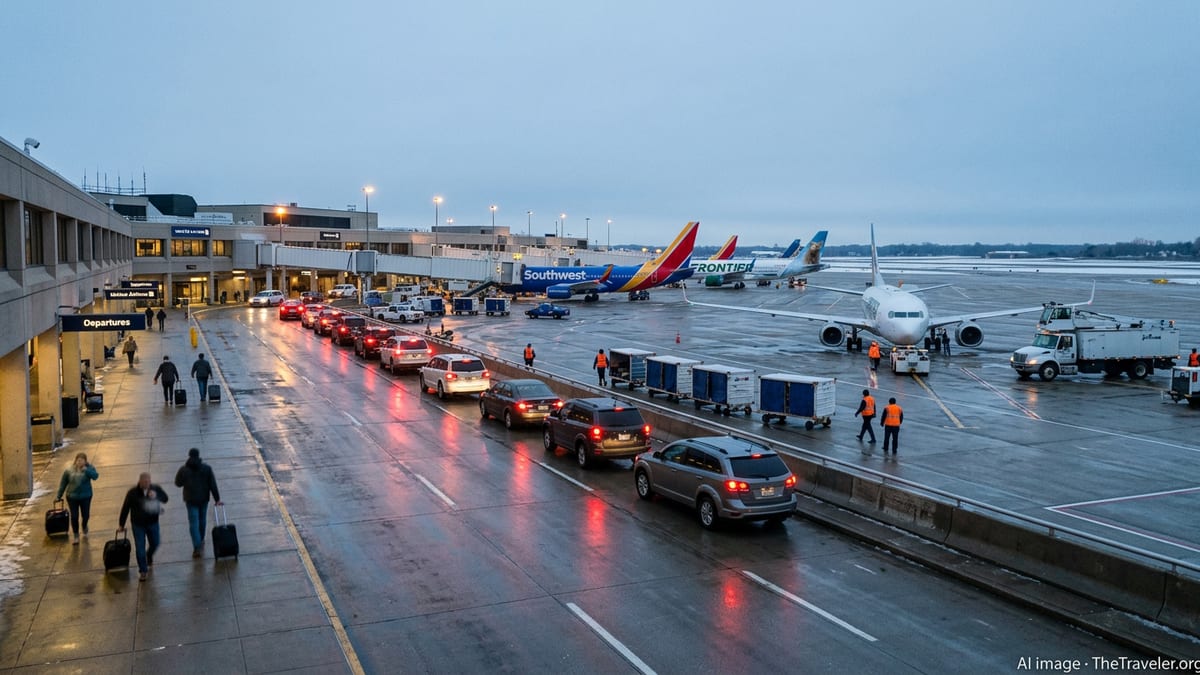
Operational Snags Ripple Across Multiple Carriers
The disruptions began to mount early in the day, as regional affiliates PSA Airlines, Jazz and Endeavor Air logged cancellations on high-frequency feeder routes linking Cleveland to major hubs. These operators, which fly under the banners of larger U.S. and Canadian network carriers, connect Cleveland to cities including Washington, Charlotte and Toronto, making any interruption especially noticeable for connecting passengers.
By midmorning, at least 11 departures and arrivals had been scrubbed from the Cleveland Hopkins schedule, with dozens of additional flights posting delay notices at departure boards. While some flights were held for under an hour, others were pushed back by several hours, creating knock-on impacts for aircraft and crews scheduled to operate later segments.
Southwest and Frontier, two of the most visible low-cost players at the airport, also reported delays on services to sun destinations and key domestic links, adding to crowding around customer service desks and rebooking counters. Gate agents worked through long lines of passengers seeking alternative routings, travel credits or overnight accommodation where applicable under each airline’s policies.
Airport staff said the pattern of cancellations and late departures was concentrated but not isolated to one airline, underscoring how closely interlinked operations are at a mid-sized hub like Cleveland. With multiple carriers depending on shared airspace and regional partners, even localized issues can quickly spill across several brands.
Key Routes to Fort Lauderdale, Minneapolis, Washington and Toronto Affected
Among the most affected routes on Friday were services to Fort Lauderdale, Minneapolis Saint Paul, Washington and Toronto, all of which serve as important gateways for both point-to-point travelers and those connecting onward. Flights to Fort Lauderdale are particularly popular with Northeast Ohio passengers heading to South Florida cruises and winter getaways, so any schedule disruption can strand vacationers mid-journey.
Delays and selective cancellations on Cleveland to Minneapolis Saint Paul flights complicated plans for business travelers and those connecting to Upper Midwest and West Coast destinations via that major hub. Some passengers faced the prospect of missed connections and overnight stays, depending on the availability of later departures.
Service to Washington, including flights used heavily by government and corporate travelers, also experienced interruptions. The resulting schedule reshuffles forced some passengers to accept rerouting through alternative hubs or to reschedule meetings and events at short notice.
Northbound traffic to Toronto, often operated by Jazz on behalf of a major Canadian carrier, was not spared. Cross-border flyers heading to or from Canada reported extended waits at Cleveland, as aircraft rotations were adjusted and crews were reassigned. With customs and immigration processing layered on top of any irregular operations, cross-border disruptions can take longer to unwind than purely domestic delays.
Weather, Airspace and Crew Positioning Cited as Contributing Factors
While each carrier will conduct its own review of Friday’s performance, early indications pointed to a mix of contributing factors behind the spate of cancellations and delays. Seasonal weather systems in parts of the Midwest and East Coast constrained airspace capacity, compounding congestion on already busy Friday schedules.
At the same time, tight aircraft and crew utilization plans at regional airlines such as PSA, Jazz and Endeavor Air can leave little margin for error when an inbound aircraft arrives late or when a crew times out under federal duty rules. A single late arrival at a hub can cascade into subsequent segments, resulting in disruptions for passengers departing from cities like Cleveland even when local conditions appear calm.
Operational analysts note that low-cost carriers including Frontier and Southwest typically run intensive daily aircraft rotations to maximize utilization, which can amplify the impact of any delay or technical issue. When operations are running at or near capacity, recovering a disrupted schedule often requires selective cancellations to reset the network, especially late in the day.
The broader U.S. aviation system has seen recurring pressure points over recent years, ranging from weather and air traffic staffing constraints to maintenance and supply chain challenges. Friday’s events at Cleveland Hopkins fit within that national context, illustrating how localized bottlenecks can quickly affect passengers on routes that stretch far beyond a single city pair.
Passengers Face Long Lines, Missed Connections and Rebooking Challenges
For travelers on the ground, the operational nuances manifested as long waits and shifting plans. Lines formed early at check-in counters and help desks as passengers arriving for morning departures discovered their flights delayed or canceled, particularly those bound for Fort Lauderdale and other leisure markets.
Some passengers with tight connection windows in Minneapolis Saint Paul, Washington or Toronto reported scrambling to secure earlier departures or entirely different routings. Others opted to accept travel credits or rebook for later in the weekend, wary of being caught in extended airport waits or overnight misconnects.
With several carriers affected simultaneously, same-day alternatives were limited on some routes, especially for large groups and families hoping to sit together. Travelers were urged by airlines and airport staff to make use of mobile apps and customer service phone lines rather than queuing in person, though high call volumes occasionally led to extended hold times.
Airport concessions and lounges saw an uptick in traffic as passengers waited out delays. For many, the experience served as another reminder of the importance of travel insurance, flexible tickets and allowing ample connection time during peak travel periods, particularly in winter and early spring when weather-related disruptions are more common.
What Travelers Through Cleveland Hopkins Should Do Next
With aircraft and crews out of their usual positions, residual delays were expected to persist into the afternoon and evening bank of flights at Cleveland Hopkins, even as airlines worked to stabilize schedules. Travelers planning to fly into or out of Cleveland later in the day were advised to monitor their flight status closely and to check in early.
Industry experts recommend that passengers departing on affected routes, especially those connecting through Fort Lauderdale, Minneapolis Saint Paul, Washington or Toronto, build additional time into their itineraries. Leaving earlier for the airport, packing essential medications and a change of clothes in carry-on bags, and keeping digital boarding passes up to date can all help mitigate the stress of unexpected changes.
Frequent flyers say that enrolling in airline text or app alerts remains one of the most effective ways to receive real-time updates when a disruption unfolds. In many cases on Friday, travelers who were notified quickly had the best chance of rebooking onto remaining seats on alternative departures or adjusting ground transport and hotel reservations without incurring extra fees.
While Friday’s cluster of cancellations and delays at Cleveland Hopkins is unlikely to define the airport’s overall performance for the season, it underscores how even a modest number of disrupted flights across a handful of carriers can affect hundreds of travelers and a wide web of domestic and international routes.