

More news on this day
Passengers at Cleveland Hopkins International Airport faced mounting frustration on March 13 as at least 11 flights were cancelled and many more delayed, with operations by PSA Airlines, Jazz, Endeavor Air, Frontier, Southwest and other carriers disrupted on major routes to Fort Lauderdale, Minneapolis–Saint Paul, Washington, Toronto, Charlotte and additional hubs.
Get the latest news straight to your inbox!
Major Carriers Hit Across Regional and Low-Cost Networks
The disruptions at Cleveland Hopkins on Friday affected a broad cross-section of airlines, from regional operators such as PSA Airlines, Jazz and Endeavor Air to low-cost carriers Frontier and Southwest. Together, they handle a significant share of short- and medium-haul traffic in and out of northeast Ohio, meaning relatively small schedule changes ripple quickly across the region’s flight map.
Regional affiliates feeding larger network carriers bore a notable share of the cancellations. PSA Airlines, which operates flights under the American Eagle brand, saw services to Charlotte and Washington affected, curtailing key connecting options for passengers heading to the Southeast and the U.S. East Coast. Jazz, operating as Air Canada Express, and Endeavor Air, flying as a Delta Connection carrier, also experienced cancellations and extended delays on cross-border and Midwest routes, including Toronto and Minneapolis–Saint Paul.
Frontier and Southwest, the airport’s primary ultra-low-cost and low-cost players, reported their own series of delays and schedule adjustments. While some of those flights continued to operate, often after extended waits at the gate or on the tarmac, others were cancelled outright, compounding rebooking challenges for travelers who rely on the carriers’ limited daily frequencies on certain leisure-heavy routes.
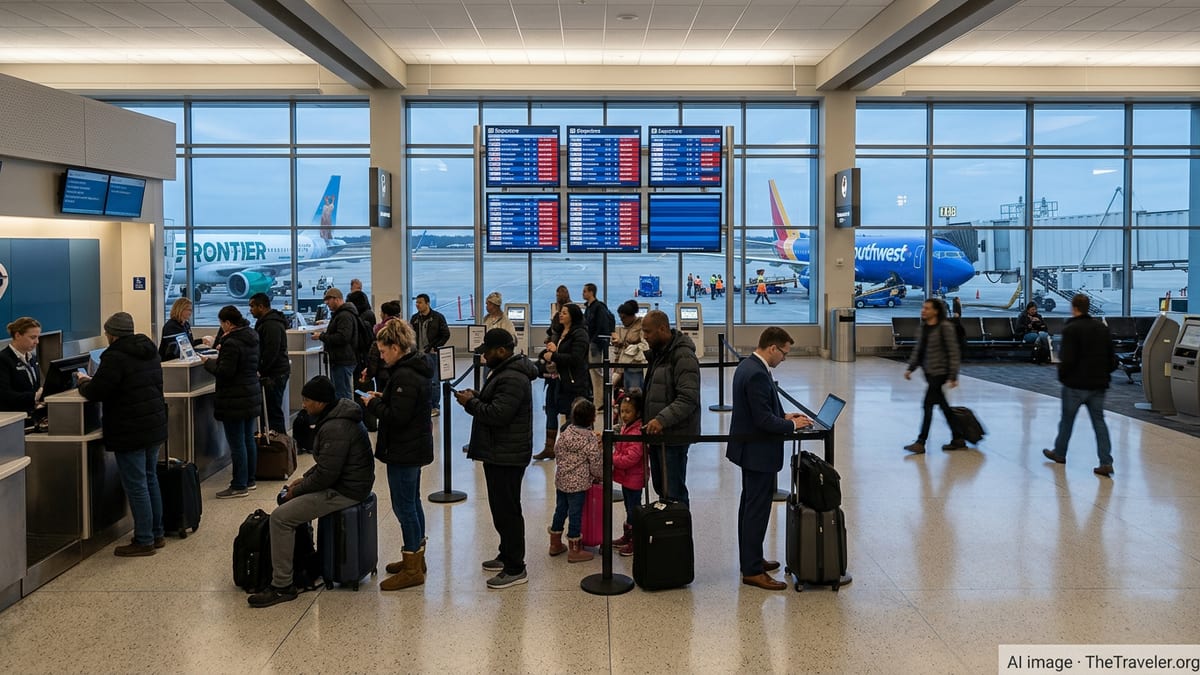
Airport displays through the afternoon showed red “cancelled” and “delayed” notices clustered around departures to major hubs, including Fort Lauderdale, Charlotte and Washington, underscoring how a handful of affected operators can temporarily constrict connectivity from a non-hub airport such as Cleveland.
Key Routes to Florida, Midwest and Canada Disrupted
The day’s operational troubles were felt most acutely on a set of high-demand routes that link Cleveland to warm-weather getaways, domestic hubs and Canada’s financial center. Flights to Fort Lauderdale, a critical gateway for South Florida and cruise departures, were among those cancelled or significantly delayed, stranding travelers beginning or ending vacation plans.
Routes to Minneapolis–Saint Paul and Toronto, both important business and connecting markets, also saw schedule disruptions. Passengers booked on Endeavor Air services to Minnesota and Jazz-operated flights to Canada reported rolling departure estimates and, in some cases, outright cancellations that forced them to seek alternative connections or overnight accommodation.
Washington services, which provide links to both political and corporate centers as well as onward domestic and international connections, were not spared. Affected PSA-operated flights led to missed meetings and tight rebookings, with some passengers opting to drive to alternative airports in search of more reliable same-day options.
Charlotte, a major southeast hub that funnels passengers across the Carolinas, Florida and the Caribbean, also experienced schedule pressure. With PSA operating a dense pattern of regional flights into the city, even a small number of cancellations at Cleveland had knock-on effects for travelers connecting onward to smaller markets or holiday destinations.
Weather, Congestion and Crew Availability Under Scrutiny
While a complete operational picture was still emerging, a combination of weather, national airspace congestion and crew availability appeared to be contributing factors to the disruptions. Seasonal storm systems affecting parts of the Midwest and East Coast have periodically slowed air traffic flows so far this year, prompting ground holds and flow-control measures that can cascade into downstream cancellations at non-hub airports.
Industry observers noted that chronic strain on the national air traffic control system continues to play a role in delays, particularly during peak travel periods. Federal efforts to reduce pressure on overworked controllers at larger hubs have led to schedule adjustments and reduced capacity in some metropolitan areas, conditions that can indirectly affect feeder flights serving cities such as Cleveland when routes pass through congested airspace.
Airlines are also managing tight crew and aircraft availability after several years of volatility in hiring and fleet planning. For regional carriers in particular, a limited pool of qualified pilots and flight attendants means that even a single aircraft out of position or a crew timing out under federal duty rules can trigger cancellations that are difficult to absorb elsewhere in the schedule.
Frontier and Southwest, which rely on highly utilized fleets and relatively lean staffing models, can see minor disruptions quickly magnified into longer delays when spare aircraft and backup crews are already committed. On Friday, that dynamic left some Cleveland passengers waiting hours for inbound aircraft or for replacement crews to arrive from other cities.
Passengers Face Missed Connections and Limited Rebooking Options
For travelers on the ground at Cleveland Hopkins, the practical impact of 11 cancellations and numerous delays was immediate and personal. Lines formed at customer service counters as passengers sought rebooking options, compensation and hotel vouchers, while others turned to airline apps to secure scarce alternative seats on later departures.
Because several of the affected routes, including Fort Lauderdale and certain Canadian and Midwestern cities, are served by a limited number of daily flights, same-day rebooking proved difficult in many cases. Budget carriers in particular often lack interline agreements that would allow them to place passengers on competing airlines, leaving some travelers effectively stuck until the next available departure on their original carrier.
Missed connections added another layer of disruption. Passengers bound for onward flights through Charlotte, Washington or Toronto reported losing access to transcontinental and international connections, forcing last-minute changes to business itineraries, family visits and vacations. Some chose to reroute through alternate hubs, while others opted to delay their trips entirely.
At gate areas, a familiar pattern unfolded: changing departure times on display boards, periodic announcements from gate agents, and travelers weighing whether to remain at the airport, arrange nearby accommodation or attempt to reach other airports in the region by car.
What Travelers Through Cleveland Should Do Next
With Cleveland Hopkins serving as a vital air gateway for northeast Ohio, the day’s disruptions offered another reminder of the importance of preparation and flexibility for air travelers. Aviation experts consistently recommend downloading airline mobile apps, which typically provide the fastest updates on gate changes, delays and cancellations, as well as self-service rebooking tools.
Passengers with imminent departures out of Cleveland, particularly those flying on regional affiliates or low-cost carriers to Fort Lauderdale, Minneapolis–Saint Paul, Washington, Toronto, Charlotte and similar routes, are advised to monitor their flight status closely and plan to arrive at the airport early. Allowing extra time for check-in, security and potential gate changes can help reduce the stress of fast-moving operational changes.
Travel insurance and credit card trip-interruption benefits can also provide a financial buffer when cancellations lead to additional expenses for hotels, meals or last-minute alternative flights. While policies vary, many plans offer coverage when disruptions are significant and outside the traveler’s control.
For Cleveland Hopkins, Friday’s wave of cancellations and delays is the latest test of resilience at a busy midsize airport that has seen fluctuating schedules and carrier lineups in recent years. As airlines continue to fine-tune their networks for 2026, local travelers are likely to keep a close eye on operational reliability as a key factor in choosing routes and carriers.