

More news on this day
Travelers flying in and out of Cleveland Hopkins International Airport at the start of April 2026 are confronting a volatile mix of disruptions, with low cost carriers Spirit Airlines and Frontier Airlines facing heightened operational pressure, thinning schedules, and rising passenger frustration at one of the Midwest’s key air gateways.
Get the latest news straight to your inbox!
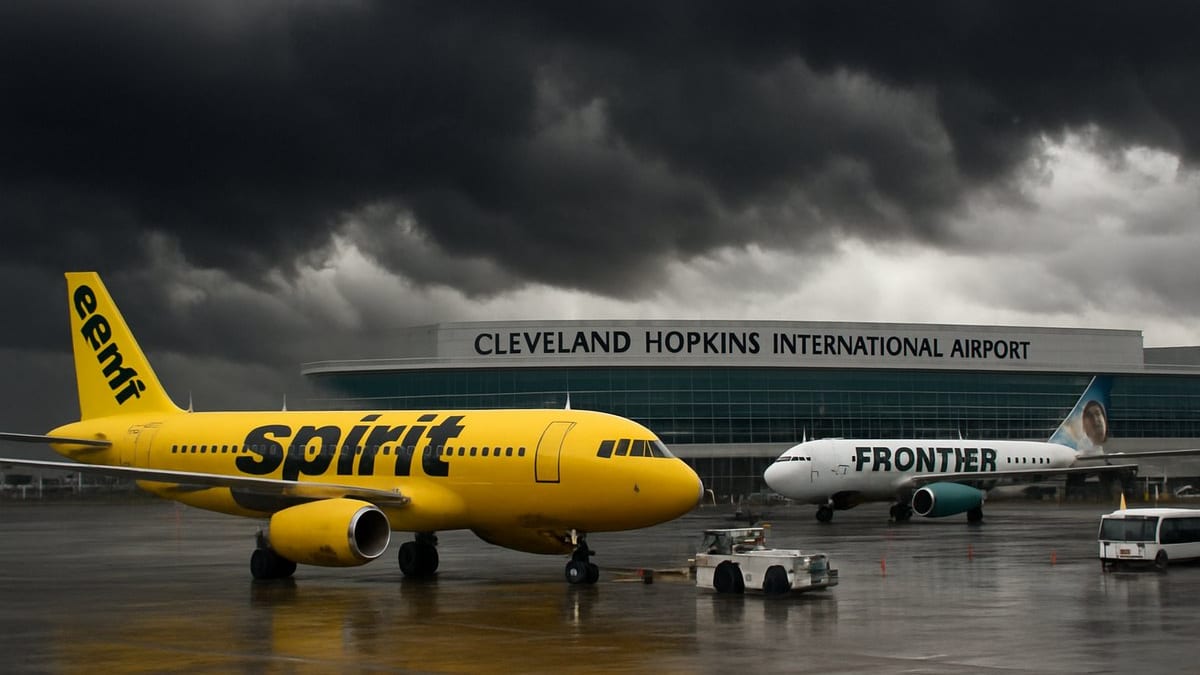
Wave of Disruptions Collides With Spring Travel Demand
Early April is bringing already elevated national flight disruption into sharp focus for passengers at Cleveland Hopkins. Publicly available tracking data for the opening days of the month shows thousands of delays and more than one hundred cancellations across the United States, affecting both full service and low cost carriers. Spirit and Frontier are among the airlines identified in national coverage as experiencing significant irregular operations, with weather and air traffic constraints amplifying existing operational strain.
Reports compiled from flight monitoring platforms indicate that late March and early April have produced repeated flare ups of delays and cancellations, particularly on leisure oriented routes popular with Cleveland travelers. Industry roundups describe Spirit logging several hundred delays in a single nationwide disruption cycle, while Frontier has recorded more than two hundred delays and a cluster of cancellations on one peak day as storms and congestion rippled through Denver, Chicago, and major East Coast markets. These national patterns feed directly into the experience of passengers connecting through or originating from Cleveland.
While the disruption is not limited to any single airline, the effect is particularly acute for budget conscious travelers using carriers with thinner schedules. With fewer daily frequencies and limited interline agreements, passengers on Spirit and Frontier often have narrower rebooking options when flights go awry. As a result, even a modest number of cancellations can cascade into overnight stays, missed connections, and lengthy airport waits at Cleveland Hopkins.
Social media posts and traveler forums over recent weeks describe crowded gate areas, long lines at customer service counters, and uncertainty about updated departure times on certain Spirit and Frontier departures nationwide. Cleveland passengers are reporting similar frustrations on routes that depend heavily on these ultra low cost carriers for affordable, nonstop access to sun and leisure destinations.
Spirit’s Exit Puts Additional Stress on Cleveland Connectivity
Against this backdrop of disruption, Spirit’s decision to withdraw from Cleveland Hopkins in mid April 2026 is reshaping expectations for low cost service in Northeast Ohio. Publicly available airport statements and route listings indicate that Spirit plans to cease operations at the airport around mid month, ending more than a decade of presence and reducing the number of ultra low cost options available from the region’s primary commercial airport.
Industry coverage notes that Spirit’s sole remaining Cleveland route has been linking the city with popular leisure destinations, including service into Florida. As the carrier accelerates network restructuring under financial pressure, Cleveland is among the cities losing direct service. The withdrawal comes as national data continues to highlight Spirit’s elevated disruption levels compared with some legacy peers on certain days, intensifying concerns among local travelers already uneasy about reliability.
Airport materials and independent air service overviews show that Cleveland’s overall route map remains diversified, with legacy carriers and other low cost operators maintaining flights to dozens of domestic and international destinations. However, Spirit has historically accounted for a meaningful share of the airport’s budget capacity, particularly for travelers prioritizing bare minimum fares over schedule flexibility. Passenger statistics released over the past two years already pointed to pressure on growth as several airlines trimmed seat capacity, with Spirit cited as a major contributor to the reduction.
For travelers, Spirit’s April departure means reduced competition on some leisure corridors and potentially higher average fares during peak periods. It also compresses rebooking options when irregular operations strike. Passengers whose April itineraries still include Spirit flights touching Cleveland are being encouraged, through airline and airport advisories, to check their status frequently and prepare contingency plans in case schedules are adjusted in the final weeks of operation.
Frontier’s Network Adjustments and Local Ground Handling Strains
Frontier has moved in recent years to expand its presence at Cleveland Hopkins, reaching a leading position in monthly passenger volume by mid decade. Schedules data compiled by aviation analysts shows Frontier serving more routes to Cleveland than any other carrier as of early 2026, positioning the airline as a central player in the airport’s low cost offering even as Spirit prepares to exit.
At the same time, the carrier has faced its own operational flashpoints. National disruption summaries for early April highlight Frontier among the hardest hit low cost airlines on certain days, with more than two hundred delays and a cluster of cancellations reported across its network. These irregular operations have been concentrated at major hubs such as Denver and Chicago, but knock on effects can ripple outward to spoke cities like Cleveland through aircraft and crew repositioning challenges.
Local conditions at Cleveland have also been shaped by ground handling changes. Labor related filings and advocacy reports from late 2024 describe an aviation services company winding down contracts that included ground handling for Frontier and Spirit at the airport, triggering workforce reductions. While airlines can and do secure alternative vendors, such transitions can introduce short term pressure points in areas such as ramp operations, baggage handling, and passenger check in during peak travel waves.
Travelers sharing experiences online frequently reference long check in queues, limited staffing at some counters, and inconsistent communication about delays on certain ultra low cost departures from Cleveland. Although these anecdotes span multiple carriers and do not necessarily reflect systemic failure, they underscore how even incremental strains in staffing or ground operations can magnify the impact of a day with higher than usual delays or schedule changes.
Passengers Face Fewer Low Cost Options and Narrower Recovery Paths
The combined effect of Spirit’s exit and Frontier’s episodic disruption leaves Cleveland Hopkins passengers facing a more precarious environment when relying on ultra low cost carriers. With Spirit leaving and Frontier recalibrating its network amid broader industry turbulence, the number of daily departures on the lowest fare airlines is shrinking compared with the immediate pre pandemic era and the early 2020s rebound.
Route mapping services indicate that Frontier now shoulders much of the responsibility for maintaining nonstop connectivity from Cleveland to several high demand leisure markets. While legacy carriers and Southwest still serve many of the same regions, their fare structures, ancillary fees, and schedule patterns often target a different mix of business and leisure customers. For travelers who previously relied on a choice between Spirit and Frontier for the lowest base fares, the landscape is tightening just as national disruption metrics remain elevated.
Travel and consumer advocates cited in recent coverage emphasize the importance of building resilience into itineraries during this period of volatility. Recommendations commonly include scheduling flights earlier in the day, allowing generous connection windows, and considering refundable fares or flexible travel protections when itineraries hinge on single daily flights. For Cleveland based passengers using Spirit or Frontier, the guidance increasingly extends to evaluating alternative airports within driving distance if schedules collapse or fares spike.
The situation also raises questions about longer term competition at Cleveland Hopkins. Airport planning documents and modernization updates highlight efforts to improve facilities and attract new or expanded service, including from emerging low cost carriers. Announced future routes from other airlines suggest that capacity may be partially backfilled over time, but the near term reality is that the current turbulence at Spirit and Frontier is landing hardest on passengers with limited budgets and limited flexibility.
Operational Challenges Test Cleveland’s Modernization Momentum
Cleveland Hopkins is in the midst of an extended modernization program aimed at refreshing terminals, expanding amenities, and improving the overall passenger experience. Airport newsletters and planning documents describe a multi year effort to rebuild critical infrastructure and reposition the facility for long term growth after a period of mixed traffic trends.
The present wave of operational strain on Spirit and Frontier intersects with this modernization push in complicated ways. While physical upgrades can ultimately enhance efficiency and appeal to new airlines, construction phases and changing tenant lineups can contribute to near term unpredictability for passengers. For travelers encountering cancellations or long delays on ultra low cost carriers, the visibility of construction zones, detours, and evolving concessions can compound the perception of instability, even when the underlying cause lies in broader national weather or airline specific scheduling decisions.
Air service analysts following the region note that Cleveland’s traffic base remains resilient, supported by a diverse mix of business travel, healthcare and education related demand, and strong visiting friends and relatives flows. Schedule and route databases for April 2026 show thousands of flights into the airport over the course of the month, served by more than ten airlines connecting the city to dozens of domestic and international points. Within that larger picture, however, the current disruptions and Spirit’s exit represent a sharp setback for the subset of travelers who depend most heavily on ultra low cost options.
As spring break and early summer travel ramp up, the evolving situation at Cleveland Hopkins will remain a test case for how mid sized U.S. airports manage the intersection of airline financial stress, volatile weather patterns, and long term infrastructure projects. For now, publicly available information suggests that passengers flying Spirit and Frontier through Cleveland should expect a more challenging travel environment than in recent years and plan accordingly.