

More news on this day
A renewed burst of Arctic air over Europe in mid-March 2026 has driven a fresh cold wave across Italy, bringing heavy snowfall, hazardous roads and a new round of travel disruption at a time when many visitors expected the first signs of spring.
Get the latest news straight to your inbox!
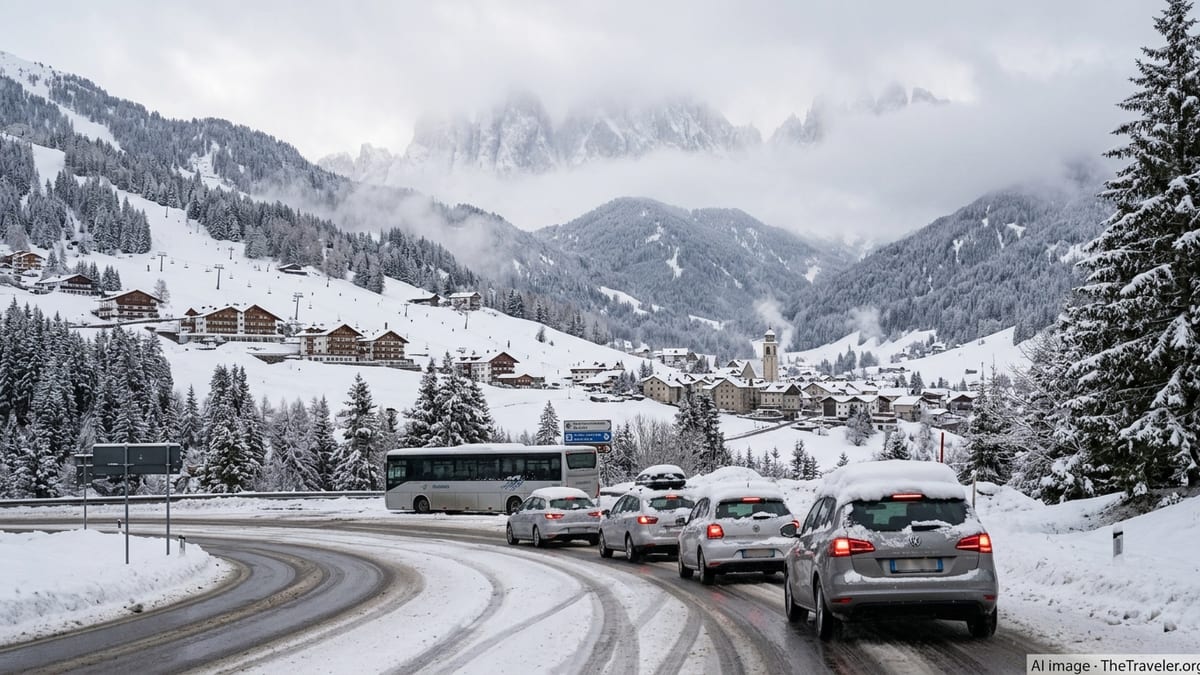
Late-Winter Cold Returns as Snow Spreads From Alps to the South
Meteorological reports for mid-March indicate that a blocking pattern over northern Europe has funneled colder continental air back across the Italian peninsula, reversing the milder conditions that began the month. Weather models point to a sharp temperature drop at higher elevations and even in some lowland areas, with snow levels falling well below typical seasonal norms.
Publicly available data from national and regional weather services show widespread snowfall across the Alpine arc, with especially deep accumulations in parts of Lombardy, Trentino-Alto Adige, and the Aosta Valley. Resorts that had already recorded a strong snowpack in February have reported additional late-season snow totals, further elevating avalanche risk on steep, wind-exposed slopes.
Further south, the same cold air interacting with moist Mediterranean systems has generated wintry conditions over portions of the Apennines and higher hills of Abruzzo, Molise, and Basilicata. In some central and southern regions, snowfall has followed a period of heavy winter rain, leaving mountain roads and secondary routes prone to ice, slush and localized landslide hazards.
This return of winter has arrived after a series of intense weather episodes across Europe earlier in the season, underscoring how quickly conditions can shift in late winter and early spring. Travel planners and tourism businesses that had been pivoting toward shoulder-season hiking and city breaks have had to adapt again to a snow-driven landscape.
Transport Networks Strained by Closures, Delays and Re-Routing
The cold wave’s most immediate impact has been felt across Italy’s transport network, particularly in mountain and hill regions. Local authorities have announced rolling road closures on Alpine and Apennine passes where snow accumulation, drifting and avalanche risk have made conditions unsafe, while some minor routes have shifted to chains-only access for private vehicles.
Rail links through key mountain corridors have experienced weather-related slowdowns, with publicly available service bulletins citing speed restrictions, temporary suspensions on certain regional lines, and longer travel times as crews work to clear tracks and manage ice on overhead power systems. Overnight sleeper and long-distance services to major Alpine gateways have remained generally operational but with warnings of potential last-minute adjustments.
Airports serving northern Italy, including those that function as gateways to the Dolomites and the western Alps, have reported a mix of delays and selective cancellations as snowfall and shifting visibility complicate runway operations. Ground-handling capacity and de-icing requirements have contributed to knock-on delays, affecting both domestic connections and inbound flights from other European hubs.
Along the coasts and around the islands, the same weather pattern has at times intensified winds and rough seas, leading to intermittent disruption of ferry services, particularly where routes intersect with stronger gusts and wind-driven waves. For travelers relying on multi-modal itineraries that combine air, rail, road and sea, the result has been a higher-than-usual risk of missed connections and cascading schedule changes.
Mixed Fortunes for Ski Resorts and Winter Destinations
For Italy’s ski resorts and snow-focused destinations, the cold wave has delivered both challenges and opportunities. Heavy snowfall has refreshed pistes in many higher-altitude areas, improving surface conditions after periods of thaw and extending the viable season for March skiing and snowboarding. Promotional materials from several resorts now highlight “powder weeks” and late-season packages built around the new snow.
At the same time, avalanche risk has increased sharply in some sectors due to the combination of deep new snow, wind loading and older weak layers within the snowpack. Avalanche advisories across the broader Alpine region have frequently reached elevated danger levels, with safety agencies urging caution outside secured ski areas. For resort operators, this has meant expanded safety perimeters, temporary closure of certain off-piste routes, and closer coordination with mountain rescue services.
Accommodation providers in major mountain hubs such as the Dolomites and the western Alps report that the cold wave has prompted a short-notice uptick in bookings from experienced winter sports travelers seeking fresh snow. However, those gains are partially offset by cancellations from visitors who are less comfortable driving or traveling in winter conditions, especially families who had anticipated milder weather for mixed ski and sightseeing holidays.
Smaller villages and cross-country skiing areas in the Apennines and central Italy have also seen renewed interest as images of snow-covered landscapes circulate on social media. Yet these destinations often have more limited snow-clearing resources and narrower access roads, making them more vulnerable to temporary isolation when accumulations are especially heavy.
City Breaks, Cultural Tourism and Domestic Travel Plans Disrupted
Beyond the mountains, the cold wave has complicated urban and cultural travel plans across parts of Italy. While major cities have largely avoided the heaviest snow totals, intermittent flurries, sleet and freezing overnight temperatures have contributed to slick surfaces and localized transport delays in places where visitors often rely on public transit and walking.
Travel forums and booking platforms indicate that some domestic travelers have postponed or adjusted weekend city breaks, particularly in northern regions, out of concern for driving conditions on motorways and regional roads. Operators of organized cultural tours, wine itineraries and countryside stays have reported rescheduling of excursions, especially those that include hilltop towns and rural agriturismo properties accessible only via minor roads.
For international tourists already in Italy, the cold wave has led to itinerary reshuffles, with more time spent in museums, indoor attractions and historic centers and fewer day trips into nearby hills. In some cases, travelers who combined coastal stays with planned inland excursions to mountain villages have opted to stay closer to sea-level destinations where conditions are more stable.
Urban hospitality businesses that had been preparing for a gradual shift into spring travel patterns now face an extended period of winterlike operations, including higher heating costs and greater sensitivity to weather-related cancellations. Event organizers in affected regions have also had to revisit logistics for outdoor festivals, sporting events and local celebrations scheduled for late March.
Tourism Industry Adjusts Strategy Amid Climate Variability
The latest cold wave arrives against a backdrop of growing attention to climate variability and its implications for Italian tourism. Research on climate and mountain communities has highlighted how both extreme snowfall events and increasingly frequent warm spells can complicate long-term planning for resorts and alpine towns that rely heavily on winter visitors.
Economic analyses focused on Italy’s tourism sector have noted that volatile winter conditions can affect not only lift operations and snow reliability but also insurance costs, infrastructure investment decisions and marketing strategies. Businesses that depend on predictable seasons now face greater uncertainty, with periods of intense snowfall sometimes arriving after earlier thaws or during what travelers perceive as the start of spring.
In response, many destinations are working to diversify their offerings, promoting year-round outdoor activities, cultural programming and wellness tourism that is less tightly linked to specific snow or temperature thresholds. Late-season storms such as the current cold wave illustrate both the enduring appeal of deep winter experiences and the operational complexity involved in hosting visitors safely under rapidly changing conditions.
Travelers planning trips to Italy in the coming weeks are being encouraged, through public advisories and travel-industry communications, to monitor weather updates closely, allow more time for transfers between modes of transport, and remain flexible with itineraries. For the country’s tourism industry, the latest spell of heavy snow is a reminder that adapting to an increasingly changeable climate remains an urgent and ongoing task.