

More news on this day
Travelers flying between Colombia, the United States and Europe are facing mounting disruption as Avianca, United Airlines, JetBlue and other carriers cancel more than a dozen key international flights, affecting high-demand routes to New York’s JFK, Newark, Madrid and Washington Dulles amid a powerful winter storm battering the U.S. Northeast.
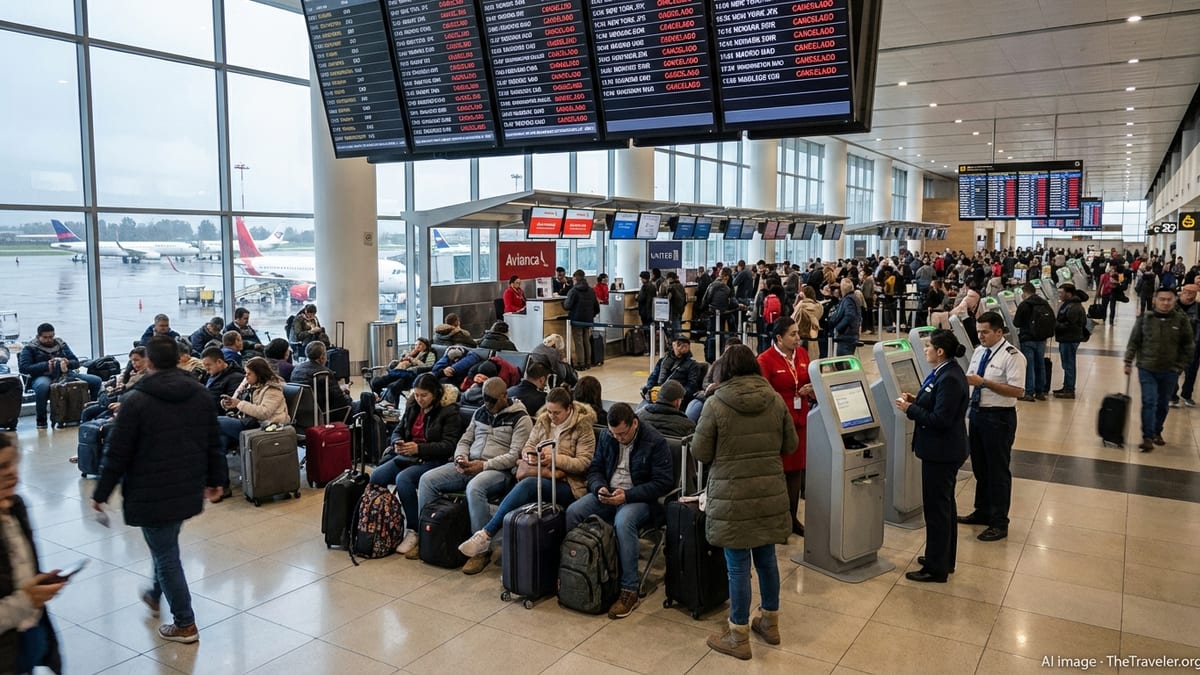
Colombia’s Gateways Snarled by Wave of Cancellations
Colombia’s main international gateways in Bogota, Medellin and Cartagena have seen a sharp uptick in cancellations since the weekend, as airlines adjust schedules in response to severe winter weather in the northeastern United States and wider operational pressures. According to aviation authorities and airport operators, at least 13 flights linking Colombia with hubs such as New York, Newark, Madrid and Washington Dulles have been scrubbed over a 48-hour period, with more delays and rolling changes expected.
At Bogota’s El Dorado International Airport, Avianca has canceled several departures to John F. Kennedy International Airport, including its high-profile late-night AV20 service and additional afternoon and morning rotations. United Airlines flights from Bogota to Newark and Avianca’s service to Washington Dulles are also among those removed from departure boards. Iberia’s route between Bogota and Madrid has been affected as well, tightening already busy transatlantic capacity at the start of a peak travel week.
While Medellin and Cartagena have reported fewer outright cancellations, both cities are experiencing knock-on delays as aircraft and crews struggle to maintain rotations in and out of weather-affected North American airports. Passengers connecting in Colombia to onward long-haul services have been particularly vulnerable, sometimes discovering changes only after arriving at the airport.
Airport officials describe the disruption as “dynamic and evolving,” with airlines continually recalibrating flight plans based on real-time weather and slot restrictions. Travelers are being urged to verify their flight status repeatedly on the day of departure and avoid arriving at the airport without a confirmed, operating flight.
JFK, Newark, Madrid and Washington Routes Hit Hard
The most heavily impacted routes are those linking Colombia to New York’s JFK and Newark Liberty airports, which sit at the center of one of the most intense winter storms to hit the U.S. Northeast in recent years. Dozens of inbound and outbound services between Colombia and the New York area have faced schedule changes over Sunday and Monday, with multiple departures outright canceled and others delayed or diverted as carriers navigate blizzard conditions and strong winds.
Avianca’s flagship Bogota–JFK link, a key corridor for Colombian diaspora travelers and business passengers alike, has seen repeat cancellations in its late-night and afternoon slots. United’s Bogota–Newark flight has also been removed on key departure days, reflecting widespread schedule cuts by U.S. carriers at their East Coast hubs. With New York airports enacting runway spacing measures, ground stops and extended de-icing procedures, airlines have preferred to preemptively cancel rather than risk long ground delays and crew duty-time violations.
Across the Atlantic, Madrid has also appeared among the affected destinations. An Iberia flight between Bogota and Madrid was canceled as the disruption fed into long-haul operations, leaving transatlantic passengers racing to secure limited alternative seats. Avianca’s connection to Washington Dulles, an important gateway for government, corporate and connecting traffic, has likewise seen cancellations, heightening uncertainty for travelers bound for the U.S. capital region or onward domestic links.
Industry analysts note that these routes are linchpins of Colombia’s global connectivity, and even a short burst of cancellations can reverberate across hotel bookings, business meetings and family visits. With many flights operating near capacity, re-accommodating displaced passengers on later departures has proved challenging, particularly for those traveling in groups or during school break periods.
Northeast U.S. Blizzard Drives Regional and International Chaos
The immediate catalyst for the latest round of cancellations is a powerful winter storm sweeping across the northeastern United States, triggering blizzard warnings from Maryland through New England and forcing widespread shutdowns of air, road and rail travel. Authorities and meteorologists have described the system as one of the most disruptive in nearly a decade, with heavy snow, strong winds and near-zero visibility making flight operations hazardous.
By Monday, thousands of flights across the United States had been canceled, concentrated at major Northeast hubs including JFK, LaGuardia, Newark, Boston Logan and Philadelphia. Airlines with large presences in the region, among them JetBlue, United, Delta and American, implemented extensive schedule reductions and issued travel waivers, encouraging passengers to postpone or reroute journeys without penalty. The ripple effect has extended far beyond the U.S. mainland, affecting inbound and outbound services across Latin America and Europe.
For Colombia, whose international network depends heavily on U.S. East Coast connections, the storm’s impact has been particularly acute. Aircraft and crews scheduled to operate Colombia–U.S. legs have been stranded at snowbound airports, while congestion in airspace and on the ground has forced airlines to consolidate operations. Even flights that technically could operate face challenges securing arrival slots and turnaround times at constrained terminals.
Travel experts point out that while such weather events are seasonal risks, the growing interdependence of global networks amplifies their consequences. A winter system centered over the northeastern United States can disrupt travel plans for passengers in Bogota or Medellin just as surely as those in New York or Boston, underscoring the complexity and fragility of international aviation in peak season.
How Avianca, United and JetBlue Are Responding
Avianca, Colombia’s largest carrier and a key operator on routes to the United States and Europe, has adopted a mixture of proactive cancellations and schedule adjustments. The airline has prioritized safety and regulatory compliance, citing challenging conditions at Northeast U.S. airports and the need to manage aircraft positioning carefully. Customer service teams have been tasked with rebooking affected passengers on the next available flights or offering date changes, subject to seat availability on alternative routes.
United Airlines, which operates services between Colombia and its Newark hub, has followed a similar approach as part of a broader Northeast operational response. The carrier has activated travel waivers for impacted markets, allowing customers with flexible plans to shift itineraries away from the storm period or reroute through less affected hubs where possible. United has also emphasized digital channels, encouraging customers to use its app and website to manage changes rather than wait in long airport lines.
JetBlue, which maintains a strong presence at JFK, LaGuardia and Boston Logan and serves a number of Caribbean and Latin American destinations, has been among the hardest-hit U.S. airlines during the storm. Although its current Colombia network is more limited than that of some competitors, the suspension or delay of its Northeast operations has fueled regional disruption more broadly, from missed connections to increased pressure on codeshare and partner flights operated by other carriers.
Across the board, airlines are facing the delicate balance of protecting safety and operational integrity while managing the expectations of frustrated travelers. Many have bolstered call centers, deployed extra staff in terminals and used social media updates to explain the evolving situation, but high call volumes and rapidly changing conditions have still left some customers struggling to obtain timely information.
Stranded Passengers, Long Lines and Patchy Information
For passengers on the ground in Colombia, the most visible signs of disruption have been crowded check-in halls, long queues at airline counters and departure boards studded with red “canceled” notices. At Bogota’s El Dorado, travelers bound for JFK and Madrid reported arriving to find their flights already scrubbed or subject to lengthy delays, sometimes with limited on-the-spot guidance on rebooking options.
Families traveling during school holidays, business travelers with tight schedules and tourists connecting to long-planned itineraries have all had to make rapid adjustments. Some have opted to reroute through alternative hubs in South America or Europe, accepting longer travel times in exchange for firmer seats. Others have chosen to delay trips altogether, taking advantage of fee waivers or vouchers where offered.
Accommodation near major Colombian airports has also come under pressure, as passengers whose flights were canceled at short notice sought overnight hotels. In some cases, airlines have provided vouchers for meals and lodging in line with local regulations and company policy, particularly when disruptions stretched into the night. However, with occupancy rising quickly, not all stranded travelers have been able to secure rooms close to the terminals.
Communication remains a recurring pain point. While airline apps and text alerts can provide speedy updates, they are only effective if passenger contact details are current and if changes are processed in time. Some travelers have reported receiving notifications about cancellations only after reaching the airport or being already in transit, reinforcing calls from consumer advocates for clearer, earlier messaging when carriers anticipate weather-related schedule cuts.
What Affected Travelers Can Do Now
With conditions in the U.S. Northeast still volatile and schedules in flux, travel advisers stress that preparation and flexibility are crucial for anyone flying between Colombia and impacted destinations this week. The first recommendation is to monitor flight status frequently, starting 24 hours before departure and continuing up to the time of leaving for the airport. Official airline apps, email alerts and airport information screens are key tools, especially as rebooked flights may depart at different times or from alternate terminals.
Passengers whose flights have already been canceled should familiarize themselves with the options offered by their airline. Many carriers are allowing one-time changes without change fees for tickets to or from affected U.S. cities within a specified date range. Depending on fare rules and availability, travelers may be able to shift their plans by several days, reroute via a different hub, or, in some cases, request refunds for unused segments. Keeping all original receipts and boarding confirmations can help streamline any subsequent claims.
Experts also recommend packing with the possibility of delay in mind: carrying essential medications, a change of clothes, chargers and basic toiletries in cabin baggage. For longer disruptions, understanding passenger rights under Colombian, U.S. and European regulations can be valuable, particularly for flights involving Madrid or operated by European carriers, where compensation rules differ based on circumstances and cause of cancellation.
Above all, travelers are being urged to build extra buffer time into connections, especially if they are combining domestic hops within Colombia with long-haul legs to the United States or Europe. With weather systems and air traffic restrictions subject to rapid change, itineraries that once left comfortable margins may now feel tight, making missed connections more likely if earlier segments are delayed.
Broader Implications for Colombia’s Air Connectivity
The current wave of cancellations highlights how dependent Colombia’s international connectivity is on a handful of key foreign hubs, particularly in the northeastern United States and Western Europe. Routes such as Bogota–JFK, Bogota–Newark, Bogota–Madrid and Bogota–Washington Dulles are not only vital for tourism but also for trade, investment and the Colombian community abroad. When those corridors are disrupted, the effects ripple across multiple sectors of the economy.
Tour operators and hoteliers report a flurry of last-minute itinerary changes, with some inbound visitors forced to cut short or postpone Colombian stays because of missed or rescheduled flights. Conference organizers and corporate travel planners are likewise monitoring the situation closely, mindful that further cancellations or rolling delays could dampen business travel recovery at a time when demand has been steadily strengthening.
In the longer term, analysts suggest that events like this may prompt airlines and policymakers to review the resilience of Colombia’s route network. Options could include diversifying long-haul links to include more connections through less weather-sensitive hubs, encouraging additional frequencies to U.S. cities outside the traditional Northeast corridor, or strengthening ties with European carriers that operate via alternative gateways.
For now, however, the focus remains on stabilizing current operations and returning to normal schedules as soon as weather conditions in the United States permit. With airlines, airports and passengers all watching forecasts closely, the coming days will be pivotal in determining how quickly Colombia’s air links to New York, Newark, Madrid, Washington Dulles and other critical destinations can fully recover.