

More news on this day
Travelers flying between Colombia, North America and Europe faced fresh turmoil this week as more than a dozen flights operated by Lufthansa, Avianca, Delta, Spirit, LATAM and other carriers were abruptly cancelled, disrupting key routes linking Frankfurt, Orlando, Atlanta, Lima and Colombia’s main hubs of Bogotá, Medellín and Cali.
Get the latest news straight to your inbox!
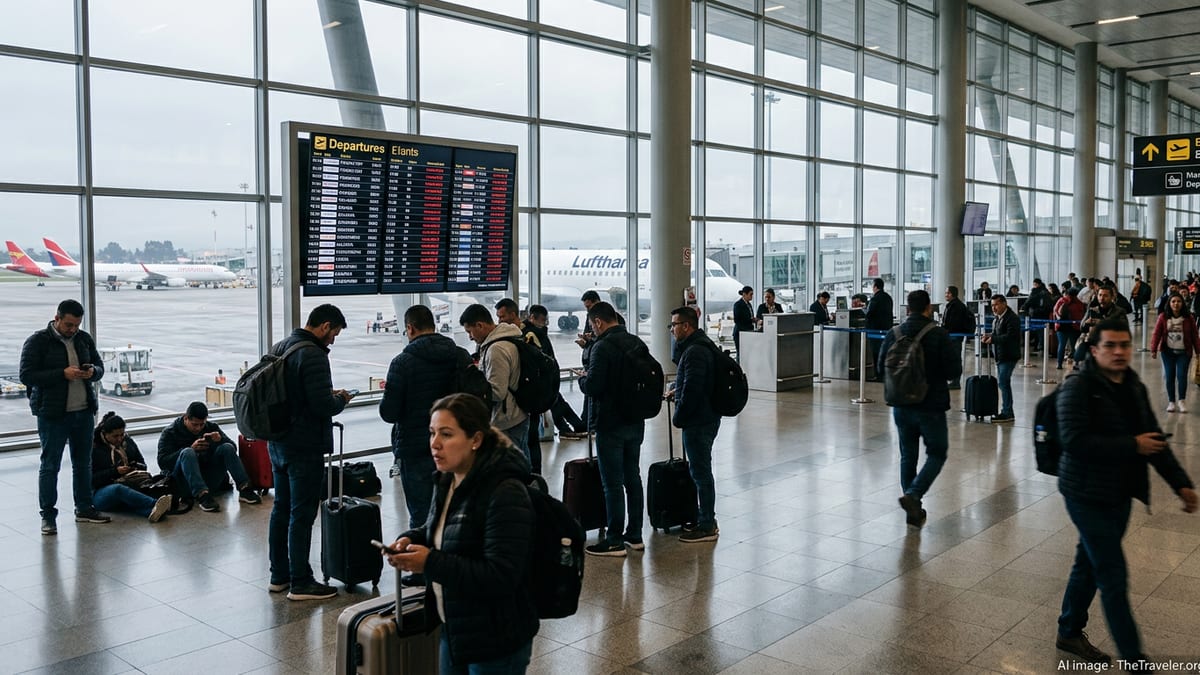
Wave of Cancellations Hits Colombia’s Main Gateways
The latest disruption began unfolding late Tuesday, March 11 and into Wednesday, March 12, as airlines trimmed schedules at short notice across several Colombian airports. Operational issues, lingering crew imbalances and knock-on effects from earlier weather and congestion in North America and Europe combined to create a patchwork of cancellations rather than a single, clearly defined event.
At Bogotá’s El Dorado, Colombia’s busiest airport, multiple departures and arrivals to and from major regional hubs were removed from boards, including selected services to Medellín, Cali and Lima. Similar patterns were reported at Medellín and Cali, where domestic trunk routes feeding Bogotá and onward international connections bore the brunt of the cuts.
While the total number of cancelled flights remains fluid, airport and passenger reports point to more than a dozen affected services within a 24 to 36 hour window, enough to trigger missed connections, crowded rebooking desks and mounting frustration among travelers who had assumed the worst of the post-pandemic turmoil was behind them.
Transatlantic and U.S. Links Disrupted
The disruption has been particularly acute on long-haul and U.S.-bound services that rely on tight connection windows. Lufthansa’s nonstop Bogotá–Frankfurt link, a key bridge between Colombia and continental Europe, saw at least one rotation scrubbed, forcing passengers onto later departures or complex routings via other European hubs.
Northbound, Delta and Spirit registered cancellations on selected services touching Colombia and major U.S. gateways including Atlanta and Orlando. Delta’s Atlanta hub is a prime connecting point for travelers from Cartagena, Bogotá and other Colombian cities, while Spirit and LATAM have aggressively marketed Colombia–Florida routes to leisure and visiting-friends-and-relatives travelers. Even a handful of cancellations on these dense corridors can cascade into missed onward flights across the United States.
Southbound flows were also affected. Connections via Lima, traditionally an important transfer point between Colombia, the southern cone and North America, were disrupted after a series of cancellations and delays in Peru and neighboring countries in recent days, adding yet another layer of complexity for itineraries stitched together across multiple carriers.
Domestic Trunk Routes Under Strain
Inside Colombia, Avianca and LATAM shouldered most of the pressure as they worked to consolidate passengers from cancelled flights onto remaining services. Trunk routes such as Bogotá–Medellín and Bogotá–Cali, usually boasting multiple daily frequencies, became chokepoints as one or two cancellations per city pair pushed remaining flights close to capacity.
For passengers originating in secondary cities like Pasto, Barranquilla or Pereira, the impact was magnified. Many rely on a single daily or less-than-daily link to Bogotá or Medellín in order to connect to international flights. When those feeder legs are cancelled, same-day alternatives are limited or nonexistent, forcing overnight stays and last-minute hotel searches near major airports.
Airlines have emphasized that most passengers are being re-accommodated, often on same-day departures. However, with school holidays starting in some markets and business travel slowly recovering, spare seats on popular routes are scarce, which can push rebooked itineraries back by 24 hours or more.
Airlines Cite Operational Pressures, Urge Passengers to Check Status
Carriers affected by the latest disruptions have pointed to a familiar mix of causes: crew scheduling constraints, aircraft rotations affected by earlier storms in North America and Europe, and persistent congestion at large hubs. For airlines operating lean post-pandemic schedules, even minor glitches can translate quickly into outright cancellations when no spare aircraft or crews are available.
Avianca, LATAM, Delta, Spirit and Lufthansa have all reiterated guidance urging passengers to monitor their flight status repeatedly on the day of travel, use airline apps where possible, and arrive at the airport with extra time to manage last-minute changes. Same-day change and rebooking policies, often relaxed during major disruption events, remain the primary tools airlines are using to keep itineraries intact.
Consumer advocates note that in many cases, travelers are entitled to meals, hotel accommodation or refunds when flights are cancelled, though specific rights vary depending on the country of departure and the operating carrier. They advise passengers to keep boarding passes, booking confirmations and receipts for incidental expenses in case claims are needed later.
What Travelers Should Do Now
With schedules still in flux across Colombia and neighboring countries, travelers holding tickets over the next several days are being urged to treat their itineraries as provisional rather than fixed. Checking flight status the evening before departure and again before leaving for the airport is now essential, especially for those connecting in Bogotá, Lima, Orlando, Atlanta or Frankfurt.
Experts recommend building longer connection windows when booking new trips touching Colombia in the short term, even if it means spending additional time in transit. Opting for through-tickets on a single airline or within the same alliance can also make it easier to be reprotected when irregular operations strike, since carriers have more flexibility to reroute passengers on their own networks.
For travelers already stranded, the most effective strategies remain straightforward but time-consuming: join the line at the airport desk while simultaneously calling the airline on a mobile phone, and consider contacting the airline through social media or app chat functions to increase the chances of a faster rebooking. Travel insurance or premium credit card protections may help with hotels, meals and replacement flights in cases where airline support falls short.
Although the current wave of cancellations is not on the scale of previous nationwide shutdowns, it underscores just how fragile regional connectivity remains between Colombia, the United States and Europe. For now, anyone flying these routes should pack patience along with their passport.