

More news on this day
Travelers flying between Colombia and the United States are facing fresh disruption after more than a dozen flights operated by Avianca, United Airlines, and other carriers were canceled or significantly delayed on key routes connecting Bogotá, Medellín, Cali, Newark, and additional cities, according to airport boards and airline status pages.
Get the latest news straight to your inbox!
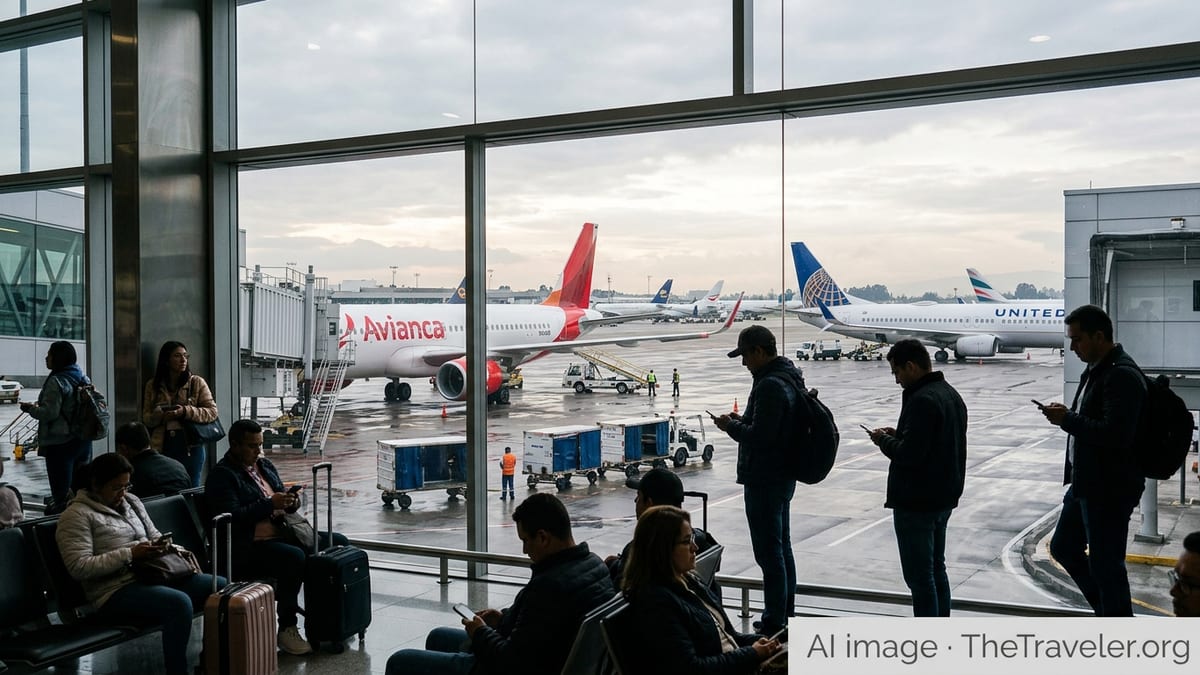
Widespread Cancellations Disrupt Key Colombian Hubs
Publicly available flight-status data on March 21 indicates that a cluster of cancellations and extended delays has emerged across Colombia’s main international gateways, including Bogotá’s El Dorado International Airport, Medellín’s José María Córdova International Airport, and Cali’s Alfonso Bonilla Aragón International Airport. The disruptions affect both domestic and international services, with a noticeable concentration on links to the United States.
Routes between Colombia and the New York metropolitan area, particularly to Newark Liberty International Airport, appear among the most affected. Several services operated by Avianca and United between Bogotá and Newark, as well as connections involving Medellín and Cali, have been marked canceled or retimed at short notice, leaving passengers scrambling to rearrange travel plans.
The latest disruption comes at a time when Colombia’s aviation market has been rebuilding capacity after recent airline exits and structural changes. With fewer carriers sharing key routes, schedule adjustments by major players such as Avianca and United can be felt more sharply across the network, especially on heavily traveled business and family-visit corridors.
Operational Pressures Behind the Latest Wave of Disruption
Reports from airline operations updates and industry briefings point to a mix of operational and external factors behind the most recent cancellations. Weather-related constraints in the North American Northeast, ongoing air traffic control pressures, and knock-on effects from broader geopolitical concerns in regional airspace have all contributed to tighter operating margins for airlines flying between the United States and northern South America in early 2026.
Analysts note that when conditions tighten, long-haul and transborder services can be particularly vulnerable. To preserve key departure slots at major hubs such as Newark, carriers may consolidate or cancel selected frequencies, especially on days when aircraft and crew rotations are already under strain. This can quickly cascade into multiple cancellations across interconnected routes, including those linking Bogotá, Medellín, and Cali with U.S. cities.
Colombia’s complex geography and limited long-distance ground transport alternatives heighten the impact of any disruption to air travel. With mountain ranges separating major cities and long road journeys between economic centers, cancellations on short- and medium-haul flights can eliminate the most practical travel option for many passengers, increasing the urgency for prompt rebooking.
What Travelers on Affected Routes Are Experiencing
Passengers scheduled to fly between Colombia and Newark, as well as those connecting onward through Bogotá, Medellín, and Cali to other U.S. and regional destinations, have reported encountering last-minute schedule changes during check-in or while monitoring flights online. Same-day cancellations and rolling delays have led to missed connections, extended airport waits, and overnight stays for some travelers.
Travel disruption has been particularly challenging for those relying on tightly timed itineraries that connect domestic Colombian flights with international long-haul services. When an early leg between cities such as Cali and Bogotá is canceled, passengers may lose onward seats to destinations like Newark or other U.S. hubs, even if those long-haul flights still operate as planned.
While most airlines provide automated rebooking tools and notifications through apps, email, and text, the volume of affected travelers can lengthen call center and airport desk wait times. As a result, many passengers are turning to mobile self-service channels to adjust itineraries, monitor alternatives in real time, and secure remaining seats on later departures.
Guidance for Travelers Heading to or from Colombia
Given the current pattern of disruption, travelers planning trips to or from Colombia in the coming days are being urged by consumer travel advocates and published advisories to monitor their reservations frequently. Checking flight status beginning 24 hours before departure and again before leaving for the airport can help reduce the risk of arriving to find a canceled or significantly delayed flight.
Flexible ticket policies and travel waivers, when available, can provide options to move trips by a day or reroute through alternative hubs without additional change fees. Passengers are encouraged to review the latest conditions on airline booking platforms, where many carriers outline rebooking windows, fare rules, and any temporary flexibility in response to operational challenges.
Travelers with essential time-sensitive commitments, such as onward international connections or events, may wish to build in longer layovers through Bogotá, Medellín, or Cali, or consider earlier departure dates where schedules allow. Allowing more buffer between flights can reduce exposure to cascading delays that might otherwise disrupt multi-leg journeys between Colombia and cities like Newark.
How the Disruptions Fit into Colombia’s Changing Air Travel Landscape
The current cancellations are unfolding against a broader backdrop of transition in Colombia’s air travel market. In recent years, the withdrawal or downsizing of several low-cost competitors has left major full-service carriers with a larger share of domestic and international traffic, particularly on trunk routes linking Bogotá with Medellín, Cali, and key foreign hubs.
Industry data released over the past year indicates that Avianca has expanded its domestic capacity in Colombia, while U.S. carriers including United have pursued targeted growth on high-demand international city pairs. This has helped restore connectivity after earlier pandemic-era and structural disruptions, but it has also made these airlines more central to the system, increasing the stakes when they consolidate schedules or face operational headwinds.
For travelers, the latest wave of cancellations serves as a reminder that Colombia’s connectivity, while significantly improved from the depths of the pandemic, remains sensitive to regional weather, infrastructure, and geopolitical dynamics. Keeping itineraries flexible where possible, staying informed about evolving conditions, and having backup plans for critical trips can help mitigate the impact of sudden changes on routes linking Bogotá, Medellín, Cali, Newark, and other major cities.