

More news on this day
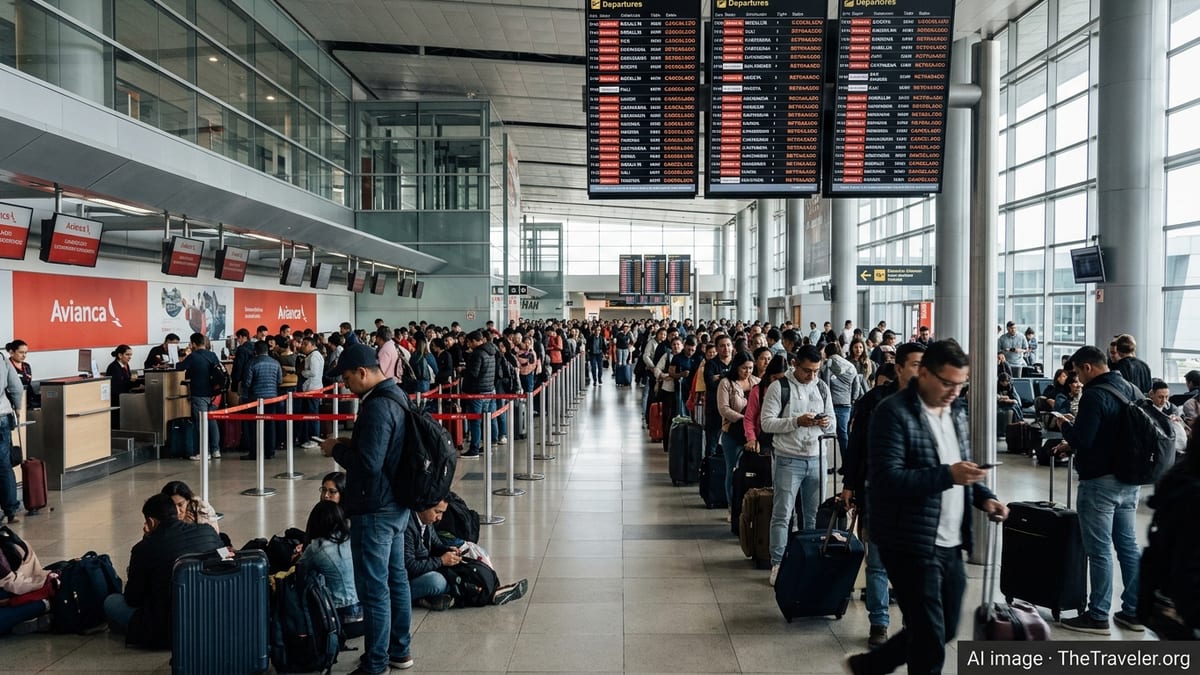
Hundreds of air passengers were left stranded across Colombia over the weekend as Avianca, LATAM Colombia, Air Canada, JetSMART and several other carriers reported 77 delays and 43 cancellations affecting key routes through Bogotá, Medellín and Bucaramanga, according to live flight-tracking data and local media coverage.
Get the latest news straight to your inbox!
Wide Disruptions Across Three Major Colombian Cities
The latest operational disruption unfolded on routes linking Bogotá, Medellín and Bucaramanga, three of Colombia’s busiest air hubs. Publicly available flight-monitoring data and Colombian news reports indicate that dozens of services were delayed or cancelled over a short window, leaving terminals crowded with passengers seeking rebooking options.
At El Dorado International Airport in Bogotá, the country’s primary aviation gateway, a cluster of late-running domestic and regional flights built up through Saturday night and Sunday morning. Routes to and from Medellín’s José María Córdova International Airport and Bucaramanga’s Palonegro International Airport were among those showing prolonged delays and last-minute cancellations.
In total, around 77 flights were reported delayed and at least 43 cancelled across multiple operators serving the three cities. These disruptions affected both early-morning departures and evening connections, complicating onward travel plans for tourists, business travellers and residents returning home after the weekend.
Although the precise breakdown by carrier has varied across tracking platforms, Avianca, LATAM Colombia, Air Canada and JetSMART were among the airlines most visibly impacted on Colombia’s core trunk routes, alongside several regional operators that provide feeder services into Bogotá.
Avianca and Codeshare Partners Hit on Key Trunk Routes
Avianca, Colombia’s largest airline, recorded some of the most significant operational issues on short-haul flights linking Bucaramanga and Bogotá. Flight histories for the Bucaramanga–Bogotá corridor show repeated cancellations and heavy delays over several consecutive days, including services marketed by Air Canada under a codeshare arrangement.
One regularly scheduled early-morning Avianca departure from Bucaramanga to Bogotá, also sold as an Air Canada flight, was listed as cancelled on multiple recent dates, following an earlier pattern of extreme delays on the same route. Travellers booked on these flights faced abrupt changes at the airport, often with limited immediate alternatives due to high demand on remaining services.
Delays have also been visible on Avianca’s international links into Bogotá, where extended late arrivals can cascade into missed connections for passengers heading onward to secondary Colombian cities. Flight-tracking data for routes into El Dorado show some services operating significantly behind schedule, tightening turnaround times and increasing the risk of rolling disruption across the network.
For passengers, the combination of outright cancellations and sustained delays led to long queues at check in and customer service counters, as travellers sought rebooking, hotel vouchers or information on their rights under airline policies and Colombian consumer regulations.
LATAM Colombia and JetSMART Weather Operational Strain
LATAM Colombia, which shares several core domestic routes with Avianca, has also experienced strains on flights between Bogotá and Medellín and other high-frequency sectors. Historic performance data for the Bogotá–Medellín corridor indicate that this route has been prone to significant average delays, reflecting its heavy utilisation and sensitivity to congestion and weather conditions.
On services involving Medellín and connections beyond, LATAM’s recent schedules show occasional late operations that can ripple across same-day rotations. Although many flights have continued operating close to timetable, the cumulative effect of even moderate delays on such a dense route structure can contribute to a broader pattern of disruption when paired with cancellations by other carriers.
JetSMART, a low-cost entrant in the Colombian market, has been ramping up operations on several domestic routes, including services touching Bogotá and, in the coming months, Bucaramanga. While its current schedule remains more limited than those of established incumbents, its inclusion among the operators affected by the latest wave of delays underscores how closely interconnected Colombia’s domestic aviation network has become.
With multiple airlines vying for similar slots and routes, any operational challenge faced by one carrier, such as a delayed departure from a congested airport, can quickly affect ground handling capacity and runway availability for others, exacerbating bottlenecks during peak hours.
Local Conditions in Bucaramanga Add to Passenger Woes
Conditions around Bucaramanga’s Palonegro International Airport have introduced an additional layer of complexity. Recent Colombian media coverage has described public-order issues and road blockages on key access routes to the airport, restricting the movement of aviation staff and passengers and prompting schedule adjustments by airlines serving the region.
LATAM Colombia has publicly outlined temporary flexibility measures for travellers whose flights involve Bucaramanga, citing the impact of the local situation on airport operability. These measures have included options to change flights without standard penalties or fare differences within a limited rebooking window, subject to seat availability on alternative services.
For travellers already en route or arriving at Palonegro during the disruptions, the combination of access difficulties, cancellations and late-running flights translated into extended waits in terminals and uncertainty about whether departures would proceed as planned. Some passengers resorted to overland travel to major hubs such as Bogotá and Medellín to salvage international connections that could not be reprotected same day.
The events at Bucaramanga highlight how non-technical factors, including protests or road closures far from runways, can significantly affect the ability of airlines to maintain regular schedules, even when aircraft and crews are otherwise positioned to operate.
Travellers Face Long Queues, Rebookings and Missed Connections
Across Bogotá, Medellín and Bucaramanga, passengers caught up in the wave of 77 delays and 43 cancellations reported long waits for information and rebooking assistance as airlines worked to consolidate services and free up seats on later departures. The impact was felt most acutely by travellers with tight connection times, especially those linking domestic legs to international flights.
For some, missed onward flights required same-day hotel stays and complex re-routing through alternative hubs, increasing travel times by many hours or, in some cases, pushing arrivals back by an entire day. Families travelling with children and older passengers were particularly exposed to the practical challenges of extended airport stays and overnight schedule changes.
Consumer information published by airlines and travel-rights organisations stresses that travellers facing significant delays or cancellations should document disruption times, keep receipts for out-of-pocket expenses, and closely review each carrier’s policy on compensation, rebooking and care. In Colombia, passenger protections may vary depending on whether flights are domestic or international, and whether disruptions are attributable to operational or extraordinary causes.
As airlines including Avianca, LATAM Colombia, Air Canada and JetSMART continue to adjust schedules and restore regular operations, travellers scheduled to fly through Bogotá, Medellín or Bucaramanga are being advised in public updates to monitor flight-status tools closely and allow additional time at the airport in case further knock-on delays emerge.