

More news on this day
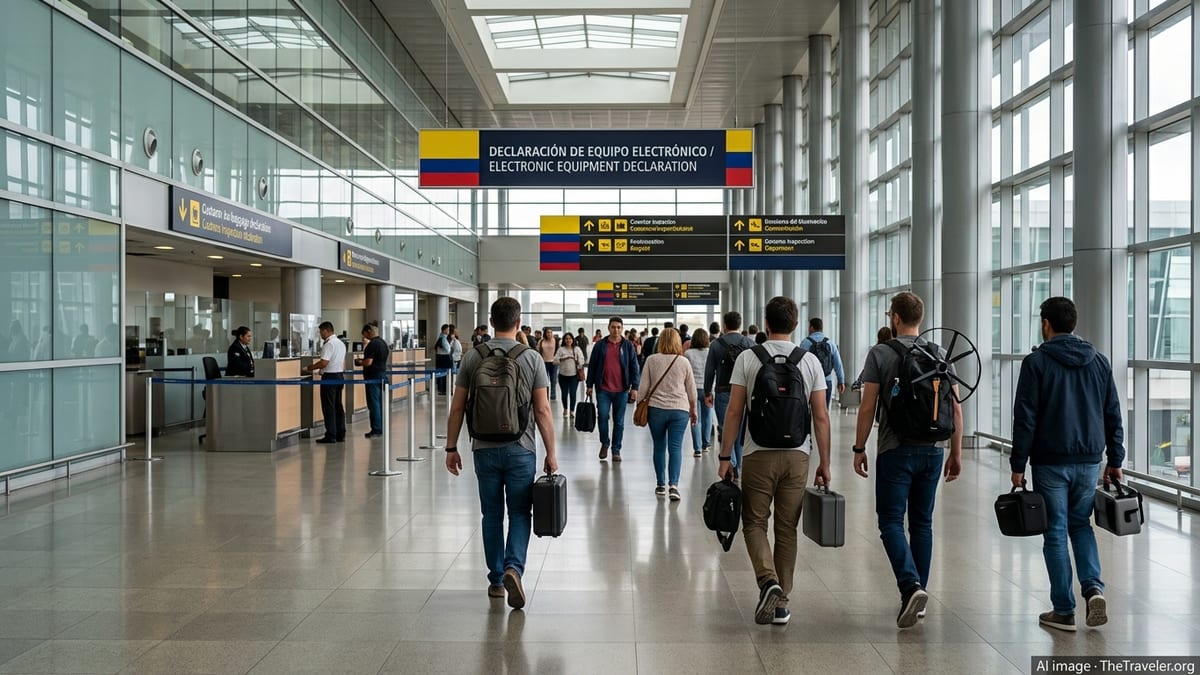
Colombia has introduced tighter controls on drones entering the country, concentrating passenger arrivals through Bogotá’s El Dorado International Airport and requiring travelers to make more detailed customs declarations about their equipment and how it will be used.
Get the latest news straight to your inbox!
New Customs Controls Focused on Drone Security
Publicly available information from Colombia’s tax and customs authority, DIAN, and recent industry bulletins shows that drones are now subject to enhanced scrutiny when entering the country. New measures adopted in late 2025 and entering into force in early 2026 restrict most drone imports to just two authorized entry points, with El Dorado International Airport in Bogotá designated as the primary gateway for travelers arriving with remotely piloted aircraft.
Reports indicate that the tighter rules are part of a broader security response to concerns about the misuse of commercial drones, including their adaptation for surveillance and improvised aerial attacks. Customs and defense authorities have moved to curtail untracked imports, particularly those arriving by mail or express courier services, while preserving a controlled channel for individual travelers and authorized importers at El Dorado and the seaport of Cartagena.
Specialist trade and logistics advisories describe a more robust risk management approach at El Dorado’s customs area, with drones, their parts and accessories treated as sensitive goods. The objective is to ensure that each incoming device can be identified, linked to a responsible person or entity, and cross-checked against aviation and security regulations before it enters Colombian territory.
El Dorado Now the Main Entry Point for Passenger Drones
According to recent customs circulars and trade briefings, international passengers who wish to bring a drone into Colombia by air are now directed almost exclusively through El Dorado International Airport. Guidance distributed to airlines and freight forwarders notes that drones arriving with travelers are to be processed by the Bogotá – El Dorado Airport Sectional Customs Directorate, which centralizes oversight and inspection.
Reports on the new regime state that travelers who attempt to enter the country with drones through other airports face a high likelihood of having the equipment held or denied entry. At the same time, the new framework limits the arrival of drones by postal shipments and express cargo, reflecting a policy shift toward physical inspection at a small number of controlled points rather than dispersed entry across many facilities.
Airline travel updates targeting passengers heading to Colombia now highlight that drones can be transported only through El Dorado when arriving by air. These notices suggest that carriers are adjusting their own procedures, advising customers to verify that their equipment complies with Colombian requirements and is correctly declared before boarding flights bound for Bogotá.
What International Travelers Must Declare
While Colombia’s general rules for baggage declarations still rely on DIAN’s standard Form 530 for travelers, recent guidance emphasizes that drones now fall within a category of goods that may require specific disclosure at the time of entry. Information distributed through customs advisories and airline channels indicates that travelers should be prepared to declare the presence of a drone, its approximate value, and whether it is intended for personal, artistic, professional or commercial use.
Publicly available material on DIAN’s traveler pages explains that passengers must submit their goods to customs inspection and comply with additional requirements set by other Colombian agencies. In the case of drones, that means customs officers may verify not only value and quantity, but also whether the equipment is subject to registration with the national civil aviation authority, known as Aerocivil, and whether it qualifies as a personal item or a formal import.
Trade compliance firms summarizing the new policy note that an advance import declaration is now required for many drone shipments, particularly for importers bringing in multiple units or higher-value models and components. Although individual tourists carrying a single recreational drone may not need to file a full commercial declaration, they are still expected to be transparent with customs about the device and to follow any instructions provided at the inspection point.
Interaction with RAC 100 Drone Aviation Rules
The tightened border controls coincide with a broader modernization of Colombia’s drone aviation framework under the RAC 100 regulations adopted by Aerocivil. According to publicly available regulatory documents and national press coverage, RAC 100 establishes a tiered system that distinguishes between recreational, specific and certified operations, and it clarifies when a drone must be registered, the conditions for flight and the obligations of operators.
Current regulatory material indicates that drones above a specified weight threshold, generally around 200 grams, must be registered in Aerocivil’s database before they can be flown in Colombia, even for noncommercial purposes. Media summaries of RAC 100 add that heavier drones or those used for professional or industrial activities may face additional requirements, including operational authorization, pilot competence and insurance.
Recent Colombian news coverage has highlighted enforcement actions tied to RAC 100, including potential fines for unregistered drones or flights that disregard no-fly zones, altitude limits and distance requirements from people and infrastructure. For international visitors, the combination of border controls at El Dorado and RAC 100’s operational rules means that compliance starts at the customs checkpoint and continues throughout any planned flights in Colombian airspace.
Practical Steps for Visitors Planning to Fly Drones in Colombia
Travel and legal advisories recommend that prospective drone operators research both customs and aviation rules before traveling to Colombia. Passengers are encouraged to confirm the exact model and weight of their drone, verify whether it meets or exceeds Aerocivil’s registration thresholds, and ensure that any required serial numbers, purchase invoices or ownership documents are on hand when passing through El Dorado.
Guidance aimed at international travelers also stresses the importance of accurately describing the intended use of the drone. A traveler using a small quadcopter for personal photography may be treated differently from a professional filming a documentary or conducting aerial surveys, and misrepresenting the purpose of the equipment at customs inspection could lead to penalties or seizure.
Once in the country, publicly accessible RAC 100 materials and Colombian media coverage underline that operators must respect local restrictions, including bans on flying near airports, military facilities and crowds, along with altitude and line-of-sight limitations. Visitors are advised to check local bylaws or municipal guidance in destinations such as Bogotá, Medellín, Cartagena and coastal or national park areas, where additional constraints may apply.
Overall, the updated entry rules at El Dorado, combined with Colombia’s evolving drone aviation framework, point to a more controlled environment for unmanned aircraft. Travelers who plan ahead, declare their equipment honestly and align their flights with RAC 100 provisions are more likely to enjoy Colombia’s landscapes from the air without encountering delays or sanctions.