

More news on this day
Colombia’s busy air corridors are facing renewed disruption as publicly available data and local media tallies point to 145 delayed flights and 10 cancellations affecting services by LATAM Colombia, Avianca and other carriers at the airports of Bogotá, Bucaramanga and Barranquilla.
Get the latest news straight to your inbox!
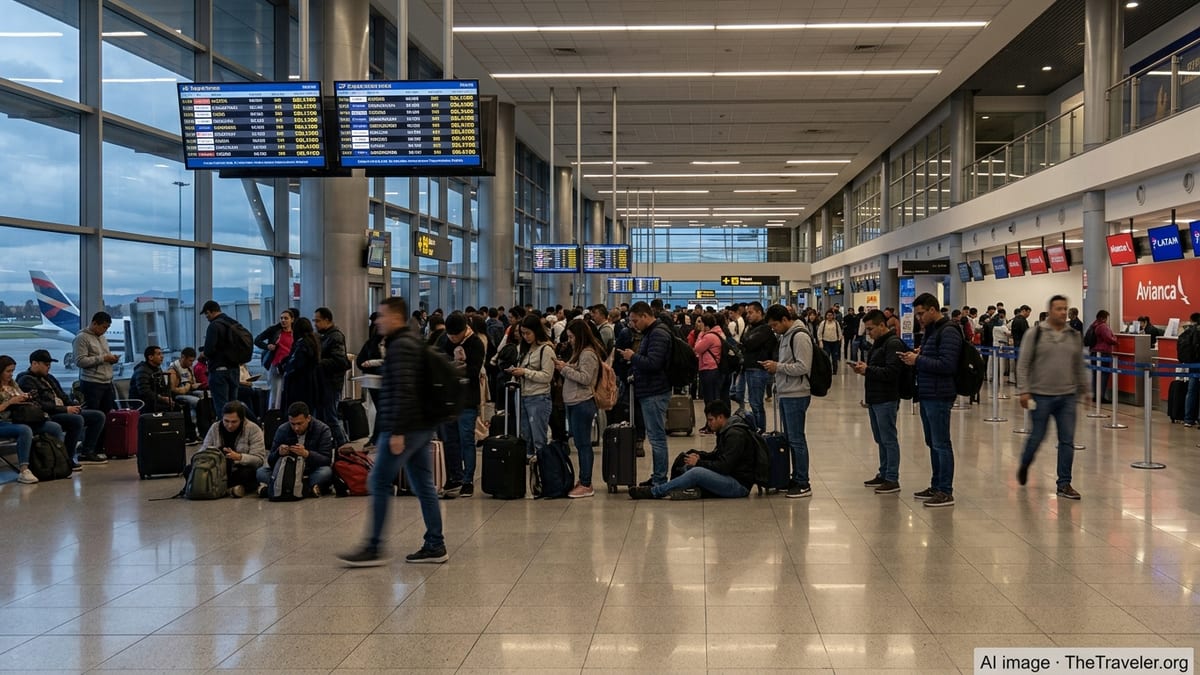
Operational Snags Ripple Across Colombia’s Main Hubs
The latest disruption centers on El Dorado International Airport in Bogotá, Palonegro International Airport serving Bucaramanga, and Ernesto Cortissoz International Airport in Barranquilla, three airports that together handle a significant share of Colombia’s domestic and regional traffic. According to published coverage tracking airport operations, a combination of delays and cancellations has created bottlenecks that are affecting both local travelers and international visitors transiting through these hubs.
Reports indicate that flights operated by LATAM Colombia, Avianca and several smaller domestic airlines have been particularly affected, with schedules bunching up in peak periods and knock-on delays spreading throughout the day. While the headline figure of 145 delays and 10 cancellations captures a snapshot of one difficult operational window, schedule data and recent passenger accounts point to a broader pattern of strain in Colombia’s busy skies.
Airlines have been working within the constraints of congested airspace, tight turnaround times and weather variability across the Andes and Caribbean coast. These pressures are magnified at Bogotá, where the airport already ranks among the region’s most congested and small disruptions can quickly cascade across the national network.
Bogotá’s El Dorado Under Pressure as National Gateway
El Dorado International Airport functions as Colombia’s primary gateway and the main connecting point for domestic flights linking major cities such as Medellín, Cali, Bucaramanga and Barranquilla. Publicly available timetables show that both Avianca and LATAM Colombia operate dense shuttle-style frequencies through Bogotá, which makes the airport especially vulnerable when aircraft or crews fall out of position.
Recent traveler reports shared on public forums describe extended waits on the tarmac and longer taxi times before reaching a gate at Bogotá, underscoring how limited runway and apron capacity can prolong even minor operational hiccups. When departures are held on the ground in Bogotá, connecting flights onward to secondary cities quickly accumulate delays, inflating the totals now drawing attention.
The situation has also raised concerns for international passengers using Bogotá as a transfer point. Connections to cities like Lima, Mexico City, Miami and Madrid often link onto domestic legs operated by Avianca or LATAM Colombia. If the first flight into Bogotá arrives late or faces congestion-related holds, travelers can miss onward domestic connections, forcing rebookings that add further pressure to already tight schedules.
Regional Impacts at Bucaramanga and Barranquilla
While Bogotá sits at the heart of the disruption, the effects are being clearly felt at Palonegro International Airport, which serves Bucaramanga, and at Ernesto Cortissoz International Airport in Barranquilla. Both airports function as important spokes in Colombia’s domestic network, linking regional centers to the capital and to other coastal or interior destinations.
Palonegro, located in the hills outside Bucaramanga, relies heavily on regular narrow-body and regional jet services from Avianca, LATAM Colombia and low-cost competitors. When aircraft are delayed leaving Bogotá or other hubs, arrivals and departures at Bucaramanga are pushed back, reducing schedule reliability for local business travelers and tourists headed toward Santander’s adventure destinations and colonial towns.
In Barranquilla, the disruptions risk complicating travel at the gateway to Colombia’s Caribbean coast, a region that has been promoting itself aggressively to international visitors. Delayed connections can affect itineraries linking Barranquilla with Cartagena, Santa Marta and inland destinations, limiting flexibility for travelers who often plan tight multi-city routes.
Tourism and Passenger Confidence at Stake
The timing of the operational difficulties is delicate for Colombia’s tourism sector, which has been working to consolidate strong growth in international arrivals and domestic leisure travel. Government reports reviewing tourism activity in recent years highlight the importance of air connectivity for dispersing visitors beyond Bogotá into regions such as Santander, the Coffee Axis and the Caribbean coast.
When clusters of delays and cancellations emerge, even over a short period, they can undermine traveler confidence in tight connections and domestic segments booked separately from long haul tickets. Publicly shared accounts from passengers discussing missed connections, last-minute rescheduling and overnight stays underline how quickly a few hours’ disruption can expand into multi-day itinerary changes.
Travel advisors and frequent visitors commenting in open forums increasingly recommend building longer layovers at Bogotá and avoiding overly tight same-day connections to regional cities. Such shifts in behavior may help individual travelers manage risk, but they also reflect a growing perception that operations remain fragile when demand and weather converge at peak times.
What Travelers Should Consider Now
While airlines continue to adjust their schedules and deploy contingency plans, publicly available guidance and recent traveler experiences suggest several practical implications for anyone planning trips through Bogotá, Bucaramanga or Barranquilla. Passengers with domestic connections in Colombia may wish to favor itineraries with more generous connection times, even if that means longer waits in transit.
Travelers whose plans depend on precise arrival times for events, business meetings or tightly packed tours may also want to schedule key commitments a buffer day after complex routings that require multiple domestic legs. By allowing extra time, visitors can absorb potential delays similar to those reflected in the latest tally of 145 disrupted flights and 10 cancellations.
Looking ahead, Colombia’s efforts to strengthen tourism and regional development remain closely tied to the reliability of its air network. As airlines refine operations and infrastructure projects progress, the experience of these latest disruptions serves as a reminder that congestion, operational constraints and unpredictable weather continue to shape the travel reality across one of Latin America’s busiest aviation markets.