

Colorado’s highways are some of the most spectacular in North America, but they are also among the most demanding. High-altitude passes, sudden snow squalls, and strict winter traction laws mean that a memorable mountain drive requires more than just a tank of gas. Whether you are cruising a summer byway or threading your way up an icy canyon in January, understanding the roads and the rules is essential.
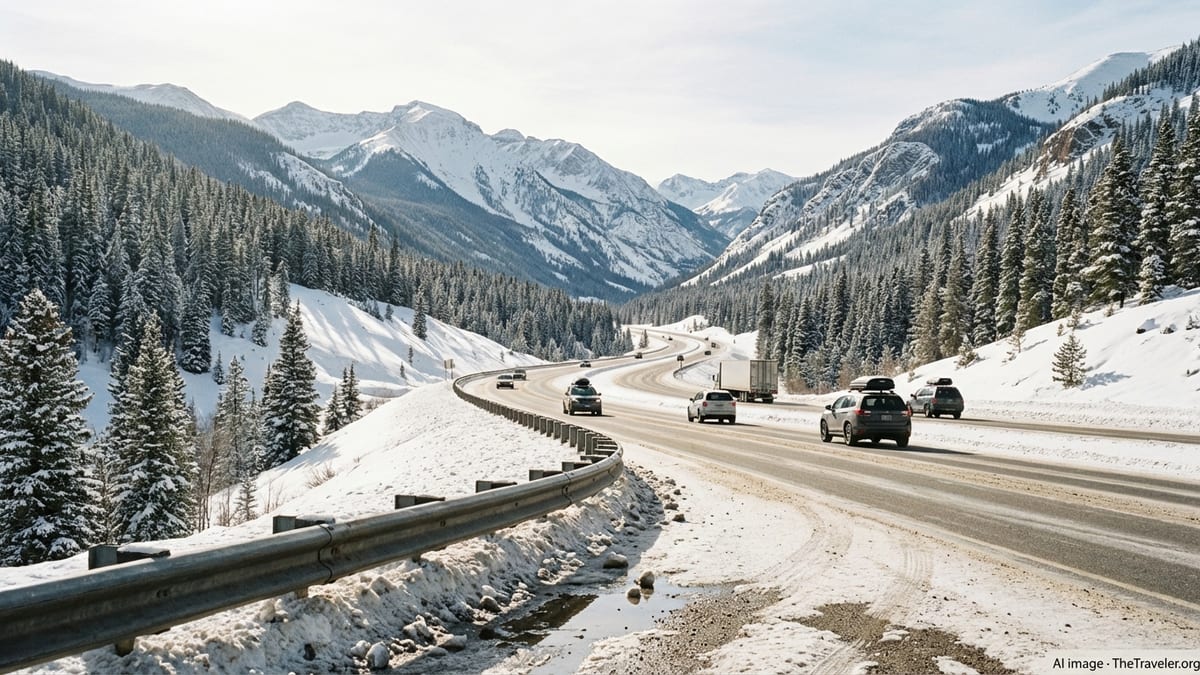
Colorado’s Mountain Roads: Beauty With Real Bite
From the high spine of the Rockies to red-rock canyons and open ranch country, Colorado’s roads offer an ever-changing backdrop of peaks and big sky. Elevations routinely top 10,000 feet on the state’s marquee routes, and some popular passes exceed 12,000 feet. That altitude brings thinner air, cooler temperatures, and a volatility in weather that can catch even experienced drivers off guard. A sunny morning in Denver can correspond with heavy snow and whiteout conditions on a nearby pass only a couple of hours later.
These extremes give the state’s highways their drama, but they also explain why winter driving rules are stricter here than in many other parts of the United States. Road crews battle frequent freeze-thaw cycles, drifting snow, and steep grades that can turn slick quickly. Drivers who arrive with worn tires or no chains are not just endangering themselves; they can bring a busy mountain corridor to a standstill. As a result, Colorado has steadily tightened its winter traction and chain requirements over the past few seasons.
For visitors, especially those flying in for ski trips, the mix of scenic promise and legal obligation can be confusing. Rental counters may be busy, weather forecasts may be changing by the hour, and different rules can apply on different stretches of highway. Understanding how the system works before you arrive is the best way to enjoy those sweeping alpine views without stress.
This guide focuses on two pillars of a successful Colorado road adventure: choosing and timing your scenic routes, and staying compliant with the latest winter traction and chain laws. Together, they form the foundation of a trip that is both unforgettable and safe.
Signature Scenic Highways and When to Drive Them
Colorado’s showcase drives are split between year-round corridors, which are engineered and maintained for winter conditions, and seasonal mountain roads that normally close once snowpack becomes unmanageable. Many of the most spectacular byways fall into the latter category, generally opening in late May and closing again sometime between late October and early November, depending on the year’s snowfall and spring melt.
Trail Ridge Road in Rocky Mountain National Park is the best-known example. Topping out at over 12,000 feet, it is one of the highest continuous paved roads in the United States and usually opens around the last week of May. In a typical season it remains drivable through early fall before repeated storms force a winter closure. Independence Pass between Aspen and Twin Lakes follows a similar pattern. Crews usually target an opening around Memorial Day weekend and then maintain the narrow, twisting road until accumulating early winter storms, often in late October or early November, make it unsafe to keep clear.
Other beloved seasonal passes have comparable rhythms. Cottonwood Pass near Buena Vista commonly opens in May and closes again in late October or early November. Guanella Pass, connecting Georgetown and Grant, tends to mirror that Memorial Day to late-fall window. Gravel-heavy or partially unpaved routes such as Kebler Pass near Crested Butte can be more variable; they may open a bit later if the spring is wet and are often the first to become difficult once autumn storms arrive. In addition, some popular high routes, such as the Mount Blue Sky Scenic Byway, can be affected by long-term construction or maintenance projects and may remain closed through an entire summer season.
By contrast, major interstates and key U.S. highways, including Interstate 70 across the mountains and U.S. 550 between Durango and Ouray, are open year-round except during active storm closures or serious incidents. These roads are heavily patrolled and plowed, with avalanche control and sand or de-icing operations running through most winter weather events. Even so, conditions can deteriorate quickly, and short-term closures for crashes, spinouts, or avalanche mitigation are not unusual.
Driving the Icons: I-70, Million Dollar Highway and Beyond
Interstate 70 is Colorado’s main artery through the Rockies and the focus of many of the state’s strictest winter rules. The 120-mile mountain stretch between Morrison, on Denver’s western edge, and Dotsero near Glenwood Canyon climbs over high passes and threads through narrow canyons. This corridor links the Front Range to major ski destinations, so traffic volumes surge on winter weekends and holidays. Steep grades, frequent storms, and a mix of rental cars, locals, and heavy trucks mean that a single unprepared vehicle can cause hours of backup.
To the southwest, U.S. 550 between Durango and Ouray carries a different kind of reputation. Often called the Million Dollar Highway, this route clings to canyon walls and negotiates steep, twisting climbs with limited guardrails and long drop-offs. It is a fully maintained state highway but feels closer to a high pass in places, especially in winter when snowbanks edge the pavement. Unlike purely seasonal passes, U.S. 550 is maintained year-round, yet closures for storms or slide mitigation are not unusual, and traction laws can activate here as conditions demand.
Other notable drives include U.S. 285, which climbs southwest from Denver toward Fairplay and beyond, and U.S. 50 over Monarch Pass between Salida and Gunnison. These routes offer big mountain scenery but are also key freight and commuter paths, so they combine local traffic, tourists, and long-haul trucks. The result is a road culture shaped by both scenery and necessity. Being the slow, under-equipped vehicle on a steep grade not only feels stressful; it can carry legal and financial consequences under Colorado’s evolving traction rules.
For visitors seeking quieter scenic alternatives, roads like Colorado Highway 9 between Frisco and Fairplay or state highways around South Park and the San Luis Valley provide broad vistas with somewhat less pressure than the main interstate. Even on these less-trafficked roads, however, winter storms can move in quickly, and the same statewide traction standards apply when conditions warrant.
Understanding Colorado’s Winter Traction Law
In response to years of winter crashes and long holiday backups, Colorado has strengthened its traction and chain requirements for passenger vehicles. The core principle is straightforward: if you are traveling during the snowy season, your vehicle must be ready for winter conditions, particularly in the mountains. Mountain drivers have long known this, but many of the rules are now embedded in law and enforced with fines that can climb into the hundreds of dollars.
The state’s Passenger Vehicle Traction Law allows transportation officials to require that all non-commercial vehicles on affected highways use adequate winter equipment whenever road conditions deteriorate. In practice, this means that drivers must be prepared to meet specific standards for tires and, in some cases, to install chains or an approved traction device. The law applies to all passenger cars, SUVs, and light trucks, including rental vehicles, when it is activated. It is not limited to Colorado residents; visiting drivers are subject to the same expectations.
On the busy I-70 mountain corridor between Morrison and Dotsero, a more specific framework is now in place. From early September through the end of May, the traction law is considered to be in effect seasonally, and passenger vehicles are expected to carry the right equipment throughout that window. All-wheel drive and four-wheel drive vehicles must be fitted with winter, all-weather, or mud and snow tires that have a tread depth of at least approximately 3/16 of an inch. If they do not meet that standard, drivers are expected to use chains or an alternative traction device on at least two drive wheels when conditions worsen.
The state has gone a step further for two-wheel drive cars and trucks on the same corridor. Recent changes require those vehicles to carry chains or an external traction device between Morrison and Dotsero during the September to May season and to use them when authorities declare chain conditions. In practice, this means that a front-wheel or rear-wheel drive vehicle heading to a mountain resort is expected to arrive at the corridor already equipped with chains in the trunk or a functionally equivalent traction aid. Driving into an active snowstorm without that backup now risks on-the-spot fines and, more importantly, the chance of losing control on icy grades.
Chain Laws for Commercial and Recreational Heavy Vehicles
Colorado has also broadened its chain requirements for commercial motor vehicles and other heavy rigs. Commercial vehicles above a certain weight, including many large recreational vehicles, must now carry tire chains or approved traction devices from early September through the end of May on an expanded network of mountain corridors. These include Interstate 70 west of Morrison, U.S. 285 southwest of the Denver area, U.S. 160 in southern Colorado, U.S. 50 in the central mountains, U.S. 40 over key high-country stretches, U.S. 550 in the San Juan Mountains, and Colorado Highway 9 between Frisco and Fairplay.
When a storm hits and chain law is formally activated, operators of these heavier vehicles are expected to pull into designated chain-up areas and install chains on multiple drive wheels before proceeding. Roadside signs and traffic alerts indicate when chain law is in effect, and enforcement patrols frequently focus on these areas during major winter events. Fines for failing to carry or use chains can be significant, and drivers who end up blocking lanes because they did not chain up face still higher penalties. Those fines can quickly climb into four-figure territory when a stuck vehicle triggers lengthy closures and costly delays.
Even for non-commercial travelers, these rules matter. Motorists sharing the road with semi-trucks and large motorhomes on steep grades are safer when those larger vehicles have enough traction to maintain steady speed and control. Drivers in passenger vehicles should keep their distance from chain-up areas, give trucks space to maneuver, and expect slower speeds on long climbs during active storms. Patience in these zones is a practical safety measure as well as a courtesy.
Recreational vehicle owners and those renting large motorhomes for Colorado trips should pay special attention to the chain rules. Weight thresholds apply to many bigger RVs, and chain-up requirements can be surprising to drivers more familiar with lowland interstates. Checking the vehicle’s weight rating, confirming where chains must be carried, and practicing installation well before a storm are key steps for a smooth mountain journey.
Penalties, Enforcement and How Alerts Work
Colorado’s winter driving laws are backed by a tiered system of fines. A driver caught on a traction-controlled highway without adequate equipment can expect a base fine and surcharge that may exceed one hundred dollars. If the same unprepared vehicle spins out, becomes stuck, or otherwise blocks a lane and forces a closure or major slowdown, penalties escalate substantially, and it is not unusual for total fines to reach several hundred dollars or more. For commercial drivers, the amounts can be higher still, especially when a jackknifed truck closes an interstate corridor.
Enforcement is both visible and subtle. The Colorado Department of Transportation posts traction and chain requirements on overhead message boards, roadside signs, and through traveler information services. During storms, chain-up stations along major corridors become focal points for enforcement patrols. State troopers may conduct periodic operations that focus specifically on whether commercial vehicles are carrying chains in the shoulder season and whether passenger vehicles are properly equipped during active snow events.
For travelers, the most important part of this system is the communication. Before leaving a hotel or rental home, drivers are encouraged to check current highway conditions, paying close attention to notices that the traction law or passenger vehicle chain law is in effect. During fast-changing storms, conditions may tighten from “no restrictions” to full chain requirements in the space of an hour, especially on the I-70 mountain corridor and on steep passes. Being surprised at a chain-up sign with no chains in the trunk is an avoidable scenario.
Visitors should also be aware that local jurisdictions sometimes layer on additional enforcement tools of their own, especially in resort communities heavily affected by winter traffic. While the details vary, the general trend is a growing expectation that anyone driving into the mountains between early autumn and late spring will arrive with winter-ready tires and some form of traction backup.
Practical Winter Driving Tips for Colorado Highways
Legal compliance is the starting point, not the finish line, for safe winter travel in Colorado. Even with the correct tires and chains in the trunk, mountain driving demands a more deliberate, patient approach than many drivers use at lower elevations. The aim is to reduce surprises. That begins with trip planning: choosing daylight hours when possible, building in extra time for slow conditions, and checking both the weather forecast and live road reports for your exact route rather than just your starting city.
Vehicle preparation is equally important. In addition to winter or all-weather tires with healthy tread, travelers should consider carrying a compact shovel, ice scraper, warm clothing, water, and snacks in the vehicle. Windshield washer fluid rated for low temperatures, a full fuel tank before heading into long stretches without services, and a charged phone all provide margin for error if traffic stops or a short closure stretches into a longer delay than expected. At higher elevations, temperatures can drop quickly after sunset, so even a minor incident can be more uncomfortable and risky than it might be in milder climates.
On the road, techniques matter. Smooth, gentle inputs on the steering wheel, accelerator, and brakes help maintain traction on packed snow or black ice. Using lower gears on steep descents can reduce reliance on the brakes and help prevent skids. Leaving significantly more following distance than usual gives time to react if the vehicle ahead loses grip. Passing snowplows is generally discouraged; operators often work in tandem, and the safest place to be is usually behind them, driving on the freshly treated surface at a moderate speed.
Some of the most challenging conditions arise not during heavy snow but just before or after storms, when roads may appear merely wet yet hide patches of ice. Bridges and shaded curves are common trouble spots. If conditions feel worse than expected or your comfort level drops, it is entirely acceptable to slow down well below the posted limit or to pull off at a safe exit and wait for conditions to improve. In Colorado’s mountains, patience is often the most valuable piece of safety equipment you carry.
The Takeaway
Colorado rewards drivers with sweeping views, historic towns, and a sense of scale that is hard to match elsewhere. Yet the same geography that makes the state a dream for road trippers also demands respect. High passes, sudden weather changes, and tight corridors leave little room for error when snow begins to fall. The state’s evolving traction and chain laws are a direct response to those realities, seeking to keep traffic flowing and reduce the number of crashes caused by under-equipped vehicles.
For travelers, the practical message is clear. Time your scenic drives with the season, recognizing that some of the most famous passes are open only from late spring to mid-autumn, while year-round routes into ski country can feel like winter for nine months of the year. Arrive with proper tires, carry chains or an equivalent traction device when the law requires it, and build extra time into your schedule for slow conditions or temporary closures.
With a bit of advance planning and a willingness to drive according to conditions rather than the clock, Colorado’s highways can be both safe and unforgettable. Respect the rules, respect the weather, and the reward is a front-row seat to some of the most dramatic mountain scenery in the United States.
FAQ
Q1. When does Colorado’s winter traction season typically run on I-70?
The key traction window on the I-70 mountain corridor is generally from early September through the end of May, when snow and ice are most likely.
Q2. Do I need chains on a rental SUV with all-wheel drive?
If your SUV has proper winter or all-weather tires with adequate tread, chains are often not required under traction law, but conditions can change, so always confirm current rules before driving.
Q3. Are two-wheel drive cars required to carry chains on I-70?
Recent rules expect two-wheel drive passenger vehicles traveling the I-70 mountain stretch in the snowy season to carry chains or an approved traction device and to use them when chain conditions are declared.
Q4. Can I drive Trail Ridge Road or Independence Pass in winter?
No, these high passes are usually closed for the winter months and typically reopen around late May, staying open only until autumn storms return.
Q5. How can I tell if my tires meet Colorado’s traction standards?
Look for winter, all-weather, or mud and snow markings on the sidewall and ensure your tread depth is around 3/16 of an inch or better for mountain driving.
Q6. What happens if my car causes a closure because it is not equipped for winter?
Drivers who block lanes while improperly equipped can face substantially higher fines than for a basic traction violation, reflecting the cost and disruption of closures.
Q7. Are chain laws only for big trucks and buses?
No, while commercial vehicles face specific chain rules, Colorado also applies traction and, at times, passenger vehicle chain laws to regular cars, SUVs, and light trucks.
Q8. Is the Million Dollar Highway safe to drive in winter?
U.S. 550 is maintained year-round, but its steep grades and exposure mean winter conditions can be demanding, so drivers should be cautious and prepared for sudden weather changes.
Q9. How far in advance are chain or traction restrictions announced?
Restrictions are typically posted as storms develop and may change quickly, so drivers should check official road condition reports shortly before and during their trips.
Q10. If I am uncomfortable driving in a storm, what is the best option?
The safest choice is often to delay travel, pull off at a safe exit, or wait in a town until conditions improve rather than pressing on in poor visibility or on icy pavement.