

Hong Kong is one of Asia’s easiest big cities to navigate, yet many first-time visitors still run into the same avoidable problems. From money mishaps and transit confusion to cultural missteps and poor itinerary planning, these mistakes can make an otherwise smooth trip feel frustrating and expensive. With a little foresight, you can move around the city like a seasoned local and focus on what matters most: dim sum, skyline views and the city’s remarkable energy.
Misreading Money: Cash, Cards and the Octopus Confusion
One of the most common surprises in Hong Kong is how fragmented payments can feel. Visitors often assume that credit cards or mobile wallets will be accepted everywhere, only to discover that many small noodle shops, cha chaan teng cafes, wet markets and older taxis still prefer cash or Octopus stored-value cards. Larger hotels, malls and chain restaurants are card friendly, but relying exclusively on plastic or a single digital wallet is an easy way to end up stuck at the wrong moment with no way to pay.
Another frequent mistake is misunderstanding how useful the Octopus card actually is. Although contactless bank cards are increasingly accepted on the MTR metro system and some buses, Octopus remains deeply embedded in daily life. Beyond transport, it works at countless convenience stores, fast-food outlets, some vending machines and smaller local businesses. Tourists who skip it often pay slightly more in fares, miss out on its speed and end up juggling coins they do not need to carry.
To avoid payment headaches, think in layers. Plan to use a major credit card for hotels, shopping and sit-down restaurants, an Octopus card for transport and quick purchases, and a modest amount of Hong Kong dollars in cash for old-style eateries and taxis that do not accept cards. You can buy a physical Octopus card on arrival at the airport or major MTR stations, or use official tourist-focused digital options if you prefer to keep everything on your phone. Keep an eye on balance and top up at station machines or convenience stores to avoid getting caught short mid-journey.
A final money misstep is chasing the very last cent on exchange rates. Airport exchange counters often have less favorable terms than city banks or ATMs, but the difference on a typical short trip is small. A practical approach is to withdraw a limited amount of local currency from a reputable bank ATM on arrival, then rely on cards and Octopus for most day-to-day spending. This balances convenience, safety and cost without turning your holiday into a finance exercise.
Getting Lost in Transit: Overpaying and Misusing Public Transport
Hong Kong’s public transport is efficient, clean and comprehensive, but it can confuse first-timers who treat it like any other city’s metro. A common mistake is defaulting to the Airport Express train without checking alternatives. This dedicated line is fast and comfortable, but not always the best value, especially for groups or travellers staying outside Central or Kowloon. Airport buses and regular MTR connections can be cheaper and sometimes more direct, depending on your hotel location and the time of day.
On the MTR itself, visitors sometimes tap with the wrong card or forget that not all payment options enjoy the same fare structure. Using a contactless bank card can be convenient, yet it may lack certain concession schemes or bundled offers that are available through Octopus products. Tourists also occasionally assume that one transit pass will cover everything, then discover that special services such as the Airport Express or specific first-class train compartments are excluded from unlimited-ride packages and require separate payment.
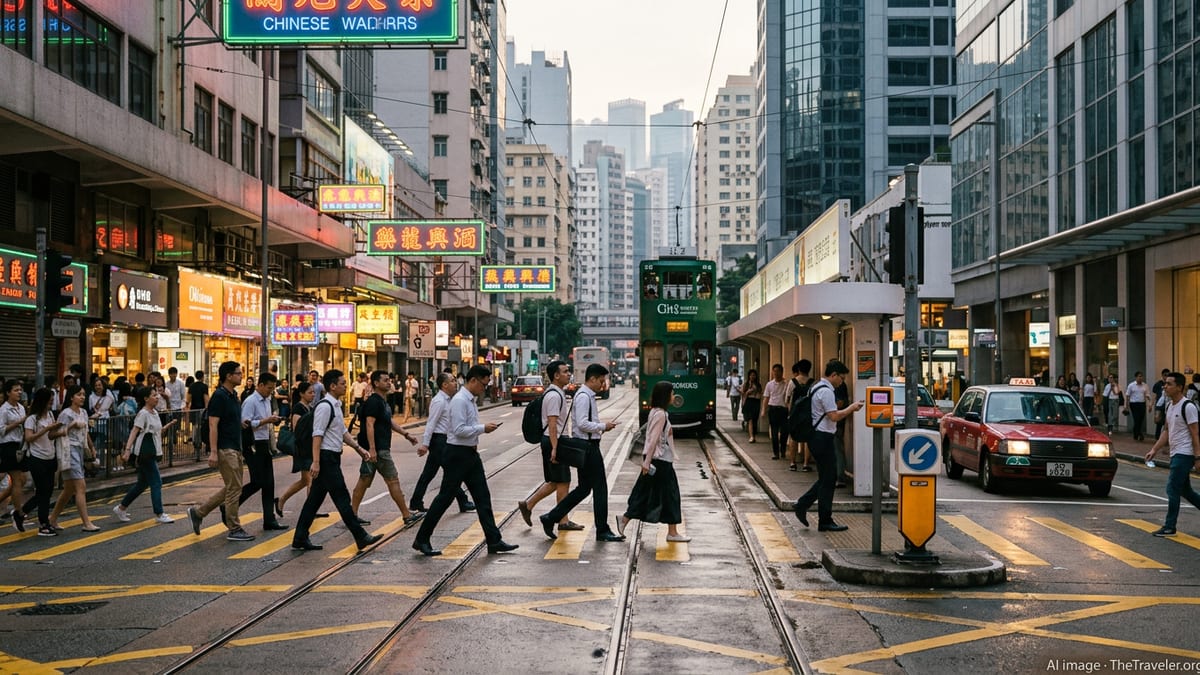
Buses and trams introduce their own pitfalls. Newcomers often try to pay bus fares in cash with large notes, only to learn that drivers typically do not give change and that the exact fare is expected. On Hong Kong Island’s iconic double-decker trams, boarding is from the rear and you pay when exiting at the front, which is the reverse of bus habits in many countries. Confusion around where to queue, when to press the stop bell and how to validate payment can make an easy journey unnecessarily stressful.
To navigate smoothly, spend a few minutes before your trip getting familiar with the city’s transit map and official route planners. Decide how you will pay for rides and stick to one primary method where possible. When you land, compare the total cost and travel time of airport options before buying a ticket or tapping in. On buses and minibuses, watch what locals do, look closely at route displays and keep smaller notes or an adequately loaded Octopus card ready so you can board confidently and avoid awkward stand-offs at the fare box.
Timing and Itinerary Traps: Underestimating Distance, Heat and Crowds
Hong Kong looks compact on a map, which lures many visitors into cramming too much into a single day. The reality is that vertical streets, hilly terrain, humidity and occasional torrential downpours can make short distances feel much longer. Packing Victoria Peak, multiple temples, markets, museums and a night out in one day quickly becomes exhausting. Travellers often end up spending more time commuting between far-flung neighborhoods than actually enjoying them, and may abandon parts of their itinerary altogether.
The city’s climate is another underappreciated factor. Summer and early autumn can bring extreme humidity, strong sunshine and sudden thunderstorms, while winter can feel colder than the temperature suggests because of damp air and wind. Visitors who head out without water, sun protection or a light rain layer frequently retreat indoors earlier than planned, or cut outdoor hikes short. Heat and crowding in popular areas like Mong Kok, Causeway Bay and Tsim Sha Tsui can also be draining for those not used to dense urban environments.
Crowd patterns matter when planning classic sights. Attempting Victoria Peak, Star Ferry crossings, major shopping streets and temple visits all on a Sunday or public holiday is a recipe for long queues and clogged walkways. Many local families and mainland tour groups are out on these days, and transport can be noticeably busier. Conversely, some smaller museums or heritage sites may have limited opening hours on specific weekdays, catching unprepared visitors off guard and forcing last-minute plan changes.
The smartest way to avoid timing mistakes is to cluster sights by district and alternate intense urban days with slower, greener ones. Combine Central and Sheung Wan on one day, Kowloon markets on another, and reserve a separate day for outer areas such as Lantau Island or the New Territories. Build in rest breaks in air-conditioned malls or cafes, and schedule major outdoor hikes early in the morning or late afternoon to dodge the worst of the heat. Finally, glance at local public holiday calendars when choosing dates for big-ticket attractions so you do not accidentally hit them at their busiest.
Cultural Missteps: Etiquette, Temples and Everyday Courtesy
Hong Kong is generally relaxed and cosmopolitan, but visitors sometimes mistake this for a lack of local customs. One recurring issue is temple etiquette. Travellers may pose inappropriately in front of altars, handle incense or offerings without understanding their significance, or speak loudly during active worship. Photography rules can vary between sites, and ignoring posted signs or verbal requests from staff is perceived as disrespectful, even if no one confronts you directly.
Dining habits also trip people up. It is easy to wander into a busy dim sum restaurant or cha chaan teng and expect menu explanations in perfect English, flexible substitutions and leisurely service. In reality, these venues are often fast paced, with servers under pressure and menus that assume some familiarity with Cantonese dishes. Sharing tables with strangers is normal at peak times. Visitors who linger after paying or move seats freely may find staff becoming noticeably impatient, not out of rudeness but because turnover is essential to the business.
Queueing culture is another subtle but important area. Hong Kong residents line up for trains, buses, escalators and food counters in a way that is orderly and efficient. Cutting in, blocking the left side of an escalator where people typically stand, or spreading out across platform doors can upset this rhythm. On public transport, talking loudly on the phone, playing media without headphones or bringing uncovered, strong-smelling food on board is discouraged and may draw disapproving looks.
To stay on the right side of local norms, adopt a simple rule of observation and modesty. In temples, dress modestly, keep voices low, follow signage, and when in doubt, ask staff if photography is acceptable. In bustling eateries, be ready to point at menu items, accept shared seating and order quickly rather than treating the space like a lounge. In queues, stand where lines naturally form, mind the flow around doors and escalators, and keep personal audio to yourself. These small gestures of respect go a long way toward a smoother, more authentic experience.
Overlooking Practicalities: Documents, Connectivity and Safety Basics
Because Hong Kong has a reputation as a safe, efficient destination, visitors sometimes relax too much on basic travel hygiene. One common mistake is being casual with passports and entry documents. People may leave passports unsecured in bags at crowded markets, carry them loosely in pockets or forget to keep digital and paper copies of key pages. While violent crime is relatively uncommon, petty theft can occur in busy areas, and replacing travel documents can be time consuming and stressful, particularly during peak travel seasons.
Connectivity can be another overlooked detail. Travellers often rely on roaming plans that turn out to be expensive or unreliable, or assume that public Wi-Fi will cover their needs. In reality, a patchwork of different networks and log-in requirements can slow you down when you most need a strong signal for maps, translation apps or ride-hailing services. This leads to missed turns, unnecessary taxi rides and uncomfortable moments when language barriers arise.
Some visitors also misunderstand local safety and legal norms. They may drink heavily in nightlife districts and then attempt to navigate complex streets or transit systems late at night with poor situational awareness. Others ignore routine precautions such as looking both ways on crowded pedestrian crossings or underestimating how quickly traffic moves. Meanwhile, laws and regulations, especially those related to national security and public order, are strictly enforced. Behaviour that would be dismissed as noisy or provocative elsewhere can sometimes attract unwelcome attention from authorities.
To stay on top of practicalities, treat Hong Kong like any major international city: keep passports in a hotel safe or hidden money belt when possible, carry only what you need each day, and store digital copies of crucial documents in a secure cloud service. Arrange a local eSIM or pocket Wi-Fi in advance so you have reliable data from the moment you land. Stay alert in crowded areas, avoid leaving bags unattended and be respectful during demonstrations or politically sensitive events. If you are unsure about the current rules, check your home government’s travel advisories and local news sources shortly before departure.
Misjudging Costs: Budgeting for a High-Demand City
Hong Kong is rarely a budget destination, yet many first-time visitors underestimate everyday costs. They may budget for accommodation and flights but forget to factor in higher-than-expected spending on dining, transport, attraction tickets and occasional splurges like rooftop bars. As a result, travellers can find themselves cutting corners halfway through their stay, skipping experiences they had looked forward to or choosing low-quality restaurants simply to save money.
Another miscalculation involves assuming that all local food is automatically cheap. While there are excellent and affordable noodle shops, bakeries and street stalls, prices at trendy cafes, modern dim sum chains and bars in central locations can rival those in major Western cities. Visitors who default to familiar-looking venues around tourist hotspots often end up paying more than they would in slightly more local neighborhoods just a few blocks away.
Hidden or easily overlooked expenses also add up. These include airport transfers, occasional taxi rides when you are too tired to navigate transit, small purchases at convenience stores, and paid attractions such as observation decks, outlying island ferries or special exhibitions. Souvenirs from upscale malls and design shops can be significantly more expensive than similar items in local markets, particularly when branded or limited-edition.
The best way to avoid financial surprises is to build a realistic daily budget that matches your travel style, then add a buffer. Research approximate price ranges for a typical breakfast in a cha chaan teng, a mid-range dinner, local transport and one paid activity per day. Aim to mix low-cost local eateries with the occasional splurge and venture beyond the most obvious tourist districts when you eat. Use your Octopus card to monitor how much you are spending on transport, and keep a mental tally of small cash purchases so your final day does not arrive with an empty wallet and a long list of things left undone.
Chasing Only Icons: Missing the Green and Local Side of the City
Many visitors treat Hong Kong as a quick stopover focused on skyscrapers, shopping and a handful of famous viewpoints. They race through Victoria Peak, the Avenue of Stars, a few towering malls and perhaps a night market, then declare that they have “seen” the city. In doing so, they miss the quieter, greener and more residential sides that give Hong Kong its depth and character. This leaves them with a skewed impression of an entirely concrete city, which is far from accurate.
Another common mistake is dismissing side trips to outlying islands and rural areas as too time consuming. Places with beaches, fishing villages, monasteries or hiking trails are often reachable within an hour or so from the urban core, yet travellers skip them because they seem logistically complex. Without realizing it, they trade a relaxed half day in nature for more hours in crowded shopping streets that begin to blur together.
There is also a tendency to stick to international chain restaurants, especially for breakfast or coffee, because they feel familiar and quick. While there is nothing wrong with the occasional comfort stop, relying on chains means missing the local bakeries, dai pai dong street stalls and family-run eateries that help you understand how Hong Kong residents actually live. These smaller venues often provide some of the most memorable meals of a trip at a fraction of the price.
To avoid an overly narrow experience, consciously balance your itinerary. Pair a day in Central’s business district and luxury malls with another in a traditional neighborhood that has older walk-ups, markets and small temples. Dedicate at least one morning or afternoon to a hike or a coastal walk, and another to an outlying island or heritage village that appeals to you. Seek out at least a few local cafes and canteens, even if you need to point at dishes or accept a partial language barrier. You will return home with a richer, more nuanced sense of the city than those who only stick to the most photographed skyline spots.
The Takeaway
Hong Kong rewards preparation and flexibility. The city’s dense energy, layered culture and efficient infrastructure make it a joy to explore, but only if you sidestep a handful of recurring mistakes. Misjudging payment methods, misunderstanding public transport, cramming too much into each day, overlooking local etiquette, neglecting practical safety and underestimating costs can all erode your enjoyment of a trip that should feel exhilarating rather than draining.
With a bit of advance planning, thoughtful budgeting and a willingness to observe how locals move through their own city, you can avoid these pitfalls almost entirely. Treat Hong Kong as more than a quick shopping stop or airport layover, and give yourself time to discover its markets, temples, nature trails and everyday eateries. By doing so, you will not only save time and money, you will also gain a deeper appreciation for one of Asia’s most distinctive urban experiences.
FAQ
Q1. Do I still need an Octopus card if my credit card works on the MTR?
It is possible to ride the MTR with a compatible contactless bank card, but an Octopus card remains more widely useful, especially for buses, small shops and quick everyday purchases. Many locals still rely on Octopus because it is fast, discreet and accepted in more situations than international bank cards.
Q2. Is the Airport Express always the best way to get from the airport to the city?
The Airport Express is fast and convenient, but not always the best value. If you are traveling as a group, staying near specific bus routes or arriving late at night, airport buses or taxis can sometimes be more practical or economical than taking the train and transferring with luggage.
Q3. How much cash should I carry in Hong Kong?
You do not need large amounts of cash, but you should keep enough for small eateries, markets and taxis that do not accept cards. Many visitors find that the equivalent of a modest daily allowance, supplemented by cards and an Octopus card, is sufficient for most situations without creating security concerns.
Q4. Is tipping expected in restaurants and taxis?
Tipping is not as formalized as in some Western countries. In many restaurants, a service charge may already be included in the bill, and small round-ups or leaving coins is appreciated but not mandatory. In taxis, passengers commonly round the fare up to the nearest convenient amount rather than adding a large percentage tip.
Q5. What should I wear when visiting temples and religious sites?
Dress modestly with shoulders and knees covered where possible, especially in active places of worship. Avoid loud behavior, do not touch religious objects unless clearly invited to do so, and pay attention to any signs regarding photography or restricted areas once inside the grounds.
Q6. Is Hong Kong safe for solo travelers at night?
Hong Kong is generally considered safe, including for solo travelers, and many people are out late in busy districts. Standard precautions still apply: stay in well-lit areas, keep valuables secure, avoid excessive drinking if you are alone and use licensed taxis or reputable ride-hailing services when returning to your accommodation late.
Q7. How many days do I need to see Hong Kong properly?
A short three-day visit is enough for highlights such as Victoria Peak, key neighborhoods and a market or two, but four to five days allows for side trips and more relaxed exploration. Longer stays give you room to mix city sights with hikes, islands and quieter local areas that many quick-stop visitors never reach.
Q8. Are English and signage sufficient for getting around?
English is widely used in transport systems, hotels and many restaurants, and most street and MTR signs include both Chinese and English. However, in smaller local eateries or markets, English may be limited. In these situations, translation apps, simple phrases and a willingness to point at menus help bridge any gaps.
Q9. What is the biggest budgeting mistake visitors make in Hong Kong?
Many visitors underestimate everyday costs for dining, transport and paid attractions, assuming everything will be inexpensive because of the presence of street food and markets. A more realistic plan is to assume prices similar to other major global cities and then deliberately seek out a mix of low-cost local spots and occasional splurges.
Q10. How can I avoid feeling overwhelmed by crowds and noise?
Plan your days with breathing space. Visit popular areas early or later in the day, include quieter neighborhoods and green spaces in your itinerary, and schedule breaks in cafes or parks. Staying hydrated, wearing comfortable shoes and accepting that some streets will be densely packed will make the city feel energetic rather than chaotic.