

From the lava fields of Craters of the Moon to the jagged Sawtooths and the quiet farm roads of the Snake River Plain, Idaho rewards travelers who come prepared. The same dramatic geography that makes the Gem State such an unforgettable road trip destination also creates unique challenges on the highway. Avoiding a few common mistakes can mean the difference between a relaxed, scenic drive and a white-knuckle day spent fighting weather, traffic and fatigue.
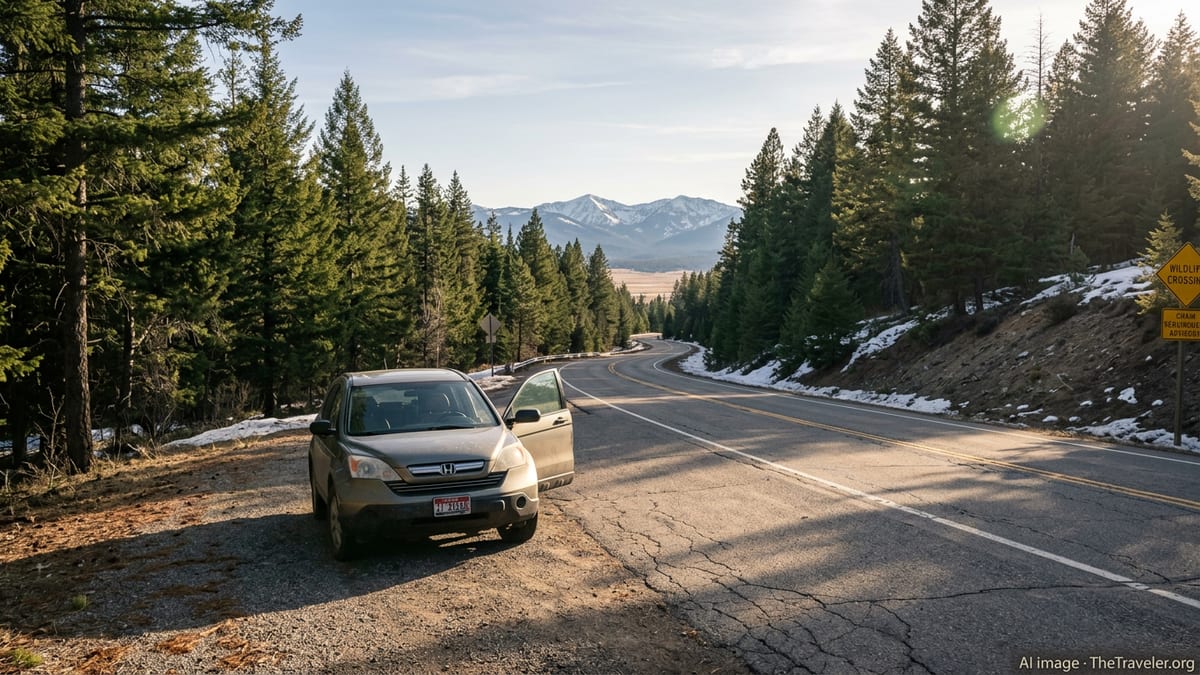
Underestimating Idaho’s Distances and Driving Times
On a map, Idaho can look compact compared with some neighboring western states. Once you are behind the wheel, the scale feels very different. Distances between major towns and attractions are often longer than expected, and secondary highways can be curvy, hilly and slow. It is common for visitors to plan back-to-back days of six or seven hours of driving without realizing that mountain grades, construction zones and wildlife crossings will stretch those estimates. What looked like a quick hop between Boise and Stanley or Coeur d’Alene and Sandpoint can easily turn into an all-day journey.
Another frequent mistake is assuming that highway speed limits equate to realistic travel times. Speed limits may drop significantly through small towns, tribal lands and work zones, and many scenic byways have limited passing opportunities where traffic naturally slows. Summer brings RVs, boat trailers and trucks hauling equipment to remote job sites, all of which can reduce your pace. Build in generous buffers so you are not tempted to speed or drive fatigued to “make up time” late in the day.
Travelers also overlook how few alternate routes exist in some regions. When a crash, rockfall or wildfire closes a highway, detours can add hours, not minutes. This is especially true in central Idaho, where river canyons and wilderness areas limit road options, and on remote stretches of US 93, US 95 and Highway 21. A flexible itinerary that includes optional stops and backup overnights will serve you far better than a rigid timetable built on optimistic estimates from a navigation app.
Finally, many first-time visitors underestimate how tiring western driving can be. Long sight lines, dry air and high elevation can lull you into a false sense of security while your reaction time and concentration quietly decline. Plan conservative driving days, swap drivers often if you can and prioritize arriving at your destination before dark, especially when your route includes unfamiliar mountain passes.
Ignoring Mountain Passes, Seasons and Weather
One of the most serious Idaho road trip mistakes is planning routes as if the calendar and elevation do not matter. A drive that feels relaxed in July can turn treacherous or even impossible in November, March or sometimes May. Many of Idaho’s most scenic roads crest high passes where weather changes quickly and snow can linger long into spring. Conditions at valley level near Boise, Idaho Falls or Lewiston rarely reflect what you will find on the surrounding summits, where temperatures are lower, wind is stronger and storms can form suddenly.
Travelers unfamiliar with snow often underestimate winter and shoulder season risks. Even interstates and major US highways can experience black ice, blowing snow and sudden whiteouts, particularly at passes and where roads cross open prairies. Secondary highways that follow river canyons, such as parts of US 12 and roads along the Payette and Salmon rivers, may see falling rocks, downed trees and temporary closures during storms or freeze-thaw cycles. Higher-altitude routes can face avalanche control work that halts traffic for extended periods. Treat local forecasts and road condition reports as essential tools, not optional extras.
Another common oversight is failing to account for reduced daylight outside midsummer. In October or March, you may have only a narrow window of daylight to cross the highest and curviest segments of your route. Arriving late at the base of a pass and “pushing through” after sunset increases your risk, especially when combined with fatigue or unreliable cell coverage. Shift your schedule so that challenging sections fall early in the day, and do not hesitate to adjust plans if forecasts deteriorate.
Visitors also sometimes view chain requirements, traction advisories and seasonal closures as mere suggestions. In much of Idaho, these are serious safety measures tied to real hazards such as steep grades, tight curves and limited guardrails. If your vehicle is not properly equipped with suitable tires, chains when required and functioning headlights and wipers, reroute or reschedule rather than attempting to “tough it out.” Respecting Idaho’s seasons is the single best way to ensure your road trip remains an adventure, not an emergency.
Overlooking Fuel, Food and Lodging in Remote Areas
Idaho has busy interstate corridors with frequent services, but it also has long, sparsely populated stretches where fuel, food and lodging can be limited or seasonal. One of the most frequent missteps travelers make is assuming that every small dot on the map indicates a town with a gas station and open restaurant. Some communities have only a post office and a few homes, and many businesses in mountain or lake towns operate on reduced hours outside the peak summer season. Relying on last-minute stops can leave you running uncomfortably low on fuel or snacks far from the next reliable services.
This risk is especially acute when you leave the main interstates for scenic byways or cross-country shortcuts. Highways across central Idaho’s lava plains, high desert and river country can feel empty for dozens of miles at a time, with no guarantee that the next visible cluster of buildings includes an open pump. Winter storms, power outages and supply issues can also temporarily shut down rural stations. A simple rule of thumb helps: when you pass a fuel stop with more than half a tank remaining, consider topping off anyway, particularly if you are heading into mountains, national forest lands or regions you do not know well.
Misjudging lodging availability is another avoidable complication. Popular destinations near Sun Valley, McCall, Coeur d’Alene and Stanley can book up months in advance during peak summer weekends and holidays, while some remote motels and lodges close entirely in the off-season. Road construction, festivals or wildfire activity can also suddenly absorb remaining rooms in the nearest towns. Travelers who assume they can always “just find something along the way” sometimes end up driving late at night or sleeping in their vehicle in an overflow lot, which is far from ideal at altitude or in cold weather.
Food and water require similar foresight. Not all scenic pullouts or trailheads have potable water, and many remote picnic areas lack any services at all. Pack more water than you think you need, especially in the dry heat of southern and central Idaho, and carry basic snacks even on short drives between larger cities. Planning ahead for these essentials does not diminish spontaneity; instead, it frees you to enjoy detours, photo stops and unplanned hikes without the constant pressure of watching your fuel gauge or stomach growl.
Misreading Wildlife, Rural Roads and Local Driving Culture
Idaho’s appeal for many visitors lies in its wildlife and wide-open landscapes, but those same qualities create hazards when people do not adjust their habits. A common mistake is treating rural highways as if they were suburban arterials. In reality, two-lane roads often pass directly through ranchlands, forests and wildlife corridors, where deer, elk and smaller animals cross frequently, especially near dawn and dusk. Collisions with animals can be sudden and severe, and braking or swerving at high speeds on a narrow shoulder can lead to rollovers or collisions with oncoming traffic.
Rural drivers may also encounter slow-moving farm equipment, logging trucks and vehicles pulling horse trailers. Passing opportunities can be limited by curves, hills and short sight lines. Visitors used to multi-lane freeways sometimes become impatient and attempt risky passes on blind rises or in no-passing zones, a choice that local law enforcement takes seriously. Accept that your average speed on these roads will be lower than on interstates and treat slower vehicles as part of the local landscape rather than obstacles to overcome.
Local driving culture can feel more relaxed in some ways and more cautious in others. Many residents are experienced with ice, gravel and narrow shoulders, and they often know where wildlife frequently crosses or where rockfall is common. If locals slow down on a sunny day with no obvious hazard, they may be responding to subtle cues, such as frost in shaded curves or patches of sand and gravel left after winter. Paying attention to how surrounding drivers behave can offer valuable clues about what lies ahead.
Another misstep is assuming that emergency response times will match those in urban areas. In remote parts of Idaho, help may be many miles away, and it can take time for law enforcement or tow trucks to reach a crash or breakdown, particularly in bad weather. This reality makes defensive driving, seat belt use, sober driving and avoidance of distractions even more critical than usual. Treat every rural stretch with respect, slow down in wildlife areas and resist the temptation to turn scenic backroads into personal racetracks.
Arriving Unprepared for Idaho’s Climate and Altitude
Idaho’s climate varies sharply by region and season, and failing to prepare for these swings is another widespread road trip mistake. Summer afternoons in the Snake River Plain can be intensely hot and dry, while evenings in the mountains remain cool or even chilly. Spring and fall can bring warm sun one day and freezing rain or wet snow the next, particularly in higher elevations. Many travelers pack as if their entire trip will match the forecast for Boise or Coeur d’Alene, then find themselves shivering at a windy overlook or underdressed during an unexpected storm.
Altitude plays a quieter but important role. Elevations on popular routes and scenic byways are often thousands of feet higher than the valley floors where your journey starts. Even if you never step out for a strenuous hike, you may feel more fatigued or dehydrated after a few hours of driving and walking at altitude. Combine that with dry air and you have a recipe for headaches, reduced concentration and slower reaction times. Packing extra water, lip balm, sunscreen and layers is simple insurance against these conditions.
Vehicle preparation is just as important as clothing and personal gear. Visitors from coastal or low-altitude climates sometimes arrive with marginal tires, weak batteries or underfilled washer fluid, then head straight for steep grades and isolated highways. In winter and shoulder seasons, that combination can quickly turn problematic if you encounter snow, slush or freezing spray from other vehicles. Having your vehicle inspected before the trip, ensuring that your coolant and oil are appropriate for the season and carrying basic emergency supplies can dramatically improve your margin of safety.
Even in mid-summer, storms can move through quickly, dropping heavy rain that lifts oil from the pavement and reduces traction. Hail is not unheard of in mountain areas, and wind can be strong in open valleys and along lake shores. If you assume that “summer” equals simple, hazard-free driving, you may be caught off guard. A more realistic approach is to treat every season in Idaho as dynamic and to outfit both yourself and your vehicle with flexibility in mind.
Overpacking Itineraries and Skipping Local Advice
Idaho’s variety encourages ambitious planning. In one trip, you might hope to see waterfalls, hot springs, historic mining towns, alpine lakes and high desert vistas. The mistake many visitors make is trying to fit far too much into a limited timeframe. Stacking multiple long drives back to back, leaving only a few hours at each destination and allowing no margin for weather, construction or simple rest often results in a blur of hurried stops and stressful late arrivals. Scenic detours and spur-of-the-moment opportunities become sources of anxiety rather than joy because every delay threatens the next rigidly scheduled stop.
Overpacked itineraries also increase risk. Drivers feel pressure to push through fatigue, nighttime conditions or questionable weather rather than adjusting the plan. Travelers may arrive at trailheads, river put-ins or lake launches late in the day, tired from the drive and less alert about safety. Families with children or multigenerational groups are especially vulnerable to burnout when every day becomes a race to “see it all” rather than savor a few well-chosen highlights.
Another missed opportunity is neglecting local knowledge. Residents, park rangers, visitor center staff and workers in cafes or gas stations can often provide more timely and practical insights than any guidebook. They know which roads are under construction, which trailhead parking lots fill by mid-morning, where wildlife has been especially active near the highway and which routes are better for avoiding weekend congestion. Ignoring those voices in favor of sticking rigidly to a preplanned route can leave you in the wrong place at the wrong time.
Allowing space in your schedule for lingering also gives you room to respond to this local advice. If a ranger suggests avoiding a certain canyon in the afternoon due to frequent rockfall or traffic bottlenecks, or if a barista mentions that smoke from distant wildfires has been heavier along one corridor than another, you can pivot without upending your entire trip. In Idaho, where conditions can shift from day to day, a flexible, locally informed itinerary is far more rewarding than an overstuffed checklist.
Neglecting Safety Basics and Emergency Preparedness
Even experienced drivers can underestimate the value of basic safety habits when traveling unfamiliar terrain. A surprising number of Idaho road trip incidents stem from issues that have little to do with weather or geography and everything to do with seat belts, speed and distraction. Wearing a seat belt on every segment, staying within posted limits, avoiding aggressive maneuvers and keeping your focus on the road are fundamental, yet they make a particularly big difference on winding mountain highways and rural two-lane routes with limited shoulders.
Emergency preparedness is where visitors most often cut corners, assuming that modern vehicles and phones will cover any eventuality. In reality, spotty cell service is common across much of Idaho’s backcountry and along river canyons. A dead battery, minor mechanical problem or slide-off that would be a simple inconvenience in an urban area can become a stressful wait if it occurs on a quiet forest road or after dark on a lightly traveled highway. Carrying a basic kit that includes water, nonperishable snacks, warm layers or blankets, a flashlight, jumper cables and a simple first aid kit can make unexpected delays far more manageable.
Navigation can also become a challenge where GPS maps are incomplete or where construction and seasonal closures change established routes. Relying solely on a smartphone without offline maps, paper back-ups or clear printed directions can leave you confused at an unsigned junction or when a detour directs you off your planned path. Downloading maps in advance and carrying a paper overview map of the state or region provides redundancy that can be invaluable if your device fails or coverage disappears.
Finally, it is easy to forget that in an emergency, communication about your plans is as important as the gear you carry. Letting someone know your intended route and approximate schedule, particularly on days that involve remote sections or mountain passes, increases the likelihood that help will be alerted quickly if something goes wrong. Checking in with a quick text or call when you reach your nightly stop is a small habit with potentially large benefits. Thoughtful preparation does not invite trouble; it simply ensures that if the unexpected happens, you and your companions are ready.
The Takeaway
Idaho rewards the thoughtful traveler. The same elements that can complicate a road trip, from steep passes to long distances between towns, are also what make the state so memorable. By acknowledging Idaho’s scale, respecting its seasons, planning conservatively for fuel and lodging, and taking local advice seriously, you dramatically increase your odds of a smooth, satisfying journey. A road trip here is less about racing from highlight to highlight and more about settling into the rhythm of the landscape.
Approach your route with humility, especially if you are new to mountain driving or winter conditions, and give yourself permission to slow down or change plans when the weather or your own energy levels demand it. Equip both your vehicle and your travel party with the basics: layers for shifting temperatures, plenty of water and snacks, offline maps and a modest emergency kit. Those simple steps turn potential hazards into manageable challenges.
Most of all, remember that Idaho’s best moments often happen on the margins of a plan: a spur-of-the-moment stop at a small-town diner, an empty overlook at sunrise, a quiet evening in a mountain valley you had never heard of before this trip. When you avoid the common road trip mistakes that sap time, energy and safety, you create space for those unplanned rewards. In the Gem State, that space is where the real travel stories begin.
FAQ
Q1. Is it safe to drive through Idaho in winter?
It can be safe with preparation, but conditions vary widely. Expect snow and ice on passes, check road reports often and consider flexible dates or routes.
Q2. How many hours a day should I plan to drive in Idaho?
For most travelers, four to six hours of actual driving per day is comfortable. Longer days are possible, but mountain roads and weather can slow progress.
Q3. Do I need a four wheel drive vehicle for an Idaho road trip?
You do not need four wheel drive for every route, especially in summer, but it is helpful on snowy or unpaved roads. Good tires and cautious driving are equally important.
Q4. How often will I find gas stations on Idaho highways?
On interstates, services are reasonably frequent. On scenic byways and rural highways, stations can be far apart, so top off the tank when you have the chance.
Q5. Is cell phone service reliable in rural Idaho?
Coverage is good around cities and major corridors but patchy in mountains, canyons and remote valleys. Download offline maps and do not rely on constant signal.
Q6. What is the best season for an Idaho road trip?
Late spring through early fall offers the most predictable conditions. Summer has the longest days, while shoulder seasons are quieter but more weather dependent.
Q7. How can I avoid wildlife collisions while driving?
Slow down at dawn and dusk, watch for animal crossing signs, scan road edges and avoid swerving sharply. If you see one animal, expect others nearby.
Q8. Do I need to reserve lodging in advance?
In popular areas and during peak summer or holiday periods, advance reservations are strongly recommended. In quieter seasons you may have more same day options.
Q9. Are Idaho’s scenic byways suitable for RVs?
Many are, but some include steep grades, tight curves or narrow shoulders. Check route descriptions, drive times and any vehicle length restrictions before committing.
Q10. What should I pack for emergencies on an Idaho road trip?
Bring water, snacks, warm layers or blankets, a flashlight, basic first aid items, jumper cables, a phone charger and printed directions or a paper map.