

Illinois rewards curious travelers with big-city energy in Chicago, classic Americana along Route 66, and quiet Midwestern towns in between. It also surprises many visitors with strict parking rules, unpredictable weather, long driving distances, and a few safety and etiquette nuances that locals take for granted. Understanding the most common travel mistakes ahead of time can mean the difference between a smooth, memorable trip and one filled with fines, delays, or avoidable stress.
Underestimating Illinois Weather and Seasonal Extremes
One of the biggest mistakes visitors make in Illinois is assuming the weather will behave like a mild, predictable version of the Midwest. In reality, conditions can swing quickly from hot and humid in summer to icy, windy, and snowy in winter, with dramatic temperature drops in a matter of hours. Travelers who pack only for one season, or who plan rigid road trip schedules without weather flexibility, often find themselves uncomfortable at best and facing hazardous driving at worst.
Winter especially catches visitors off guard. State and local agencies repeatedly remind motorists that winter weather can be highly unpredictable and that snow, freezing rain, or black ice can appear with little warning. Drivers are advised to allow extra travel time, slow down significantly in poor conditions, and check official road condition maps before they set out. Ignoring these recommendations and clinging to tight timetables can turn a scenic Illinois drive into a white-knuckle experience.
Even outside winter, storms can be intense, especially in spring and early summer when heavy downpours and strong winds are common. These can reduce visibility on highways, cause localized flooding, and complicate long-distance segments of Route 66. Travelers who build some buffer into their plans, pack layers, and keep an eye on local forecasts are far more likely to enjoy the state, rather than remember it purely for a stressful weather event.
Finally, many visitors do not realize how much the wind can affect comfort in Chicago, even on days that look pleasant on a weather app. A 45-degree Fahrenheit spring day on the lakefront can feel far colder because of the breeze off Lake Michigan. Bringing a windproof layer, a hat, and gloves in the cooler months, and having warm-weather gear for humid summer days, is a simple way to avoid one of the most common Illinois travel oversights.
Misreading Chicago Parking, Towing Rules, and Street Signs
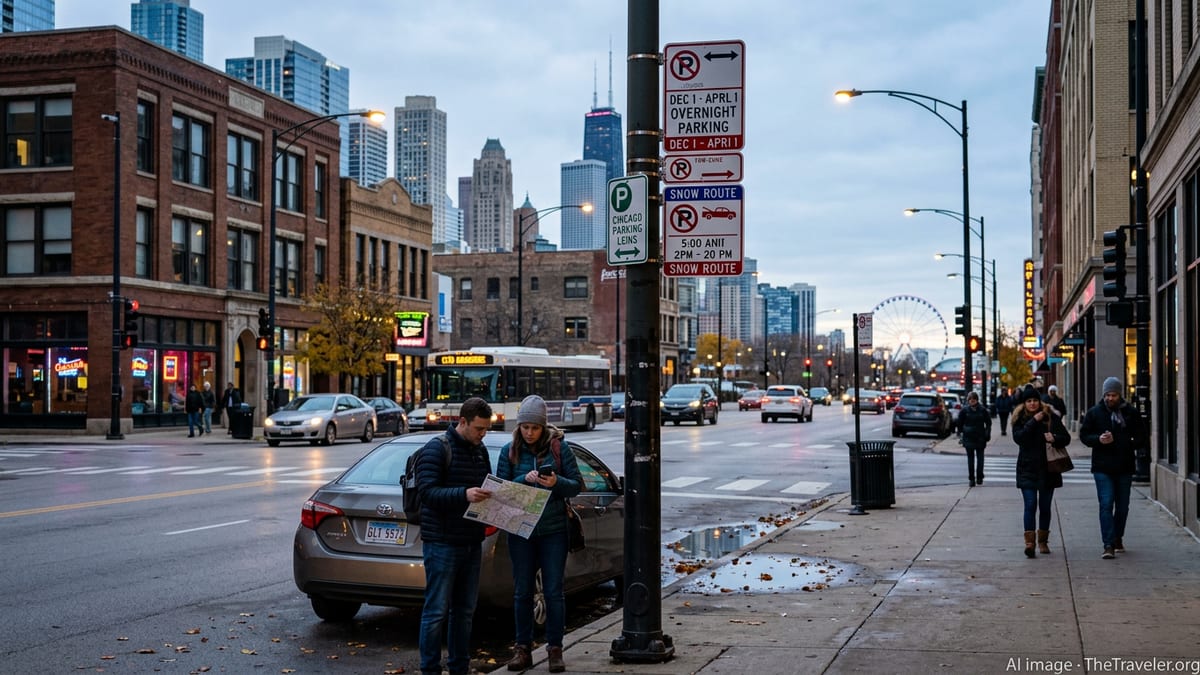
Chicago is one of the most challenging places in the Midwest to park without incident, and misunderstanding the rules is a mistake that can become very expensive. The city enforces an overnight winter parking ban on key arterial streets from early December through early April, generally from 3 a.m. to 7 a.m., regardless of whether snow is on the ground. Every year, hundreds of vehicles are towed on the first nights of enforcement because drivers either miss the signs, assume the rule applies only when it is snowing, or believe short-term parking will be overlooked.
In addition to the seasonal overnight ban, Chicago maintains a separate network of streets where parking is prohibited when two inches or more of snow have fallen. These snow routes are signed differently and can apply at various times of day when activated after a storm. Visitors who focus only on meter hours or assume local practice is lenient often wake to discover their car has been moved to an impound lot, along with a ticket, tow fee, and daily storage charges that can quickly climb into the hundreds of dollars.
Residential permit zones are another common source of confusion. Many neighborhoods require a local resident placard or specific zone number for overnight parking or for parking during certain evening hours. Short-term visitors who think they can rely on free street parking without carefully reading posted signs risk repeated tickets. While some apps and garages make downtown parking more predictable, travelers who opt to bring a car into dense neighborhoods should be prepared to pay for secure lots or spend time learning each block’s rules in detail.
Finally, travelers often overlook shorter-term restrictions such as loading zones, standing zones, and tow zones near intersections. Even when a curb space appears open, there may be restrictions during peak hours, school pick-up times, or along bus routes. The safest habit is to read every sign on the pole from top to bottom, assume the strictest rule applies, and move on if anything is unclear. Treating Chicago parking as an afterthought is one of the quickest ways to add unplanned costs to an Illinois trip.
Misjudging Distances and Driving Demands, Especially on Route 66
Another frequent mistake is underestimating just how spread out Illinois can feel once you leave Chicago. The state stretches roughly 400 miles from north to south, and even the Route 66 section between Chicago and the Mississippi River passes through long, rural stretches with limited services. Travelers who assume small-town distances or constant roadside amenities may run low on fuel, food, or rest options, particularly at night or during the off-season.
Route 66 in Illinois is romanticized as a leisurely cruise past neon signs and historic diners, but it is still a working network of highways, local roads, and bypassed segments. Speed limits can change quickly when entering small towns, and enforcement can be strict. Visitors sometimes barrel through at freeway speeds, unaware they have passed into lower-speed zones. Giving yourself time to slow down, enjoy roadside attractions, and adjust to frequent changes in the road type is not only safer but more in line with the spirit of the route.
Long-distance drives also demand realistic planning about driver fatigue. It is easy to overestimate how many hours you can safely spend behind the wheel, especially when fueled by excitement and coffee. Illinois authorities consistently emphasize that posted speed limits assume normal weather and full alertness, and that tired drivers must reduce speed, take regular breaks, and share driving duties where possible. Shaving hours off a day’s route may feel productive, but it increases the risk of mistakes on unfamiliar roads.
Finally, some travelers forget that older Route 66 alignments can be narrow, uneven, or poorly lit. Certain segments run close to active rail lines or through industrial districts before opening back into countryside. Approaching the road with realistic expectations, checking recent traveler reports, and being willing to switch to nearby interstates when conditions are poor helps avoid the mistake of treating every mile of Route 66 as a purely nostalgic, low-risk scenic drive.
Overlooking Winter and Rural Road Safety
The combination of winter conditions and rural highways in Illinois creates a specific set of risks that many visitors, especially those from milder climates, do not fully appreciate. State transportation officials describe winter as the most hazardous driving season and encourage motorists to avoid unnecessary trips during severe storms. When travel is essential, they recommend checking state road condition maps, building extra time into the schedule, and informing someone of your planned route and expected arrival time.
Common mistakes include assuming that interstates will always be clear and that secondary roads will be similar. In reality, snow, slush, and ice can persist longer on less-traveled routes, bridges, and overpasses, which often freeze before surrounding pavement. Motorists are urged to slow down, maintain greater following distance, and avoid sudden braking or lane changes in winter conditions. Out-of-state drivers unused to driving in snow can be caught off guard by black ice or drifting snow, especially after dark.
Another overlooked safety consideration is vehicle preparation. Illinois agencies and safety organizations advise drivers to carry basic winter supplies such as an ice scraper, blankets, extra warm clothing, and a small emergency kit with non-perishable snacks and water. Keeping a phone charged and maintaining at least half a tank of fuel are simple ways to reduce the risk of being stranded for an extended period. Travelers who assume that cell coverage or passing traffic will always offer a quick rescue, particularly in rural areas, may underestimate the time it takes for assistance to arrive in poor weather.
Finally, distracted driving is a persistent issue on Illinois roads, especially on long, monotonous stretches of highway. Local campaigns consistently remind motorists to put away handheld devices, respect move-over laws when passing stopped vehicles, and avoid trying to photograph roadside attractions while moving. Pulling safely off the road at designated stops to check maps or capture that classic Route 66 sign is not just courteous, it is a key part of responsible travel in the state.
Misusing Public Transit and Ride Services in Chicago
Chicago’s public transportation network is a powerful asset for visitors, but it can be underused or misused in ways that lead to lost time and frustration. Many travelers default to renting a car for city sightseeing, only to discover that parking, traffic, and one-way streets make driving a burden rather than a convenience. In reality, the elevated trains, buses, and commuter rail lines cover most of the city’s major attractions and often provide the fastest way to move between neighborhoods, particularly during rush hours.
One common mistake is failing to research or purchase a transit card before arriving. The city’s stored-value and unlimited-ride cards make transfers and frequent trips cheaper and simpler, yet some visitors rely solely on cash fares or single-ride options, which slows boarding and adds cost over a multi-day stay. Taking a few minutes to understand fare structures, route maps, and peak travel times can dramatically improve the experience of navigating Chicago without a car.
Ride-hailing services and taxis can also be misunderstood. Visitors sometimes assume availability and pricing will be consistent across all neighborhoods and times of day, only to find surge pricing, long wait times after major events, or difficulty finding pickups on congested streets. Planning for a mix of transit, walking, and rides, rather than relying solely on one mode, helps avoid last-minute stress, particularly late at night or during bad weather.
Lastly, travelers occasionally overlook basic etiquette on Chicago transit, such as moving away from doors, offering priority seats to those who need them, and avoiding loud conversations or open food in crowded cars. While locals are generally tolerant, respecting such norms makes the experience more comfortable for everyone and contributes to a smoother, more authentic impression of the city.
Misunderstanding Safety, Neighborhood Nuance, and Local Etiquette
Illinois is broadly safe for visitors, but misunderstandings about neighborhoods and local customs can influence both comfort and safety. In Chicago, one mistake is to view the city as uniformly safe or unsafe based solely on headlines. In practice, safety varies block by block, and popular visitor areas such as the Loop, the lakefront, and major museum districts see heavy foot traffic and a strong security presence, particularly during the day. Issues more commonly involve petty theft, such as unattended bags, visible valuables in parked cars, or easily grabbed phones.
Travelers who remain aware of their surroundings, avoid displaying expensive items in crowded areas, and use common-sense precautions in any big city are unlikely to encounter serious problems. At night, it helps to favor well-lit streets, travel in small groups, and use reliable transport back to accommodations rather than wandering unfamiliar side streets. Asking hotel staff or hosts for up-to-date, practical advice about walking routes and transit at different hours is often more useful than relying exclusively on outdated stereotypes or brief online comments.
Downstate and along Route 66, safety concerns are usually more related to road conditions, wildlife, and limited services than to crime. Stopping in small towns, respecting closing times, and fueling up when stations are available help avoid being caught short on supplies late at night. In rural areas, it is courteous to drive slowly through residential streets, reduce noise near homes, and treat local businesses with the same respect you would hope visitors would show in your own hometown.
Etiquette mistakes can also affect the quality of interactions. In Chicago, respecting queues at transit stops, keeping voices moderate in restaurants and bars, and tipping appropriately for service are standard expectations. In smaller Illinois communities, simple gestures such as greeting staff, being patient during busy times, and asking permission before photographing people or private property go a long way toward positive exchanges. These are subtle points, but they shape how welcome a traveler feels and how willing locals are to share tips and stories.
Rushing Illinois Route 66 and Skipping Small-Town Highlights
A romantic Route 66 road trip is often central to an Illinois itinerary, yet many visitors unintentionally rush through the state, treating it mainly as a corridor between Chicago and the Southwest. The mistake is assuming that the experience is limited to a few famous signs and diners. In reality, the Illinois stretch of Route 66 offers historic town squares, restored gas stations, classic motels, murals, and museums that reward travelers who slow down and explore rather than simply following the main highway alignment.
Some travelers focus exclusively on major urban stops, bypassing smaller communities such as Joliet, Pontiac, Bloomington-Normal, or smaller Route 66 towns that have invested in preserving their roadside heritage. These places often host museums, visitor centers, and local festivals that tell the deeper story of how the highway shaped commerce and culture. Skipping them may save time, but it also leaves the trip feeling surprisingly thin, as though the traveler drove a long distance without really connecting with the route.
Another mistake is traveling the entire Illinois portion of Route 66 in a single day. While this is technically possible, it leaves little room for unexpected discoveries, photo stops, or lingering over meals. Road-trip veterans often recommend planning shorter daily distances, building time for side visits, and being open to detours. This slower pace is especially important during winter or shoulder seasons, when daylight hours are limited and weather may force last-minute changes.
Finally, not checking seasonal openings can lead to disappointment. Some Route 66 attractions and mom-and-pop businesses reduce hours or close entirely during colder months. Calling ahead, reviewing current opening times, and having backup options in nearby towns can prevent the frustration of arriving at a long-anticipated stop only to find it closed. Treating Route 66 less as a checklist and more as a flexible, exploratory journey helps avoid one of the most common Illinois road trip regrets.
The Takeaway
Travelers often arrive in Illinois with a mental picture of either the Chicago skyline or a classic Route 66 postcard, but the reality is more nuanced. From complex parking and towing rules to quickly changing weather, from rural winter roads to the subtle charms of small towns, the state rewards those who prepare thoughtfully and remain flexible. The most costly or stressful experiences usually stem from underestimating the environment, rushing long drives, or treating local rules as suggestions rather than requirements.
By contrast, visitors who respect Chicago’s signage, use transit where it makes sense, plan realistic driving days, and build in time for unplanned discoveries along Route 66 tend to remember Illinois for its architecture, food, and friendly conversations instead of fines and delays. A bit of advance research on seasonal conditions, neighborhood transit, and small-town opening hours can transform a good trip into a great one.
Ultimately, avoiding common Illinois travel mistakes is less about perfection and more about mindset. Approach the state as a place where urban and rural experiences sit side by side, where weather demands attention, and where local knowledge is worth seeking out. With that perspective, you can enjoy Chicago’s energy, the nostalgia of Route 66, and the quieter corners of the Prairie State with confidence and ease.
FAQ
Q1. Do I really need a car in Chicago, or is public transit enough?
For most visitors focusing on central neighborhoods, public transit and occasional ride services are usually sufficient. A car can be more of a burden because of parking costs and restrictions.
Q2. When does Chicago’s winter overnight parking ban typically apply?
The overnight ban generally runs from early December through early April, from 3 a.m. to 7 a.m. on designated main routes, and it is enforced whether or not it has snowed.
Q3. How much time should I allow to drive the Illinois portion of Route 66?
While it is possible to drive the Illinois stretch in a single long day, many travelers prefer at least two days to stop in towns, visit attractions, and account for weather or traffic.
Q4. Is winter driving in Illinois safe for someone with little snow experience?
It can be safe if you slow down, avoid travel during active storms when possible, and follow official road condition updates. Drivers new to snow should be especially cautious and flexible with plans.
Q5. Are small towns along Route 66 in Illinois open year-round?
Essential services are open, but some Route 66 attractions and independent businesses shorten hours or close in colder months, so checking seasonal schedules before visiting is wise.
Q6. What is the biggest mistake visitors make with Chicago street parking?
The most common mistake is not reading all posted signs carefully, especially regarding winter bans, residential permit zones, and tow-away restrictions during certain hours.
Q7. Is it safe to walk around downtown Chicago at night?
Busy central areas are generally active and patrolled, but visitors should stay on well-lit streets, remain aware of their surroundings, and use trusted transport for longer late-night trips.
Q8. How should I prepare my car for a winter road trip in Illinois?
Check tires and fluids, carry an ice scraper, warm clothes, and a basic emergency kit, keep your fuel tank at least half full, and ensure your phone is charged before long drives.
Q9. Can I rely on my phone for navigation in rural parts of Illinois?
Navigation apps usually work, but coverage can be inconsistent. Downloading offline maps and noting key highway numbers and towns as backups is a smart precaution.
Q10. How far in advance should I plan stops along Route 66 in Illinois?
Having a general plan and reserving key accommodations ahead of time is helpful, but leaving some flexibility for unscheduled stops and detours creates a more rewarding trip.