

Mexico’s temporary and permanent residency pathways are comparatively accessible, but the application process is highly procedural. Small errors in documentation, timing, or local compliance frequently lead to delays, fines, or outright refusals. Understanding the most common mistakes and how consulates and Mexico’s National Migration Institute (INM) evaluate files is essential for anyone assessing whether a relocation to Mexico is realistically achievable.
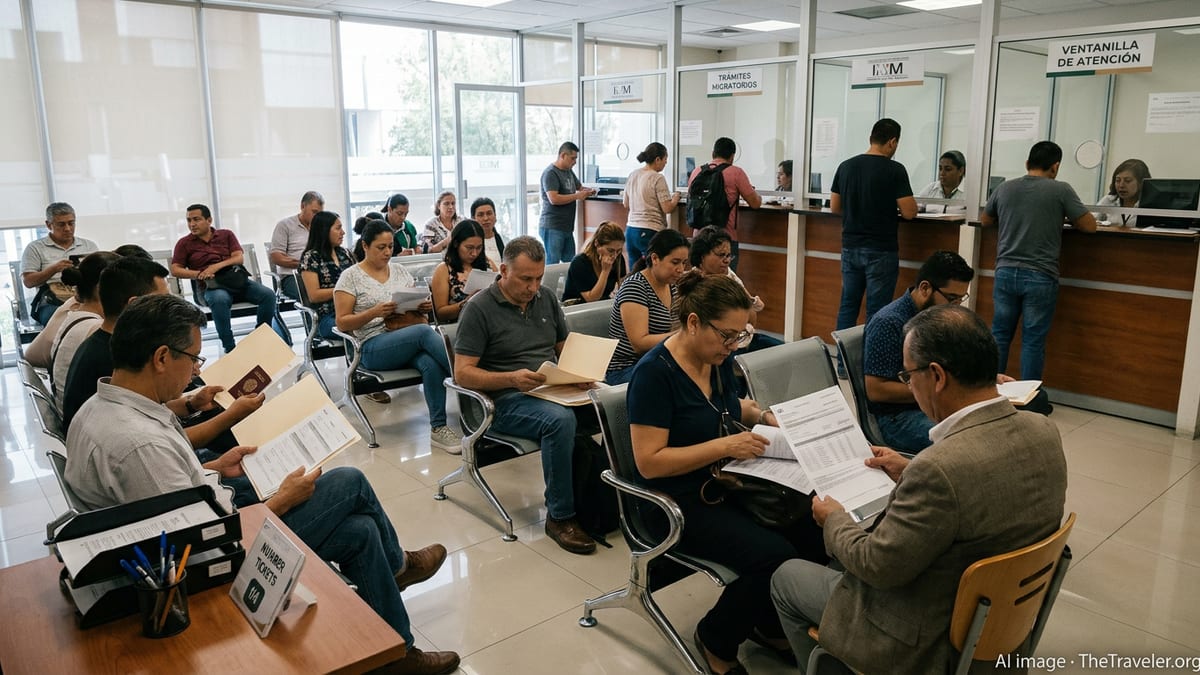
Overview of the Mexico Residency Application Process
Most foreign nationals apply for Mexican residency in two stages. First, an applicant obtains a residency visa at a Mexican consulate abroad, typically based on financial solvency, family ties, or employer sponsorship. Second, after entering Mexico with the visa sticker in the passport, the applicant must complete an in-country exchange process (canje) at an INM office within a defined time window to receive the physical residency card. This multi-step structure creates two separate points at which technical mistakes can derail an application.
Requirements are grounded in federal immigration law, but implementation is heavily decentralized. Consulates and local INM offices maintain their own checklists, appointment systems, and documentary preferences, and these can change with short notice. Reports from 2024 and 2025 show increasing scrutiny of financial documentation and tighter enforcement of deadlines, particularly after pandemic-era flexibilities were phased out in 2023 and 2024.
For relocation planning, the key implication is that eligibility on paper is not sufficient. The practical feasibility of gaining residency depends on the applicant’s ability to navigate locally defined procedures, provide consistent evidence, and comply with strict timelines at both consulate and INM stages.
Documentation Errors and Identity Inconsistencies
One of the most frequent reasons for residency complications is inconsistency across documents. Mexican officials often review passports, birth certificates, marriage certificates, financial statements, and application forms line by line, and relatively minor discrepancies in names, dates, or civil status can trigger refusals or protracted clarifications.
Common patterns include missing middle names, abbreviations (for example, “Ma.” instead of “Maria”), different spellings of surnames, or mismatched dates of birth between passports and civil registry documents. Case reports from 2024 and 2025 show applications rejected at both consulate and INM level because the applicant’s name on the online application form did not exactly match the passport, or because a parent or spouse’s name appeared in different formats on supporting records.
To mitigate this risk, relocation candidates should conduct a document audit before booking consulate appointments. Every identity and civil-status document likely to be used should be checked for alignment of: full legal names (including second surnames where relevant), dates and places of birth, and marital status. Where inconsistencies exist, it is generally safer to correct or regularize records in the country of origin before initiating the Mexican process, since consular officers have limited ability to interpret or reconcile ambiguous documents.
Translations and apostilles also present a risk area. Non-Spanish documents often require official translations and, in many cases, apostille or legalization. Incomplete legalization chains, unofficial translations, or missing seals can lead to documents being set aside, effectively leaving the application without the required proof even if the underlying facts are correct.
Financial Solvency Mistakes at the Consulate Stage
Most economic-residency applications are assessed primarily on financial solvency, using formulas linked to Mexico’s daily minimum wage or UMA (a government index used for benefits and penalties). In practice, consulates convert these thresholds to local-currency or USD figures and apply them to either monthly income or average savings over a specified period, commonly 6 or 12 months. Recent guidance for 2025 and projected 2026 updates shows upward adjustments in the equivalent USD amounts as Mexican wages and exchange rates shift, with some consulates now referencing income figures in the approximate range of several thousand USD per month for temporary residency.
Applicants are often refused not because they are truly ineligible, but because their documentation does not match how consulates interpret the rules. Recurrent mistakes include presenting income that falls below the threshold in just one or two months within the required period, assuming consulates will accept an average rather than month-by-month compliance, or mixing multiple small accounts without clear, official statements. Reports from 2024 and 2025 show consulates in North America rejecting files where even a single month’s deposits dipped below the published requirement, regardless of higher income in adjacent months.
Another frequent error is misunderstanding what counts as “official” proof. Many consulates insist on original, stamped, or bank-generated statements for a fixed period (for example, 6 or 12 consecutive months), along with employer or pension letters on letterhead that state net income and continuity. Screenshots, spreadsheets, or informal letters are often refused. Some consulates have also adjusted policy to favor savings over income, or to exclude certain income types entirely, which catches applicants who relied on outdated online advice.
To reduce risk, applicants should review the website or written guidance of the specific consulate where they intend to apply, then assemble evidence that meets or exceeds that consulate’s stated thresholds and format requirements. As a practical rule, providing a margin above the published minimum and ensuring every single month in the relevant period is comfortably above the line offers better protection than attempting to qualify on a narrow average.
Timing, Overstays, and INM Process Missteps
Timing mistakes are a second major cause of residency problems. After a consulate issues a residency visa, the applicant typically has a fixed period, often 180 days, to enter Mexico. Once in Mexico, there is then a strict deadline to initiate the canje at INM, usually within 30 calendar days of entry. Missing this 30-day window can lead to rejections or the need to restart the process at a consulate, adding months and additional costs.
Recent case reports show applicants being turned away from INM because their appointment date fell more than 30 days after their entry date, even if the appointment had been scheduled through the official system. In some instances, discrepancies between the entry stamp and the consular visa or electronic records caused confusion, underscoring the need to check the entry stamp before leaving the border post or airport.
Overstaying visitor permits while attempting to manage residency paperwork is another recurring issue. Guidance and anecdotal evidence from 2024 and 2025 highlight more active enforcement by INM against people who remain in Mexico beyond the validity of their FMM or e-visitor record. Being in irregular status can complicate or block eligibility for residency pathways, and rectifying an overstay often requires paying fines or using special regularization programs that may be time-limited and uncertain.
Relocation planners should map timelines conservatively: schedule consulate appointments only when required documentation is fully prepared, plan entry to Mexico so that the 30-day INM window falls within a period where the applicant can remain in-country without travel, and avoid relying on overstay-based regularization unless specifically advised by qualified counsel.
Misunderstanding Local Variations and Policy Shifts
Although residency requirements are anchored in national law, implementation varies significantly among consulates and INM offices. Different consulates often publish different income thresholds, require different lengths of bank history, or prioritize particular categories such as retirees or family-based applicants. Reports from 2024 and 2025 document examples of one U.S. consulate ceasing to accept monthly income as a qualifying route and relying exclusively on savings, while another consulate in the same country continued to accept income-based evidence with different thresholds.
Applicants commonly make the mistake of assuming that guidance from online forums or from a friend’s experience in one location will apply universally. This leads to mismatches between expectations and local practice, such as preparing income evidence when a given consulate is currently favoring high-balance savings, or bringing six months of statements to a post that has quietly shifted to a 12-month rule.
Policy shifts are also frequent. Mexico’s minimum wage has risen steadily, and consulates periodically recalculate financial thresholds accordingly, sometimes with limited public explanation. In parallel, post-pandemic operational changes and leadership shifts at INM have resulted in processing backlogs and evolving interpretations of rules, particularly around regularization programs and humanitarian exceptions. Applicants who rely on information more than a few months old risk planning to standards that no longer apply.
To reduce exposure to these variations, applicants should treat national-level rules as a baseline and then verify local practice shortly before applying, ideally by reviewing current consulate guidance and, where possible, confirming details through official channels. Flexibility in choosing a consulate with clearer procedures or more predictable criteria can be a meaningful strategic advantage for globally mobile professionals.
Common Post-Approval Compliance and Maintenance Errors
Mistakes do not end once the residency card is issued. INM imposes ongoing obligations on residents, and failure to comply can lead to fines, complications at renewal, or even loss of status. One frequently overlooked obligation is notifying INM of changes in address, marital status, or employer within a set period, typically 90 days. Failure to report a change of address has been associated with fines in the range of several thousand Mexican pesos, and can delay processing of renewals until the penalty is paid.
Another recurring error is misunderstanding how to enter and exit Mexico as a resident. Holders of valid residency cards should not be processed as tourists at e-gates or through automatic kiosks in major airports, since being admitted as a visitor can result in a conflicting record of status. There are documented cases in 2024 and 2025 where residents were advised not to use e-gates because doing so could effectively register them as tourists and create complications for future renewals or travel.
Residents also sometimes depart Mexico while renewal or modification applications are pending, without obtaining the appropriate exit and re-entry authorization from INM. This can cause pending applications to be treated as abandoned, requiring a restart of the process and, in some situations, a new consular application. For individuals whose work or family obligations require frequent international travel, this aspect of compliance should be factored into broader mobility planning.
Relocation decision-makers should therefore assess not only the feasibility of initial approval but also the organization’s or individual’s capacity to maintain compliance: tracking renewal dates, handling INM notifications after address or employment changes, and aligning travel schedules with local processing times.
Use of Unqualified Intermediaries and Informal Advice
The growing demand for Mexican residency has created a market for informal advisors and fixers offering to “guarantee” approvals or expedite appointments. While some local facilitators provide valuable logistical support, there are recurring reports of unregulated intermediaries submitting incomplete or inaccurate information, fabricating documents, or advising applicants to conceal relevant facts. These practices significantly increase the risk of denials, fraud findings, or long-term complications with INM records.
Applicants may also rely heavily on social media posts, anecdotal experiences, or outdated blog articles. While such sources can provide helpful context, they often omit nuances such as consulate-specific criteria, updated income thresholds, or recent enforcement trends. Misinterpretation of terms like “you can fix it later in Mexico” or “everyone is being approved on savings” can lead applicants to underprepare documentation or misjudge their true eligibility.
From a risk-management perspective, the safer approach is to treat unofficial advice as illustrative rather than authoritative. Critical decisions, such as whether a given level of income or savings is likely to meet current solvency rules at a particular consulate, should be grounded in the most recent official guidance. Where cases involve complex factors such as prior immigration violations, mixed-source income, or family-based pathways with incomplete civil records, professional legal input is often warranted.
For companies relocating staff, the use of vetted immigration counsel or well-established relocation providers that monitor regulatory changes in real time is particularly important. This reduces the likelihood that an employee’s assignment will be delayed or cancelled due to avoidable documentary or procedural errors.
The Takeaway
Mexico offers comparatively accessible residency options, but the system is unforgiving of technical mistakes. The most common problems arise not from ineligibility on the merits, but from documentation inconsistencies, narrowly missed financial thresholds, missed deadlines in the consulate-to-INM sequence, and misunderstandings of local variations in practice.
Prospective residents and mobility managers evaluating Mexico as a destination should factor in the operational demands of the process. A realistic assessment includes verifying current consulate-specific requirements, conducting a thorough pre-application audit of identity and financial documents, planning conservatively around the 30-day INM canje window and renewal timelines, and establishing routines to comply with ongoing reporting duties once residency is obtained.
For organizations, the key question is not only whether employees can theoretically qualify, but whether corporate support structures, budgets, and timelines can accommodate the procedural complexity and evolving enforcement environment. Where those supports are in place, Mexico remains a viable and often attractive residency destination; where they are not, the risk of delay, denial, or loss of status is materially higher.
FAQ
Q1. What is the most common reason Mexico residency applications are refused at consulates?
At the consulate stage, the most frequent issues are financial solvency documentation that does not meet local thresholds month by month, and incomplete or unofficial bank and income statements. Even small gaps or one low-income month in the required period can lead to refusal.
Q2. How strictly does INM enforce the 30-day deadline to start the canje after entering Mexico?
INM offices generally apply the 30-day deadline strictly. If an applicant’s appointment or filing occurs after that period according to the entry stamp or electronic record, the application can be rejected and the person may have to restart the process at a consulate.
Q3. Do all Mexican consulates apply the same income and savings requirements for residency?
No. While they follow the same national framework, consulates differ in how they calculate and apply minimums, which currencies they use, how many months of statements they require, and whether they favor income or savings. Local guidance should always be checked.
Q4. Can minor name differences between my passport and birth certificate cause problems?
Yes. Differences such as missing middle names, abbreviations, or altered spellings can lead officers to question identity or family links. Aligning names across documents or obtaining corrected records before applying is strongly recommended.
Q5. Is it safe to enter Mexico as a resident using e-gates or automated kiosks at airports?
Residents are generally advised not to use e-gates or automated systems, because these may process them as tourists and create conflicting records. It is safer to use staffed immigration counters and show the residency card.
Q6. What happens if I move within Mexico and do not update my address with INM?
Failure to notify INM of an address change within the required period can result in fines and may delay renewal or other procedures until the penalty is paid. The amounts can be significant relative to local costs.
Q7. Can I travel outside Mexico while my residency renewal or modification is in process?
Travel is generally risky unless INM has issued specific exit and re-entry authorization. Leaving without proper permission can result in the application being treated as abandoned, requiring a new process.
Q8. Are online forums and social media groups reliable sources for residency requirements?
They can provide useful practical insight but should not be treated as authoritative. Requirements change frequently and vary by consulate and INM office, so official guidance and, where needed, professional advice are more reliable.
Q9. How far in advance should I prepare my financial documents for a consulate appointment?
Because many consulates require 6 to 12 consecutive months of statements, preparation should start at least that far in advance. Ensuring that every month meets or exceeds the relevant threshold reduces refusal risk.
Q10. If my residency application is denied, can I apply again?
In many cases, yes. Denials based on documentation or format issues can often be addressed by correcting the problems and reapplying. However, repeated refusals or findings of misrepresentation can complicate future applications and should be approached cautiously.