

Vatnajökull National Park is one of Iceland’s wildest landscapes, a vast world of ice caps, volcanic plateaus and deep canyons that demands respect as much as admiration. Many incidents that make headlines here are not the result of bad luck but of avoidable errors: underestimating the weather, venturing onto glaciers without proper guidance, or treating fragile nature like a playground. Understanding the most common mistakes visitors make is one of the simplest ways to keep your trip memorable for the right reasons.
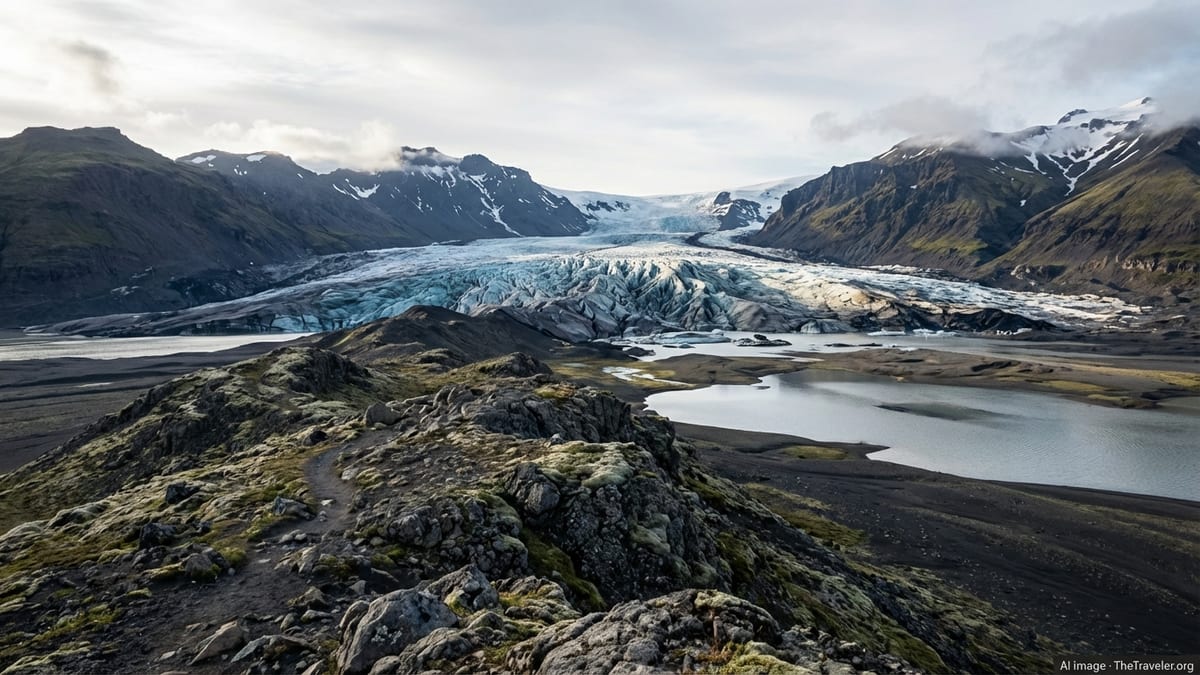
Underestimating Weather and Terrain in a True Arctic Environment
One of the biggest mistakes travelers make in Vatnajökull National Park is assuming that summer latitude and a popular park mean gentle conditions. In reality this is a highland and glacier dominated environment where storms can arrive quickly, temperatures change in hours, and snow, fog or gale force winds are possible at almost any time of year. Even in July or August, a warm morning at sea level can shift to sleet or whiteout on a glacier plateau, and wind strong enough to slam car doors or topple hikers is not unusual.
Another frequent error is treating hiking distances here as if they were comparable to lowland trails back home. Trails in areas such as Skaftafell, the highlands around Askja, or the canyons of Jökulsárgljúfur often cross uneven, rocky ground, old lava, loose scree or snow patches. A route that looks like a short loop on the map can demand far more time and energy than expected, particularly once strong wind or rain combines with chilly temperatures. Starting a long hike late in the day, without leaving margin for deterioration in weather, is a pattern that local search and rescue teams see again and again.
To avoid these pitfalls, always check the latest forecast from Iceland’s meteorological service before you set out, and check again during the day if you have mobile coverage. Pay attention not only to temperature and precipitation but also to wind speed and direction, which can transform an otherwise manageable day into a serious undertaking. If the forecast looks marginal, scale back the plan, choose a lower elevation route, or postpone your hike altogether. In Vatnajökull, turning back is a sign of good judgment, not failure.
Finally, remember that visibility here can drop in minutes. Fog sweeping across a glacier, sideways rain in open sand plains, or drifting snow on a high pass can quickly erase landmarks and trail markers. Navigation that feels simple in clear weather becomes challenging when you cannot see more than a few metres. Carry a paper map and compass and know the basics of how to use them, and treat your phone or GPS as backup, not your only lifeline.
Going Onto Glaciers and into Ice Caves Without Proper Guidance
Glaciers are the signature experience of Vatnajökull National Park, yet they are also one of its greatest hazards when approached casually. A common and extremely risky mistake is walking onto a glacier tongue or exploring the edges of crevassed ice without a qualified guide. Crevasses can be hidden under thin snow bridges or dust covered ice, meltwater channels can collapse without warning, and ice cliffs calve unexpectedly. To the untrained eye, the surface may look solid and safe right up to the moment it fails.
In recent years serious accidents, including a fatal ice cave collapse, have prompted tighter oversight and changing regulations on guided tours inside the park. Safety checks, seasonal closures and stricter contracts with tour companies reflect the reality that glacier and ice cave conditions can shift from day to day. Yet visitors still sometimes seek out unofficial caves, follow footprints away from controlled areas, or attempt to recreate photos they have seen online by approaching unstable arches and overhangs. This kind of improvisation is not just unwise, it can be deadly.
The safest approach is to treat all glaciers and ice caves in Vatnajökull as technical terrain that requires professional guidance and specialized equipment. A reputable local operator will provide helmets, crampons, harnesses and other gear appropriate to the season, and will base go or no go decisions on current assessments rather than on fixed schedules. Expect that a tour may be rerouted, shortened or cancelled if conditions are judged unsafe, and understand that this is a mark of a responsible company, not a sign that you have been shortchanged.
If you are an experienced mountaineer planning independent glacier travel, another mistake is to rely on outdated guidebooks or assume that previous seasons’ tracks reflect present reality. Glacier tongues are retreating, crevasse patterns change, and access routes can shift significantly within a year. You should be prepared to update your route planning with current local information, carry full crevasse rescue equipment, and travel in a properly roped party. Anything less, on this scale of ice, is gambling.
Ignoring Safety Advice, Trail Closures and Local Regulations
Ignoring posted warnings and closures is a surprisingly common behavior in Vatnajökull National Park, particularly in well visited sectors such as Skaftafell and Jökulsárgljúfur where infrastructure and trailheads can give a false sense of safety. Visitors sometimes see ropes, signs or closed gates as obstacles to a better photograph or a quieter viewpoint rather than as essential protection. Stepping beyond barriers near glacier lagoons, walking onto unstable riverbanks, or climbing over safety railings above canyons may seem harmless for a moment, but the risks range from rockfall and sudden ice collapse to undercut banks giving way.
Another mistake is failing to respect seasonal restrictions. Certain areas of the park close temporarily because of snowpack instability, flooding, nesting birds or fragile vegetation emerging after winter. Over the past decade, debate around vehicle access in sensitive highland corridors such as Vonarskarð has shown just how delicate these ecosystems can be and how difficult management decisions often are. When you see that a track is closed to motor vehicles, or that tent camping is restricted to designated areas, it reflects long experience with erosion, habitat damage and safety incidents, not arbitrary rules.
Many first time visitors also underestimate the value of local advisory resources. The park’s visitor centres and rangers track recent accidents, river levels, trail damage and wildlife sensitivities. Skipping a quick conversation at the desk, or assuming that online reviews and social media posts tell you everything you need to know, can mean missing crucial, up to date guidance. Rangers are usually happy to suggest alternatives if your original plan is not advisable that day.
Respect for rules in Vatnajökull is not just a matter of avoiding fines or awkward conversations. It is part of sharing a landscape that must serve conservation, local communities and visitors at the same time. Staying on marked paths, obeying speed limits and respecting closures helps keep the park wild, safer and accessible for everyone who comes after you.
Arriving Poorly Prepared with Inadequate Gear or Planning
Underestimating what to bring is one of the most avoidable mistakes and one that can turn a beautiful day in Vatnajökull National Park into a miserable or risky ordeal. Lightweight sneakers, fashion coats and a single cotton hoodie might be comfortable in Reykjavík, but they are a poor match for wet, windy conditions on a glacial valley trail or a windswept plateau. Hypothermia in Iceland does not require extreme cold; a few hours in near freezing rain with strong wind is enough if you are damp and improperly dressed.
Visitors also frequently skip basic items such as gloves, hats and extra socks, assuming they will not be out long enough to need them. When things go wrong – a turned ankle, a lost trail, an unexpectedly slow group – these small omissions matter. A simple daypack with spare layers, a waterproof shell, food, water and a power bank for your phone dramatically increases your margin for error. Trekking poles, while not essential for every route, can be valuable on steep, muddy descents and uneven moraine.
Planning mistakes are just as important as gear. Trying to combine too many locations in a single day is a classic error along the south side of the park, where glacial lagoons, black sand plains, waterfalls and viewpoints cluster along the Ring Road. Long distances, single lane bridges and slowly driven gravel sections add up. If you pack Skaftafell hikes, a glacier tour and a sunset at a lagoon into one day, you may find yourself rushing trails, ignoring fatigue, or driving tired late at night on unfamiliar roads.
Finally, many travelers forget that they are operating far from their usual support networks. Reliable mobile coverage does not extend to every corner of the park, and in some highland regions it may be patchy or absent. Before heading into more remote sections, such as Askja or interior routes, you should file a travel plan with Icelandic search and rescue through their official channels, carry a fully charged phone and consider renting a satellite beacon if you expect to be beyond signal range. Clear planning and redundancy are far better safeguards than assuming someone will stumble across you if you need help.
Misjudging Driving Conditions, Distances and Road Rules
For many visitors, driving to and through Vatnajökull National Park is part of the adventure. It is also a major source of accidents and close calls. One of the most widespread mistakes is misjudging distances and driving times between Reykjavík, Skaftafell, Höfn and the park’s northern gateways. Maps and navigation apps show smooth lines and estimated times that rarely factor in strong crosswinds, sudden storms, slow moving vehicles, frequent photo stops or unpaved sections. What looks like a comfortable four hour leg can easily stretch to six or more.
Another serious error is treating Iceland’s gravel roads and highland tracks as if they were well graded countryside lanes. On approaches to less visited parts of Vatnajökull, and on interior routes that may open seasonally, surfaces can be loose, rutted and potholed. Sudden transitions from asphalt to gravel, especially at higher speeds, catch many drivers off guard and lead to skids or loss of control. High embankments, narrow shoulders and roadside ditches leave little room for correction. Driving too fast for the surface and weather is a recurring factor in crashes.
Visitors also sometimes overlook that certain highland roads are designated only for four wheel drive vehicles and may be impassable due to snow, rivers or mud even in mid summer. Attempting these routes in a small rental car, or pushing on despite a warning from rangers or road authorities, can leave you stranded or damage your vehicle. Rescue operations in remote glacial areas draw heavily on volunteer search and rescue teams, and needing to be pulled out of a river ford that you were not equipped to cross is an avoidable burden on those services.
Wind deserves particular attention. Along the sand plains south of Vatnajökull, crosswinds can be powerful enough to buffet vehicles dramatically, especially taller campers and vans. A moment’s inattention while opening a car door into gale force gusts has resulted in injuries and expensive damage when doors are ripped from hinges. To minimize risk, park facing into the wind when possible, exit the vehicle carefully and maintain a firm grip on doors. When conditions are severe, postponing travel or waiting in a safe location is far wiser than trying to maintain a schedule.
Disrespecting Fragile Nature and Local Etiquette
Vatnajökull is not only a playground for adventure but also a protected national park and a World Heritage site. One of the most disheartening mistakes visitors make is failing to recognize just how vulnerable its ecosystems are. Thin carpets of moss that cloak volcanic rock can take decades to recover from a single footprint. Cutting across switchbacks on steep trails, stepping off path for a closer photo, or driving a vehicle even a few metres off a designated track can leave scars visible for years. In some heavily visited spots, park staff now spend much of their time repairing damage rather than improving trails.
Litter is another persistent issue. While most travelers are careful with obvious rubbish, small items such as tissue, bottle caps, snack wrappers or cigarette butts accumulate rapidly in popular viewpoints and rest areas. In windy conditions, unsecured trash from car doors or picnic stops can scatter before you even notice. Practicing strict pack in, pack out habits, using the bins available at visitor centres and campgrounds, and securing light items in your vehicle are simple ways to minimize your footprint.
Local etiquette also extends to wildlife and other visitors. During the short Arctic summer, birds nest on cliffs, river islands and heathland across the park. Approaching nests too closely, letting drones buzz overhead, or leaving marked paths through sensitive areas stresses wildlife during a critical breeding window. In some zones dogs must be leashed or are excluded altogether, both for wildlife protection and because grazing livestock may also be present. Keeping noise levels low in backcountry areas, yielding narrow trail sections to uphill hikers and giving photographers or wildlife watchers a bit of space contributes to a more respectful atmosphere.
Finally, cultural respect includes recognizing that Vatnajökull is intertwined with local communities that depend on the land for livelihoods. Treat farm tracks, fences and grazing areas with care, do not block access roads when parking, and follow guidance about private land that adjoins the park. Supporting locally owned accommodations, guides and services is another way to give back to the region that hosts your visit.
Overlooking Insurance, Emergency Resources and Personal Limits
Many travelers arrive in Vatnajökull National Park with comprehensive packing lists but only vague ideas about what would happen if something went wrong. Skimping on travel insurance or choosing a policy that does not cover adventure activities, helicopter evacuation or extended medical care in Iceland is a common oversight. In a remote, high cost destination where rescue operations can involve dozens of volunteers spending hours on a glacier in tough conditions, assuming that you will somehow be looked after without preparation is unrealistic.
Another mistake is unfamiliarity with Iceland’s emergency systems and safety tools. Before heading into the park, you should know that the national emergency number is 112, and that an official app related to this service allows you to share your location quickly in a crisis. Travelers planning remote hikes or highland drives should also use recognized platforms to register their travel plans. This simple step gives search and rescue teams a starting point if you fail to return and can greatly speed up a response.
Perhaps the most subtle error of all is overconfidence. The presence of other tourists, buses and tour groups can create the impression that the national park is an outdoor theme park, where risks are managed and consequences are limited. In reality you are entering an environment shaped by glaciers, volcanoes and powerful rivers, where rescue can take hours and where your own decisions are the most important safety factor. Honesty about your fitness, experience and comfort level, and a willingness to say no to activities that feel beyond your capacity, are as important as any piece of gear.
Listening to your body and your instincts will carry you far. If you feel unusually tired at a trail junction, if weather looks worse than forecast, or if a river crossing or slope feels unsafe, take those signals seriously. Turning back, choosing a shorter loop or skipping a viewpoint you had hoped to see are signs that you are treating Vatnajökull as the serious landscape it is.
The Takeaway
Visiting Vatnajökull National Park is a privilege and, for many, a highlight of a lifetime of travel. The glaciers, volcanic highlands and stark river plains you encounter here exist on a scale and with a rawness that is rare in today’s world. That very wildness, however, leaves little margin for careless mistakes. The most common problems visitors face are not mysterious. They grow from the same roots: underestimating weather and distance, stepping beyond safety advice, venturing onto technical terrain without guidance, or treating fragile nature and local rules as optional.
Approaching the park with humility, preparation and respect transforms the experience. Checking forecasts carefully, dressing for real conditions rather than for photos, choosing professional guides for glacier travel, driving conservatively and listening to rangers does not reduce your adventure. It deepens it, allowing you to stay present with the landscape rather than distracted by avoidable stress. In a place where rescue teams regularly risk their own safety to help those in trouble, the most responsible thing you can do is to reduce the chance you will ever need them.
If you remember nothing else, remember this: Vatnajökull does not need you to be heroic or extreme. It asks you to be thoughtful. Travel within your limits, respect the power of ice, weather and wilderness, and you will leave with memories and photographs instead of cautionary tales.
FAQ
Q1. Do I really need a guide to walk on a glacier in Vatnajökull National Park?
Yes. Glaciers are heavily crevassed, constantly changing terrain. A certified guide brings technical equipment, local knowledge and current safety assessments that independent visitors simply do not have. Walking onto the ice without that expertise is one of the most dangerous mistakes you can make.
Q2. Is summer in Vatnajökull National Park safe enough for beginners without special preparation?
Summer offers milder temperatures and longer days, but conditions can still be harsh with strong winds, sudden rain or fog, and snow at higher elevations. Beginners should stick to well marked trails, check forecasts carefully, carry proper clothing and gear, and avoid glacier or ice cave terrain unless on a guided tour.
Q3. How far in advance should I check weather and road conditions before visiting?
Check both weather and road conditions the day before your trip, again on the morning of travel, and once more during the day if you are covering long distances or heading into higher ground. Conditions in and around Vatnajökull can change quickly, so repeated checks are wise.
Q4. Are highland roads to areas near Vatnajökull safe for regular rental cars?
Many interior and highland roads serving remote parts of Vatnajökull are only suitable for four wheel drive vehicles and open for a limited summer season. A standard rental car may not have the clearance or traction needed, especially where river crossings or deep ruts are involved. Always follow road authority guidance and your rental company’s rules.
Q5. Can I camp anywhere inside Vatnajökull National Park?
No. Wild camping is restricted or prohibited in several parts of the park, and overnight stays are generally limited to designated campsites and specific approved areas. Rules aim to protect vegetation, wildlife and water sources, so always confirm current regulations with visitor centres before pitching a tent.
Q6. What is the biggest packing mistake people make for Vatnajökull?
The most common packing mistake is bringing clothing for sightseeing in town rather than for time in a cold, windy, potentially wet environment. Cotton layers, light sneakers and fashion coats are not enough. Waterproof outerwear, insulating layers, solid footwear, gloves and hats are far more important than stylish outfits.
Q7. How can I minimize my impact on the park’s fragile nature?
Stay on marked trails, avoid stepping on moss or delicate vegetation, never drive off road, pack out all waste and respect seasonal closures. Following established paths and using existing viewpoints for photos do more to protect the landscape than any after the fact clean up.
Q8. What should I do if I get lost or injured on a hike?
If you are lost or injured, stop and avoid making the situation worse by wandering aimlessly or attempting risky shortcuts. Use your phone or emergency app to contact 112 if possible, give clear information about your last known location, and conserve battery. Extra clothing, food and shelter carried from the start will help you stay safe while awaiting assistance.
Q9. Are ice caves in Vatnajökull open all year?
No. Ice cave accessibility depends on season, temperature and safety assessments. Many are only considered safe during colder months, and some seasons see particular caves closed entirely. Trust local operators if they say conditions are not suitable; trying to find unofficial caves on your own is extremely dangerous.
Q10. Is travel insurance really necessary for a short visit to Vatnajökull National Park?
Yes. Even on a short trip, unexpected events such as injuries, vehicle accidents or weather related disruptions can be expensive. A robust policy that covers medical care, evacuation and adventure activities provides a safety net in a remote, high cost country where paying out of pocket can quickly become overwhelming.