

Endicott Arm is one of Southeast Alaska’s most beautiful fjords, a narrow waterway of steep cliffs, waterfalls and floating ice that leads to Dawes Glacier. On many Alaska itineraries it is billed as a once in a lifetime scenic day. Yet every season, passengers step off their ships disappointed, not because Endicott Arm underdelivers, but because they were unprepared for its realities. From wrong expectations about weather and wildlife to simple logistical missteps on board, small errors can cost you the views and memories you came for. Here are the most common mistakes to avoid when visiting Endicott Arm on a cruise and how to make the most of this dramatic fjord.
Arriving With the Wrong Expectations
One of the biggest mistakes is treating Endicott Arm like a guaranteed glacier close up rather than a scenic cruise that is highly dependent on weather, ice conditions and safety decisions made by the bridge. Endicott Arm is a narrow fjord with a single way in and out, and the density of ice increases long before Dawes Glacier itself comes into view. Captains continually assess whether there is enough room to maneuver safely among ice floes. Some days a ship can approach within impressive viewing distance of the face. Other days, especially in early season, it may need to turn around well before the glacier. If you board assuming a specific outcome, anything less can feel like a failure when in reality it is a routine safety call.
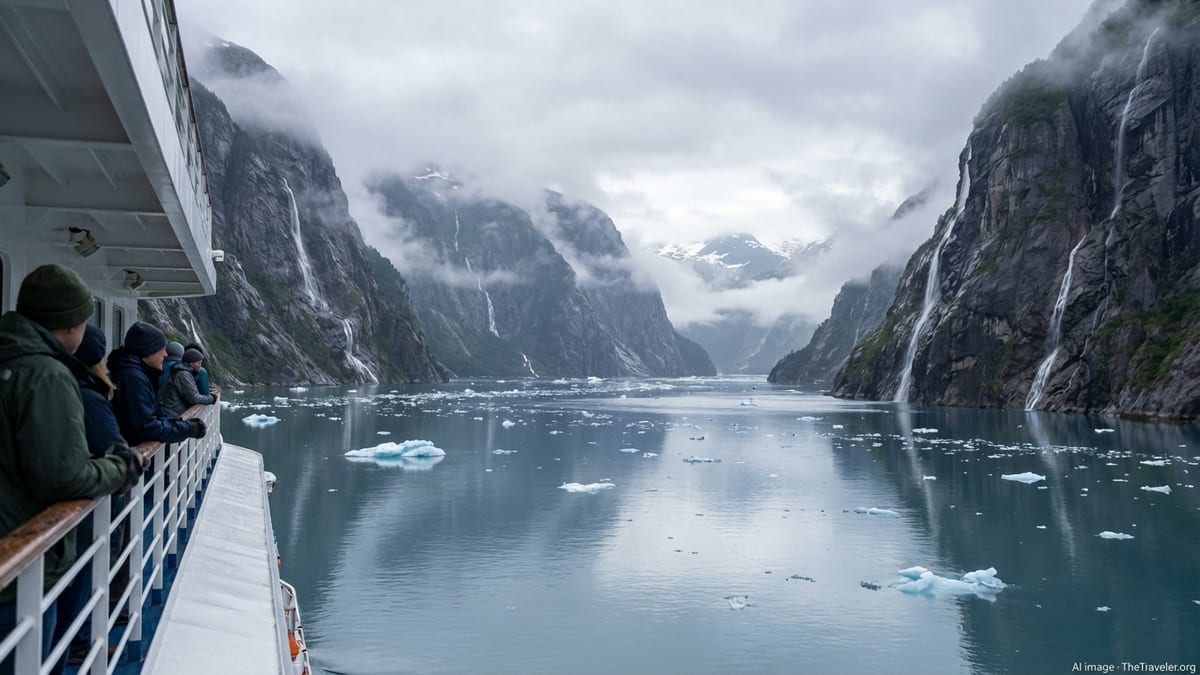
It is also common to confuse Endicott Arm with other marquee glacier destinations such as Glacier Bay or Hubbard Glacier. These areas offer multiple glacier viewpoints and more open water. Endicott Arm in contrast is all about the journey through a single steep walled fjord that funnels your focus forward. Passengers who expect a wide amphitheater of glaciers may not appreciate the enclosed drama of sheer rock walls, waterfalls close to the ship and drifting ice fields. Approaching the day as a slow motion fjord experience, with Dawes Glacier as a possible highlight rather than the only point, leads to far greater satisfaction.
Marketing materials can add to the confusion by showcasing blue sky, glass calm footage taken on ideal days, or by using generic photos of tidewater glaciers that are not Dawes at all. Weather in Southeast Alaska is highly variable and many sailings encounter low cloud, mist or steady rain. The scenery remains impressive in all conditions, but it looks very different to brochure images. Go in expecting moody, shifting conditions rather than postcard perfection, and you are less likely to feel shortchanged by a day that is authentically Alaskan.
Finally, many guests underestimate how early in the day the experience begins. Ships typically enter Endicott Arm in the morning, often around dawn or shortly after, then spend several hours navigating toward the inner fjord. If you plan to sleep in and only head outside when an announcement mentions the glacier, you may miss some of the most atmospheric sections of the transit: the first appearance of ice, waterfalls close to the hull and wildlife along the shoreline. Treat Endicott Arm as a full scenic window rather than a single photo stop.
Underestimating Weather, Cold and Comfort
Another frequent mistake is assuming that because your cruise departs from comparatively mild ports such as Seattle or Vancouver, conditions in Endicott Arm will be similarly comfortable. As the ship pushes deeper into the fjord, air blowing off the ice field drops the temperature noticeably. Wind chill on open decks can make it feel far colder than the forecast suggests. Even on a sunny July afternoon, you can go from light sweater weather to near winter conditions within a short timeframe as you near Dawes Glacier and the concentration of ice.
Passengers who head outside in only a light hoodie, cotton jeans and regular sneakers often end up retreating indoors just as the scenery becomes most dramatic. They then watch through glass, contending with reflections and fogged windows, or simply stay in interior venues and miss large portions of the scene altogether. A better approach is to treat Endicott Arm day as a mountain outing. Bring a small daypack with a windproof, waterproof shell, a warm mid layer, hat, gloves or thin liner gloves, and a scarf or buff. Footwear should be closed toe with decent grip, since decks can be wet from spray and drizzle.
Rain is common in Southeast Alaska and mist often clings to the cliffs of Endicott Arm. Many visitors arrive with only a travel umbrella, which is almost useless on a moving ship where wind can be strong. A hooded waterproof jacket is far more practical and leaves your hands free for binoculars or a camera. Sunglasses are equally important, not only for sun but to cut glare off water and ice. The combination of low sun angle, reflective ice and water can be unexpectedly harsh on the eyes, even under thin cloud.
Comfort is not only about keeping warm but about managing your energy. Standing in one exposed spot for hours is tiring and uncomfortable, which can tempt you back to your cabin at the wrong time. Instead, plan to alternate between outdoor decks and sheltered locations. Identify a promenade or mid level deck with indoor access so you can step inside briefly to warm up, then return outside when you hear ice shifting or the ship changing course. Those short breaks keep you comfortable enough to stay engaged throughout the long transit.
Choosing the Wrong Viewing Spot on the Ship
Many first time visitors head straight to the very top forward deck as the ship enters Endicott Arm, assuming the highest point will offer the best views. That area does indeed provide big panoramas, but it is also the most exposed to wind, spray and cold. On a breezy or damp day, passengers clustered at the bow can quickly find themselves chilled, eyes watering and camera lenses coated in moisture. After a short time, they retreat indoors, leaving the dramatic sections of the fjord to those who planned a more sustainable viewing strategy.
Another common misstep is relying solely on a balcony. A private balcony is wonderful for quiet contemplation and photos but it locks you into one side of the ship. In a narrow fjord, waterfalls, glaciers and wildlife often appear first on one side and then on the other. If you spend the whole transit on your balcony, you risk missing action that is happening out of sight, including harbor seals resting on ice floes or mountain goats high on a cliff that only come into view as the ship turns. You also experience more wind and cold at balcony height, especially on forward facing cabins.
A more flexible approach is to treat your balcony as a secondary viewing option and base yourself on an open deck near the ship’s sides or stern, ideally on a mid level deck with partial wind protection and quick indoor access. From there, you can move easily from port to starboard as points of interest appear, follow commentary from the bridge or naturalist if offered, and adjust your angle relative to the sun and glare. On some lines, lower promenade decks sit closer to the waterline, providing a powerful sense of scale as ice floes and small bergs slide past just meters away.
Timing also matters. Outdoor decks fill quickly when the cruise director announces the ship’s arrival at Endicott Arm, but they are often relatively quiet at first light when the ship is still approaching the entrance. Those early hours can be some of the most beautiful, with soft light picking out distant peaks and the first appearance of ice chunks that signal you are nearing glacier fed waters. If you value photography or a calm atmosphere, consider heading out well before the main crowd, staking out a comfortable spot and then rotating as needed when the fjord narrows.
Being Unprepared for Ice and Itinerary Changes
Perhaps the most disappointing experience for some guests is learning, often on short notice, that the ship will not be able to approach Dawes Glacier closely or in rare cases may need to substitute another scenic area altogether. The mistake here is not checking the seasonal realities and built in uncertainties of Alaska fjords before you sail. Endicott Arm, like nearby Tracy Arm, is known for heavy ice early in the cruise season, particularly in April and May when winter’s accumulation has not yet melted and new calving continues to feed the channel. In some years, ice congestion can persist into early summer, with captains forced to slow down, hold position or turn around miles from the glacier.
Even in mid season, bigger pieces of ice can drift into tighter sections of the arm, making navigation for large ships more challenging. Safety always takes priority, and captains reserve the right to alter plans at any time. Cruise contracts typically make this clear, but many passengers either overlook the fine print or assume changes will not happen to their sailing. As a result, a necessary course alteration is perceived as a broken promise rather than a routine maritime decision. Going in with an understanding that Endicott Arm access can vary significantly week to week will help you take any adjustment in stride.
Weather is another wild card. Dense fog, low cloud ceilings and strong winds can limit visibility and make maneuvering in a narrow fjord unsafe. In these conditions, even if ice levels are manageable, the bridge may decide not to proceed far inside. Some ships may slow at the entrance for scenic views, then resume open water cruising or head to an alternative location such as a wider bay or a different glacier area. This can feel anticlimactic if you expected a full fjord transit, but those same conditions also tend to obscure much of the scenery. Understanding that safety driven changes are part of the Alaska experience helps frame the day correctly.
To avoid frustration, listen carefully to the captain’s updates the night before scenic cruising and again on the morning of Endicott Arm day. Announcements often include expected times for entering and exiting the fjord, likely viewing distances and any known concerns with ice or fog. Adjust your personal plans around those windows. Do not schedule long spa treatments, specialty lunches or other indoor commitments that overlap with the prime scenic period. And if you have a flexible itinerary before or after your cruise, consider sailing later in the season when ice blockage in narrow fjords tends to be less frequent, accepting that Alaska’s conditions are never entirely predictable.
Ignoring Wildlife Opportunities and Photography Realities
Endicott Arm is not just about glacial ice. The fjord and surrounding wilderness host harbor seals, bald eagles, seabirds and occasionally whales or bears along the shoreline. A common mistake is to assume that wildlife will present itself dramatically and obviously in front of the ship. In reality, many sightings are subtle and brief. Harbor seals haul out on small ice floes that drift near but not directly in the ship’s path. Eagles sit motionless in trees or on rocky ledges until they suddenly take flight. Without binoculars or a zoom lens, you may miss these moments entirely or only catch a distant shape.
Bringing a pair of binoculars dramatically changes the experience, allowing you to scan ice fields for seals with pups, watch waterfalls in detail and spot birds along the cliff edges. If you plan to photograph, manage your expectations about gear. You do not need a professional camera to capture memorable images, but a phone alone has limitations in a deep fjord where many subjects are far away. A simple travel zoom camera or a mirrorless body with a moderate zoom lens offers far more flexibility. Just be careful not to spend the whole time glued to your viewfinder. Some travelers return home with full memory cards but little clear memory of having simply watched the glacier and ice in motion.
Conditions in Endicott Arm can also be challenging for photography. Light can shift quickly as the ship moves past high cliffs that cast deep shadows and then open to wide sky. Fog and drizzle can create a muted, almost monochrome palette. Sun, when it appears, reflects strongly off ice and water, risking blown out highlights in your images. Many visitors make the mistake of keeping cameras or phones exposed constantly, only to find lenses smeared with spray and condensation just as calving occurs. A lens cloth, simple rain cover or even a resealable plastic bag helps keep gear dry until you are ready to shoot.
Finally, remember that the fjord tells its story in layers rather than single iconic shots. Ice appears in small fragments long before the glacier, then builds in density until the ship slows amid a crowded surface. Try to document that progression, not just the final approach. Include people and railings in some frames to convey scale, then switch to details of ice textures, waterfalls and seals. Passengers who chase only the perfect postcard of the glacier face sometimes miss the quieter, more intimate scenes that define Endicott Arm as a lived experience rather than just a backdrop.
Overlooking Logistics, Timing and Onboard Communication
Because Endicott Arm is a scenic cruising day rather than a port call, some travelers treat it casually, assuming they can simply look out when convenient. In practice, several logistical missteps can blunt the experience. One is failing to check the ship’s daily program carefully. Schedules usually list approximate times for entering the fjord, nearing Dawes Glacier and turning to exit, along with notes on any naturalist commentary or special programming. If you glance at the program only briefly, you may misjudge when the most dramatic scenery will occur and miss key segments while at breakfast, in the gym or attending an indoor activity.
Another mistake is not understanding how public announcements work onboard. On many ships, full commentary about Endicott Arm is broadcast in public areas and on the open decks, but only key safety announcements are piped into cabins. If you are waiting in your stateroom to hear a detailed update that never comes through the ceiling speaker, you can easily lose track of where you are in the fjord. Keep the ship’s channel tuned to the bridge updates on your television if available, and periodically step into a hallway or public space to listen for announcements. When the captain advises that the ship is approaching the turnaround point or the closest pass to Dawes Glacier, you will want to be outside, not halfway through a shower.
Time zone quirks can also catch passengers out, especially when sailing itineraries that cross borders or change clocks mid cruise. While this matters more for port days than for scenic cruising, it still affects when you wake up and head on deck. Always keep at least one watch or phone set manually to ship time and do not rely solely on automatic updates, which may lag or jump to local land time instead. If Endicott Arm entry is scheduled for early morning, set an alarm and allow enough time to dress in layers, grab a hot drink and secure a viewing spot before the fjord narrows.
Finally, avoid overloading Endicott Arm day with competing priorities. Spa packages, specialty brunches and behind the scenes tours can be tempting, but if they overlap with prime scenic hours you may later regret the trade. Ask staff directly which parts of the day typically offer the best views so you can schedule indoor experiences at times when the ship is either approaching or leaving the fjord in less confined waters. Treat the schedule with the same seriousness you would a treasured shore excursion. Scenic cruising is not a backdrop to your cruise; it is one of its main events.
The Takeaway
Endicott Arm is one of Alaska’s most evocative fjords, a place where narrow rock walls, drifting ice and the distant thunder of a tidewater glacier create an atmosphere that feels almost otherworldly. Yet the quality of your experience depends greatly on preparation and realistic expectations. Many of the disappointments travelers describe stem not from the place itself but from arriving underdressed, choosing inflexible viewing spots, misunderstanding how ice and weather shape the captain’s decisions or assuming that nature will present a choreographed show on their schedule.
By approaching Endicott Arm as a dynamic environment rather than a guaranteed product, you can embrace its moods, whether that means low mist clinging to cliffs, seals scattered on ice floes or a clear approach to Dawes Glacier. Pack layers and simple gear like binoculars, study the ship’s program, respect safety related itinerary changes and remain flexible about where and how you watch. Above all, give yourself the time and space to be present. The slow passage through this remote corridor is as much about what you feel and hear as what you photograph, from ice rubbing softly against the hull to waterfalls echoing off stone. Avoid the common mistakes, and Endicott Arm will likely become one of the most enduring memories of your Alaska cruise.
FAQ
Q1. How likely is it that my ship will reach Dawes Glacier in Endicott Arm?
The likelihood varies by season, ice conditions and ship size. Early season sailings see more ice congestion, while later summer often allows closer approaches, but no captain can guarantee a specific distance in advance.
Q2. Is Endicott Arm better to see from a balcony or from the open decks?
A balcony is comfortable and private, but open decks give you the flexibility to move from side to side and adjust to changing views. The best strategy is to use public decks as your primary vantage point and retreat to your balcony for quieter moments.
Q3. What should I wear for an Endicott Arm scenic cruising day?
Dress in layers as if you were visiting a mountain viewpoint: a moisture wicking base, warm mid layer, windproof and waterproof jacket, hat, gloves and sturdy closed toe shoes. Conditions are usually colder and windier near the glacier than in ports.
Q4. Can bad weather cancel Endicott Arm scenic cruising altogether?
Yes, in some cases heavy fog, low clouds, strong winds or unsafe ice conditions can cause the captain to limit how far the ship enters the fjord or to substitute a different scenic area. Safety always takes precedence over the planned route.
Q5. Will there be commentary while we cruise through Endicott Arm?
Many lines provide bridge updates or naturalist commentary over the public address system and on a dedicated TV channel, but details vary by ship. Check the daily program and be aware that full commentary may not play inside cabins.
Q6. Is seasickness a concern in Endicott Arm?
Seas tend to be relatively calm inside narrow fjords like Endicott Arm compared with open ocean segments. However, sensitive travelers may still feel motion, so carrying medication or remedies is wise, especially for rougher stretches before or after the fjord.
Q7. What kind of wildlife might I see in Endicott Arm?
Common sightings include harbor seals on ice floes, bald eagles along the cliffs and various seabirds. Whales, bears or mountain goats are possible but not guaranteed. Binoculars greatly improve your chances of spotting distant animals.
Q8. Do I need professional camera gear to photograph Endicott Arm?
No. A modern smartphone can capture excellent wide scenes, but a simple camera with a zoom lens offers more flexibility for wildlife and glacier shots. More important than gear is protecting lenses from spray and taking time to enjoy the view without always shooting.
Q9. When during the day is the best time to be on deck?
Ships often enter Endicott Arm in the morning, with the most dramatic scenery as the fjord narrows and the ice density increases near the inner reaches. Check your daily program for approximate timings and plan to be outside before the ship nears those sections.
Q10. How far in advance should I start planning for an Endicott Arm cruise?
For a typical Alaska season, starting planning at least six to twelve months ahead gives you better cabin choice and flexibility on dates. It also allows time to research seasonal patterns, pack appropriate gear and understand how scenic cruising days like Endicott Arm fit into your itinerary.