

The Netherlands is one of Europe’s most welcoming and efficiently organized destinations, but that does not mean it is foolproof for first-time visitors. Between unfamiliar cycling culture, local laws that are stricter than many assume, and the gravitational pull of Amsterdam’s busiest streets, it is easy to make missteps that waste time, money, or in some cases lead to real trouble. Understanding how Dutch systems and social norms work before you arrive will help you navigate the country confidently and respectfully.
Overthinking Logistics and Underestimating Dutch Efficiency
Many visitors arrive in the Netherlands expecting complicated transfers, confusing ticket systems, and long delays, only to discover that the country’s transport network is one of the most efficient in Europe. A common mistake is overbooking private transfers or costly taxi rides from airports such as Schiphol, when trains and local buses are usually faster and far cheaper. Dutch public transport is integrated and well signposted in English, so in most cases you can tap a contactless bank card or buy a simple travel card and be on your way within minutes.
Another frequent error is not checking timetables and platform information closely. Trains can look similar, and several services may depart from the same platform in quick succession. Boarding the wrong train or tram because you only recognized part of the destination name leads to unexpected detours or fines for being in the wrong class or zone. Take a moment to verify the final destination and intermediate stops on the platform displays, and remember that Dutch transport tends to run punctually, so arriving just one or two minutes late can mean a missed connection.
Travelers also underestimate how compact Dutch cities are. Booking hotels on the very busiest streets in central Amsterdam or Rotterdam from fear of being too far away often results in higher prices, more noise, and less authentic surroundings. In reality, well-connected neighborhoods a few tram stops or a short bike ride from the historic center can be more comfortable and still very convenient. Embracing the dense, walkable nature of Dutch cities is one of the simplest ways to improve your stay.
Finally, visitors sometimes forget that Dutch systems are designed for self-service. From train ticket machines to supermarket checkouts, you are expected to read the screen, follow clear instructions, and only seek staff help if something truly goes wrong. Taking a few minutes to familiarize yourself with how payment, check-in, and ticket validation work will reduce stress and keep queues moving for everyone.
Misreading Cycling Culture and Ignoring Bike Lanes
Cycling is woven into everyday life in the Netherlands, and misunderstanding how it works is one of the biggest mistakes tourists make. Many visitors treat bike paths as convenient sidewalks or photo spots, stepping into them while looking at their phones or maps. Dutch cyclists, who are often commuting to work or school, move quickly and expect their path to remain clear. When you hear a bicycle bell behind you, it is not a friendly greeting but a firm request to move out of the way immediately.
Renting a bicycle without knowing the rules is another common source of problems. Some travelers wobble along slowly, stop in the middle of intersections to take photos, or ride two abreast on narrow paths, all of which can annoy locals and increase the risk of collisions. In the Netherlands, cyclists must generally follow the same traffic signals and direction of travel as cars, stay in marked bike lanes where provided, and use hand signals when turning. At night, front and rear lights are required by law, and cycling without them can lead to fines as well as safety risks.
Visitors who normally wear helmets at home are often surprised that most Dutch adults do not. While helmet use is a personal choice, do not mistake the relaxed appearance of local cyclists for a lack of rules. Traffic is dense, intersections can be complex, and different types of road users share space in close proximity. If you are not an experienced cyclist, consider starting with quiet routes, joining a guided bike tour that explains local etiquette, or relying on walking and public transport in the busiest urban areas.
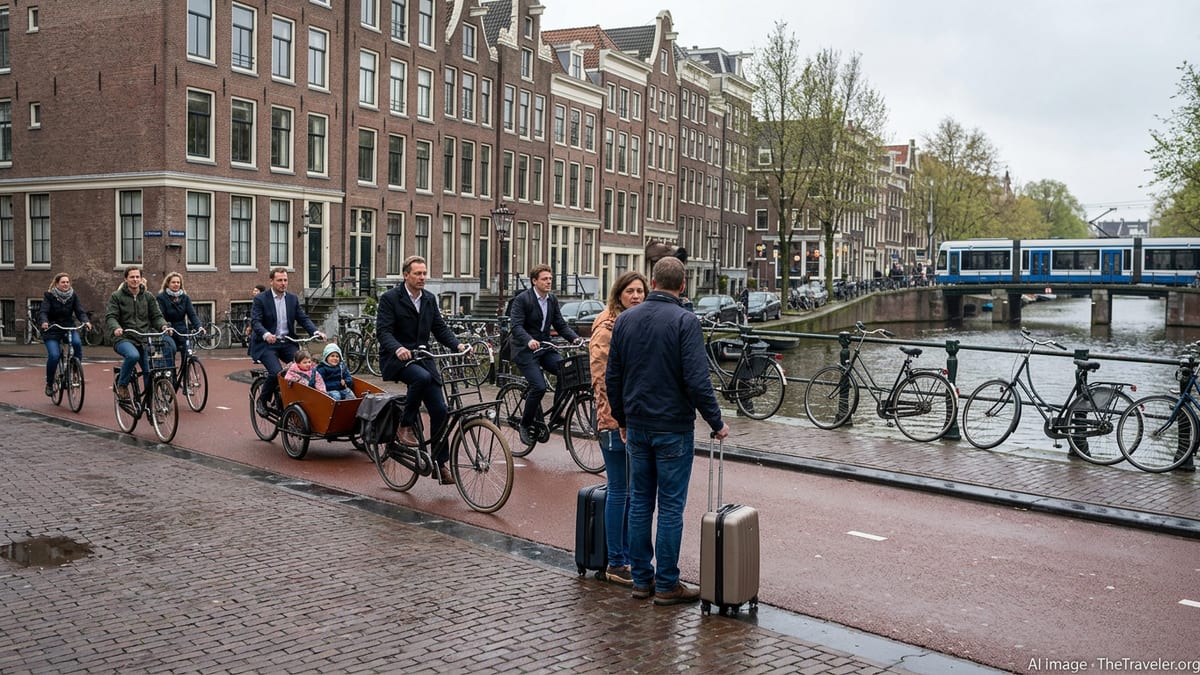
Even if you never get on a bike, understanding cycling culture matters. When crossing a street, look carefully for bike lanes in addition to car lanes and trams. The red or brick-colored strips with bicycle symbols are not decorative pavement; they are active roads. Stand back from them when waiting at crossings, avoid leaving luggage or strollers in the lane, and cross at right angles so cyclists can predict your movements.
Thinking Amsterdam Is the Netherlands
Amsterdam’s canals, museums, and nightlife make it an obvious first stop, but a major mistake is equating the entire Netherlands with one city. Many itineraries allocate four or five full days solely to Amsterdam, then depart without seeing any of the country’s other landscapes, towns, or cultural traditions. Not only does this contribute to overcrowding in an already busy city center, it also shortchanges travelers who miss out on the country’s variety.
Beyond Amsterdam lie historic cities such as Utrecht, Haarlem, Leiden, and Delft, each with its own character, canals, and architecture but fewer crowds. Rotterdam offers striking modern design and a major port, while The Hague combines international institutions with seaside neighborhoods. Smaller towns and villages provide a window into everyday Dutch life that can be harder to glimpse in areas dominated by short-stay visitors and souvenir shops.
Another side effect of staying only in Amsterdam is paying more for almost everything. Accommodation, food, and activities in the most touristed districts are often priced at a premium. By adding even one or two nights elsewhere in the country, visitors can experience quieter streets, more local-oriented restaurants, and often better value for money. Thanks to the compact size of the Netherlands and frequent train connections, day trips and multi-city routes are easy to arrange.
Spreading your time around also helps you see more than the famous canal ring and red-light district. Whether you are interested in contemporary architecture, North Sea beaches, polder landscapes, traditional windmills, or cutting-edge design, there is likely a city or region that showcases it particularly well. Thinking of Amsterdam as a starting point rather than the entire destination makes for a richer, more balanced trip.
Misunderstanding Dutch Social Norms, Tipping, and Service
Travelers often come to the Netherlands expecting the same style of service they know from home, whether that is extremely attentive staff or strong emphasis on formality. Dutch culture is generally direct, practical, and reserved. One common surprise is that restaurant servers do not check in frequently or strike up extended small talk. This is not rudeness; it reflects a belief that customers should be allowed to enjoy their meal in peace and simply signal when they need something.
Tipping is another area where misconceptions abound. In most cases, service charge is already included in the bill, and wages are not built on tips to the same extent as in some countries. Rounding up the total or leaving a modest percentage for particularly good service is appreciated, especially in sit-down restaurants, but large or automatic tips are neither expected nor required. In casual cafes, bars, and fast-service spots, many locals only round up to the nearest euro.
Communication style can feel abruptly honest to visitors from more indirect cultures. Dutch people generally value clarity over politeness formulas, so you may hear straightforward feedback if you block a bike lane, stand on the wrong side of an escalator, or ignore a queue. This is not meant to be offensive; it is a way of keeping shared spaces running smoothly. Responding calmly, adjusting your behavior, and not taking it personally will make interactions much easier.
Finally, respect for privacy is taken seriously. Photographing strangers closely without permission, especially in sensitive areas such as the red-light district, is frowned upon and in some cases actively policed. Keep your voice at a moderate level on public transport, ask before taking personal photos, and remember that residential canals and streets are people’s homes, not just scenic backdrops.
Getting Coffee, Cannabis, and Alcohol Rules Wrong
One of the most persistent sources of confusion for visitors is the difference between ordinary cafes and licensed cannabis coffee shops. It is perfectly possible to order a regular espresso in a normal cafe that has nothing to do with drugs, while coffee shops are specialized venues where the sale of small quantities of cannabis is tolerated under strict conditions. Assuming that every relaxed-looking bar allows cannabis use, or that coffee shops operate like casual tourist attractions, can lead to awkward situations or legal trouble.
Many travelers underestimate how regulated this scene actually is. Age limits are strictly enforced, carrying cannabis across borders is illegal, and possession is only tolerated up to small personal-use amounts. Street dealers, who sometimes target tourists near nightlife areas, are always a bad idea. Apart from the legal risk, their products are unregulated and may contain dangerous substances. Inside licensed coffee shops, staff typically explain product strengths and recommended quantities; it is wise to start with a very small amount, especially if you are unfamiliar with local potency.
Alcohol regulations also surprise some visitors. Public drinking is restricted or banned in many city centers, on public transport, and near stations, with authorities issuing fines for open containers or public drunkenness. Late-night noise on residential canals, urinating in public, and risky behavior near unfenced waterways can all result in penalties. The combination of alcohol, narrow canal edges, and crowded streets is particularly hazardous, so pacing yourself and choosing licensed venues over street drinking is both safer and more respectful.
It is also important to remember that tobacco smoking is banned in most indoor public spaces, including many bars and cafes. Some venues provide designated outdoor areas or separate rooms that comply with current regulations, but you cannot assume that lighting a cigarette indoors will be tolerated. Reading posted signs, following staff instructions, and when in doubt asking politely will help you navigate these overlapping rules without incident.
Overcrowding Hotspots and Ignoring Basic Safety
Another widespread mistake is treating heavily touristed areas as if they were theme parks rather than functioning neighborhoods and workplaces. In districts with dense crowds, such as around major train stations, popular squares, and nightlife streets, pickpocketing is more frequent than in quieter zones. Travelers who walk with phones held high for photos, bags unzipped, or wallets in back pockets make easy targets. Keeping valuables out of sight, using cross-body bags, and being alert in crowded trams or metros significantly reduces the risk of petty theft.
Some visitors also underestimate the physical risks posed by canals and busy streets. Balancing on the edge of bridges for a better selfie, sitting on narrow railings after a night out, or cycling while intoxicated may look harmless in the moment but can have serious consequences. The combination of water, stone, and moving traffic leaves little margin for error. Choosing safer spots for photos, staying behind barriers where they exist, and arranging a taxi or night tram rather than cycling after heavy drinking are all sensible precautions.
Overcrowding can make certain times and places feel overwhelming even for seasoned travelers. Arriving at major museums without a timed ticket, trying to navigate narrow alleys with large wheeled suitcases at peak hours, or joining extremely popular seasonal events without understanding the scale of the crowds can lead to frustration. Booking entry slots in advance where possible, traveling outside rush hours, and using luggage storage facilities away from the busiest streets can make the experience more manageable.
Travel insurance, while not a legal requirement for many visitors, is another subject people overlook. Even in a country with high-quality healthcare, non-residents can face significant costs for emergency treatment or hospital stays. Comprehensive coverage that includes medical care, theft, and trip disruptions offers peace of mind and ensures that an accident or illness does not turn a short visit into a financial ordeal.
Misjudging Weather, Seasons, and What to Pack
Photos of tulip fields, canal-side terraces, and blue skies have given many travelers the impression that the Netherlands is predictably mild and sunny. In reality, the weather is changeable and often wetter and windier than expected. A frequent mistake is packing only light clothes, canvas shoes, or a single fashionable jacket, then spending much of the trip cold and damp. Even in late spring and early autumn, temperatures can drop quickly, especially in the evening or near the coast.
Visitors also sometimes misjudge seasonal patterns. Tulip season, for example, is relatively short and can shift slightly depending on the year’s weather. Arriving too early or too late because you assumed flowers would bloom throughout spring can be disappointing. Similarly, major holidays and national celebrations such as King’s Day turn city centers into massive street parties, which is exciting if you plan for it but frustrating if you expected a calm day of museum visits.
Packing layers is more effective than relying on one heavy coat. A waterproof shell, a warm sweater, and comfortable waterproof shoes are invaluable throughout much of the year. An umbrella is useful, but wind can make compact models challenging; many locals rely on good outerwear instead. In summer, heatwaves do occur, but air-conditioning is not universal in older buildings, so light sleepwear and the ability to ventilate your room may be more important than at home.
Daylight hours also affect how you plan. In winter, evenings fall early, making it wise to schedule most sightseeing during the middle of the day and reserve nighttime for cozy restaurants, concerts, or indoor attractions. In contrast, the long days of late spring and summer invite longer excursions, sunset walks along canals, and more time outdoors, provided you are dressed for the evening breeze.
The Takeaway
Traveling successfully in the Netherlands is less about memorizing obscure rules and more about paying attention to how the country organizes shared space. Respect for bike lanes, clear communication, and an understanding that city centers are living neighborhoods rather than amusement parks go a long way. When visitors adapt to the rhythm of Dutch life, they usually find that everything from public transport to museum visits becomes easier and more enjoyable.
Avoiding the most common mistakes also opens up space for richer experiences. By venturing beyond Amsterdam, learning the basics of cycling etiquette, familiarizing yourself with local laws around cannabis and alcohol, and planning realistically for the weather, you gain the freedom to explore at your own pace. The Netherlands rewards curiosity, consideration, and a willingness to meet the country on its own terms. With a bit of preparation and an open mind, the small inconveniences that trip up many first-timers can become non-issues, leaving you free to focus on the canals, coastlines, and cultural gems that brought you here in the first place.
FAQ
Q1. Do I need to rent a bike to experience the Netherlands properly?
Not necessarily. Cycling is a big part of Dutch culture, but public transport and walking are excellent alternatives. If you are not confident on a bike, you can still enjoy the atmosphere safely by using trams, trains, and buses, then perhaps joining a short guided bike tour once you understand the rules.
Q2. Is it true that cannabis is legal everywhere in the Netherlands?
No. Cannabis is not fully legal, but its sale in small quantities is tolerated in licensed coffee shops under strict conditions. Street dealing remains illegal, exporting cannabis is forbidden, and possession is only tolerated up to small personal amounts. Outside licensed venues, local rules can be much stricter than many visitors expect.
Q3. How strict are Dutch authorities about walking in bike lanes?
Very strict in practice, even if you are unlikely to receive a formal fine just for stepping into a lane. Cyclists expect their paths to be clear and will ring bells or shout if you stray into them. For your own safety and to avoid conflict, stay on sidewalks and cross bike lanes quickly at designated points.
Q4. Do I have to tip like I would in the United States?
No. Service charges are generally included in menu prices, and staff wages do not depend on tips in the same way. Rounding up the bill or leaving a modest tip for good service in restaurants is appreciated, but large percentages are not customary. In casual places, many locals simply round to the nearest euro.
Q5. Is Amsterdam safe at night for solo travelers?
Overall, yes, but with normal city precautions. Busy nightlife and red-light areas can attract pickpockets and people selling illegal substances, so keep valuables secure, avoid unlit side streets, and decline offers from street dealers. If you feel uncomfortable walking, use official taxis, rideshares, or night buses and trams where available.
Q6. Can I drink alcohol in public in Dutch cities?
Often you cannot. Many municipalities restrict or ban open alcohol in certain streets, squares, and on public transport. Signs usually indicate where drinking is prohibited, and fines are possible for open containers or public drunkenness. It is safest to consume alcohol in licensed bars, terraces, and restaurants.
Q7. What is the biggest mistake people make with Amsterdam’s museums?
Arriving without a timed ticket during busy periods is a frequent mistake. Major museums and popular attractions often require or strongly encourage advance reservations, especially in peak season and on weekends. Booking a time slot ahead reduces waiting, avoids disappointment, and makes it easier to plan the rest of your day.
Q8. How should I dress for the weather in the Netherlands?
Think layers and waterproofing rather than heavy single pieces. The weather can change quickly, so a light but effective rain jacket, a warm layer, and comfortable waterproof shoes are essential almost year-round. Even in summer, evenings can be cool and breezy, especially near the water.
Q9. Is it worth leaving Amsterdam if I only have a few days?
Yes, if you plan carefully. Because the Netherlands is compact and well connected by train, you can see another city or town as a day trip or even split a short stay between Amsterdam and one additional destination. This approach often leads to more varied experiences and slightly calmer surroundings.
Q10. Will I have trouble communicating if I do not speak Dutch?
Unlikely. English is widely spoken, especially in cities and tourist-facing roles. Learning a few basic Dutch words and greetings is appreciated, but you can navigate transport, restaurants, and attractions in English. Signage in public spaces and museums is also commonly provided in English.