

Relocating to the United Arab Emirates depends heavily on securing the correct visa, yet many expats encounter avoidable rejections or delays at the application stage. As immigration scrutiny has tightened and digital screening has expanded, seemingly minor errors in UAE visa applications now carry higher operational risk. Understanding the patterns behind refusals is critical for anyone assessing the practicality and timeline of a move to the UAE.
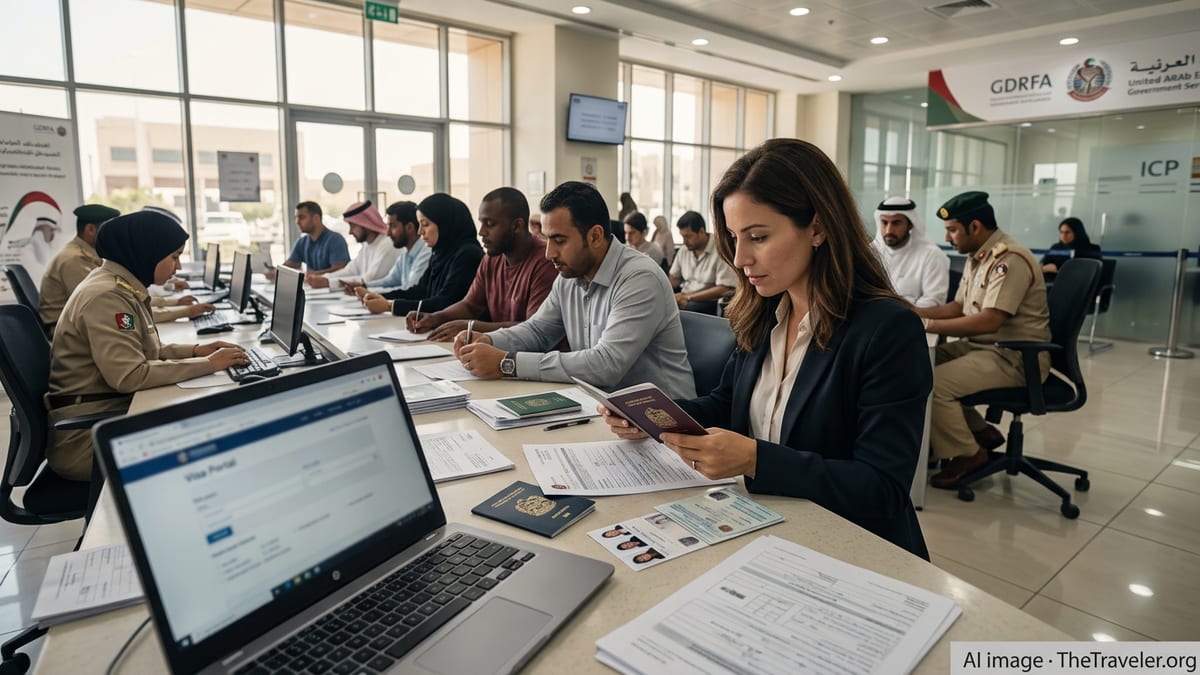
Why UAE Visa Application Accuracy Matters for Relocation Feasibility
For prospective expats, the UAE visa process is no longer a purely administrative hurdle but a decisive factor in relocation feasibility. Authorities use integrated platforms such as ICP and GDRFA systems to cross-check identity, immigration history, and documentation consistency, and they are increasingly intolerant of discrepancies or incomplete files. Recent practice shows that a significant share of refusals results from preventable errors rather than ineligibility.
Policy tightening since around 2024 has placed greater emphasis on documentation accuracy and traceability. Reports covering different visa categories, including work, visit, virtual work, multi-year visit, and Golden Visa applications, indicate that documentation and data-quality issues are frequent rejection triggers. Some analyses of rejection decisions for long-term visas have suggested that documentation problems alone account for roughly one-third of refusals, reflecting a clear systemic pattern rather than isolated cases.
For expats evaluating a UAE move, this environment means the real risk is not just whether they meet core eligibility criteria, but whether their application file is internally consistent across platforms, employers, and time. A relocation plan that assumes straightforward visa issuance without accounting for these operational risks may underestimate both lead times and the probability of costly disruption.
Recognizing the most common mistakes allows applicants and sponsoring employers to design more robust application workflows, introduce internal checks, and allocate adequate time for remediation if systems flag issues. This is especially important where move dates, school start terms, or employment commencement dates depend on visa approval.
Incorrect or Inconsistent Personal Data
One of the most persistent causes of UAE visa rejections is incorrect or inconsistent personal data entered on application forms compared with the passport and, where relevant, Emirates ID records. Frequent issues include spelling errors in names, transposed digits in passport numbers, mismatched dates of birth, and discrepancies between Arabic and Latin-script spellings. Even minor differences that might be tolerated in some jurisdictions can lead to outright refusal in UAE systems, as immigration platforms are designed to detect and flag mismatches automatically.
These inconsistencies often arise because multiple parties edit the same data. Travel agents, employers, and PROs may retype information from scans, and applicants may repeat entries across ICP, GDRFA, Amer, and employer HR portals. Each manual step increases exposure to error. Recent advisories emphasize that data entered into UAE portals must exactly match passport and other official records, including spacing, order of names, and document numbers, to avoid automatic rejection or manual review backlogs.
Another dimension of inconsistency involves historical records. If an applicant has previously visited or resided in the UAE, immigration systems may still hold older spellings or passport numbers. Where these do not align with current details, new applications can be delayed while records are reconciled. Cases have been reported where exits were not properly recorded, leaving old visas technically active, which then blocked new applications until the underlying file was corrected.
From a relocation risk perspective, incorrect or inconsistent personal data is a low-cost but high-impact failure point. It can lead to same-day rejections for virtual work or visit permits, interrupted travel plans, and unexpected delays in residence processing. Mitigation requires disciplined identity-data management well before formal submission, particularly for expats with prior UAE immigration history.
Submitting Incomplete or Non-Compliant Documentation
Incomplete documentation is consistently identified as a primary cause of UAE visa rejection across visa types. Authorities commonly describe rejected cases where a single missing document, an unreadable scan, or a non-compliant format stops processing. For work and residency visas, missing items such as attested degree certificates, properly formatted employment contracts, or required clearances can result in immediate refusal or a “returned for missing documents” status that effectively pauses the relocation timeline.
Document quality is an equally important factor. Immigration and visa service providers note that unclear passport scans, cropped images, or low-resolution uploads are regularly dismissed. Blurry passport photos, document edges cut off in scans, or reflective glare on laminated pages can cause automated systems to fail recognition checks. This is particularly relevant since authorities have added new mandatory elements, such as the requirement in late 2025 for a clear image of the passport’s external cover page for most visa and entry-permit applications, increasing the number of documents that must meet technical standards.
Expats also underestimate the impact of mismatched supporting documents. Bank statements, salary certificates, tenancy contracts (for certain sponsorships), and relationship proofs for dependents must align with the declared purpose and category of visa. If income levels, addresses, or family ties cannot be clearly inferred from the documentation, authorities may treat the file as incomplete even if all items are technically uploaded.
For relocation planning, incomplete or non-compliant documentation introduces both uncertainty and non-trivial costs. Many processing fees are non-refundable once an application is in progress, and resubmissions may require new attestations or translations. Building a document checklist aligned with current UAE requirements and pre-validating quality and consistency before submission substantially reduces the risk of multiple application cycles.
Choosing the Wrong Visa Category or Misstating Purpose
Another recurrent mistake is selecting a visa category that does not match the applicant’s actual situation or intention. As the UAE has diversified its visa framework to include jobseeker visas, remote-work permits, multi-year tourist visas, and various Golden Visa categories, the matrix of eligibility and documentation has become more complex. Applications may be refused on “eligibility” or “failed eligibility” grounds where the chosen category does not clearly correspond to the applicant’s profile or evidence.
Typical misalignments include remote workers applying for virtual work visas without meeting minimum income or employer requirements, visitors using tourist visas while signaling employment-seeking purposes, or investors and property buyers targeting Golden Visa categories without matching investment thresholds or documentation. In such cases, even technically complete applications are rejected because the purpose and supporting documents do not satisfy the rules of the category selected.
Misstating or vaguely stating the purpose of travel can lead to similar outcomes. Authorities scrutinize whether itinerary, financial documents, and sponsorship details support the declared purpose, especially in tourism-related categories amid heightened efforts to separate genuine tourists from de facto jobseekers. Inconsistent narratives between invitation letters, hotel bookings, and employment history can undermine credibility and generate refusals.
For expats considering relocation, choosing the correct visa pathway is strategic. An initial misstep into the wrong category not only risks rejection but can also trigger additional questions in subsequent applications, particularly if prior refusals are on record. Clarifying the appropriate visa type and ensuring that all evidence is tailored to that category is central to a predictable relocation trajectory.
Overlooking Immigration History, Overstays, and Old Files
Many expats underestimate how comprehensively UAE authorities track prior stays, overstays, unpaid fines, and unresolved visas. Recent commentary and case examples show that applications are often blocked because previous visas remain active in the system, exits were not correctly recorded at departure, or fines and administrative issues from earlier visits remain unsettled. In such scenarios, new applications can be automatically rejected or held until records are regularized.
Overstays on prior visit or residence visas are a critical red flag. Even where fines were eventually paid, the overstay history can prompt closer scrutiny of subsequent applications and, in some cases, refusals if authorities assess a risk of non-compliance. Similarly, if an expat previously held a UAE residence or work permit that was not properly canceled when they left the country, immigration systems may still show them as resident, effectively blocking new entry-permit issuance until manual intervention rectifies the status.
Duplicate or fragmented records also contribute to hidden obstacles. For example, a person who previously entered the UAE using one passport and later renews their passport may find that immigration systems still associate their old passport number or an outdated UID with an active or unresolved file. This can produce conflicting system messages such as an “active visa” status even though the individual has been out of the UAE for months and considers their visa expired.
From a relocation-risk lens, overlooking immigration history is a medium-probability, high-consequence mistake. Resolving legacy issues may require in-country representation, professional PRO services, or visits to immigration counters. Expats planning moves should allocate lead time to check for outstanding fines, active files, or exit-record anomalies well before committing to employment start dates or non-refundable logistics.
Mismanaging Timelines, Medicals, and Validity Windows
A further class of common errors relates to timing, especially around entry-permit validity, in-country status changes, and mandatory medical testing for residency. UAE entry permits typically have specified validity windows within which the holder must enter the country or complete status-change processes. Applicants sometimes misunderstand these deadlines, entering too late or failing to finalize residence formalities in time, which can void the permit and require reapplication.
For employment-linked visas, medical fitness tests in the UAE are mandatory and must be passed within prescribed stages of the process. A frequent mistake is assuming that arrival equals immediate security of status and delaying medicals or Emirates ID biometrics. If medical appointments are missed or delayed beyond allowed periods, residence issuance can stall or be refused, leaving the applicant with an incomplete transition from entry permit to residency.
In addition, documentation such as passports, police clearances, education attestations, and tenancy contracts may need minimum remaining validity or recent issue dates. Submitting documents close to their expiry can cause last-minute disruptions, especially where approval processing takes longer than anticipated. Applicants sometimes discover only after submission that a passport will expire before the intended residence visa term, forcing either a passport renewal or a shortened visa.
For relocation planning, mismanaging these timing variables converts a controllable administrative process into a source of volatility. Aligning flight dates, onboarding schedules, school enrollments, and housing with the actual visa processing timeline requires conservative assumptions about processing speed and proactive completion of post-arrival requirements.
Relying Blindly on Third-Party Agents or Outdated Processes
Many UAE visa applications are filed through travel agencies, typing centers, or employer-appointed PROs. While these intermediaries can add efficiency, overreliance on them without direct visibility into the application often results in misunderstandings and uncorrected mistakes. Examples have been reported where applicants were told a visa was not processed or was rejected, only to later find that an approval existed in the system but the document was never retrieved or shared.
Another risk is the use of outdated process assumptions. UAE immigration systems and portal interfaces evolve frequently. Requirements such as new mandatory uploads, changes in available services through the ICP app, or modified refund and download options can shift within months. Applicants who rely on old checklists or informal advice may omit newly required elements or pursue a service route that has been removed or reconfigured, leading to rejections or stalled files.
In some cases, lack of transparency about rejection reasons leads to confusion such as ambiguous statuses or generic terms like “rejected to receive.” These can indicate that required documents were never submitted or that the file did not pass preliminary vetting. Without direct access to the underlying application record or official notes, applicants may reapply without addressing the root cause, repeating the same mistakes across multiple submissions.
From a relocation-governance perspective, expats and employers reduce risk by maintaining direct access to official portals, tracking reference numbers, and ensuring that any external agent’s work is fully visible and verifiable. This approach supports faster problem diagnosis and prevents avoidable duplication of fees and effort.
The Takeaway
For expats evaluating a move to the UAE, visa application mistakes represent a significant operational risk that can disrupt otherwise viable relocation plans. The environment in 2025 and 2026 is characterized by tighter scrutiny, expanded digital cross-checking, and less tolerance for discrepancies or incomplete files. Many rejections arise from controllable issues such as spelling errors, low-quality document scans, wrong visa category selection, unresolved historical records, and mismanaged timelines rather than from fundamental ineligibility.
Decision-grade relocation planning should therefore treat visa processing as a structured project rather than a routine formality. This entails auditing identity data against official documents, constructing updated document checklists aligned with current UAE requirements, confirming the visa category that best matches long-term intentions, and reviewing prior UAE immigration history for any unresolved issues. Where intermediaries are involved, direct access to official systems and clear visibility of application status reduce the probability that errors persist unnoticed.
By approaching the UAE visa process with the same rigor applied to employment contracts or housing commitments, expats can materially lower the risk of late-stage refusals and unexpected delays. This improves the reliability of relocation timelines and provides a more accurate basis for deciding whether and when a move to the UAE is practical.
FAQ
Q1. What are the most common reasons UAE visas are rejected for expats?
Typical reasons include incorrect personal data, incomplete or poor-quality document uploads, choosing the wrong visa category, unresolved previous visas or fines, and missed validity or medical-test windows. Most of these issues are administrative and preventable with careful preparation.
Q2. How serious are spelling mistakes or number errors on a UAE visa application?
Even minor spelling mistakes in names or transposed digits in passport numbers can trigger automatic rejections or manual reviews. UAE systems rely heavily on exact data matching, so applications should mirror passport and other official documents precisely.
Q3. Can a previous overstay in the UAE affect a new visa application?
Yes. A history of overstay, even if fines were paid, can lead to heightened scrutiny and in some cases refusal, especially if the new application does not clearly demonstrate improved compliance and credible plans for timely exit or status regularization.
Q4. What documentation problems most often delay work or residence visas?
Frequent issues include missing attested degrees, incomplete employment contracts, unclear passport or photo scans, and supporting documents that do not align with declared salary, role, or family relationships. Any single missing or non-compliant document can stall the entire process.
Q5. How can expats avoid choosing the wrong UAE visa category?
Applicants should first map their actual purpose and profile against current UAE visa types and then verify eligibility and documentation expectations for that category. Aligning income levels, employer status, investment amounts, or family circumstances with the chosen route reduces the risk of “failed eligibility” rejections.
Q6. What role does previous UAE immigration history play in new applications?
Immigration systems track previous entries, exits, residencies, and fines. Active old files, unclear exit records, or unpaid penalties can block or delay new applications. Checking for and resolving such issues before applying is essential for a predictable timeline.
Q7. Are visa processing fees in the UAE refundable if an application is rejected?
In many cases, once a visa application has entered processing, core government fees are not refundable, even if the application is refused due to errors. This makes accurate, complete first-time submissions financially important.
Q8. How far in advance should an expat start the UAE visa process before relocating?
While nominal processing times can be short, a prudent planning window is several weeks to a few months, depending on visa type. This allows for collecting attestations, resolving any legacy issues, and addressing potential rejections or requests for additional documents without disrupting move dates.
Q9. Is it safer to apply through a visa agency or directly through official UAE portals?
Agents can simplify procedures but do not eliminate responsibility for accuracy. The safest approach is to ensure that, whether using an agent or not, the applicant or employer retains direct access to official portals, can verify all entries, and can see real-time status updates.
Q10. What is the best way to reduce the risk of UAE visa rejection when planning a move?
The most effective measures are strict data accuracy, updated document checklists, selecting the correct visa route, early checks on prior immigration history, and conservative assumptions about timelines. Treating the visa as a critical workstream within the relocation project significantly lowers rejection risk.