

More news on this day
In 2026, concert calendars are starting to look a lot like flight schedules, as music fans arrange entire vacations around tour dates, residencies and back-to-back festival weekends rather than traditional beach escapes or city breaks.
Get the latest news straight to your inbox!
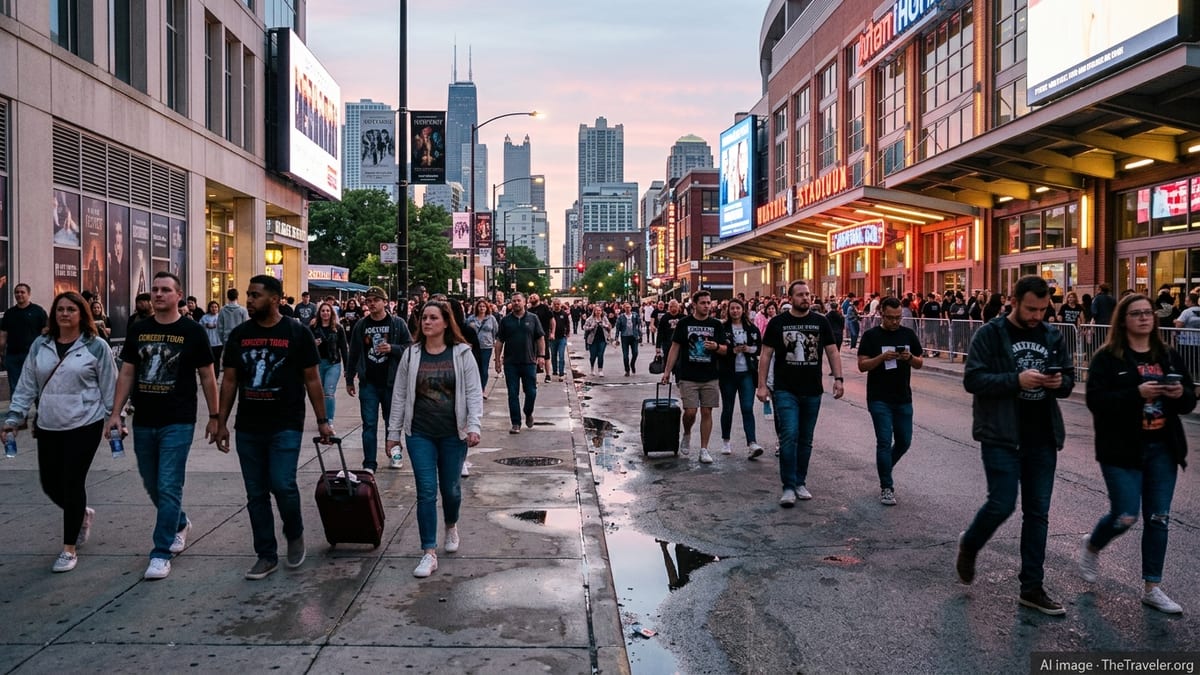
From Niche Fandom To Mainstream Travel Driver
Concert tourism, once associated with a handful of devoted “roadie” fans, has moved firmly into the travel mainstream. Industry data tracking the live music business shows that global tours have crossed historic revenue thresholds in the past two years, with Taylor Swift’s Eras Tour becoming the first tour reported to surpass 1 billion dollars in gross revenue and related analyses estimating its wider economic impact in the multibillion-dollar range. Travel researchers note that a sizable share of that spending is tied directly to hotels, flights and on-the-ground tourism as fans chase multiple stops on the same tour.
Reports from hospitality analysts and tourism boards point to a pattern that is becoming familiar in host cities. When a mega tour or high-profile residency is announced, hotel occupancy jumps, average daily room rates climb and short-term rental searches spike for the relevant dates. An industry roundup of live music tourism trends in 2025, for example, highlighted how concert-related travel pushed hotel occupancy in host cities up by an average of around 15 percent, underscoring that accommodation demand now tracks closely to tour routing rather than just traditional holiday periods.
The trend is not limited to one artist or genre. Data compiled from recent years of touring points to a broad base of demand, with blockbuster outings by Beyoncé, Coldplay, U2, Latin superstars and major country acts all associated with surges in visitor spending. The common denominator is a fan base willing to travel significant distances, often more than once per tour cycle, and treat each show as the centerpiece of a wider getaway.
“Groupie Getaways” Redefine How Fans Plan Vacations
One of the most visible expressions of the shift is the rise of what travel marketers are calling “groupie getaways” and “show hopping” itineraries. Rather than purchasing a single ticket in their home city, fans are organizing multi-stop trips around clusters of concert dates, blending city breaks with repeat performances of the same tour. Survey work referenced in recent travel marketing reports suggests that roughly two in five concertgoers are now willing to travel outside their home area specifically to see a show, and a notable share say the concert provides the excuse to visit a new destination.
Platforms that track short-term rental searches have picked up the same pattern. Airbnb reported in 2025 that searches for stays in Houston timed to Beyoncé’s Cowboy Carter tour dates were more than six times higher than the previous year, a jump the company linked to the broader rise of “passion tourism” in which travelers follow personal interests such as music rather than conventional sightseeing themes. Earlier, during the first leg of the Eras Tour, hosts using the platform collectively earned tens of millions of dollars on concert weekends alone, illustrating how quickly accommodation demand scales when fans decide to turn a show into a full trip.
Travel behavior around individual concerts increasingly resembles that of a long weekend city break. Fans often arrive one or two days in advance to explore restaurants, bars and local attractions, and many extend their stay beyond the show night. Local business associations in cities that have recently hosted major tours have reported sharp increases in restaurant reservations and retail activity on concert weekends compared with typical periods, indicating that groupie getaways are being felt across the wider urban economy, not just in venues and hotels.
Show Hopping, Stadium Circuits And New Itineraries
A parallel trend, show hopping, is reshaping traditional ideas of route planning. Instead of visiting a single destination, fans plot multi-city itineraries that follow a tour’s stadium circuit or link different residencies and festivals. In Europe, analyses of 2024 touring patterns showed how acts such as Coldplay, Ed Sheeran and Bruce Springsteen drew repeat travelers from market to market as they moved through summer stadium dates, helping lift box office totals and tourism receipts across several countries in the same season.
Las Vegas has emerged as a model for residency-driven tourism. U2’s run at the Sphere venue, for example, produced one of the top-grossing residencies on global rankings and has been cited in business coverage as a case study in how a single, high-tech venue can act as a travel magnet. Hospitality research tied to the Sphere notes that each out-of-town concertgoer typically spends several times the face value of a ticket on hotels, dining and entertainment, a multiplier effect that has encouraged other destinations in the Middle East and Asia to consider similar large-scale venues.
In Latin America and Asia, newly expanded global tours are also generating cross-border music travel. Reporting on Shakira’s Las Mujeres Ya No Lloran World Tour describes a tourism surge in host cities, including additional airline capacity scheduled around concert dates and strong inflows of regional visitors. Case studies of Taylor Swift’s exclusive run of concerts in Singapore in 2024 and further dates across Asia have similarly been used in policy and academic papers as examples of how exclusive tour stops can realign regional travel flows for weeks at a time.
Tourism Boards, Airlines And Hotels Shift Strategy
The growing financial stakes of concert tourism are prompting a strategic response from the travel industry. A Skift analysis of cultural event marketing noted that hotels and destination marketers in the United States increasingly design campaigns around what it calls “tour tourism,” with dynamic advertising that targets fans at the moment they secure tickets. Expedia Group and other travel brands report survey findings showing that a clear majority of travelers are more inclined to plan trips around concerts and cultural events than they were before the pandemic, prompting new cross-promotional packages that bundle tickets, rooms and local experiences.
Tourism organizations in Europe, North America and Asia are also experimenting with themed campaigns tied to high-profile tour stops. Publicly available case studies point to cities that have temporarily rebranded public spaces, organized themed walking tours and launched special passes that combine museum entry with venue tours during major concert weeks. The aim is to convert one-night visitors into repeat tourists by framing the concert as the gateway to a broader cultural itinerary.
Airlines and rail operators, for their part, have begun to adjust capacity and pricing in response to demand spikes. Regional carriers in Latin America documented adding flights around Shakira tour dates, while transport data in Southeast Asia during recent exclusive concert runs in Singapore showed sharp short-term increases in inbound travel. In response, some operators are trialing limited-run “concert fares” that target fans booking multiple destinations along a tour route, reflecting how show hopping is now sophisticated enough to influence network planning.
What Concert Tourism Means For 2026 Travelers
As 2026 unfolds, travel booking patterns suggest that concert tourism is poised to remain a dominant theme. Forward-looking industry reports highlight a dense calendar of global tours, new residencies and festival expansions across North America, Europe, Asia and Latin America. Upcoming tour cycles for major pop, rock, Latin and country artists are already associated with early spikes in hotel searches and package inquiries in several markets, reinforcing expectations that music-driven trips will compete directly with more conventional holiday options.
For travelers, this shift brings both opportunities and challenges. On the opportunity side, bundled concert packages and themed city programming can create richer, more memorable itineraries than a standard weekend away, especially for groups of friends planning a shared experience. At the same time, analysts caution that limited hotel supply around stadiums and arenas can lead to rapid price increases, and some central neighborhoods may see constrained availability around key dates, making early planning essential for fans intent on show hopping or stitching together groupie getaways.
For destinations, the new reality is that a handful of tour dates can now rival major sports events in their tourism impact. Economic studies of recent mega tours point to billions of dollars in cumulative spending worldwide and meaningful boosts for local hospitality sectors still recovering from the pandemic. With the 2026 tour calendar filling up, many cities and travel brands are racing to position themselves not just as places to see a concert, but as the starting point for fans’ next music-fueled journey.