

More news on this day
German leisure carrier Condor is preparing to relocate its headquarters back to Frankfurt’s Gateway Gardens district in early 2026, a strategic step intended to streamline operations near its main hub at Frankfurt Airport and reinforce the airline’s role in Germany’s tourism and aviation sectors.
Get the latest news straight to your inbox!
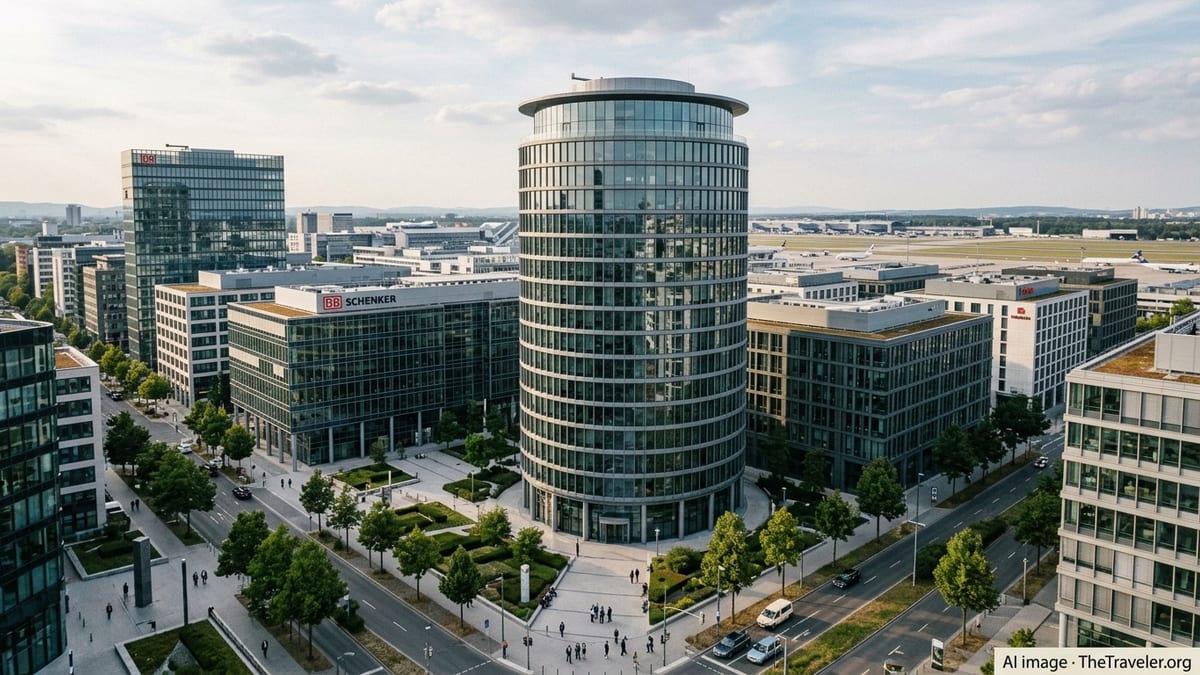
Return to a Familiar Address at Frankfurt’s Airport City
Publicly available company information and local reporting indicate that Condor plans to move its corporate base to the Alpha Rotex building in Gateway Gardens from February 2026. The high-rise office property lies on the western edge of the fast-growing business district that has evolved from former military housing into a major commercial cluster connected to Frankfurt Airport.
The shift marks a return to a location that already played a central role in Condor’s history. The airline previously established a purpose-built headquarters and operations center in Gateway Gardens in 2012 before relocating to nearby Neu-Isenburg in 2020. The forthcoming move back to the airport-adjacent quarter is framed in public documentation as a way to bring management, administrative teams and flight operations into closer physical proximity.
Reports describe the Alpha Rotex tower as offering enough space for roughly 800 to 900 Condor employees, consolidating functions that have been spread across other sites in the Frankfurt region. By concentrating staff in a single hub, the airline is expected to benefit from shorter internal communication channels and quicker decision-making across commercial, operational and support departments.
The relocation plan fits into a broader pattern of companies choosing Gateway Gardens for aviation-related activities. Corporate profiles and airport publications highlight that several major travel and logistics players, including airline and airport service providers, have built or leased premises in the district to tap into its transport links and business infrastructure.
Operational Synergies from Direct Airport Proximity
Gateway Gardens sits across the A3 motorway from Frankfurt Airport, placing Condor’s future headquarters within minutes of terminal facilities, crew bases and partner organizations. Urban development materials emphasize that the district has been positioned as an “airport city,” with road, rail and pedestrian connections designed to integrate office tenants into the day-to-day flow of one of Europe’s busiest hubs.
For an airline whose primary base is Frankfurt Airport, the practical benefits are significant. Crew briefing centers, training facilities and operations control departments have historically been located close to the airfield to support quick rotations, schedule adjustments and irregular operations management. Concentrating corporate and operational teams nearby can reduce travel time for staff, ease coordination during peak seasons and improve access to airport stakeholders.
Earlier descriptions of Condor’s Gateway Gardens facilities noted the combination of office space, a training and education center, including simulator capacity, and a flight operations hub under one roof. The return to the district in 2026 is expected to re-create similar proximity between administrative decision-makers and front-line operations, even though the specific internal layout in Alpha Rotex has not yet been detailed in public sources.
Transport connections also play a role in the move. Gateway Gardens is linked to Frankfurt’s regional rail network through its own S-Bahn station, with frequent services to the airport terminals and the city center. This connectivity is likely to support commuting employees and visiting business partners, while also offering rapid access to long-distance rail services at the airport’s long-distance station.
Strengthening Ties to Frankfurt Airport’s Hub Role
Frankfurt Airport is a central pillar of Germany’s aviation network and an important gateway for leisure travelers from Europe and beyond. Reference data on the hub underscores its role as a major intercontinental transfer point and a starting place for long-haul and medium-haul tourism traffic, including routes traditionally served by Condor to holiday destinations in the Mediterranean, North America, Africa and the Indian Ocean.
By reinforcing its physical presence in the airport’s immediate surroundings, Condor is aligning its corporate identity even more closely with Frankfurt as its home base. Industry observers note that this can support closer collaboration with airport operator units, ground handling providers and service partners that are already clustered in and around the airport city, including in Gateway Gardens.
The move may also make it easier for Condor to participate in joint initiatives related to infrastructure planning, digitalization and sustainability projects in and around the hub. Local planning documents and airport publications repeatedly highlight Gateway Gardens as a showcase district for energy-efficient buildings and modern mobility concepts, potentially offering Condor a platform for workplace and environmental improvements.
In branding terms, re-establishing a headquarters at a site that is physically and symbolically tied to Frankfurt Airport can further anchor Condor as a key German leisure carrier based at the country’s largest international gateway. This may be particularly relevant at a time when competition in the holiday flight segment is intensifying and airlines are working to sharpen their market positioning.
Implications for Tourism and Regional Economic Growth
Condor’s renewed investment in Gateway Gardens also has wider implications for tourism and the surrounding economy. Local business profiles of the district describe it as a growth corridor for office employment, services and hospitality, emphasizing its role in attracting international companies and business travelers to Frankfurt. Anchoring a major leisure airline headquarters there contributes additional steady employment and visitor traffic.
For tourism, a strong base of operations at Frankfurt can translate into more robust leisure capacity and route stability. While future network decisions depend on market conditions, the close integration of Condor’s headquarters with its main hub infrastructure could support efficient planning for seasonal expansions, new destination launches and schedule adjustments that respond quickly to demand trends from German and international travelers.
Gateway Gardens itself, with hotels, restaurants and supporting services, benefits from having airline staff, partners and guests frequent the neighborhood, reinforcing a mixed-use environment that combines offices with hospitality and public space. Urban planners have promoted this model as a way to create an attractive environment for mobile professionals and visitors who value quick access to both the airport and the city center.
From an investment perspective, the move signals continued confidence in Frankfurt’s role as a long-term aviation and tourism hub. Even as airlines navigate evolving market dynamics and sustainability requirements, the decision to place hundreds of employees in an airport city office tower highlights the enduring importance of physical proximity to key infrastructure for the efficient delivery of air travel services.
Evolving Airline Footprints in Europe’s Airport Cities
Condor’s plan to relocate its headquarters back to Gateway Gardens forms part of a broader European trend in which airlines and aviation-related firms seek locations that blur the line between airport and city. Airport cities around major hubs increasingly host corporate headquarters, training centers, hotels and logistics operations, creating dense ecosystems of aviation and travel businesses.
Frankfurt’s development strategy for Gateway Gardens reflects this pattern. The district has attracted a combination of aviation, logistics, travel and service companies that benefit from indirect access to the airfield, direct access to ground transport and a modern office environment. Condor’s renewed presence strengthens the sector mix and adds another recognizable travel brand to the skyline.
For travelers, these shifts mostly play out behind the scenes, but they can indirectly influence the reliability and variety of air services on offer. When airlines colocate leadership, planning and operational units near their primary hubs, it may support more agile responses to disruptions, more coordinated scheduling decisions and closer cooperation with tourism partners in source and destination markets.
As Condor prepares for its move into the Alpha Rotex building from 2026, observers will be watching how the new headquarters supports the airline’s fleet and network plans, and how the Gateway Gardens district continues to evolve as a key node in the wider Frankfurt aviation ecosystem.