

More news on this day
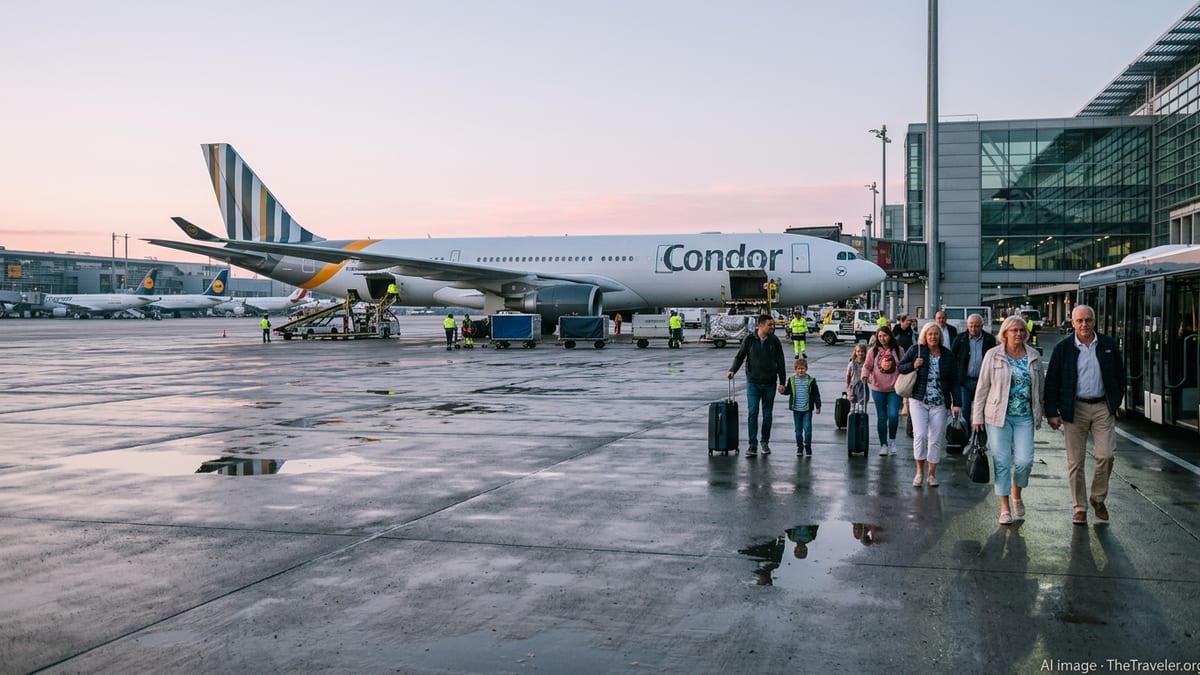
Condor Airlines has launched special repatriation flights to Frankfurt on behalf of the German government, providing a critical air bridge for stranded holidaymakers in the Middle East and offering a tentative boost to Europe’s battered tourism recovery amid the escalating regional crisis.
Emergency Airlift Responds to Rapidly Escalating Crisis
According to Condor, at least two special flights from Muscat, the capital of Oman, landed in Frankfurt over the weekend, carrying German and other European travelers who had been unable to leave the wider Middle East after airspace closures and mass flight cancellations. Operating on behalf of the German Federal Foreign Office, the missions were organized at short notice as governments across Europe raced to extract citizens from a conflict zone affecting multiple Gulf and Levant states.
The disruption follows air and missile exchanges involving Iran, Israel and the United States, which triggered retaliatory strikes and rolling airspace shutdowns across the region. Major hubs that normally funnel millions of long haul travelers every month have seen schedules slashed or temporarily frozen, leaving tens of thousands of passengers in resort areas and transit points scrambling for alternatives.
German tour operators have reported that resort guests whose itineraries depended on connections through Gulf hubs suddenly found themselves without onward flights. For many, government-chartered repatriation services such as Condor’s Muscat to Frankfurt operation have become the most reliable path back to Europe, bypassing congested or closed airports elsewhere in the region.
The repatriation effort has unfolded alongside similar rescue operations coordinated by other European governments, Gulf carriers and international alliances, a patchwork response reflecting both the scale and speed of the aviation shutdown.
Frankfurt Reinforces Its Role as a Crisis Hub
Frankfurt Airport, already Condor’s primary long haul base, is emerging as a central hub in Europe’s crisis response. The airport’s extensive ground infrastructure, connectivity to the rest of Germany and the wider Schengen area, and experience handling irregular operations have made it the logical destination for concentrated repatriation traffic.
Once passengers arrive on Condor’s special flights, they are funneled into a network of domestic and intra European services that redistribute travelers to secondary cities and regional airports. While schedules remain volatile, the ability to reach Frankfurt is giving stranded tourists a clearer path home than many feared just days earlier when cancellations first cascaded across airline systems.
Airport officials and tour operators describe a fragile but functioning corridor: emergency flights from the Middle East into a handful of major European gateways, followed by rebooked short haul segments. In this configuration, Frankfurt is operating not only as a German entry point but as a staging ground for onward travel across the continent.
The crisis has also underscored Frankfurt’s strategic importance to Germany’s tourism sector. When regular networks fail, the airport’s scale, technical capacity and concentration of airlines, including Condor and its partners, allow authorities to stand up dedicated rescue operations quickly.
Stranded Holidaymakers Highlight Tourism Sector Vulnerability
The travelers now arriving in Frankfurt on Condor’s repatriation flights are a stark reminder of how exposed global tourism remains to geopolitical shocks. Many had booked routine winter sun or cultural trips, with package holidays sold through major European tour brands and itineraries built around seamless connections through Middle Eastern hubs.
When airspace closures took effect and airlines began suspending routes to and from key Gulf and Levant airports, those carefully planned itineraries collapsed. Package holidaymakers, in particular, found themselves reliant on their tour operators and on government coordination to secure seats on limited repatriation services, rather than having the flexibility to individually rebook via alternative routings.
Industry analysts note that the crisis comes at a time when tourism in the broader Middle East had been on a steady upward trajectory, driven by investment in resort infrastructure, new cultural attractions and high profile global events. The sudden reversal, with thousands of tourists queuing for emergency flights instead of excursions, illustrates how quickly confidence can be shaken.
Even so, the orderly return of holidaymakers on flights such as Condor’s Muscat to Frankfurt service may help limit the long term reputational damage for the region’s tourism destinations, showing that authorities and airlines can mount a coordinated response when security conditions deteriorate.
Repatriation Flights as a Bridge to Recovery
Aviation experts stress that repatriation flights are not simply a humanitarian measure but also an early step in restoring normal travel flows. By clearing the backlog of stranded tourists and residents, airlines and governments create space to reassess demand, reconfigure routes and gradually reopen corridors as security assessments allow.
Condor’s close coordination with tour operators and the German Foreign Office is seen as a template for this process. The airline has indicated it is prepared to mount additional flights at short notice where demand and safety conditions justify it, giving travelers and the tourism industry some predictability in an otherwise fluid situation.
For destinations in the Middle East that rely heavily on European visitors, the speed and reliability of these repatriation operations will influence how quickly tourists are willing to return once the immediate crisis eases. Transparent communication around safety, flexible booking policies and clear contingency plans will likely become more prominent selling points in brochures and online offers for seasons to come.
While experts caution that regular schedules to some countries may remain curtailed for an extended period, the very presence of organized repatriation flights indicates that air corridors can be opened, monitored and, when necessary, adjusted rather than shut indefinitely. That message, carried by aircraft returning full of passengers to Frankfurt and other European hubs, is an important signal for a global tourism sector eager for signs of resilience.
Middle East Tourism Faces a Test of Resilience
For tourism boards and hotel groups across the Middle East, the current wave of repatriations represents both a setback and an opportunity. Bookings have slumped as travelers postpone or cancel trips, and airlines scale back services to key leisure destinations. Yet the handling of outbound flows during the crisis will shape how safe and well managed these destinations appear in the eyes of future visitors.
Many resorts and city hotels have worked closely with tour operators to keep guests informed, arrange transfers to operating airports such as Muscat, and coordinate check out times with the unpredictable arrival of special flights. These practical measures, while rarely headline grabbing, can significantly affect traveler satisfaction during stressful departures.
Once immediate safety concerns subside, marketing campaigns are likely to pivot toward narratives of resilience and hospitality, emphasizing how quickly local authorities, hoteliers and airlines collaborated to get visitors home. The experience of being repatriated on a well organized Condor flight to Frankfurt, rather than left to navigate a chaotic scramble for seats, may ultimately encourage some travelers to return when conditions stabilize.
For now, every successful special flight is a small but tangible step toward rebuilding confidence. As Condor and other carriers continue to ferry stranded tourists back to Europe, the contours of a longer term tourism recovery in the Middle East are beginning to take shape, one carefully coordinated departure at a time.