

More news on this day
Tourism across Southeast Asia is facing a fresh wave of disruption as airspace shutdowns linked to the escalating conflict involving Iran and its adversaries force airlines to reroute or cancel services, driving up costs and stranding travelers across popular destinations such as Thailand, Indonesia’s Bali and Malaysia.
Get the latest news straight to your inbox!
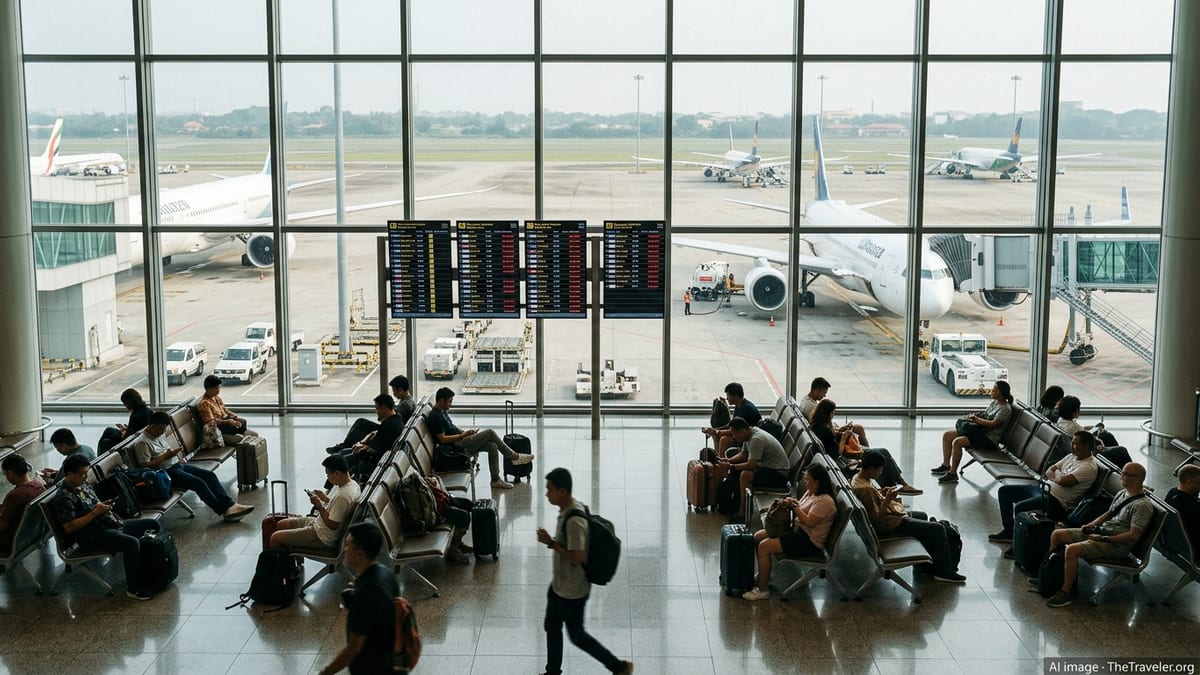
Middle East Conflict Ripples Across Southeast Asian Skies
Publicly available aviation data and news coverage show that the war involving the United States, Israel and Iran, which began in late February 2026, has triggered extensive airspace closures across parts of the Middle East and Gulf region. Large sections of airspace over Iran, Iraq and neighboring territories have been heavily restricted for civilian traffic, while key hubs such as Dubai, Abu Dhabi and Doha have experienced waves of suspensions, diversions and capacity cuts. These corridors are central to long-haul links between Europe and Asia, including routes that feed Southeast Asia’s main tourist gateways.
Reports indicate that thousands of flights have been delayed or canceled worldwide since the conflict began, as airlines attempt to avoid conflict zones and comply with evolving safety notices. Long-haul services that previously overflew the Middle East are now being rerouted via Central Asia, Africa or the Pacific, lengthening flight times by several hours. The changes are straining airline schedules, raising fuel consumption and complicating crew rotations, with knock-on effects that reach all the way to leisure markets in Thailand, Indonesia and Malaysia.
These global aviation disruptions come just as Southeast Asia’s tourism sector was consolidating its recovery after the pandemic-era downturn. The region relies heavily on long-haul visitors from Europe and North America, many of whom typically travel via Gulf carriers. With those connections restricted or significantly altered, travel planning to Southeast Asia has become more uncertain and, in many cases, more expensive.
Thailand Counts the Cost of Rerouted and Reduced Flights
Thailand, which welcomed tens of millions of visitors annually before the pandemic, is particularly exposed to long-haul aviation shocks. Bangkok and Phuket are heavily served by European and Middle Eastern carriers, and a substantial share of those flights traditionally connect through Gulf hubs now affected by airspace restrictions. Publicly available airline advisories and flight-tracking platforms show higher numbers of rerouted or canceled services on Europe to Bangkok and Phuket routes since early March.
Industry analyses suggest that many carriers are consolidating services or reducing frequencies to Thailand to cope with higher operating costs and limited available detours. Longer routings increase fuel burn and crew costs, while war-risk insurance premiums have reportedly risen on flights that still pass near affected regions. Airlines facing slim margins on leisure-heavy routes are responding by trimming capacity or raising fares, putting pressure on price-sensitive travelers who make up a sizable portion of Thailand’s inbound market.
Travel forums and booking data highlighted in regional media coverage point to rising airfares into Bangkok, Chiang Mai and southern beach destinations, especially from European departure points. Some tour operators have begun adjusting packages or advising customers to consider alternative routings via East Asian or Australian hubs, which can further extend journey times. For smaller Thai resorts that depend on direct or one-stop long-haul arrivals, even modest schedule cuts can translate quickly into lower occupancy and cash flow stress.
Bali and Indonesia Face Fuel and Connectivity Strains
Indonesia’s top resort island of Bali is also feeling the strain from the conflict-driven reshaping of global airspace. Denpasar’s Ngurah Rai International Airport depends heavily on connections from Australia, East Asia and, increasingly in recent years, Europe and the Middle East. The closure or restriction of key West Asian corridors has disrupted some of these longer-haul links and contributed to schedule volatility.
In parallel, regional reporting from Vietnam and wider Southeast Asia indicates growing anxiety about jet fuel supply as the war constrains exports and raises prices. Vietnamese authorities have already warned airlines to prepare for potential flight reductions from April 2026 because of possible fuel shortages, after China and Thailand halted some jet fuel exports in response to the conflict’s market impact. These pressures on regional fuel availability risk spilling over into Indonesia and other neighboring markets if shortages widen or prices continue to rise.
For Bali, any instability in fuel supply or international connectivity can quickly affect tourist flows, given the island’s reliance on air access and its limited alternative transport links. Airlines may prioritize higher-yield routes or home markets when fuel is tight, potentially at the expense of long-haul leisure destinations. Travelers heading to Bali are already being advised in public travel discussions to monitor airline updates closely, as some carriers continue to adjust schedules or swap widebody aircraft for smaller jets to manage costs.
Malaysia’s Hubs Grapple With Higher Costs and Rerouting
Malaysia’s aviation and tourism sectors are likewise navigating rising operational challenges. Kuala Lumpur International Airport functions as a significant Southeast Asian hub, with Malaysia Airlines and a range of international carriers operating long-haul connections that historically relied on Middle East overflight rights or transit partnerships with Gulf airlines. With those corridors constrained, airlines have been shifting traffic through alternative hubs in South Asia, East Asia or Europe, often with longer block times and higher fuel bills.
Public schedules and airline statements show that some services between Malaysia and Europe have extended flight times or restructured routings since the conflict began. While outright cancellations to Kuala Lumpur and popular Malaysian islands remain more limited than at Gulf hubs, the cumulative impact of longer journeys and higher fares is beginning to influence traveler behavior. Price-sensitive tourists, particularly from Europe, may opt for destinations with more stable or shorter connections, while regional travelers could pivot to nearer alternatives within Southeast Asia.
Malaysia’s domestic tourism has partially cushioned the blow from external shocks in the past, but analysts note that international arrivals deliver especially high per-capita spending in urban centers such as Kuala Lumpur and Penang and in resort areas like Langkawi. Any sustained rise in long-haul travel costs or persistent schedule uncertainty could weigh on hotel performance, aviation-linked employment and broader service-sector growth through the crucial 2026 high season.
Travelers Confront Rising Prices, Complex Routes and Insurance Gaps
For individual travelers heading to Southeast Asia, the most immediate consequences of the conflict-driven aviation turmoil are higher prices, longer routes and greater uncertainty. Publicly available fare data summarized in regional business coverage point to noticeable increases on many Europe to Southeast Asia itineraries, particularly those that would previously have routed via the Gulf. Competing carriers in India and East Asia have added capacity on certain corridors, but additional demand and higher fuel and insurance costs have limited any downward pressure on fares.
At the same time, widespread airspace restrictions are prompting more complex itineraries. Travelers bound for Thailand, Bali or Malaysia are increasingly booking multi-stop journeys that avoid the Middle East entirely, patching together connections via East Asia, India, or Australia. Travel discussion forums are filled with accounts of passengers rerouting at short notice, dealing with missed connections or struggling to find last-minute alternatives when flights are canceled or significantly delayed.
Travel risk specialists and advisory bulletins also highlight gaps in coverage for many visitors. A significant number of standard travel insurance policies exclude disruptions linked to acts of war or ongoing conflict, leaving travelers to absorb costs for extra hotel nights, new tickets or missed tours when cancellations are tied to the Iran conflict and related airspace closures. Public guidance from consultancy and security firms encourages travelers to review policy wording carefully, document all disruption-related expenses and monitor airline waiver programs, which in some cases allow free changes or refunds for affected itineraries.
With no clear end in sight to the regional conflict and its cascading effects on global aviation, Southeast Asia’s tourism economies remain vulnerable to further shocks. The coming months are expected to test the resilience of airlines, airports and hospitality businesses across Thailand, Indonesia and Malaysia as they adapt to a more volatile and costly air travel environment.