

More news on this day
Dozens of Middle East travelers were left in airport terminals from Abu Dhabi to Cairo and Kabul on April 8 as a cluster of cancellations and delays on Royal Jordanian, EgyptAir and flydubai disrupted already fragile regional air links.
Get the latest news straight to your inbox!
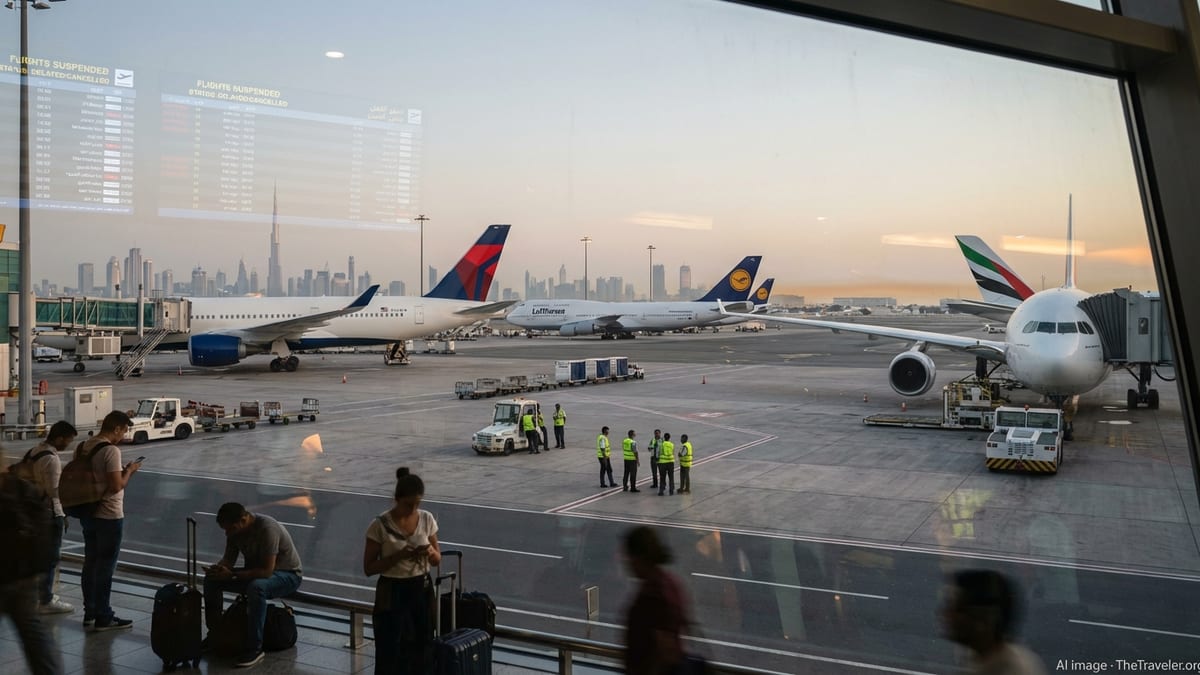
Targeted Cancellations Hit Abu Dhabi, Cairo and Kabul
Publicly available reports indicate that a total of 12 flights operated by Royal Jordanian (RJA), EgyptAir (MSR) and flydubai (FDB) were cancelled on April 8, alongside at least 17 delays across their combined networks. Coverage from travel trade outlets and regional news sites links the disruption most visibly to services touching Abu Dhabi, Cairo and Kabul, with secondary impacts at other Gulf and South Asian gateways.
In Abu Dhabi, where traffic has been gradually rebuilding after weeks of conflict-related restrictions, several EgyptAir and flydubai services were either pulled from schedules or held for extended periods. Route data shows EgyptAir’s Cairo to Abu Dhabi operations running on a limited pattern since March, leaving little spare capacity to absorb fresh cancellations. For flydubai, any change to rotations into the UAE capital has a knock-on effect for onward connections through Dubai and other Gulf points.
Cairo also experienced an uneven day of operations. Tracking data and schedule snapshots suggest a combination of outright cancellations and multi-hour delays on flights linking the Egyptian capital with Jordan and the UAE. With EgyptAir already operating a reduced timetable to Gulf destinations, even a small wave of disruptions generated substantial queues at transfer desks and rebooking counters.
In Afghanistan, where international links remain comparatively thin, the loss of a handful of Kabul flights proved particularly disruptive. Regional media summaries describe passengers waiting through repeated rolling delay notices only to see flights scrubbed later in the day. With many services to and from Kabul funneled through Gulf hubs such as Abu Dhabi and Dubai, the same operational shock rippled quickly across three countries.
Regional Conflict Keeps Airspace Volatile
The flare-up in cancellations did not occur in isolation. Aviation advisories and conflict monitoring analyses show that much of the Middle East’s airspace remains heavily restricted as the Iran conflict and the wider Strait of Hormuz crisis continue into April. Airspace over Iran, Iraq and parts of the Gulf has been intermittently closed or tightly controlled since late February, forcing airlines to reroute or thin their schedules on short notice.
These restrictions have already extended flight times between Europe and Asia by several hours and pushed some carriers to suspend services entirely. Industry guidance issued to airlines in early March highlighted continued uncertainty for operations involving UAE airports, including Abu Dhabi and Dubai, with alleviation measures on take off and landing slots extended well into spring. The cluster of cancellations and delays on April 8 fits into this broader pattern of reactive timetable changes rather than a stand-alone incident.
For Royal Jordanian and EgyptAir, which rely on cross-border traffic that threads between Jordan, Egypt and Gulf states, the volatile airspace picture has complicated network planning. Schedule data and recent travel advisories point to rolling adjustments on routes via Amman and Cairo, as carriers try to balance safety margins with demand from travelers attempting to reconnect with major hubs.
Flydubai, as a Dubai-based low cost operator serving many secondary cities in the region, has been especially exposed to the cumulative effects of temporary closures and route detours. Operational updates issued over recent weeks refer to selective suspensions on certain Middle Eastern routes and extended flight times elsewhere, suggesting that the April 8 disruption is the latest manifestation of a longer running challenge.
Stranded Passengers Face Long Queues and Limited Options
Travelers caught up in the April 8 disruption reported long waits at check in and transfer areas, according to passenger accounts compiled by online travel forums and regional travel coverage. With three different airlines affected across multiple airports, rebooking options were limited, particularly for those traveling onward to South Asia or Europe via Gulf hubs.
In Abu Dhabi and Cairo, the combination of capacity reductions since March and a sudden batch of cancellations meant that remaining seats on later departures filled quickly. Some travelers were rerouted via alternative hubs such as Istanbul or Doha on other carriers, while others were advised to accept travel a day or more later. For Kabul bound passengers, the relatively small number of available flights and the need to route through a shrinking set of open corridors left few immediate alternatives.
Analysts who track aviation disruption note that compensation and care obligations vary by jurisdiction and ticket origin, leaving many passengers uncertain about their entitlements. Guidance from consumer organizations emphasizes that routes starting in the European Union may qualify for stronger delay and cancellation protections than those beginning in the Middle East or South Asia, where regulations are less standardized.
For travelers on complex itineraries stitched together through online travel agencies or multiple separate tickets, the risk of missed connections and stranded segments is higher. Publicly available advisories from major travel management firms in recent weeks have urged passengers heading into or through the region to favor through tickets on a single carrier or alliance where possible, to simplify support during irregular operations.
Airlines Adjust Schedules as Recovery Remains Uneven
Even as cancellations mounted on April 8, other data points suggest that parts of the region’s aviation system are edging toward partial recovery. Travel analytics reports show that Dubai International Airport recorded its busiest day of departures since the conflict began during the first week of April, powered largely by Emirates and flydubai operations. Yet those gains coexist with continuing fragility in nearby markets such as Abu Dhabi and secondary Gulf airports.
EgyptAir has signaled a gradual resumption of some UAE services, publishing plans for a limited daily link between Cairo and Abu Dhabi that came into effect in March. However, the airline has framed these flights as subject to operational and regulatory conditions, leaving room for occasional cancellations when regional tensions spike. Royal Jordanian, for its part, has maintained a tranche of services between Amman and Gulf destinations, while also publicizing flexible change policies for passengers booked during the disruption period.
Flydubai is balancing route cuts with selective growth, including new or restored services to markets outside the most heavily affected airspace corridors. Operational notices list temporary suspensions to specific European destinations for reasons unrelated to the conflict, such as runway works, illustrating how overlapping operational factors can collide with geopolitical risk to complicate scheduling.
Industry observers caution that, despite gradual improvements at some airports, the risk of renewed disruption remains elevated across the network. Advisories from slot coordinators and travel management companies in March and April underscore that airlines serving the UAE, Egypt, Jordan and Afghanistan are operating with contingency plans that allow for last minute schedule changes in response to security updates or airspace notices.
What Travelers Should Expect in the Coming Weeks
Based on current advisories and published airline updates, travelers planning to fly with Royal Jordanian, EgyptAir or flydubai through Abu Dhabi, Cairo, Kabul or other regional hubs should prepare for a period of unstable operations. Schedules are being published, but multiple industry summaries warn that flight status may change within hours of departure as carriers respond to evolving conditions.
Travel specialists recommend that passengers monitor flight status closely on the day of travel, arrive early at airports where screening and check in queues can lengthen during disruption, and keep essential items in carry on bags in case of overnight delays. Rebooking windows may be constrained on popular routes, particularly toward the end of the week when both point to point and connecting traffic typically peaks.
Publicly available information also highlights the importance of understanding ticket rules before departure. Many airlines in the region have introduced temporary waivers that allow one free date or route change within a defined travel period, while others continue to apply standard fare conditions. Passengers who booked via third party agents may need to coordinate changes through those intermediaries, which can add another layer of complexity when large numbers of travelers are affected simultaneously.
For now, the April 8 wave of cancellations and delays on RJA, MSR and FDB services stands as another reminder that the Middle East’s air travel ecosystem remains highly sensitive to geopolitical shifts. Until airspace restrictions ease more comprehensively and carriers restore stable timetables, journeys that rely on Abu Dhabi, Cairo, Kabul and neighboring hubs are likely to remain vulnerable to sudden and sometimes severe disruption.