

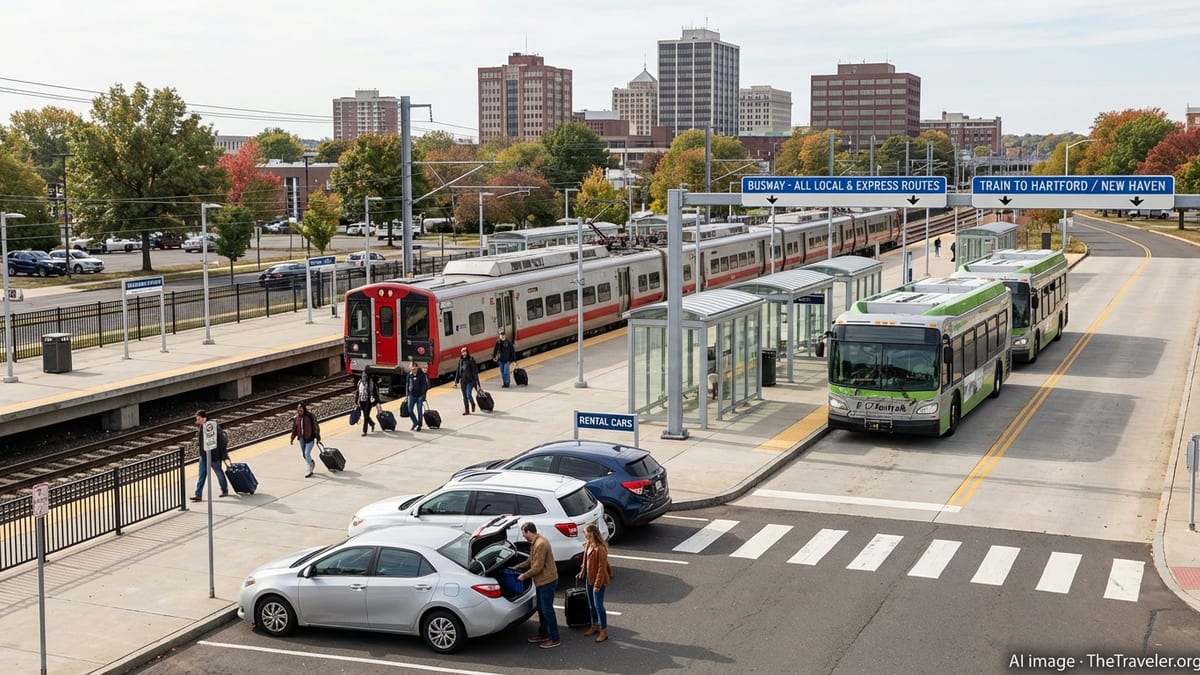
Connecticut is compact, well connected and surprisingly easy to traverse if you understand how its trains, buses and rental cars fit together. From fast commuter rail into New York City to dedicated busways around Hartford and convenient airport car rentals, the state offers a mesh of options that can turn a simple visit into a smooth, largely stress‑free journey. This guide walks you through the essentials so you can choose the right mix of transportation for your itinerary, budget and comfort level.
Understanding Connecticut’s Transportation Landscape
Connecticut sits between New York City and Boston, and its transportation network reflects that geography. Rail lines run along the coast and up the Connecticut River Valley, tying the state to the Northeast Corridor. Commuter routes into Manhattan operate alongside regional services like the Hartford Line and Shore Line East, which move residents and visitors between cities such as New Haven, Hartford, New London and Springfield, Massachusetts. Together, these rail corridors form the backbone of public transportation in the state.
Layered onto this rail grid is an extensive bus system. CTtransit and several regional operators cover major cities and suburbs, while CTfastrak provides bus rapid transit along a dedicated roadway in the Hartford region. Local buses are designed for everyday trips to workplaces, campuses, hospitals and shopping centers, but they are also handy for visitors who want to explore without a car or connect from train stations to attractions and hotels.
Despite this relatively dense public network, many visitors still rely on rental cars to explore smaller coastal towns, inland state parks and rural corners of Litchfield County. Some destinations are poorly served by fixed‑route transit, and service can taper off in the evenings and on weekends outside the main corridors. For many trips, the most efficient strategy is a hybrid approach: use rail or express buses for longer legs, then rent a car or rely on local services to complete the final miles.
Because transportation in Connecticut is highly integrated, planning ahead pays off. Schedules and fares can change as agencies respond to funding shifts, ridership trends and seasonal demand, and recent years have brought a series of incremental rail fare increases. It is wise to confirm up‑to‑date timetables, planned construction work and any special schedules around holidays or severe weather when you finalize your plans.
Riding the Rails: Metro‑North, CTrail and Amtrak
For many travelers, the most important piece of Connecticut’s transportation puzzle is the New Haven Line of Metro‑North Railroad. This busy commuter line runs between New Haven and New York City’s Grand Central Terminal, with key stops in Stamford, Bridgeport, Fairfield, Norwalk and Greenwich. Branch lines extend service to communities such as Danbury, New Canaan and Waterbury, giving many inland towns a rail link to Manhattan and coastal hubs. Trains operate frequently on weekdays, with somewhat reduced service on nights and weekends.
Alongside Metro‑North, the state sponsors two branded CTrail services: the Hartford Line and Shore Line East. The Hartford Line connects New Haven, Hartford and Springfield, Massachusetts, largely paralleling Interstate 91. It is particularly useful if you are flying into Bradley International Airport via a connection in Hartford, touring the Connecticut River Valley or continuing north toward western Massachusetts. Shore Line East runs along the coast between New London and New Haven, with stops in communities such as Old Saybrook, Westbrook, Clinton, Madison and Branford, and limited weekday through trains to Stamford. These routes give coastal towns a practical rail option without requiring a car.
Amtrak overlays intercity services onto these same tracks, providing longer distance trains such as Acela, Northeast Regional and Vermonter that stop at select Connecticut stations including New Haven, Hartford, New London and others. For visitors, the decision often comes down to speed, schedule and price. Commuter and regional trains may be cheaper but make more stops, while Amtrak tickets can cost more yet save time on longer journeys. Because services share infrastructure, disruptions from construction or storms can ripple across multiple operators, so it is prudent to check travel alerts on the day of departure.
Recent years have seen a renewed focus on station upgrades and reliability, including multimillion‑dollar renovation projects at historic hubs such as Waterbury Union Station and planning work around a potential full redevelopment of the Stamford station district. At the same time, fare policies are in flux. A series of small percentage increases, including recent and proposed hikes on Metro‑North and CTrail services, aim to support operating budgets while preserving service levels. Travelers should expect modestly rising fares over the next couple of years and should always confirm current prices just before purchasing tickets.
Using Buses and CTfastrak Around the State
If rail forms the spine of Connecticut’s transportation system, buses are the connective tissue. CTtransit, the state’s largest bus operator, runs local and express routes in and around cities such as Hartford, New Haven, Stamford, Waterbury, New Britain, Bristol, Meriden and others. These buses serve residential neighborhoods, employment centers and major institutions, often running at high frequency along key corridors during weekday peaks and at more modest intervals off‑peak and on weekends. For visitors staying in city centers, CTtransit can eliminate the need to rent a car for short urban trips.
One of the most distinctive features of the network is CTfastrak, a bus rapid transit system operating on a dedicated bus‑only roadway between New Britain and Hartford, with branches reaching west toward Waterbury and east toward Manchester. CTfastrak buses can leave the busway and operate on city streets to bring riders closer to destinations, including downtown Hartford, major employers and shopping districts. For travelers, CTfastrak is a fast and reliable way to get from Hartford Union Station to nearby hotels, entertainment venues and suburban communities without battling highway congestion.
Fares on CTtransit and CTfastrak are integrated, and riders can pay using two‑hour passes, multi‑day passes or stored‑value smart cards. Ticket vending machines along the CTfastrak corridor allow passengers to buy and time‑stamp passes before boarding, which speeds up stops and supports a proof‑of‑payment system. While fares are generally modest compared with many large metropolitan areas, exact prices can shift, and some promotional discounts may exist for youth, seniors or frequent riders. It is sensible to check current options when you plan a longer stay or expect to rely heavily on buses.
Regional bus authorities supplement CTtransit in many areas, especially along the coast and in rural districts. These smaller systems may run fewer trips and maintain more limited hours, but they are an important lifeline for residents and can be valuable for visitors willing to adapt to their schedules. In some towns, transit agencies coordinate with local universities, hospitals or employers to extend service later into the evening or add trips at specific times of year, such as the academic calendar or summer tourism season.
Airports, Car Rentals and Driving Logistics
Many travelers encounter Connecticut’s transportation system for the first time at Bradley International Airport, north of Hartford. In recent years the airport has consolidated all major rental car operations into a single ground transportation center directly across from the main terminal. The facility brings rental counters, parking and related services under one roof, eliminating the need for off‑airport shuttle buses and shortening the time between landing and driving away. For those with mobility needs, wheelchair assistance is available between the terminal and the rental center.
New Haven and smaller regional airports also offer rental car options, although the scale and choice of providers can vary. In general, advance reservations are advisable, particularly around peak holiday periods, university commencements and summer weekends. Visitors arriving by train to cities such as Stamford, New Haven or Hartford can often find rental desks or partner agencies near the main stations, but availability in smaller towns may be limited or require a taxi or rideshare transfer.
Driving in Connecticut is straightforward but can be congested along Interstates 95 and 84, especially near urban centers during rush hours and summer beach traffic. The state uses a mix of numbered interstates and parkways, some of which have vehicle restrictions. For example, certain parkways prohibit commercial vehicles and may have low bridges that are ill‑suited to tall vans or recreational vehicles. Winter weather can affect travel, with occasional snow and ice storms leading to reduced speed limits or temporary closures, and coastal flooding can disrupt roads in severe nor’easters. Rental car companies typically provide basic guidance, but you should check weather forecasts closely during the colder months.
Parking rules vary widely by city. Downtown Hartford, New Haven and Stamford offer a mix of garages, paid surface lots and on‑street meters, with enforcement that is generally strict in central business districts. Some commuter rail stations provide large daily and permit parking facilities that can fill quickly on weekday mornings. Many hotels offer overnight parking for guests, although surcharges are common in dense downtown locations. Building a parking strategy into your itinerary, especially if you are combining driving with train rides, will help avoid last‑minute stress.
Tickets, Passes and Payment Options
Because multiple agencies operate trains and buses in Connecticut, tickets and passes are not fully universal, but efforts in recent years have simplified the landscape. For CTrail services such as the Hartford Line and Shore Line East, a dedicated mobile app allows riders to purchase tickets directly on their phones, including certain through tickets that cover a connecting trip on the Metro‑North New Haven Line. This is particularly convenient for travelers moving between smaller stations and New York City, or for those who prefer to avoid lines at ticket machines.
On Metro‑North, traditional ticket windows and vending machines remain common at larger stations, supplemented by mobile ticketing apps. Off‑peak and peak pricing structures apply, with higher fares during the busiest weekday periods. Recent and proposed fare increases on these routes, including a two‑phase percentage hike scheduled to roll out between 2025 and 2026, mean that published ticket prices can change within a year or two. Travelers who ride frequently should watch agency announcements for updated tables and consider buying monthly passes or ten‑trip tickets when they match usage patterns.
Bus fares on CTtransit and CTfastrak lean on time‑based passes. Two‑hour passes function like transferable tickets that cover multiple trips within the validity window, while all‑day and multi‑day passes work well for intensive sightseeing or conference travel. Riders can also use a reloadable smart card product that deducts the appropriate fare at validators or onboard fareboxes, sometimes with built‑in daily or monthly caps to prevent overspending compared with pass costs. Ticket machines on CTfastrak platforms and at selected downtown locations accept cash and major bank cards, although they may not allow mixed payment methods on a single transaction.
Amtrak maintains its own pricing structure, with dynamic fares that fluctuate based on demand, advance purchase windows and service class. For longer‑distance trips beyond Connecticut, rail passes and multi‑segment itineraries may be worthwhile, especially if you plan side excursions to Boston, Washington or intermediate cities. Because Amtrak seats can sell out on popular departures, particularly along the Northeast Corridor, advance booking is recommended whenever your schedule is fixed.
Planning Itineraries and Making Connections
Successful travel in Connecticut often hinges on how well you manage connections between modes. At major hubs such as New Haven Union Station, Hartford Union Station and Stamford, rail platforms, bus bays and taxi stands are located within short walking distance of one another. From New Haven, for example, travelers can step off an intercity Amtrak or CTrail Shore Line East train and cross the platform or concourse to a Metro‑North New Haven Line train, a CTtransit city bus or an intercity coach. Schedules are generally designed with reasonable transfer windows, but padding your plans with extra time reduces the risk of missed connections due to minor delays.
In the Hartford region, CTfastrak and CTtransit routes converge near Hartford Union Station, creating an efficient interchange between buses and the CTrail Hartford Line. From there, travelers can continue on by bus to state offices, hospitals, universities and nearby towns, or board trains toward New Haven or Springfield. In Waterbury, bus connections link the city’s Metro‑North branch line to surrounding communities, and the ongoing renovation of Union Station aims to deliver a more comfortable and accessible waiting area, modern platforms and better real‑time information displays in the coming years.
Air travelers can combine modes as well. Bradley International Airport is connected to Hartford by highway and bus, and Hartford Union Station acts as a gateway for continuing journeys by rail. With the airport’s ground transportation center consolidating rental cars in one nearby facility, it has become easier to shift from plane to car and then to train, or the reverse, especially for travelers coordinating flights with meetings or events in multiple Connecticut cities.
Because the network spans several agencies, digital tools are especially valuable. Transit apps and route planners can show real‑time departures, alert you to substitute bus service during rail construction and warn of service suspensions during severe weather. During major storms in recent winters, for instance, agencies have temporarily reduced or paused both rail and bus operations, then restored them gradually as conditions improved. Keeping notifications enabled during your trip helps you respond quickly to those changing conditions.
Accessibility, Reliability and Safety Considerations
Connecticut’s transportation agencies have made visible progress on accessibility, though the picture is still mixed from one station or route to another. Many major rail stations feature high‑level platforms, elevators and tactile warning strips. Ongoing capital programs are funding improved platforms, new elevators and interior waiting spaces at key hubs, particularly on branch lines that historically saw underinvestment. Bus fleets increasingly include low‑floor vehicles with ramps, priority seating and audio‑visual stop announcements, and CTfastrak stations were designed with level boarding and clear signage from the outset.
Travelers with mobility or sensory disabilities should still expect some variation and may want to check specific station information in advance. Smaller or older stations can have stairs without elevators, low platforms requiring steps into the train or limited sheltered waiting space. When in doubt, contacting the relevant agency’s customer service ahead of time can clarify what assistance is available. Bradley International Airport and other major terminals coordinate with airlines, railroads and rental car agencies to arrange wheelchair support, escort services and accessible vehicles where needed.
Reliability has become a central focus as agencies recover from the disruptions of the early 2020s and adapt to new travel patterns. Ridership on many rail lines has been climbing again, and authorities are balancing the need for track and station maintenance with the public’s desire for frequent, on‑time service. Construction work can bring weekend schedule changes, temporary bus substitutions on certain segments and off‑peak slow orders that lengthen travel times. Checking project calendars and service advisories a few days before you travel can reveal whether your preferred departure is affected.
From a safety standpoint, public transportation in Connecticut is generally perceived as secure, with a visible presence of agency staff, conductors, station attendants and, at larger hubs, transit police or local law enforcement. Most operators encourage riders to report suspicious activity, unattended items or disruptive behavior through dedicated hotlines or mobile app features. On late‑night trains and buses, staying in well‑lit areas, traveling in groups when possible and keeping valuables out of sight are sensible precautions that mirror standard urban travel advice elsewhere in the United States.
The Takeaway
Connecticut’s transportation network rewards a bit of homework. Trains, buses and rental cars each excel in different scenarios, and understanding how they work together makes it easier to choose the right option at the right time. If your trip revolves around city centers and the New York or Hartford corridors, you can rely heavily on rail and bus services, venturing car‑free for days at a time. If your plans include coastal villages, rural landscapes or dispersed attractions, a rental car, at least for part of the journey, will likely save time and give you more flexibility.
As you plan, keep three principles in mind: check current schedules and fares, allow generous transfer time between modes and build a backup plan in case weather or construction disrupts your first choice. With that mindset, Connecticut’s trains, buses and highways become less of a maze and more of a toolkit. Whether you are commuting, attending a conference, visiting colleges or simply exploring the shoreline and countryside, the state’s transportation options can support a smooth, well‑connected trip.
FAQ
Q1. Can I explore Connecticut without renting a car?
Yes, if you focus on the main rail and bus corridors. Cities such as New Haven, Hartford and Stamford are well served by trains and buses, though smaller towns and rural areas often still require a car.
Q2. Which train should I take from Connecticut to New York City?
Most travelers use the Metro‑North New Haven Line, which runs frequent trains from New Haven and intermediate coastal stations to Grand Central Terminal in Manhattan.
Q3. What is CTfastrak and how is it different from regular buses?
CTfastrak is a bus rapid transit system using a dedicated bus‑only roadway in the Hartford region, allowing faster, more reliable service than typical buses that operate entirely in mixed traffic.
Q4. Are train fares in Connecticut going up?
Yes, recent years have brought several modest percentage increases on Metro‑North and CTrail services, with additional phased fare hikes scheduled to help support operating budgets.
Q5. How early should I book a rental car at Bradley International Airport?
Booking as early as you can is wise, especially for holidays, university events and summer weekends, when demand rises and certain vehicle types may sell out.
Q6. Is public transportation in Connecticut accessible for travelers with disabilities?
Major stations and most buses offer accessibility features such as ramps, elevators and level boarding, but conditions vary, so it is best to confirm details for specific stations in advance.
Q7. Do I need exact change to ride CTtransit buses?
Cash fares generally require exact change, but many riders use passes, smart cards or mobile ticketing options that eliminate the need to handle cash on board.
Q8. How reliable are trains and buses during winter in Connecticut?
Most services operate through typical winter weather, but major storms can lead to temporary suspensions or reduced schedules, so checking day‑of travel alerts is important.
Q9. Can I use one ticket on both Amtrak and CTrail trains?
In some limited cases, certain CTrail passes are accepted on specified Amtrak trains, but generally each operator requires its own ticket, so you should verify rules for your exact itinerary.
Q10. What is the best way to connect from the airport to trains in Connecticut?
From Bradley International Airport, travelers typically use buses, shuttles or rental cars to reach Hartford Union Station, then transfer to CTrail or Amtrak services for onward rail travel.