

More news on this day
The Conscious Travel Foundation is expanding its philanthropic reach with new marine conservation initiatives in Indonesia and Kenya, tying tourism revenue directly to coral recovery, protected coastal zones and community-led ocean stewardship.
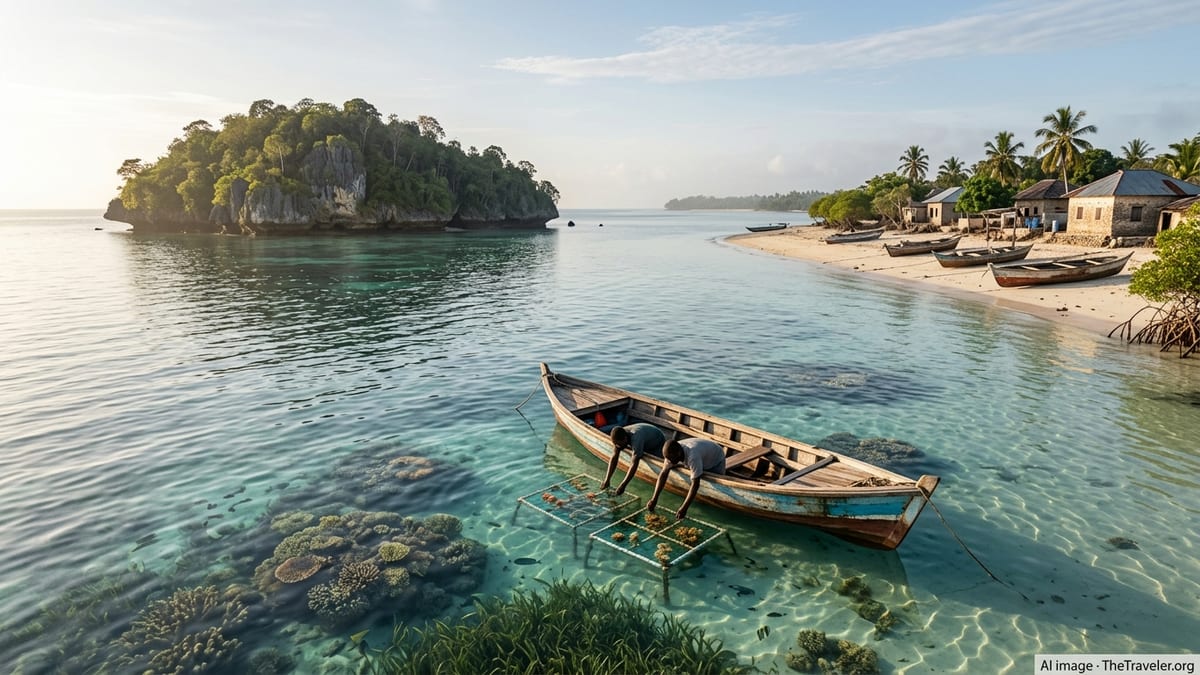
A Travel Community Turning Membership Fees into Ocean Action
Publicly available information shows that the Conscious Travel Foundation operates as a non-profit membership network for travel businesses, using annual fees and fundraising to back grassroots projects in destinations its members sell. In recent years its grant making has increasingly focused on conservation outcomes linked to local livelihoods, from African wildlife corridors to sustainable income programmes in Latin America.
Its latest round of support positions marine conservation in Indonesia and Kenya as a priority, reflecting broader travel-industry concern over coral bleaching, overfishing and coastal habitat loss. The foundation’s philanthropic framework prioritises locally led projects that may struggle to access conventional funding yet have strong ties to tourism and potential for long-term revenue generation.
Reports indicate that each project is screened not only for environmental impact but also for its ability to involve residents as decision makers and beneficiaries. By channelling member contributions into small but targeted grants, the organisation aims to create models in which visitors, operators and host communities all have a direct stake in healthier seas.
The travel sector has been under pressure to demonstrate tangible conservation impact beyond carbon offset claims. The Conscious Travel Foundation’s move into marine projects in two of the world’s most tourism-dependent coastal regions underscores how industry coalitions are starting to embed ocean protection within their core business narratives.
Indonesia: Supporting Coral Recovery and Women-Led Reef Stewardship
Indonesia’s reefs, particularly around eastern archipelagos such as Raja Ampat, are widely recognised as some of the most biodiverse on the planet, yet they face mounting stress from warming seas, destructive fishing practices and unmanaged tourism. According to recent conservation updates from the region, community organisations have been trialling coral nurseries, locally managed marine areas and education for boat operators to reduce anchor damage and pollution.
Funding from the Conscious Travel Foundation is directed towards initiatives that align with these efforts, with a focus on community-run restoration and monitoring that can be sustained by tourism income. Public information on associated projects in West Papua highlights the role of trained local divers in maintaining coral nurseries and transplant sites, as well as in leading low-impact snorkel and dive excursions for paying visitors.
Reports also point to the growing influence of women-led marine initiatives in Indonesian conservation. Programmes that provide dive training, science skills and leadership opportunities for women in coastal villages are viewed as particularly effective at embedding stewardship values across households and generations. The foundation’s grants are structured to strengthen such initiatives by covering training costs, basic research equipment and community outreach.
For travelers, these developments translate into more structured opportunities to visit reef sites with clear conservation protocols, guided by residents whose livelihoods depend on the long-term health of local ecosystems. Operators within the Conscious Travel Foundation network are expected to steer guests toward certified community experiences, helping to ensure that tourism demand reinforces, rather than undermines, fragile coral systems.
Kenya: Backing Community-Run Marine Sanctuaries on the Coast
On Kenya’s Indian Ocean coastline, conservation advocates have long promoted community-managed marine sanctuaries as a response to declining fish stocks and reef degradation. One widely cited example is Oceans Alive, a local enterprise on the south coast that has helped establish a 30-hectare no-take zone. Public reports attribute a several-fold increase in fish biomass and visible ecosystem recovery to long-term protection paired with community enforcement.
The Conscious Travel Foundation’s philanthropy programme identifies such projects as models for linking eco-tourism directly with conservation. According to information shared through the foundation’s own impact communications, supported initiatives on the Kenyan coast are using eco-tourism products such as guided snorkelling, reef walks and glass-bottom boat tours to generate revenue for patrols, reef monitoring and community benefits.
In practice, visitors who book marine excursions through responsible operators are funding the upkeep of no-take zones, while gaining a window into how local fishers, women’s groups and youth leaders are reshaping their relationship with the sea. This approach seeks to move beyond traditional park-fee models by keeping a greater share of tourism income within nearby villages and by giving residents a leading voice in management decisions.
Kenya’s coast is also central to broader international conversations about the blue economy, with government strategies calling for more sustainable tourism, cleaner beaches and stronger protection of nearshore habitats. By directing philanthropic capital into community initiatives that already have a track record of success, the Conscious Travel Foundation is positioning its members as practical contributors to these national and regional goals.
Embedding Marine Conservation in the Future of Conscious Travel
The Conscious Travel Foundation’s support for projects in Indonesia and Kenya reflects a larger shift in how the travel trade frames its responsibility to ocean environments. Rather than treating conservation as a peripheral charity activity, the organisation encourages members to integrate marine health metrics and community impact into product design, staff training and guest communication.
In both countries, the featured initiatives share common elements: locally agreed rules restricting harmful activities, community monitors who enforce those rules, and tourism offerings carefully structured around ecological limits. Early outcomes, such as increased fish biomass in no-take zones and renewed interest among youth in marine careers, are being used to advocate for replication in other coastal destinations.
For travelers, this trend signals a growing availability of experiences that are explicitly framed around regeneration, from coral-planting excursions with Indonesian community groups to educational reef walks with Kenyan marine stewards. Travel companies aligned with the Conscious Travel Foundation are urged to vet partners carefully, communicate conservation objectives transparently and invite guests to support long-term monitoring and maintenance, not just one-off volunteer days.
As ocean-focused tourism compacts and industry-wide pledges gain visibility, the foundation’s targeted support in Indonesia and Kenya offers a concrete example of how membership organisations can convert sustainability rhetoric into measurable marine outcomes. With climate impacts intensifying across tropical seas, these early experiments in locally led, tourism-backed conservation are likely to inform how conscious travel is defined in the decade ahead.