

More news on this day
Youth-focused tour operator Contiki is strengthening its presence in the Himalayas with new small-group trekking and culture itineraries in Nepal, targeting 18 to 35-year-old travellers seeking more intimate, locally guided adventures.
Get the latest news straight to your inbox!
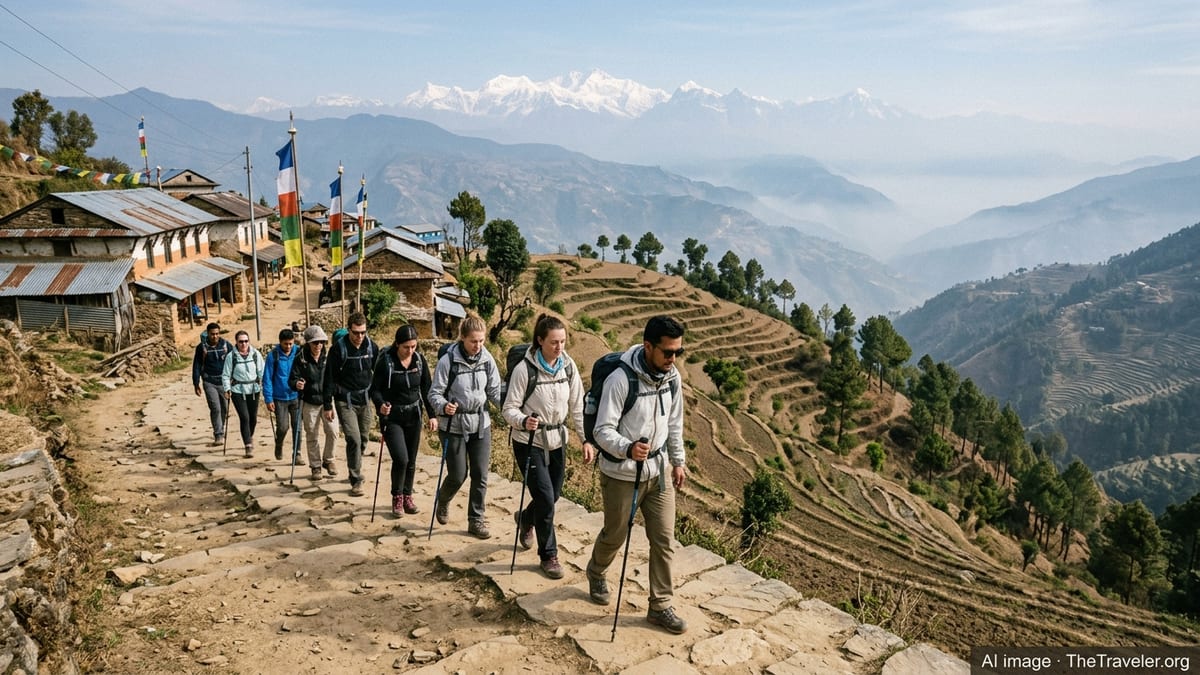
Small Groups, Big Himalaya Backdrops
According to Contiki’s latest product information, its Nepal programs are built around capped group sizes, with the flagship Nepal Trek and Temples itinerary limited to a maximum of around 20 participants. The format is designed to offer a more personal atmosphere than the brand’s large-coach European circuits, while still retaining the social energy that has long defined its youth tours.
The five day Nepal Trek and Temples trip starts and ends in Kathmandu and focuses on accessible trekking in the hill country rather than high-altitude expedition-style routes. The journey follows trails through national parks, pine forests and mountainside villages, combining scenic walking days with overnight stays in a mix of simple lodges and hotels. The goal is to give first-time trekkers a taste of Himalayan landscapes without demanding technical skills or extreme fitness.
Industry listings for Contiki’s Nepal Trek Challenge, a six day option based entirely around hiking, also flag small group departures, positioning the product alongside other compact walking and adventure tours aimed at younger travellers. Together, the itineraries highlight a broader shift at the company toward lower-capacity, niche trips in regions where intimate group sizes are considered a core part of the experience.
Travel comparison platforms feature these Nepal departures within Contiki’s dedicated small-group category, grouped alongside similar itineraries in Borneo and other adventure destinations. The categorisation signals that the brand is deliberately differentiating these programs from its traditional, higher-capacity offerings.
Age-Targeted Treks For 18–35s
Contiki continues to focus on the 18 to 35 demographic, and its Nepal trips follow the same age parameters as most of its worldwide portfolio. The small group format is intended to appeal to solo travellers and young professionals who want the convenience of a structured itinerary but prefer a tighter-knit group than a coach tour of 40 or more participants.
Travel advice sites that review group tour companies note growing demand from younger travellers for smaller groups that feel more like a cohort of friends than a large, anonymous crowd. Contiki’s own materials promote the social aspect of its small-group range, highlighting the chance to connect with other guests in shared trekking days, communal lodge dinners and village walks.
Compared with many of the company’s party-leaning Europe itineraries, the Nepal programs align more closely with the adventure and trekking segment of the youth travel market. Reviews and product descriptions emphasize hiking, culture and scenery ahead of nightlife, reflecting an audience that is interested in active days and early starts rather than late nights.
Tour industry overviews also point out that small-group youth departures can be a stepping stone for travellers new to independent exploration. Guided logistics, bundled accommodation and structured daily plans can make destinations like Nepal feel more approachable for those who might be hesitant to tackle the region entirely on their own.
Culture-Rich Routes Through Kathmandu Valley
The core of Contiki’s Nepal offering is a route that explores the Kathmandu Valley and nearby hill towns, combining trekking with cultural stops. Public itineraries highlight visits to temples and pilgrimage sites, along with time in traditional settlements known for their architecture and mountain views.
On Nepal Trek and Temples, travellers typically begin in Kathmandu before heading into the surrounding countryside on foot and by private mini coach. The walking days are structured to pass through mid-hill settlements and terraced farmland, with the aim of showcasing everyday Nepali life alongside views of distant Himalayan peaks.
Descriptions of the program underline its focus on accessible distances, with trekking stages pitched at participants with moderate fitness rather than seasoned mountaineers. Daily highlights often include sunrise or sunset viewpoints, giving the group repeated opportunities to see changing light on the mountains without needing to commit to multi week expeditions.
Meals and overnights are split between hotel stays in Kathmandu and simple lodges in smaller towns, reflecting a balance between comfort and immersion. Operators that distribute Contiki’s Nepal product stress that local guides play a central role on the trail, interpreting cultural sites and managing route conditions on behalf of the group.
Shifting Demand Toward Intimate Adventure Travel
The expansion of small-group itineraries in Nepal arrives as many major youth travel brands adapt to shifting preferences after years of strong interest in high-energy city and beach circuits. Travel media coverage indicates that a growing segment of younger travellers is prioritising nature, hiking and slower-paced cultural immersion, often in smaller groups that feel less packaged.
Analyses of Contiki’s broader portfolio show that the company now highlights several product lines marketed as small group or adventure-focused, typically averaging fewer than 24 guests and sometimes capping numbers closer to a dozen. The Nepal treks sit firmly within this strategy, serving as a flagship example of how the brand is recalibrating toward intimate experiences in remote regions.
At the same time, industry commentators note that the social aspect remains central. Small-group departures are still pitched as opportunities to travel with like-minded peers, share costs and access destinations that can be logistically challenging for first-time visitors. In Nepal, this includes arranging ground transport, trek permits, meals and lodge bookings, all of which can be difficult for solo travellers to coordinate.
Tour aggregators position Contiki’s Nepal adventures alongside offerings from other small-group operators in the region, giving young travellers a broader menu of options that range from budget trekking to more comfort-focused programs. The presence of a youth-specific brand in this space underscores how mainstream the demand for intimate adventure trips among 18 to 35-year-olds has become.
Competitive Landscape In Nepal’s Youth Market
Nepal has long been a stronghold for small-group trekking operators, particularly those specialising in adventure tours for international visitors. Industry rankings of companies serving younger travellers frequently mention brands that focus entirely on small groups, with maximum sizes often in the mid-teens.
By promoting capped group sizes and local guiding on its Nepal routes, Contiki is positioning itself within this competitive set rather than outside it. The approach gives the company a foothold in a destination where large-bus tourism is less practical and less appealing than it might be in Europe or North America.
Travel market reports suggest that younger travellers are increasingly willing to pay for trips that emphasise responsible travel, local engagement and time in nature. Nepal’s trekking infrastructure, established hiking routes and concentration of cultural sites make it a natural fit for operators seeking to respond to those trends with tightly curated, small-batch departures.
As more youth-focused companies introduce or refine small-group programs in Nepal, observers will be watching how demand develops for itineraries that blend social travel with quieter, more contemplative days on the trail. Contiki’s move into this space reflects confidence that its signature style can translate from party cities to the foothills of the Himalayas, provided the group size stays small and the focus remains firmly on the shared experience of the journey.