

More news on this day
Continental Airlines has unveiled a sweeping retrofit of its Airbus A320 fleet, promising a step change in cabin comfort, personal space and inflight technology as competition over the passenger experience intensifies on short and medium haul routes.
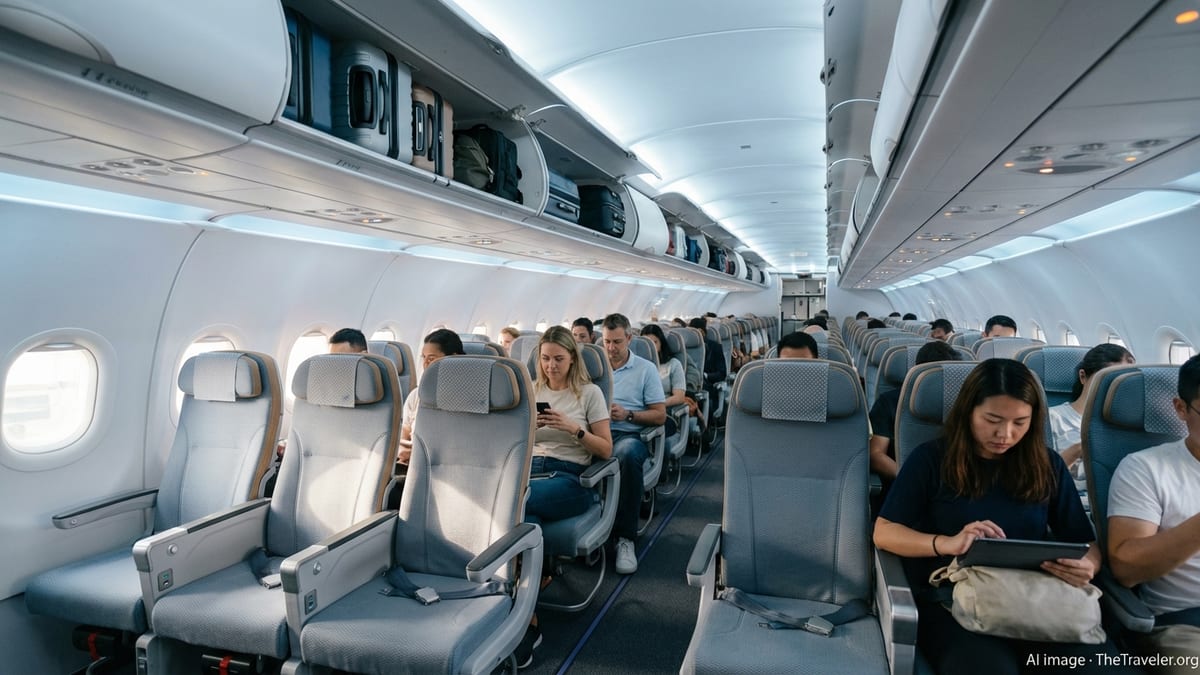
A Strategic Bet on the A320 Workhorse
For Continental Airlines, the Airbus A320 family is the backbone of its continental network, flying dense schedules on business and leisure routes where comfort has increasingly become a deciding factor for passengers. By committing to a full-cabin retrofit, the carrier is signaling that it views these aircraft not as aging assets to be run down, but as platforms for a new generation of onboard experience.
The program, announced this month, will see dozens of A320s removed from service in phases over the next several years for a comprehensive interior overhaul. Continental is positioning the investment as a way to align its short and medium haul cabins with the look and feel of its newest long haul aircraft, creating a more consistent brand experience across the fleet. Executives describe the move as essential in a market where travelers increasingly compare narrowbody cabins as closely as they once compared widebody flagships.
The retrofit also comes as airlines around the world race to modernize existing fleets rather than rely solely on new aircraft deliveries. Supply chain constraints and long order backlogs at Airbus and Boeing have pushed carriers to extract more value from the aircraft they already operate. Continental’s A320 project is part of this broader wave, but the airline is touting its focus on comfort and technology rather than pure densification.
By setting an ambitious completion target in the second half of this decade, Continental is effectively locking in its A320 strategy for years to come. The airline is betting that a more refined onboard product, supported by digital services and better cabin ergonomics, will pay dividends in loyalty and yield, even as low cost rivals continue to compete aggressively on price.
Inside the New Continental A320 Cabin
At the heart of the retrofit is an all-new cabin environment designed to feel brighter, quieter and more spacious, even within the constraints of a single-aisle fuselage. Continental is adopting a visual language inspired by its long haul flagships: calmer color palettes, cleaner lines and integrated mood lighting that shifts subtly during boarding, cruise and pre-landing phases.
LED lighting will replace legacy fluorescent systems, allowing more precise control over color temperature and intensity. Cabin designers say this is not just an aesthetic change; tailored lighting scenarios can reduce perceived jet lag on early-morning and late-evening sectors and make the aircraft feel less cramped during full flights. Sidewalls and ceiling panels are being refreshed with lighter materials and textures intended to reflect more light and visually widen the aisle.
Noise reduction has also been a priority. New insulation treatments around key cabin sections, combined with redesigned air vents and panels, are expected to soften the constant background hum that characterizes older narrowbodies. While engine and aerodynamic noise remain inherent to the aircraft, Continental expects incremental gains that will be most noticeable on longer sectors near the top of the A320’s typical stage length.
The airline is also rethinking the sense of flow inside the cabin. Entry areas at the front and rear will be reconfigured to create clearer separation between boarding zones and galley workspaces, helping reduce congestion around doors and lavatories. These small layout changes are intended to make boarding and deplaning feel less chaotic, especially when every overhead bin is filled to capacity.
New Seats, New Ergonomics
Perhaps the most visible element of the A320 retrofit for frequent flyers will be Continental’s new generation of slim, ergonomically contoured seats. Developed with input from seat specialists and medical ergonomics consultants, the design aims to deliver improved support without changing the fundamental seat pitch bands that determine legroom.
The seats feature sculpted backrests that create a little more knee clearance at eye level, combined with a slimmer profile that frees up space at shoulder height. Continental is also introducing horizontally adjustable headrests across the aircraft, allowing passengers to fine-tune neck support rather than relying on fixed or minimally flexible wings. In the forward cabin, the business class seats will gain a deeper recline and more generous cushioning to distinguish them more clearly from the main cabin.
Seat padding has been upgraded with multi-layer foam combinations tuned for flights of two to four hours, the sweet spot of the airline’s A320 network. Designers say they have tried to avoid the “board-flat” feel that has drawn criticism of some slimline seats in the past. Textiles and leather accents have been chosen not only for durability but for tactile comfort, with more breathable surfaces in areas that contact the passenger’s back and legs.
Continental is also taking the opportunity to modernize seat hardware. Tray tables are being redesigned to incorporate integrated tablet and smartphone cradles, making it easier for passengers to watch their own content without awkward balancing acts. Armrests and recline controls are being simplified and standardized across the cabin in an effort to reduce breakages and maintenance delays, while still preserving familiar functionality for travelers.
Bigger Bins and Smarter Storage
One of the most consequential changes for many passengers may be above their heads. Continental’s retrofitted A320s will receive larger, modern overhead bins engineered to accommodate carry-on bags in a vertical orientation, significantly increasing capacity over the airline’s current aircraft. The bins are modeled on the latest designs being adopted across the industry, which promise around 40 percent more volume than legacy installations.
By allowing typical cabin-sized suitcases to stand wheels-in rather than lying flat, the new bins can accommodate more bags per row without requiring passengers to force-fit items or request that luggage be gate-checked. Continental expects this to have a direct impact on boarding times, as passengers will spend less time searching for space and shifting luggage around the cabin once onboard.
The airline’s operations team views the storage upgrade as a key operational efficiency lever. Faster, more predictable boarding and deplaning can translate into tighter turnaround times and better on-time performance, especially at congested hubs where a few minutes’ delay at the gate can ripple throughout the day’s schedule. At the same time, easing pressure on overhead space could help reduce boarding gate tensions that have become a familiar part of modern air travel.
Cabin designers have also worked to integrate the larger bins into the overall aesthetic of the new interior. Smooth, clean-lined contours and lighter interior colors are being used to maintain a sense of openness despite the increased volume. The goal, Continental says, is to avoid the “overstuffed locker” look that has sometimes accompanied bin enlargements on older aircraft.
Charging, Connectivity and the Personal Device Economy
Recognizing that most passengers now board with multiple devices, Continental’s A320 retrofit introduces universal charging at every seat. Each seat row will be equipped with both USB-A and USB-C outlets, with power modules designed to support simultaneous charging of smartphones, tablets and lightweight laptops within safe power limits. Placement of the ports has been carefully considered to minimize cable tangles and accidental disconnections.
Device holders integrated into the seatback or tray table will allow passengers to mount their screens at eye level, effectively turning personal phones and tablets into primary entertainment displays. This approach reflects a broader industry shift away from heavy, maintenance-intensive seatback screens on certain short and medium haul fleets, and towards streaming content accessed over onboard Wi-Fi networks.
Continental plans to pair the physical upgrades with an enhanced digital platform accessible via the aircraft’s wireless network. Once connected, passengers will be able to browse a curated library of films, series, music and digital publications, in addition to real-time flight information and destination content. The airline is also exploring more transactional features, such as inflight catering upgrades and last-minute seat changes, delivered through the same portal.
While the airline has yet to detail a full connectivity roadmap for the A320 fleet, the retrofit is being designed with future antenna and server upgrades in mind. Cabling and power provisions are being routed to simplify later installation of higher-bandwidth satellite systems, reflecting expectations that inflight connectivity will continue to improve in speed and reliability across the remainder of the decade.
Business Class Reimagined for Short Haul
Continental’s A320 retrofit is not limited to the main cabin. The airline is using the opportunity to sharpen its short haul business class proposition at the front of the aircraft, targeting both corporate travelers and higher-yield leisure passengers who increasingly expect a differentiated product even on flights of two or three hours.
The redesigned business cabin will feature a refreshed seat with enhanced recline, wider cushions and upgraded headrests, along with more substantial privacy between seats. While the A320’s cabin dimensions do not allow for the full lie-flat suites seen on long haul aircraft, Continental aims to deliver a clearly more premium environment than a simple blocked middle seat. Materials in the forward cabin will include higher-grade leathers, refined stitching and distinctive trim elements that visually separate the space from the economy cabin.
Service elements are also being revisited. New side consoles and cocktail tables will give passengers more usable surface area for laptops and refreshments, while additional stowage niches will help keep bags and personal items organized during the flight. The airline is reviewing catering concepts for the retrofitted aircraft, with an emphasis on fresher, more regionally inspired menus tailored to departure and arrival cities.
For Continental, the refreshed business class is also about aligning expectations across its network. Passengers connecting from long haul premium cabins onto A320-operated sectors will encounter a more seamless experience in terms of design language, amenities and service cues, reinforcing the brand’s positioning as a full-service carrier from origin to final destination.
Timeline, Disruption and the Retrofit Challenge
Undertaking a fleet-wide retrofit of this scale is a complex logistical exercise. Continental expects each A320 to spend roughly a month in maintenance as older interiors are stripped out and new components installed. That includes the seats, bins, lighting, sidewalls, lavatories and technical provisions for future connectivity and power systems.
To minimize disruption to passengers, the airline will phase the program so that only a limited number of aircraft are out of service at any given time. Scheduling teams are building buffer capacity into the network to absorb the temporary loss of lift, using a mix of spare aircraft, optimized rotations and, where necessary, upgauging of select flights to larger types. Customers will be able to see whether their flight is scheduled with a retrofitted A320 as aircraft enter service, allowing some to actively seek out the new cabin experience.
The supply chain presents another major challenge. Airlines globally are competing for the same bins, seats, lighting systems and connectivity hardware, and lead times for some components have stretched into many months. Continental’s technical team has spent considerable time locking in agreements with manufacturers and maintenance partners to secure production slots and avoid bottlenecks that could delay the program.
Internally, the retrofit requires extensive training for cabin crew and maintenance personnel. New equipment, different safety procedures for modified layouts and updated service routines all need to be embedded before each aircraft returns to commercial duty. Continental is using mock-ups and training cabins to familiarize staff with the new environment, ensuring that the relaunch of each aircraft feels polished from day one.
What It Means for Travelers and the Wider Market
For passengers, the most immediate impact of Continental’s A320 retrofit will be felt in everyday details: a bag that finally fits in the overhead bin, a phone that reaches the destination fully charged, a seat that feels a little less fatiguing after three hours in the air. These changes may not carry the glamour of a new widebody flagship, but on the high-frequency routes that define much of modern air travel, they shape the overall perception of an airline more than any marketing campaign.
The project also sends a signal to the wider market. As airlines across North America, Europe and Asia embark on their own retrofit waves, competition will increasingly center on who can deliver the most comfortable, connected and reliable narrowbody experience. Continental, by moving early and comprehensively on its A320 fleet, is positioning itself to be in that first rank of carriers competing not just on schedule and price, but on how it feels to spend a few hours in seat 15A.
Whether travelers reward that investment with loyalty and higher-yield bookings will become clear over the next several years, as more retrofitted aircraft enter service and passengers begin to experience the new cabins at scale. If Continental’s gamble pays off, the humble A320 could become the stage on which the airline quietly reinvents what passengers expect from short and medium haul flying.