

More news on this day
Contour Airlines is set to launch new nonstop flights between Page, Arizona and Las Vegas, Nevada, reconnecting two major Southwest tourism gateways and offering faster access to Lake Powell, Antelope Canyon and the Grand Canyon’s remote North Rim.
Get the latest news straight to your inbox!
New Route Restores a Critical Southwest Air Link
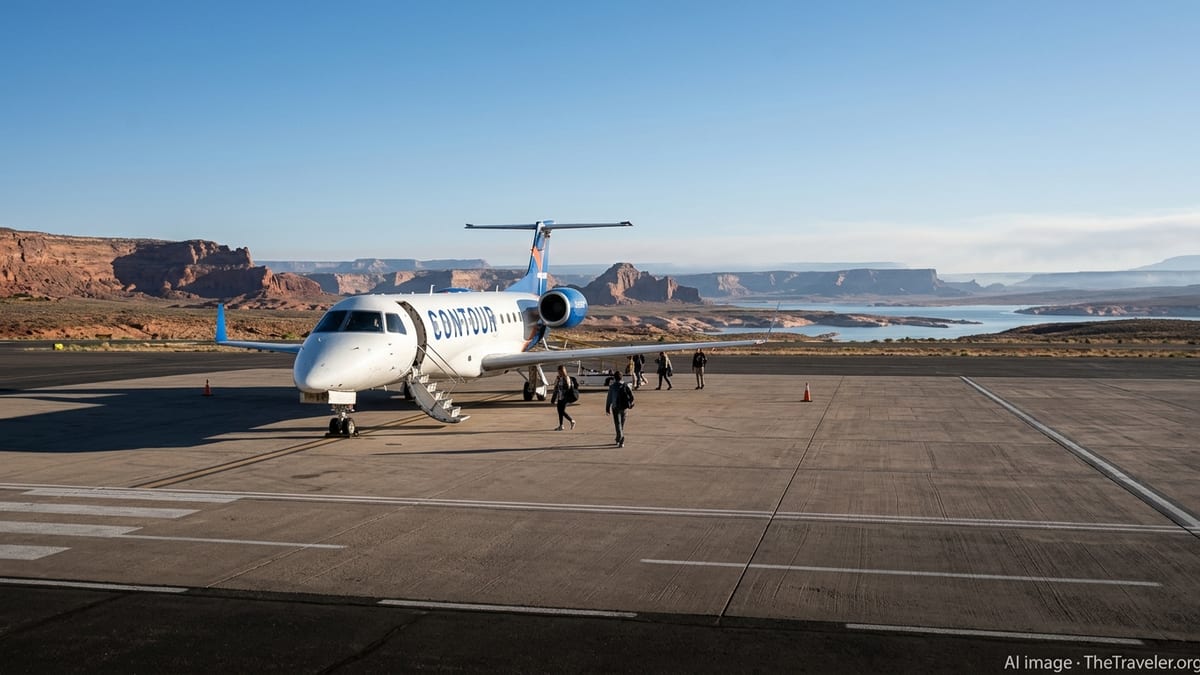
Publicly available information indicates that Contour Airlines has announced new nonstop service linking Page Municipal Airport in northern Arizona with Harry Reid International Airport in Las Vegas. The route is scheduled to begin operations in early July 2026, restoring a direct air connection that had disappeared from Page prior to the pandemic and has been sought by regional tourism interests ever since.
According to recent coverage and timetable information, the new service is planned to operate four times weekly, with flights on Mondays, Thursdays, Fridays and Sundays. This schedule is aimed at capturing both weekend leisure traffic from Las Vegas and flexible midweek demand from tour operators and independent travelers exploring the canyon country of northern Arizona and southern Utah.
Contour’s move builds on the carrier’s growing presence in smaller Western markets, where it often connects remote communities to larger hubs. The Page to Las Vegas route complements existing service patterns that already link Page with Phoenix and other regional centers, signaling that the airline sees continuing potential in the Grand Canyon and Lake Powell corridor.
The announcement arrives as Las Vegas continues to post near-record passenger volumes, with Harry Reid International Airport remaining one of the busiest gateways in the United States. The addition of Page gives the airport another niche leisure destination tied closely to outdoor recreation and national park tourism in the interior West.
Gateway to Lake Powell, Antelope Canyon and the North Rim
The new nonstop link is expected to be particularly significant for travelers aiming to combine Las Vegas with some of the Southwest’s most photographed natural attractions. Page sits just minutes from the marinas of Lake Powell, the slot canyons that have made Antelope Canyon world-famous, and the overlook at Horseshoe Bend on the Colorado River, making it a compact base for scenic day trips.
Previously, many visitors starting their journey in Las Vegas faced a four to five hour drive across the desert and high plateau to reach Page. The nonstop Contour flights will reduce that travel time to under an hour in the air, potentially changing how travelers structure itineraries that include both casino-and-entertainment time in Las Vegas and landscape-focused exploration around Page.
The route also strengthens access to the remote North Rim of Grand Canyon National Park, which is significantly closer to Page than to the more heavily visited South Rim. Tour planners have long pointed to the logistical challenges of connecting these areas efficiently. With the new flights in place, visitors may be more likely to plan loop trips that begin in Las Vegas, connect by air to Page for several nights, then return to Las Vegas or continue on to other desert destinations.
For local businesses in Page, including outfitters, guides, hotels and houseboat operators, the renewed air service to Las Vegas could deliver a noticeable boost in high-value visitors who are willing to pay for time savings and convenience. Industry observers note that increasing the mix of air arrivals can help extend the season and support more stable year-round employment.
Contour’s Regional Jet Product Targets Comfort on Short-Haul Flights
Contour Airlines markets a premium-leaning product on its regional routes, typically using Embraer regional jets configured with around 30 seats. Public details about the fleet highlight features such as generous legroom compared with many larger carriers’ standard economy cabins, as well as complimentary snacks, beverages and at least one checked bag included in the fare.
On the Page to Las Vegas route, that product mix positions the airline to appeal both to leisure travelers looking for a more relaxed short flight and to tour operators who can incorporate the service into packaged itineraries. The small jet configuration also aligns with the operational constraints of Page Municipal Airport, which handles limited commercial traffic alongside general aviation and scenic flights.
Industry coverage of Contour’s expansion across the Mountain West and Southwest notes that the airline often enters markets where air service has previously been intermittent or subsidized under federal connectivity programs. The return of Las Vegas service to Page follows earlier patterns in which Contour has reintroduced links that had disappeared from small-city schedules, betting that improved aircraft economics and targeted marketing can make them sustainable.
By keeping frequency at four weekly departures rather than daily service at launch, Contour appears to be calibrating capacity carefully to match projected demand. Aviation analysts often describe this staged approach as a way for regional carriers to build awareness while maintaining operational flexibility if booking trends shift.
Implications for Regional Tourism and Travel Patterns
The launch of nonstop flights between Page and Las Vegas has broader implications for regional tourism flows across Arizona, Nevada and Utah. With an air bridge in place, tour operators may redesign itineraries that previously relied on long coach transfers, substituting flights where travelers are willing to pay a premium for time savings and comfort.
Travel industry reports suggest that visitors increasingly seek multi-stop itineraries that combine urban entertainment hubs with national park landscapes in a single trip. The Las Vegas to Page connection fits squarely into that trend, allowing travelers to fly in for a weekend on the Strip, then quickly reach Lake Powell and surrounding public lands without renting a car for the entire journey.
For destination marketing organizations in northern Arizona, the new flights create opportunities to promote Page as a standalone short-break escape from Las Vegas, not just a one-night stop on extended road trips. Campaigns can now position Page as a quick-change destination where visitors can go from neon-lit resorts to sunrise over red-rock canyons in less than a day of travel.
The route may also encourage more international travelers, who often enter the United States via large hubs like Las Vegas, to include Page on their itineraries. With ticketing for Contour’s flights available through online travel agencies and standard booking channels, the Page to Las Vegas sector can be more easily combined with long-haul tickets from Europe, Asia and Latin America.
Page Municipal Airport’s Role in Future Growth
Page Municipal Airport has a long history of fluctuating commercial service, often reflecting broader shifts in regional aviation economics and tourism demand. Historical records show that the airport has seen various combinations of turboprop and regional jet operations, with routes to hubs such as Phoenix and seasonal or intermittent service to Las Vegas and other cities.
The reintroduction of nonstop flights to Las Vegas places new focus on the airport’s role as a gateway to some of the most heavily visited public lands in the United States. With national park visitation trends remaining strong, local stakeholders are likely to watch booking patterns closely to assess whether additional frequencies or seasonal adjustments might be warranted in future schedule updates.
Observers note that successful performance on the new Las Vegas route could strengthen the case for further investment in airport facilities and ground transportation links around Page. Improved air connectivity can also support efforts to distribute visitor traffic more evenly across the wider Grand Canyon region, potentially easing pressure on overcrowded viewpoints and trailheads at better-known access points.
For now, the launch of Contour’s nonstop Page to Las Vegas service marks a notable milestone in the ongoing reshaping of air travel across the American Southwest, reconnecting two destinations that sit at the crossroads of entertainment, outdoor adventure and iconic desert landscapes.