

More news on this day
Widespread disruption at Copenhagen Airport has triggered a cascade of delays and cancellations, turning one of Scandinavia’s key hubs into a gridlocked chokepoint and leaving thousands of travelers struggling to get home.
Get the latest news straight to your inbox!
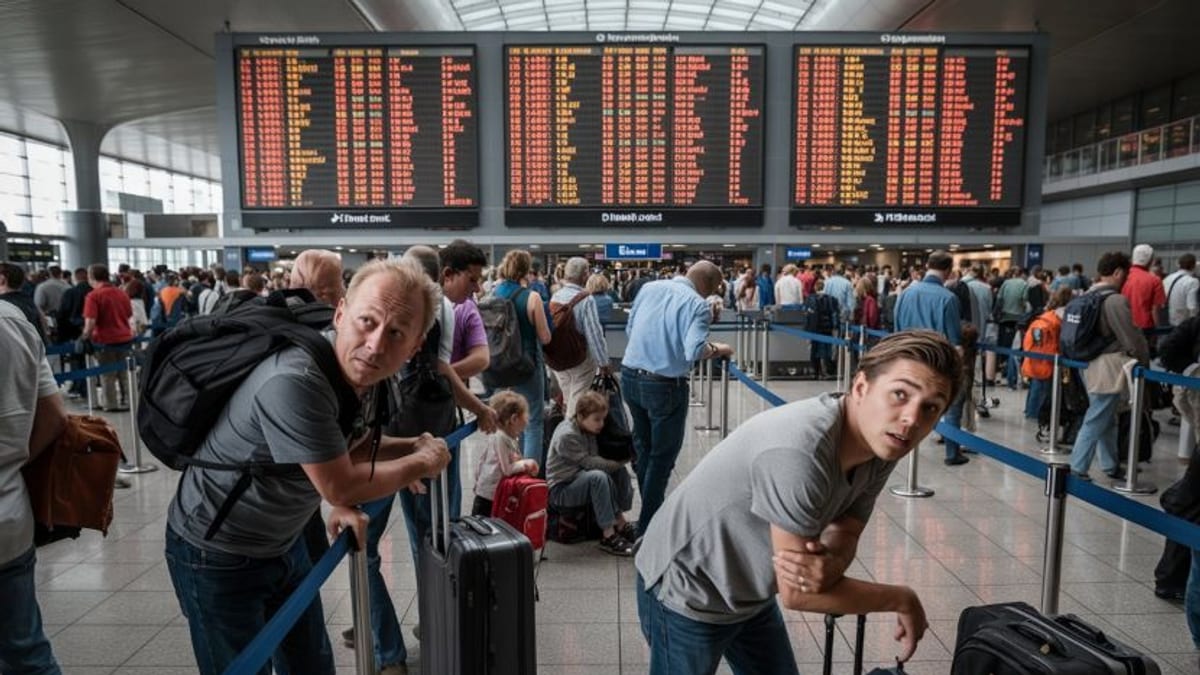
Image by Global Travel Alerts, Advisories, International Travel Alerts
What Is Happening at Copenhagen Airport
Over the weekend and into Monday, Copenhagen Airport has been grappling with a sharp spike in flight delays and cancellations, producing long lines at check in, security and rebooking desks. Publicly available flight tracking data and local media coverage point to a dense cluster of grounded or severely delayed departures, with knock on effects rippling across northern Europe.
Reports indicate that the disruption began as a concentrated operational bottleneck affecting ground handling, aircraft rotation and crew availability, then quickly escalated as more flights missed scheduled departure and arrival slots. Once early wave services fell behind schedule, aircraft and crews failed to be in position for later departures, compounding the problem through the day.
By Monday morning, the cumulative effect resembled a rolling traffic jam in the sky and on the apron, with aircraft waiting for stands, passengers stranded in transit, and limited spare capacity for airlines to absorb further shocks. Travelers reported on social platforms that information screens were frequently changing, with some flights repeatedly pushed back before ultimately being cancelled.
The result for many passengers has been a classic hub gridlock scenario, where even travelers whose origin or destination lies far from Denmark find themselves stuck in Copenhagen because their connecting services cannot be re-routed quickly enough through alternative airports.
Impact on Flights and Stranded Passengers
The pattern of disruption at Copenhagen involves both outright cancellations and extended delays stretching several hours beyond scheduled departure times. Short haul routes around Scandinavia and continental Europe appear particularly affected, as airlines struggle to rotate aircraft quickly enough through the hub to maintain high frequency schedules.
Travelers connecting through Copenhagen toward long haul destinations are experiencing some of the worst knock on impacts. With missed connections and limited remaining capacity on later departures, passengers describe being rebooked for travel one or even two days later, or being offered indirect routings through alternative hubs such as Amsterdam, Frankfurt or London to complete their journeys.
Accommodation has emerged as a critical pressure point. With large numbers of travelers forced to remain overnight in the Danish capital at short notice, airport area hotels have filled rapidly, pushing some stranded passengers toward city center rooms or nearby towns. Social media testimonies describe families sleeping in terminal seating or on the floor near departure gates after failing to secure a bed, a familiar image from previous large scale aviation disruptions in Europe.
For travelers already in the air when the disruption intensified, the experience has included diversions and extended holding patterns. Some flights bound for Copenhagen have been rerouted to other airports when arrival slots could not be guaranteed within safe limits, leaving passengers facing onward journeys by bus, rail or delayed positioning flights.
Wider European Knock On Effects
Copenhagen Airport is a central node for Scandinavian and Baltic air travel as well as an important transfer point between northern Europe and intercontinental routes. When a hub of this size experiences distress, the consequences are rarely contained to one country. Published flight data and European aviation coverage show delays spreading to airports linked by dense schedules with Copenhagen, such as Oslo, Stockholm and major German and Dutch hubs.
Aircraft and crew that should be cycling through Copenhagen to operate services elsewhere in Europe have become trapped in the logjam. This has produced secondary cancellations on routes that only touch Copenhagen at one end of the journey, frustrating travelers who may not even have realized that their flight’s reliability depended on operations in Denmark.
Airlines using Copenhagen as a base are attempting to rebalance aircraft and staff positioning to restore some resilience to their networks. In practice, that can mean pruning schedules, consolidating lightly booked flights and prioritizing routes with the highest demand or the fewest alternative options. While these tactics can help stabilize operations, they can also deepen the ordeal for passengers whose services are cut altogether.
Rail and long distance bus operators in Denmark and neighboring countries are beginning to feel the strain as stranded air travelers pivot to ground transport. Ticketing platforms show increased demand for same day departures between Denmark, Sweden, Germany and beyond, as people attempt to salvage business trips, holidays and family visits disrupted by the airport chaos.
What Travelers Need to Know Right Now
For anyone booked to travel through Copenhagen in the coming days, publicly available guidance from airlines and travel advisories converges on several key recommendations. Passengers are being urged to check the status of their flights repeatedly in the hours before departure, as schedules remain fluid and same day cancellations or significant retimings are still occurring.
Many carriers have introduced limited flexibility measures, such as allowing free rebooking to alternative dates or routes when space is available. Some airlines are also advising customers to consider starting their journey from or connecting through alternative hubs where feasible. However, with wider regional aviation still under strain, spare seats on popular routes are in short supply and may sell out quickly.
Travel experts commenting in European media suggest that travelers build in much longer buffers for connections involving Copenhagen, particularly for itineraries that mix separate tickets or different airlines. Where possible, passengers may wish to avoid tight same day transfers through the hub until on time performance clearly improves and the backlog of stranded customers has been worked through.
For those already caught up in the disruption, it remains important to document expenses associated with hotels, meals and alternative transport, as well as to retain written confirmation of cancellations and extensive delays. This documentation can be crucial later when seeking compensation or reimbursement under applicable airline policies or European passenger rights rules.
Passenger Rights and What Compensation May Be Available
The crisis in Copenhagen is unfolding against the backdrop of evolving European rules on air passenger protection. Under long established regulations, travelers departing from an EU airport, or flying to the EU on an EU carrier, may be entitled to care, rerouting and in some cases financial compensation when flights are cancelled or heavily delayed, unless the disruption is caused by extraordinary circumstances beyond the airline’s control.
Recent efforts to update and clarify these regulations have focused on making it easier for passengers to understand when airlines must provide meals, hotel accommodation and assistance at the airport, as well as when cash compensation applies. Coverage in European policy and aviation outlets notes that regulators have pushed for simpler explanations of rights at check in and boarding gates, and for faster handling of compensation claims.
In the current situation, what individual travelers can claim will depend on the specific cause of their cancellation or delay, the airline operating the flight, and whether the disruption is judged to fall within the airline’s responsibility. Technical faults, crew shortages and internal operational issues are typically treated differently from air traffic control restrictions or severe weather that affects multiple carriers simultaneously.
Consumer advocates quoted across European media are encouraging affected passengers at Copenhagen to keep detailed records, submit claims directly to airlines rather than relying solely on intermediaries, and be prepared for processing times that can stretch over weeks when large numbers of travelers file complaints at once. For many stranded at the airport, the immediate priority remains simply finding a way home, but the financial aftermath of this episode in Denmark’s main air gateway is likely to play out long after the last delayed flight finally departs.