

More news on this day
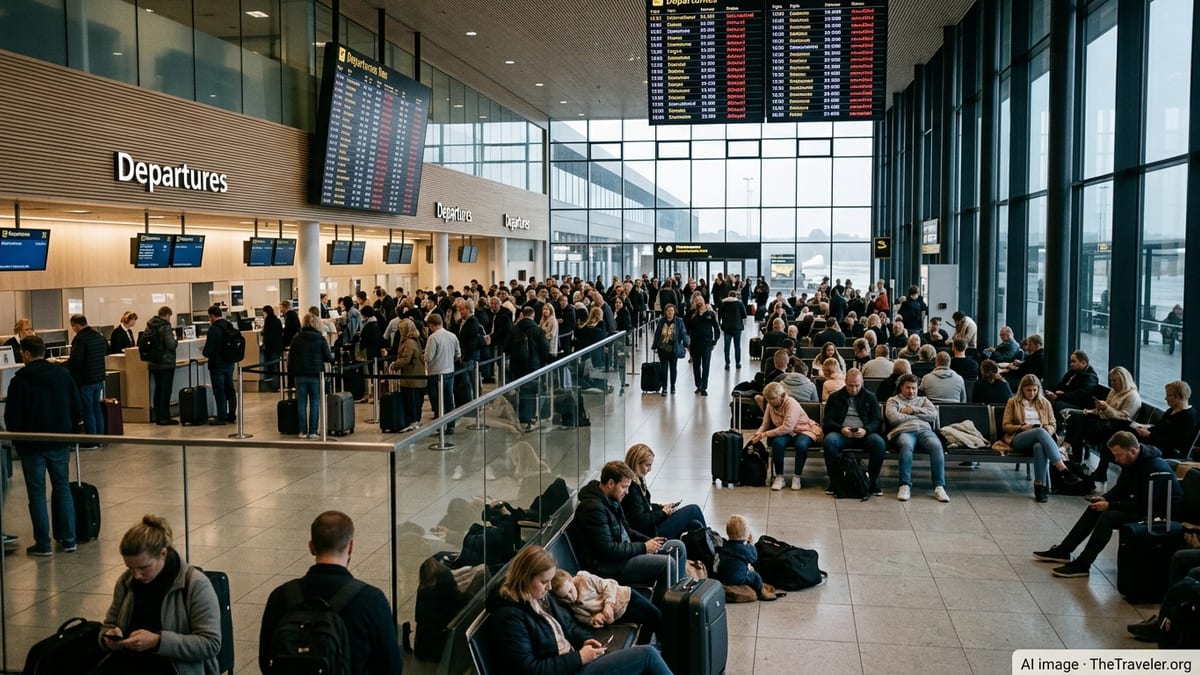
Copenhagen Airport is grappling with severe operational disruption today after a major technical failure sharply reduced air traffic capacity, triggering long delays, widespread cancellations, and leaving thousands of travelers stranded across terminals.
Get the latest news straight to your inbox!
Technical Breakdown Paralyzes One of Scandinavia’s Busiest Hubs
Publicly available information from Danish and European aviation channels indicates that a significant technical malfunction has forced Copenhagen Airport to scale back the number of flights it can safely handle, creating a bottleneck across arrivals and departures. The exact nature of the failure has not been fully detailed, but the impact on airport systems has been serious enough to disrupt both aircraft movements and passenger processing.
The disruption comes at a time when air travel across Europe is already running close to capacity, which means the loss of operational flexibility at a major hub like Copenhagen quickly ripples through airline networks. Flight tracking dashboards show long queues of delayed departures, heavily revised arrival times, and aircraft diverted to nearby airports when slots at Copenhagen are unavailable.
While some services are still operating, the reduction in runway or systems capacity has forced airlines to prioritize select routes, reduce frequencies, and in many cases cancel rotations altogether. Travelers are being urged, through airline channels and airport notices, to monitor their flight status closely and avoid heading to the airport without confirmed rebooking.
Operational data from recent months had shown Copenhagen as one of Europe’s more punctual large airports, which underscores how unusual today’s breakdown is compared with the airport’s typical performance baseline.
Travelers Face Long Queues, Uncertain Timelines, and Limited Options
Scenes described in social media posts and local coverage portray crowded terminals with extensive queues at check in, security, and airline service desks as passengers attempt to rebook or seek clarification. Many travelers report waiting hours for updates as airlines reorder their schedules in response to the constrained capacity.
Families on holiday, business travelers with tight connections, and long haul passengers transiting through Copenhagen have all been caught in the disruption. Some have been rebooked onto later flights, often with overnight delays, while others have been offered connections through alternative European hubs as carriers attempt to move aircraft and crews around the network.
With hotel rooms near the airport and in central Copenhagen quickly filling up, accommodation has become a growing concern for stranded passengers. Local media note that some travelers are bedding down in terminal seating areas overnight when immediate rebooking or lodging cannot be arranged. Food outlets and retail services inside the airport are also experiencing heavy demand as people wait for news.
Reports highlight that the disruption is not confined to those physically at Copenhagen Airport. Passengers originating in other cities but booked to connect through the hub are facing last minute cancellations or reroutings, in some cases before even leaving their home airports, as airlines attempt to prevent additional bottlenecks downstream.
Airlines Scramble to Rebuild Schedules and Manage Crews
Airlines using Copenhagen as a key base or focus city are working to redesign their operations in real time, according to publicly available flight program updates and timetable changes. When a hub suddenly loses part of its capacity, carriers must reposition aircraft, reassign crews, and, in some cases, swap aircraft types in order to keep at least a portion of their network functioning.
Industry observers point out that once a day’s schedule is severely disrupted, the effects can last well beyond the initial incident. Crews may run up against duty time limits, aircraft can end up overnight at outstations rather than at their planned bases, and maintenance checks may need to be rescheduled. This can lead to knock on delays and cancellations even after the immediate technical issue at the airport is brought under control.
Some airlines appear to be implementing rolling cancellations, progressively trimming later flights as it becomes clear that earlier delays cannot be recovered. Others are consolidating departures, combining passengers from multiple flights onto a single service where capacity allows. Carriers are also issuing guidance on rebooking rights and, where applicable, compensation rules under European passenger protection regulations.
Travel data specialists note that large scale disruptions at a hub can also distort traffic flows for days, as passengers rerouted through other airports compete for limited spare seats in the broader European network. This may make it harder for affected travelers to secure preferred alternatives, especially on popular leisure and long haul routes.
Broader Network Effects Across Northern Europe
The turmoil in Copenhagen is having noticeable effects on airports across Northern Europe, as reflected in live departure boards and regional media reports. Flights that would normally operate as straightforward point to point services are being diverted, delayed, or retimed to account for the restrictions at the Danish hub.
Neighboring airports in countries such as Sweden, Norway, and Germany are seeing an uptick in diverted or rerouted traffic, with some carriers choosing to feed passengers through alternate hubs rather than risk extended ground time in Copenhagen. This can relieve some pressure on the affected airport, but also creates new congestion points elsewhere as terminals and ground services handle unexpected additional volumes.
Rail and ferry operators in the wider Øresund and Baltic region are also experiencing higher demand as travelers seek alternative ways to reach their destinations. Some passengers are deciding to abandon air travel altogether for short and medium distance trips, opting instead for cross border trains and regional bus services when available.
Analysts caution that while these alternative routes offer important pressure relief, they are unlikely to fully absorb the displaced air traffic. The scale of activity passing through Copenhagen on a typical day means that any sustained reduction in capacity will continue to be felt across the European travel network.
What Travelers Should Expect in the Coming Days
Available operational updates suggest that restoring full capacity at Copenhagen Airport may take time, even once the underlying technical problem is fixed. Clearing the backlog of displaced passengers, repositioning aircraft, and rebalancing crew schedules usually extends disruption beyond the initial event, particularly for long haul and tightly scheduled short haul operations.
Travel experts recommend that anyone booked to travel via Copenhagen in the next several days monitor airline apps and airport status boards frequently, as further timetable changes are likely. Where possible, passengers are advised to complete online check in, update contact details for alerts, and consider carrying essential items in hand luggage in case bags and travelers are separated during rebooking.
Standard passenger rights in Europe mean that travelers may be entitled to care provisions such as meals and refreshments during long delays, and, in specific circumstances, hotel accommodation and financial compensation. However, the exact level of support depends on the cause of the disruption and the policies of individual carriers, so travelers are being encouraged by consumer groups to review airline guidance and keep receipts for any out of pocket expenses.
As operations gradually stabilize, Copenhagen Airport and its partner airlines face a challenging task in rebuilding confidence among passengers who experienced the worst of the disruption. For now, the airport remains a vivid example of how a single critical failure can turn a routine travel day into a true nightmare for thousands of people in a matter of hours.