

More news on this day
Hundreds of travelers were left stranded in Denmark after a fresh wave of disruption at Copenhagen Airport resulted in 13 flight cancellations and 63 delays, affecting services operated by SAS, Air France, Air Baltic, Lufthansa, Icelandair and several other major carriers across Europe.
Get the latest news straight to your inbox!
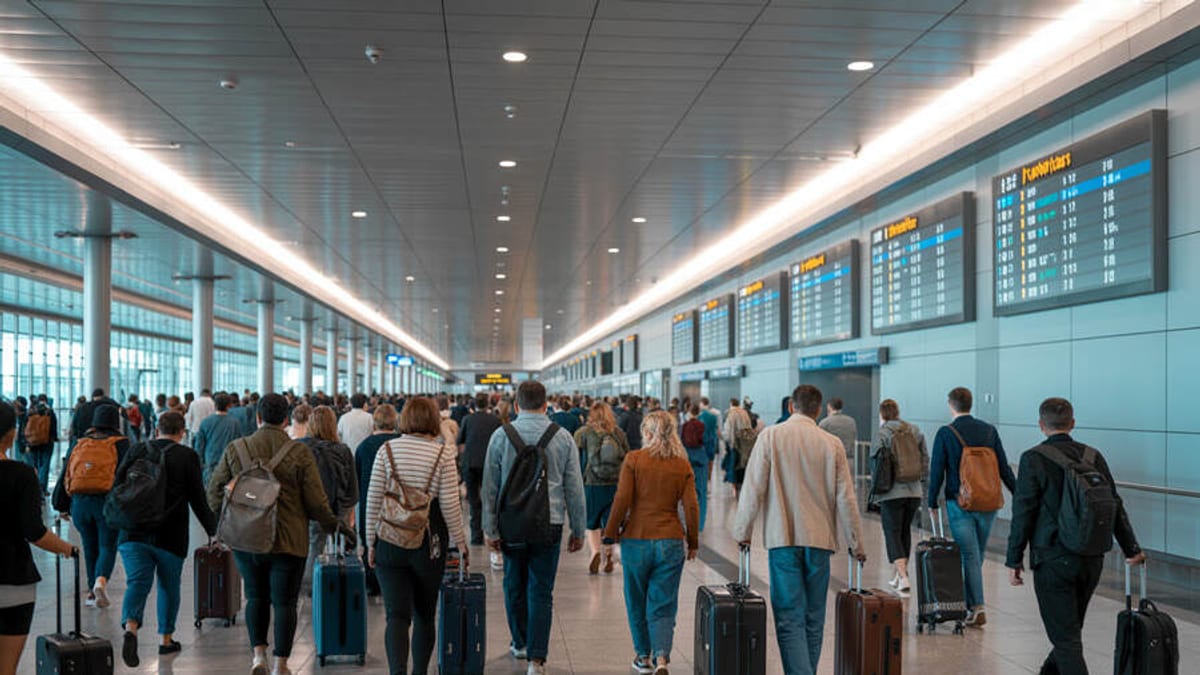
Image by Travel And Tour World
Wide-Ranging Disruptions Hit Key European Routes
According to publicly available airport operational data and live departure boards, the disruption centered on flights linking Copenhagen with several major European destinations, including Rome, Malaga, Zurich, Frankfurt and Keflavik. Departures and arrivals on these routes saw a mix of outright cancellations and extended delays, leaving transfer passengers particularly exposed.
Services operated or marketed by Scandinavian Airlines (SAS) accounted for a substantial share of the impact, with multiple flights either canceled outright or subject to long ground holds. Flights involving partner and competitor airlines such as Air France, Air Baltic, Lufthansa and Icelandair were also affected, underlining how quickly operational turbulence in a hub like Copenhagen can ripple across multiple airline networks.
The 13 cancellations and 63 delays reported within a relatively short time window represent a significant operational shock for an airport that normally promotes strong punctuality performance. While Copenhagen routinely manages weather-related and air traffic control constraints, the scale of the current disruption has proved challenging for airport planners and airline operations teams.
Published coverage and flight-tracking data show that passengers on both point-to-point and connecting itineraries experienced missed onward flights, missed hotel check-ins and unplanned overnight stays. Even where flights did eventually operate, long waiting times at departure gates and crowded seating areas were common complaints shared across social media and travel forums.
Rome, Malaga, Zurich, Frankfurt and Keflavik Among Hardest Hit
Routes between Copenhagen and major cities such as Rome and Malaga were among those most visibly disrupted, affecting both leisure and business travelers. Southern European destinations are particularly popular for Nordic holidaymakers at this time of year, meaning that even a small number of cancellations can translate into high passenger volumes in need of rebooking.
Traffic to Zurich and Frankfurt, both important European hubs, was also heavily affected. These routes are critical for connecting travelers to long haul services, and delays or cancellations on these segments can cascade into missed intercontinental departures. Travelers with itineraries involving banks of transatlantic and Asian flights via Switzerland and Germany faced the prospect of complex rebooking scenarios, in some cases involving multiple airlines.
Icelandair services between Copenhagen and Keflavik were part of the disruption as well, impacting passengers using Iceland as a bridge between mainland Europe and North America. When feeder flights into Keflavik are delayed or canceled, the knock-on effect can be felt on onward services to key North American gateways, increasing the number of travelers who must be accommodated on later departures.
Reports indicate that some passengers attempting to reach these destinations were rerouted through alternative hubs, such as Amsterdam, Paris or London, as airlines looked to relieve pressure on heavily affected city pairs. However, rerouting options were constrained by high seasonal demand and limited spare capacity across many European networks.
Multiple Airlines Grapple With Operational Strain
SAS, Copenhagen’s largest operator, featured prominently in the disruption footprint. The carrier has already drawn attention in recent months for a pattern of short notice cancellations and retimed services, a trend that travelers and aviation observers link to a combination of cost pressures, aircraft and crew availability, and broader volatility in European air traffic control.
Air France and Lufthansa, both major network airlines with strong connectivity into Copenhagen, also saw their schedules affected. Publicly accessible operations data and traveler accounts describe cases where flights were delayed long enough to require complete rebooking of connecting itineraries, even when the original sectors eventually departed.
Air Baltic and Icelandair, which rely on carefully timed connections in their home hubs, were faced with the task of absorbing late-arriving passengers while maintaining onward punctuality as far as possible. For smaller and medium-sized operators, a disruption of this size at a key partner airport can have outsized effects on daily fleet utilization and crew positioning.
The combined impact across different airlines illustrates how interdependent European aviation has become. A single airport’s period of disruption can, within hours, affect schedules from the Baltic region to southern Spain and from the Nordics to North America, particularly when the affected flights connect into other hub-and-spoke networks.
Stranded Passengers Turn to EU261 and Rebooking Options
As cancellations and long delays accumulated, many travelers looked to the European Union’s passenger rights framework, commonly known as EU261, for guidance on compensation and care. Publicly available consumer guidance notes that, depending on the cause of the disruption and the length of the delay, passengers on flights departing an EU or EEA airport may be entitled to meals, refreshments, hotel accommodation and monetary compensation.
However, practical experience shared on travel and airline forums suggests that applying these rules in real time can be complicated. Passengers often report difficulty obtaining clear written explanations for the cause of delays, which is a key factor in determining eligibility for compensation. Distinguishing between extraordinary circumstances, such as certain air traffic control restrictions, and issues within an airline’s control, such as crew rostering or technical problems, is not always straightforward for affected travelers.
Rebooking proved to be another challenge. When several flights on the same route are canceled or heavily delayed, spare seats on remaining services are quickly taken. Public commentary indicates that some passengers sought alternative routings via secondary airports or different airlines, while others opted for rail travel within mainland Europe where feasible. In a number of cases, travelers reported overnight stays in Copenhagen while waiting for newly arranged departures.
Consumer advocates consistently advise passengers in such situations to retain boarding passes, booking confirmations and receipts for any extra expenses, as these documents are often essential for later claims. They also suggest travelers check both airline-specific conditions of carriage and general EU261 guidance to understand which costs may be recoverable.
What Travelers Through Copenhagen Should Expect Next
Operational forecasts and recent performance trends suggest that while the immediate disruption at Copenhagen Airport may ease as airlines work through backlogs, travel conditions could remain uneven in the short term. Schedules may be adjusted at short notice as carriers fine-tune capacity and reposition aircraft and crew to restore network stability.
Passenger experience reports from the current disruption indicate that travelers with tight connections are particularly vulnerable when delays mount at Copenhagen. Travel planners frequently recommend building in longer connection times, especially during busy travel periods or when onward journeys involve long haul sectors that do not operate daily.
Airports and airlines have increasingly promoted digital tools to help passengers manage disruption, including real-time flight status notifications, mobile boarding passes and in-app rebooking options. Publicly available data from recent events suggests that travelers who enrolled in these services often received faster updates on gate changes, revised departure times and rebooking offers than those relying solely on terminal screens.
For now, travelers scheduled to fly through Copenhagen are being encouraged by consumer groups and travel advisors to monitor their bookings closely in the 24 to 48 hours before departure, stay alert to schedule changes and consider flexible arrangements for accommodation and ground transport at both origin and destination in case further disruption arises.