

More news on this day
Travelers across Europe faced long queues, missed connections and unexpected overnight stays after Copenhagen Airport experienced a wave of disruption that led to 13 flight cancellations and 63 delays, affecting routes to Rome, Malaga, Zurich, Frankfurt and Keflavik and stranding passengers in Denmark and beyond.
Get the latest news straight to your inbox!
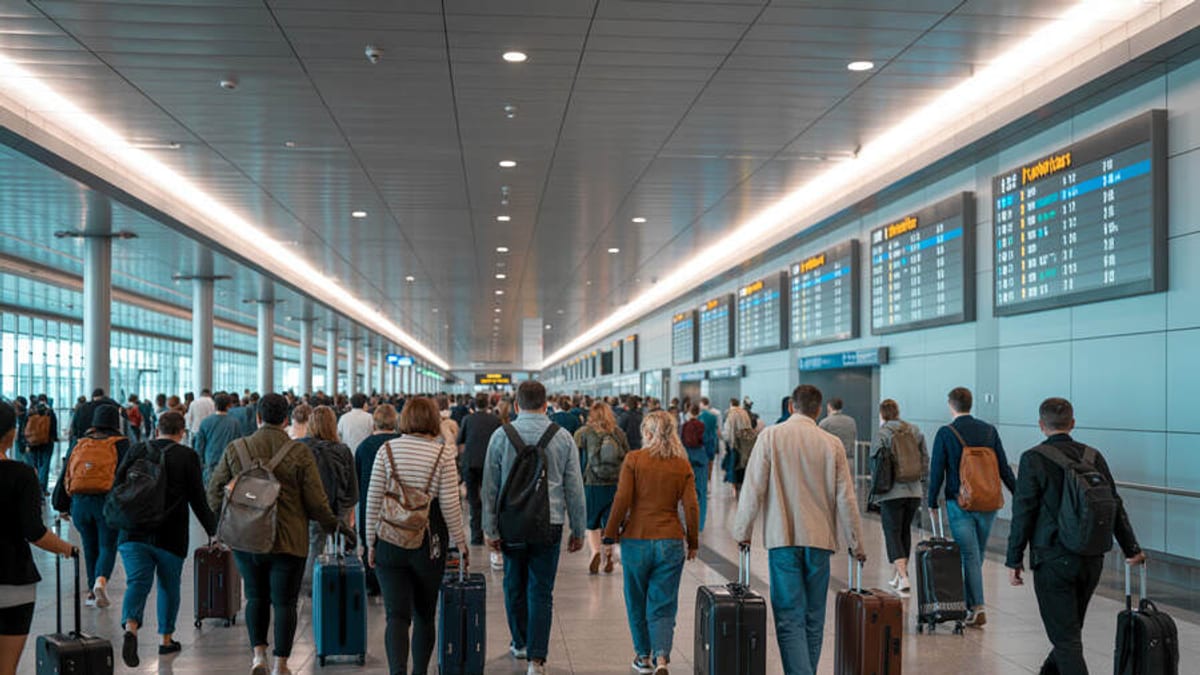
Image by Travel And Tour World
Wide-Ranging Disruptions Hit Key European Routes
The disruption at Copenhagen Airport has rippled across some of Europe’s busiest leisure and business corridors. Publicly available operational data and media coverage indicate that at least 13 flights were cancelled and 63 were delayed over the course of the disruption, with services to Rome, Malaga, Zurich, Frankfurt and Keflavik particularly affected. These routes connect Scandinavia to major hubs in Italy, Spain, Switzerland, Germany and Iceland, magnifying the impact for connecting passengers.
Carriers operating at Copenhagen, including SAS, Air France, Air Baltic, Lufthansa and Icelandair, were among those most exposed. Rome and Malaga are heavily used by leisure travelers and city-break passengers, while Zurich, Frankfurt and Keflavik are important transfer points for long-haul itineraries. When flights on these routes are disrupted, rebooking options quickly narrow, leaving travelers with limited same-day alternatives.
Reports from airline and airport information channels show that cancellations primarily affected flights departing from Copenhagen, but knock-on delays spread across the wider network. Aircraft and crew out of position in Denmark translated into later departures and missed slot times in other European cities, compounding the disruption throughout the day.
The uneven pattern of cancellations and delays meant some services operated close to on time, while neighboring departures on similar routes were heavily affected. This patchwork of reliability created confusion for passengers trying to understand whether their own flight would be impacted.
Passengers Stranded in Denmark as Capacity Tightens
For many travelers, the biggest immediate consequence was being stranded in Denmark as departures from Copenhagen were scrubbed or heavily delayed. Published passenger accounts and airline advisories describe travelers stuck in terminal queues as they attempted to rebook on later flights, with available seats quickly disappearing on popular routes to southern Europe and key hubs such as Frankfurt and Zurich.
Copenhagen Airport acts as a primary connecting point for SAS and several partner airlines, so disruptions at the hub rapidly reduce options for re-routing. When multiple departures to the same region are cancelled in a short window, passengers are often moved onto a smaller number of remaining flights, stretching capacity and leaving some travelers with no same-day alternatives.
Travel forums and social media updates referenced long waits at service desks and difficulties reaching airline call centers as the disruption unfolded. With passengers vying for limited seats on remaining departures to Rome, Malaga, Zurich, Frankfurt and Keflavik, many were pushed to next-day flights or advised to consider itineraries involving additional stops or overnight stays.
Some travelers reported that their original itineraries through Copenhagen effectively collapsed once a single leg was cancelled, especially where onward flights operated only once daily. In such cases, rebooked journeys often involved significant detours through other European hubs, adding hours or even an extra day to total travel time.
SAS, Air France, Air Baltic, Lufthansa and Icelandair Among Affected Carriers
The disruption at Copenhagen Airport brought a cross-section of European and Nordic airlines into focus. SAS, the dominant carrier at Copenhagen, faced particular scrutiny as passengers documented cancellations and extended delays on multiple routes. According to recent operational statistics and customer reports, the airline has already been managing a challenging period of schedule adjustments and occasional mass cancellations across its network.
Air France and Air Baltic, which link Copenhagen to key hubs and regional destinations, also experienced operational knock-on effects. With aircraft rotations intertwined across Europe, even a small cluster of cancellations at a major hub can rapidly translate into downstream schedule changes. Passengers booked on these carriers from Rome, Malaga and other cities into Copenhagen reported altered departure times and uncertain connection windows.
Lufthansa and Icelandair, which rely on Copenhagen for both origin and connecting traffic, were likewise caught up in the disruption. Frankfurt and Zurich serve as vital gateways for onward long-haul travel, while Keflavik is a strategic transit point for routes between Europe and North America. When Copenhagen-based flights to these cities are delayed or cancelled, travelers risk missing transatlantic departures and losing carefully planned same-day connections.
In several documented cases, passengers were ultimately rebooked on partner or non-partner airlines as part of complex recovery efforts. While such solutions can help reduce the length of delays, they also increase the risk of lost or misrouted baggage and create additional uncertainty for travelers unfamiliar with the operating carrier.
Knock-On Effects From Weather, Congestion and Crew Availability
Although a single clear cause has not been isolated in publicly available reporting, the pattern of disruption at Copenhagen appears consistent with a combination of factors that have challenged European aviation in recent seasons. Weather-related constraints over northern Europe, air traffic control restrictions, and tight crew and aircraft rotations can interact to amplify relatively small initial problems into large-scale schedule upheavals.
Industry analyses of recent flight reliability in Europe highlight that even modest storms or low-visibility conditions can trigger rolling delays, particularly during peak traffic periods. Once departure slots are missed, aircraft may be forced into later windows, causing late arrivals into airports such as Rome, Malaga, Zurich, Frankfurt and Keflavik and limiting time available for turnarounds.
Recent studies of air travel reliability have also noted that airlines across the continent are operating with leaner spare capacity, both in terms of aircraft and crew. When operations at a major hub like Copenhagen become stressed, there may be few standby resources available to restore the schedule quickly. This can turn what might once have been a short-lived disruption into a multi-wave event of cancellations and long delays.
Public data from airports and regulators across the region further suggest that traffic volumes have continued to grow, in some cases outpacing improvements in infrastructure and staffing. In this context, even localized issues can have Europe-wide consequences as aircraft and crews fail to reach their next scheduled points on time.
What Travelers Can Expect in the Coming Days
The immediate disruption at Copenhagen has already eased compared with the peak of cancellations and delays, but passengers traveling through the hub in the short term are likely to feel residual effects. Industry experience shows that it can take several days for aircraft and crews to return fully to their intended rotations after a major disturbance, particularly for carriers operating complex networks such as SAS, Lufthansa and Air France.
Travelers with upcoming flights involving Copenhagen, Rome, Malaga, Zurich, Frankfurt or Keflavik are advised by consumer advocates and travel experts to monitor their bookings closely through airline apps and online departure boards. Because late operational changes remain possible, checking flight status repeatedly in the 24 hours before departure is recommended.
Passenger rights under European regulation provide for assistance in many cases of long delays and cancellations, including meals, accommodation and potential financial compensation when disruptions are not caused by extraordinary circumstances. Public guidance from aviation regulators and consumer organizations encourages travelers to keep receipts and documentation related to any additional expenses incurred while stranded.
While the latest disruption once again highlights the fragility of tight aviation schedules in a busy European airspace, it also underscores the importance for travelers of building extra margin into itineraries that rely on single daily connections or tight transfers through major hubs like Copenhagen.