

More news on this day
Australian small-ship specialist Coral Expeditions has entered into a new partnership with cruise agency and digital platform CruisePals, aiming to blend high-touch expedition cruising with data-driven personalization and broadened distribution as demand for remote, low-impact voyages accelerates worldwide.
Get the latest news straight to your inbox!
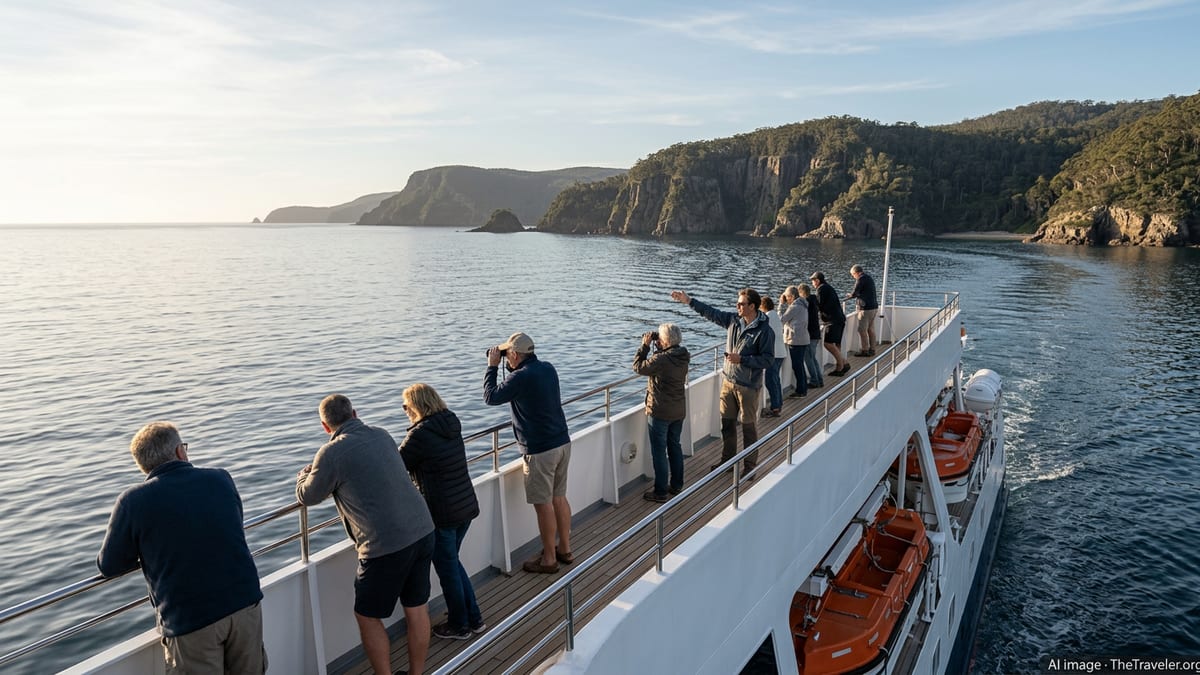
Strategic Alliance Targets Rapidly Growing Expedition Segment
The tie-up brings together Coral Expeditions, a pioneer of small-ship journeys along Australia’s coasts and across the Asia Pacific, with CruisePals, a retail and group travel brand that has been expanding its focus on cruise packaging and loyalty-driven sales. While financial terms have not been disclosed, industry observers say the collaboration underscores how even niche operators are leveraging technology-focused partners to compete in a crowded expedition market traditionally led by larger global brands.
Coral Expeditions has steadily diversified from its Great Barrier Reef origins into itineraries that include Tasmania, Papua New Guinea and the Indian Ocean, deploying a three-ship fleet carrying roughly 70 to 120 guests per voyage. The company has positioned its vessels as purpose-built for expedition travel, with shallow drafts, dedicated excursion tenders and a strong emphasis on naturalist-led programming rather than conventional entertainment.
For CruisePals, the agreement strengthens its credentials in one of cruising’s fastest-growing niches. Expedition cruising continues to outpace the wider market, buoyed by travelers seeking smaller ships, access to secluded destinations and more meaningful encounters with nature and local cultures. By embedding Coral Expeditions more deeply into its product lineup, CruisePals gains a distinctive small-ship option that contrasts with the larger vessels dominating mainstream itineraries.
The partners say the relationship will initially focus on improving the end-to-end planning and booking journey for guests, before moving into co-created product concepts and expanded channel marketing. That phased approach reflects how expedition operators are cautiously integrating new technology while maintaining their hallmark intimate atmosphere on board.
Next-Gen Guest Experience Blends Personalization With Human Touch
Central to the partnership is an ambition to deliver a “next-generation” guest experience that uses data and digital tools without losing the personal, unhurried character that has defined small-ship expeditions. Coral Expeditions’ guest base, which skews toward experienced travelers and nature enthusiasts, increasingly expects the same frictionless planning, tailored recommendations and pre-trip content that they encounter with larger brands and in other segments of travel.
Through CruisePals’ platform and customer relationship capabilities, the two companies intend to map traveler preferences more closely, from cabin layouts and dietary requirements to interests in wildlife, photography or Indigenous culture. That information can then be used to personalize pre-departure communications, highlight relevant shore excursions and better match guests with on-board experts such as naturalists, historians and guest lecturers.
On board, the vision is less about overt gadgets and more about subtle enhancements that support discovery. Rather than large-scale, app-centric programming, Coral Expeditions is expected to continue favoring informal briefings, open-bridge policies where possible and spontaneous landings dictated by weather and wildlife encounters. Digital tools are likely to remain in the background, used by crew and shore teams to coordinate logistics, refine daily schedules and capture feedback that can feed into future voyage design.
Industry analysts note that this blended model is becoming a hallmark of modern expedition cruising. Operators that successfully combine high-touch hospitality and science-led exploration with lighter, guest-friendly technology are seen as best placed to attract younger professionals and multigenerational groups without alienating traditional expedition travelers.
Remote Itineraries and Local Partnerships in the Spotlight
The Coral Expeditions and CruisePals collaboration is launching at a time when demand is strong for itineraries that go beyond classic polar routes and marquee ports. Remote coastlines of Australia, Southeast Asia and the South Pacific are emerging as prime expedition territory, with guests increasingly drawn to cultural immersion and biodiversity hotspots closer to home.
Coral Expeditions has invested heavily in these regions, tailoring voyages around tidal phenomena, endemic species and community visits. Its Tasmanian voyages, for example, emphasize rugged national parks, island walking trails and encounters with local producers, while Papua New Guinea and Indonesian sailings focus on village visits, traditional ceremonies and snorkeling over coral reefs far from mainstream cruise routes.
Through CruisePals’ retail networks and group travel expertise, these itineraries are expected to reach new audiences, particularly in markets where awareness of small-ship expeditions remains limited. Packaged offerings that bundle flights, pre- and post-cruise stays and travel insurance could make expedition travel more approachable for first-time cruisers who might otherwise gravitate to larger ships.
The partners have also flagged a stronger emphasis on collaborating with local guides, conservation groups and cultural custodians along key routes. While Coral Expeditions already works with regional experts and land-based partners, a broader distribution footprint could help sustain these relationships and support year-round employment in remote communities that host expedition landings.
Sustainability and Low-Impact Operations Central to Value Proposition
The partnership lands against a backdrop of heightened scrutiny on cruise tourism’s environmental footprint. Expedition operators, whose vessels often sail in fragile marine ecosystems and World Heritage areas, face particular pressure to demonstrate that growth will not come at the expense of local environments and communities.
Coral Expeditions has long pitched itself as a low-impact alternative to large ships, highlighting smaller guest numbers, flexible itineraries that avoid overcrowded ports and an educational approach built around marine biologists, conservation-focused lectures and citizen science initiatives. Its ships are designed to facilitate rapid, small-group landings, which can reduce congestion and help limit disturbance at sensitive sites.
In working with CruisePals, the line is expected to foreground these credentials more aggressively in marketing and pre-trip communications. Clearer sustainability messaging, transparent information on fuel efficiency and waste management, and guidance for guests on responsible behavior ashore are likely to feature prominently in product training for travel advisors and in consumer-facing content.
Travel consultants say this focus aligns with shifting expectations among expedition guests, who are more inclined to ask about environmental policies, community engagement and scientific partnerships before booking. A stronger digital interface, supported by CruisePals, could make it easier to share detailed sustainability information and trip reports, reinforcing Coral Expeditions’ positioning as a steward of the regions it explores.
Competitive Implications in a Crowded Expedition Market
The Coral Expeditions and CruisePals alliance comes as numerous established cruise brands and new entrants expand into expedition cruising, commissioning purpose-built ships and introducing sailings to polar and tropical frontiers. That rapid capacity growth has sharpened competition for both guests and experienced crew, while also increasing pressure on certain high-profile destinations.
By deepening its partnership with a specialized cruise agency, Coral Expeditions gains a targeted distribution partner rather than relying solely on mass-market channels. CruisePals, in turn, secures access to a distinctive product that can differentiate its portfolio and appeal to travelers seeking smaller vessels, Australian hospitality and itineraries outside the standard Caribbean and Mediterranean circuits.
Analysts suggest that similar alliances between niche operators and tech-enabled distributors are likely to proliferate, particularly in segments where authenticity, expertise and sustainability are central to the value proposition. For Coral Expeditions, the challenge will be to harness CruisePals’ data and reach without diluting the intimate, expedition-first character that sets it apart from larger competitors.
As the next generation of expedition guests looks for deeply personal, environmentally conscious and seamlessly organized adventures, the success of the Coral Expeditions and CruisePals partnership may offer an early indicator of how small-ship lines can navigate the future of this fast-evolving corner of the cruise industry.