

More news on this day
Australian small-ship pioneer Coral Expeditions is accelerating a new, technology-enabled era of travel on the Great Barrier Reef and along Western Australia’s Kimberley coast, blending upgraded onboard systems with science partnerships and next-generation itineraries to reshape how visitors experience two of the country’s most fragile frontiers.
Get the latest news straight to your inbox!
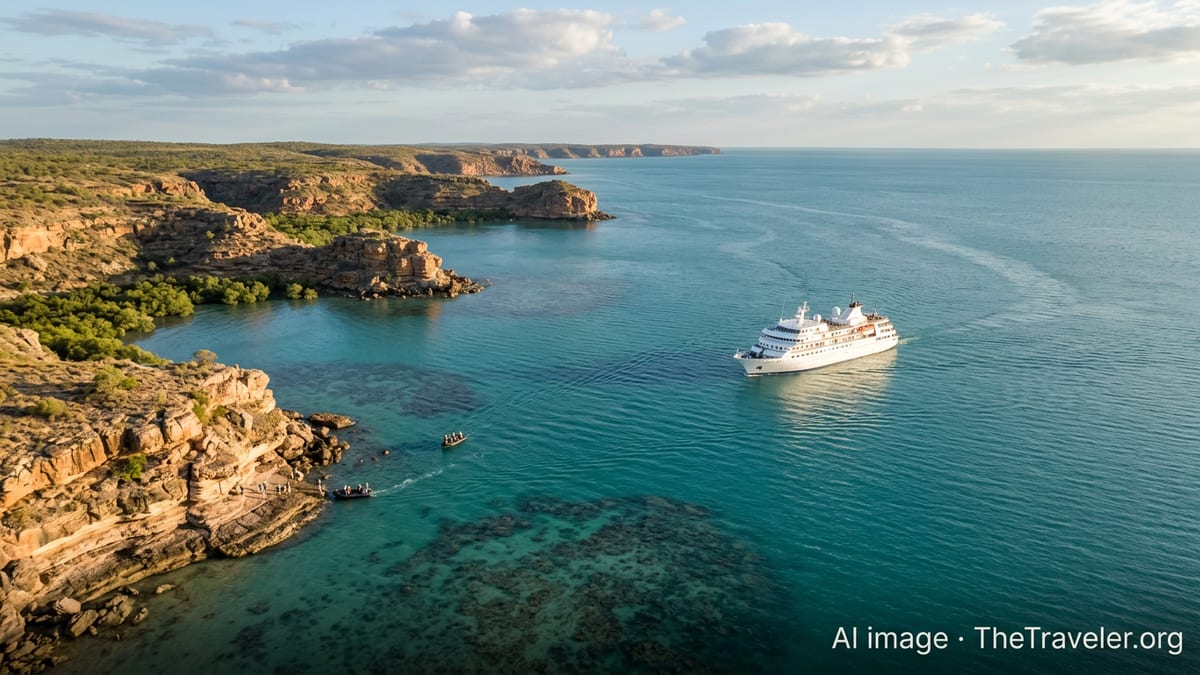
From Reef Pioneer to Tech-Forward Expedition Leader
Coral Expeditions built its reputation more than four decades ago with sensitive small-ship voyages to the outer reaches of the Great Barrier Reef. Today, the company operates a trio of purpose-built expedition vessels, including the Coral Discoverer and Coral Adventurer, designed specifically for navigating Australia’s remote coastlines with shallow drafts, robust hulls and extensive deck space for open-air viewing.
Recent seasons have underscored how central the Great Barrier Reef and the Kimberley remain to the line’s identity. According to the company’s latest voyage guides and sailing schedules, Coral Expeditions now runs tightly curated programs in both regions, timing departures around seasonal wildlife activity, tidal movements and weather patterns to maximise time at key natural highlights while avoiding crowding and ecological pressure.
While the ships retain an understated Australian character, they are being refitted and refined in ways that reflect a broader cruise-industry turn toward quieter, smarter and more sustainable expedition operations. The changes are not about flashy attractions but about hardware, connectivity, navigation and behind-the-scenes systems that together are transforming life on board and the experience ashore.
Industry analysts say this positions Coral Expeditions in the vanguard of a small-ship sector now racing to demonstrate that deeply remote cruising can coexist with heightened expectations for safety, comfort and environmental care.
Connectivity and Navigation Upgrades Redefine Remote Travel
One of the most visible shifts for guests is the leap in connectivity. Coral Expeditions has invested in advanced satellite and 4G broadband systems fleetwide, replacing the patchy links that once defined off-grid cruising with more robust coverage that allows for real-time weather routing, digital navigation tools and improved communication between ship and shore.
For travelers, this means the ability to share experiences from the reef or Kimberley gorges with friends at home and to access digital briefings, expedition maps and naturalist content on personal devices. For the bridge team, always-on data significantly enhances situational awareness, from up-to-the-minute marine forecasts to chart updates for complex tidal rivers and unmarked inlets along the Kimberley coast.
The same technology is enabling more flexible itineraries. Captains can adjust daily plans around sudden changes in wind, swell or visibility while still delivering on promised highlights such as Montgomery Reef, the Horizontal Falls or isolated coral cays. Expedition leaders report that this agility has become crucial as climate variability makes conditions less predictable across northern Australia.
Behind the scenes, upgraded monitoring and maintenance systems feed engineering data ashore, helping the company to fine-tune performance, reduce fuel consumption and schedule preventative work with less disruption to sailing seasons. The result is a quieter, smoother ride that supports a growing expectation that high-comfort travel should leave a lighter wake.
Science Partnerships Bring a New Dimension to Reef Voyages
The technology revolution is not limited to shipboard hardware. On the Great Barrier Reef, Coral Expeditions is leaning into citizen science and research collaborations that turn voyages into platforms for reef monitoring and storytelling about climate resilience.
A new partnership with the Australian Geographic Society and Great Barrier Reef-focused organisations is anchoring itineraries that include onboard experts, structured data collection and in-depth interpretation of coral health. Guests are briefed on reef ecology and invited to take part in activities such as observational surveys, underwater photography for identification projects and guided snorkels on less frequently visited outer reef sites.
The expansion of digital tools is amplifying these efforts. High-resolution mapping, tablet-based field guides and instant image sharing allow scientists and travelers to compare sites across seasons and years, while also feeding into broader research networks tracking bleaching events, species shifts and recovery patterns.
Tourism officials in Tropical North Queensland say such collaborations are becoming a cornerstone of the region’s strategy to position reef travel as part of the solution rather than the problem. By building science engagement into the product, Coral Expeditions is helping to set expectations that reef visitors will be informed participants in conservation rather than passive spectators.
Kimberley Seasons Grow as Onboard Tech Enhances Safety
Far to the west, Coral Expeditions is scaling up its Kimberley operations just as improved ship technology strengthens confidence in navigating one of Australia’s most demanding coastal environments. The company’s current programs feature more than 45 sailings in a single Kimberley season, with a further expansion signalled for 2026 that will see dozens of departures between March and October across its three-ship fleet.
The Kimberley’s dramatic 12-metre tidal swings, narrow channels and scattered reefs have long made it a mariner’s challenge. Enhanced radar, sonar and electronic charting, supported by the line’s upgraded connectivity, now give bridge teams more precise insight into underwater topography and tidal flows when approaching sites such as the King George River, Prince Regent River and the Buccaneer Archipelago.
Expedition staff say the technology improves not only navigation but also the timing of landings and tender operations, allowing Zodiacs and custom-built excursion vessels to meet windows of slack water or optimal waterfall flow. Itineraries remain weather-dependent, but the margin for careful adjustment is greater, supporting both safety and the sense of drama that guests seek from this rugged coastline.
As regional competitors add capacity of their own, the arms race is as much digital as it is nautical. Operators are differentiating through better onboard data, more precise logistics and richer interpretive content delivered via screens, speakers and field equipment rather than through ship size alone.
Balancing Growth, Expectations and Fragile Ecosystems
The convergence of cruise technology and expedition travel is reshaping guest expectations. Travellers increasingly want the intimacy and flexibility of small-ship voyages with the reliability, safety and connectivity they associate with larger vessels. Coral Expeditions’ embrace of upgraded systems and science-led partnerships signals how operators are responding.
At the same time, the stakes on the Great Barrier Reef and in the Kimberley are unusually high. Both regions face pressures from climate change, coastal development and rising visitor numbers. Technology can help reduce risk and improve understanding, but it also enables greater access, extending seasons and opening previously hard-to-reach locations.
Industry observers say the challenge over the coming decade will be to ensure that tech-driven efficiency does not translate into unsustainable growth. For Coral Expeditions and its peers, that means continually reassessing carrying capacities, tightening environmental protocols and working closely with Traditional Owners and scientists to identify which sites can absorb more visitation and which should remain off the tourism map.
If handled carefully, the same tools that are now revolutionising navigation, communication and research could underpin a more sensitive model of expedition cruising. For Coral Expeditions, the next era of Great Barrier Reef and Kimberley travel will be judged not only by the sophistication of its ships, but by the health of the waters and coasts they explore.