

More news on this day
Princess Cruises’ Coral Princess is charting an ambitious world-spanning route that links Southeast Asia with the glaciers of Alaska, with an extended Pacific itinerary that connects Singapore to North America while calling at landmark cities and several UNESCO-listed destinations along the way.
Get the latest news straight to your inbox!
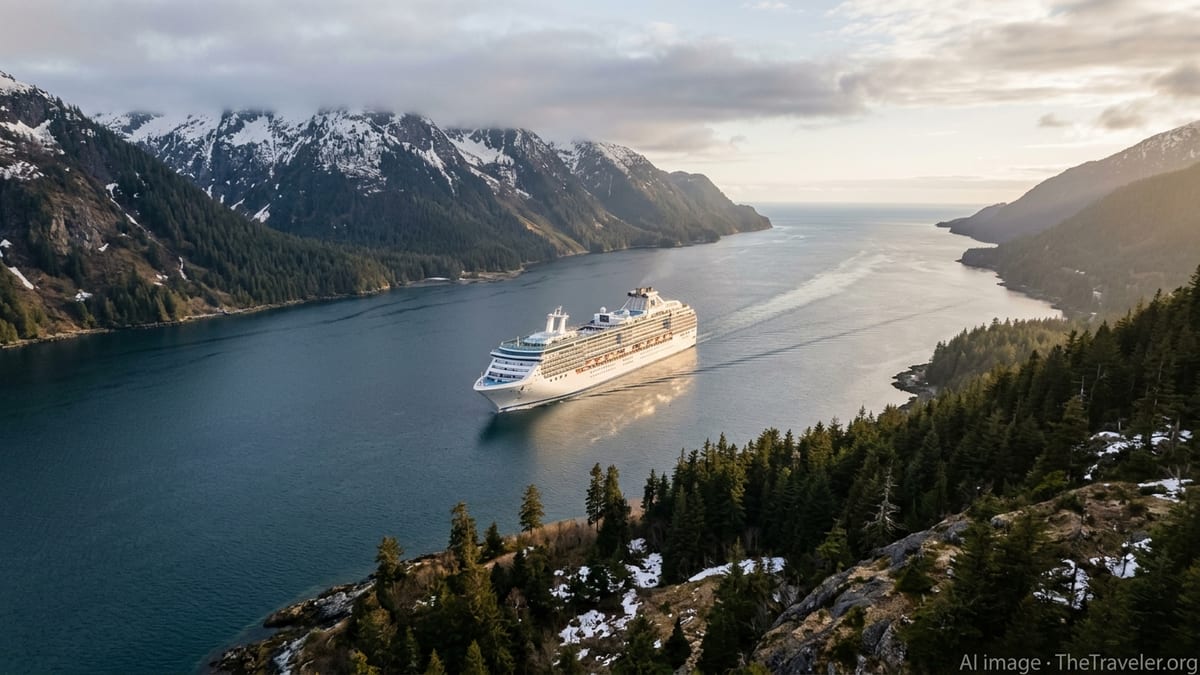
Pacific-Focused World Cruise Route Links Asia And Alaska
Publicly available itinerary information shows Coral Princess operating an extended, Pacific-centered world cruise program that places Singapore and Alaska at opposite ends of a sweeping route. Rather than a traditional Atlantic-circling world cruise, the itinerary focuses on the breadth of the Pacific basin, taking guests from tropical Southeast Asia through Japan and the North Pacific before reaching Alaska’s glacier country.
Travel trade listings and cruise brochures for upcoming seasons describe a multi-month “Grand Circle Pacific” or similar voyage structure, with segments that either begin or end in Singapore and continue through to Alaska and the U.S. West Coast. The voyage framework is designed so that travelers can book shorter sectors, such as Singapore to Los Angeles or Asia to Alaska, or remain on board for the full extended journey.
The sailing pattern reflects Princess Cruises’ decision in recent years to prioritize a Pacific-facing world cruise on Coral Princess, with a network of calls encompassing Hawaii, French Polynesia, the South Pacific, New Zealand, Australia and key Asian hubs before heading north to Alaska. Reports indicate that the line has adjusted routes to keep the ship within the Pacific sphere, giving passengers a cohesive, ocean-crossing narrative that still touches multiple continents.
From a traveler’s point of view, the itinerary effectively functions as an epic overland journey by sea, linking Singapore’s equatorial skyline with Alaska’s fjords and glaciers via a succession of major ports, over-water passages and cultural stops spread out across several months of sailing.
Iconic Ports Across Southeast Asia And East Asia
Sector descriptions published by cruise retailers and itinerary aggregators highlight a long list of high-profile calls between Singapore and the ship’s northernmost Alaskan ports. In Southeast Asia, Coral Princess is scheduled to visit destinations such as Port Kelang for Kuala Lumpur, Phuket, Langkawi and Penang in Malaysia, as well as Vietnamese ports that provide access to coastal heritage sites and historic city centers.
Further north, the itinerary traces a busy route through East Asia, with calls noted at major gateways such as Hong Kong, Keelung for Taipei, and multiple Japanese ports including Osaka, Kagoshima and Yokohama or Tokyo. These cities act as cultural and logistical hubs, allowing passengers to sample everything from historic temples and traditional neighborhoods to contemporary waterfront districts and modern urban skylines.
The voyage’s eastward progression across Asia builds toward a trans-Pacific crossing that may incorporate the International Date Line and extended days at sea. This sequence gives the sailing a sense of gradual transition, as tropical humidity and equatorial light give way to the milder climates of Japan and, eventually, the cool, changeable conditions of the North Pacific.
For many cruise travelers, the combination of dense cultural stops in Asia with the open-water experience of a long ocean crossing is a central part of the itinerary’s appeal. The route allows guests to balance immersive port exploration with quieter sea days before the ship arrives in Alaska for a very different landscape and climate.
UNESCO World Heritage Highlights Along The Route
A notable feature of the Coral Princess voyage is the number of UNESCO-listed sites that can be accessed from its port calls. In Vietnam, published itineraries that include Halong Bay give guests proximity to one of Southeast Asia’s most recognizable UNESCO World Heritage landscapes, where limestone karsts rise dramatically from emerald waters. Excursions from Halong Bay typically highlight the bay’s protected seascape and cave systems, framed by small fishing communities and islands.
From Hong Kong and nearby Asian ports, travelers can connect to additional UNESCO-recognized cultural and natural sites in the wider region, including historic trading districts, mountain landscapes and temple complexes. While these visits often require separate overland arrangements, the cruise itinerary provides the maritime backbone that makes multi-country exploration possible within one extended journey.
Japan’s appearance on the route also opens up options to visit several UNESCO properties, depending on overland programs and personal travel planning. From Osaka and other Japanese ports, travelers may reach historic districts, shrines and temples that form part of the country’s World Heritage portfolio, adding another layer of cultural depth to the voyage.
At the northern end of the cruise, Alaska’s Glacier Bay National Park and Preserve, a UNESCO World Heritage Site and part of a larger protected area, frequently appears on Coral Princess Alaska itineraries. Public schedules for the ship’s Alaska seasons show repeated visits to Glacier Bay, giving passengers the opportunity to experience one of the most famous ice-sculpted landscapes in North America as part of their broader Pacific journey.
Alaskan Finale Showcases Glaciers, Fjords And Frontier Towns
Once Coral Princess completes its long crossing and seasonal repositioning, the ship spends the northern summer operating well-known Alaska routes that effectively serve as the finale for travelers who have followed the voyage from Asia or who join specifically for the Alaska segment. Brochure materials and schedule summaries point to itineraries that include the Gulf of Alaska, College Fjord and the Inside Passage.
Typical Alaska sectors for Coral Princess feature marquee ports such as Juneau, Ketchikan and Sitka, alongside scenic cruising days in areas dominated by glaciers, steep-sided fjords and forested coastlines. These sailings often include extended time in glacial areas, allowing for views of calving ice and dramatic mountain backdrops that contrast with the tropical scenes earlier in the world cruise.
For passengers who embarked in Singapore or joined at intermediate Asian ports, arriving in Alaska represents a dramatic shift in environment. Instead of bustling equatorial cities and humid evenings, travelers encounter cooler temperatures, long daylight hours and landscapes shaped by ice and tectonics. That stark contrast is central to the itinerary’s storytelling, reinforcing the sense of having traversed a significant portion of the planet by sea.
The Alaska legs also appeal strongly to wildlife enthusiasts. While wildlife sightings can never be guaranteed, the region is known for potential encounters with humpback whales, orcas, sea lions, bald eagles and bears along the shoreline. These natural highlights add yet another dimension to a voyage that began in the heart of Southeast Asia’s urban and cultural centers.
Segment Options And Growing Demand For Long Voyages
Industry reports and booking data from cruise retailers suggest robust interest in longer itineraries and world cruise segments, particularly among travelers seeking to visit multiple regions without repeated long-haul flights. The Coral Princess Pacific-focused world cruise structure aligns with that trend by offering a core multi-month route that can be broken into shorter, more accessible segments.
Travelers can choose to sail only the Singapore to North America leg, focus on Asia-intensive sectors, or join the Alaska portion as a standalone holiday. This flexibility allows the line to serve repeat cruisers looking for an extended journey as well as first-time guests who want a single, high-impact region such as Alaska paired with a few international gateways.
The focus on UNESCO-associated destinations and marquee ports also speaks to changing expectations in the cruise market. Many travelers now look for itineraries that combine classic postcard stops with opportunities for deeper cultural or natural exploration, whether that means visiting historic districts, Indigenous heritage sites, iconic bays or protected national parks.
As Coral Princess continues to operate its Pacific-spanning world cruise pattern in upcoming seasons, the ship’s evolving route between Singapore and Alaska is likely to remain a high-profile option for travelers seeking a single itinerary that blends Asian megacities, UNESCO landscapes and the icy grandeur of North America’s far northwest.