

More news on this day
As international interest in Brazil continues to build for 2026 and 2027, emerging travel brand Corazul is positioning a slate of fresh, experience-led itineraries that tap into the country’s diverse landscapes, secondary cities and growing air connectivity.
Get the latest news straight to your inbox!
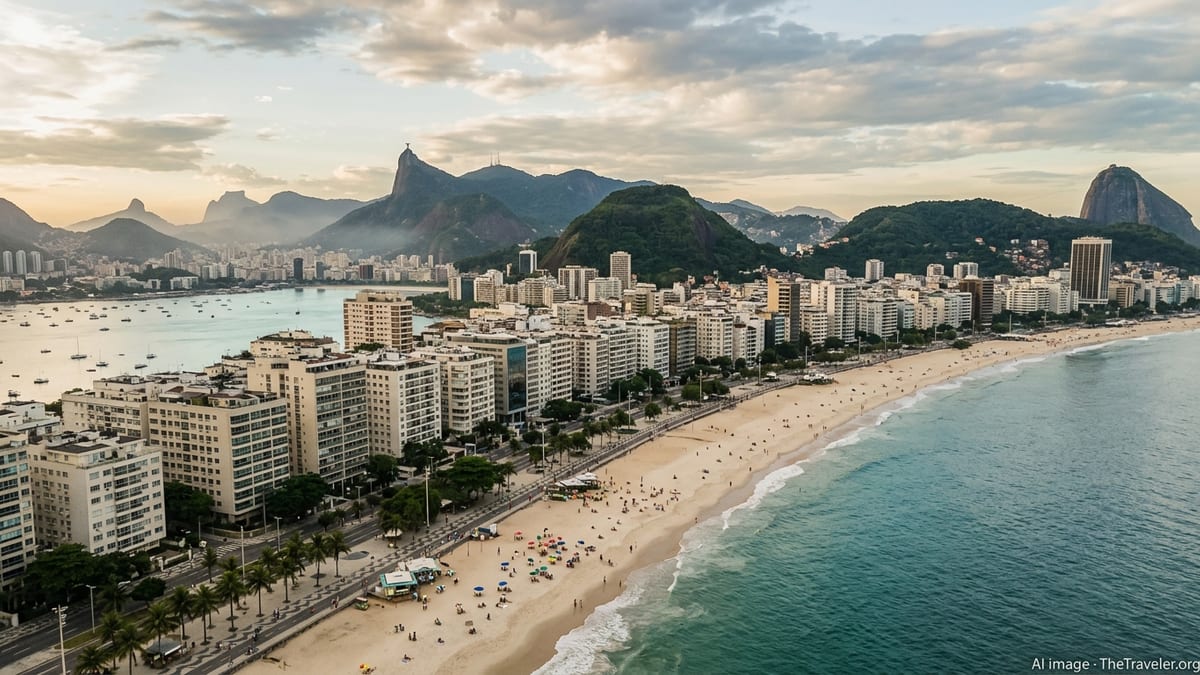
New Player Aligns With Brazil’s Tourism Momentum
Publicly available information on Corazul indicates a young brand seeking to ride a broader wave of renewed demand for Brazil, as airlines, tour operators and destinations prepare new capacity for the 2026–27 travel season. Recent network expansions by Brazilian and international carriers are improving access to both major gateways and lesser-known regions, creating a favorable backdrop for curated products focused on nature, culture and coastal escapes.
Industry reports point to a gradual recovery in Brazil’s aviation sector, with leading carriers restructuring, attracting new investment and reopening room for partnership-driven products. This context offers space for specialist brands such as Corazul to build packages that combine scheduled flights, charters and on-the-ground experiences, targeting travelers looking beyond the classic Rio and São Paulo circuit.
Corazul’s positioning for the 2026–27 season appears to center on mid- to upper-segment leisure travelers, with an emphasis on small-group and semi-flexible itineraries. By focusing on seasonal peaks and shoulder periods, the company is expected to leverage emerging routes and enhanced domestic connectivity to assemble trips that feel more personalized than traditional mass-market offerings.
Focus on Secondary Cities and Coastal Gateways
For the coming seasons, Corazul is understood to be prioritizing Brazilian destinations that are gaining visibility as alternatives to the country’s largest hubs. Coastal cities in the Northeast, mid-sized urban centers in the South and emerging inland eco-destinations are all likely to feature prominently in its itineraries. These locations benefit from improving air links while still offering a sense of discovery for repeat visitors.
Tourism data and route announcements show that airports in cities such as Fortaleza, Salvador, Recife and Florianópolis have attracted new or expanded services in recent years, opening additional entry points for international travelers. Corazul’s program design appears to reflect this shift by combining these gateways with overland segments to smaller beach towns, colonial centers and national parks, reducing backtracking through the busiest hubs.
By building around multiple entry and exit points, the brand is positioned to offer one-way coastal journeys, circular routes and multi-city stays that appeal to independent-minded travelers. This approach can also help distribute tourist spending more evenly across regions, supporting local operators and communities outside traditional hotspots.
Experience-Led Itineraries for 2026–27
Corazul’s proposed 2026–27 slate is framed around experiences rather than simple point-to-point travel, mirroring a broader shift in long-haul leisure demand. Early outlines suggest thematic itineraries that foreground Brazil’s beaches, food culture, musical heritage and natural environments, from Atlantic rainforest reserves to canyon landscapes and waterfall regions.
Seasonal timing is expected to play a central role. The southern summer remains crucial for classic coastal escapes, but the calendar for 2026 and 2027 also favors travel linked to major events, school holidays in key source markets and shoulder-season pricing windows. Corazul appears set to use these patterns to structure departures that balance favorable weather with relative crowd avoidance.
On the ground, the brand is likely to emphasize smaller-scale accommodation, local guides and a mix of scheduled and privately arranged excursions. Public information suggests an interest in authentic neighborhood dining, community-led cultural projects and low-impact outdoor activities, positioning the itineraries as an alternative to large-group coach circuits while still operating within a packaged framework.
Connectivity and Partnership Opportunities
The wider Brazilian aviation landscape is undergoing change, with recent recapitalizations, codeshare growth and new international services reshaping how travelers reach the country. This environment creates openings for brands such as Corazul to build partnerships with airlines, regional carriers and charter specialists to secure capacity for the 2026–27 season.
Industry coverage highlights that Brazilian airlines are refining networks and exploring new seasonal routes, while foreign carriers add Brazil to wider South American strategies. These movements can support Corazul’s access strategy, particularly for itineraries that start in one region of Brazil and end in another, or that integrate multi-country segments in South America.
Travel trade observers note that technology and distribution platforms are also evolving, with more mid-sized operators connecting to global booking systems and dynamic packaging tools. Corazul’s ability to plug into these channels may prove important for reaching international travel agencies and online sellers looking for specialist Brazil content without building it in-house.
Sustainability and Community Engagement in Focus
With travelers increasingly attentive to social and environmental impact, Corazul’s success in the 2026–27 season is likely to depend partly on how it addresses sustainability and community engagement. Brazil’s most fragile destinations, from marine reserves to rainforest fringes, are under pressure from rising visitor numbers, making responsible product design a competitive differentiator.
Publicly available guidance from Brazilian tourism authorities and regional organizations emphasizes dispersing visitors, supporting local employment and encouraging low-impact activities. Corazul’s itineraries appear aligned with this direction, aiming to combine signature attractions with lesser-known stops where local businesses can benefit more directly from tourism spend.
Travel advisors following developments in Brazil note that brands which clearly communicate their sustainability practices, from transportation choices to waste reduction and community partnerships, tend to resonate more strongly with high-value guests. For Corazul, the 2026–27 window offers an opportunity to embed such practices from the outset, shaping both its reputation and the long-term appeal of the destinations it promotes.