

More news on this day
Spanish start-up Corazul Cruceros is preparing to enter the cruise market in July 2026 with a Spanish-language product built around the 2,000-guest Buenavista, positioning itself to fill a gap left in Iberian cruising and extend its reach across the Mediterranean, Caribbean and South America.
Get the latest news straight to your inbox!
A New Player Focused on the Iberian Consumer
Corazul Cruceros has emerged as one of the most closely watched names in European cruising as it readies a brand developed specifically for Spanish-speaking travelers. Publicly available information shows that the company is building its proposition around language, culture and on-board ambience tailored to guests from Spain, Portugal and Latin America, in contrast to the largely international offerings that dominate the region today.
The initiative comes after the disappearance of major Spanish brands during and after the pandemic era, which left the Iberian market mainly served by global operators. Industry coverage indicates that Corazul’s founders see clear room for a mid-size, Spanish-focused operator able to combine familiar Mediterranean routes with a product where Spanish is the primary language on board.
Reports describe Corazul’s positioning as family-oriented and multi-generational, with programming designed for groups and travelers who prefer a relaxed atmosphere over mega-ship amenities. The company’s messaging emphasizes comfort, familiarity and an "Iberian atmosphere" that seeks to make Spanish-speaking guests feel they are in the majority rather than a niche segment.
Buenavista: A Classic Vessel With a New Identity
The brand will debut with the Buenavista, a ship with a long history in the international cruise fleet. Cruise industry reports indicate that the vessel sailed for years under different names and operators before being selected as Corazul’s first ship, with a refit intended to adapt both hardware and interiors to the new concept.
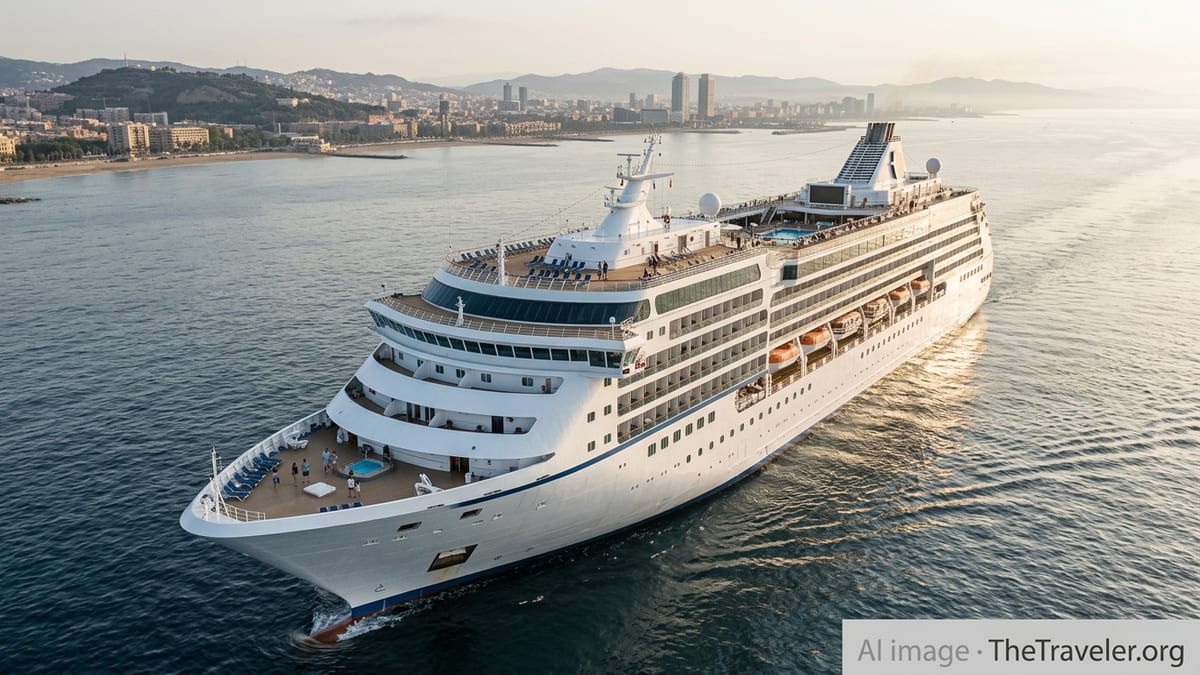
According to technical details published by specialist cruise outlets and company materials, Buenavista will carry around 2,000 guests, with just under 1,000 cabins distributed across 13 decks. The ship’s size places it firmly in the mid-scale segment, significantly smaller than the newest megaships, which may appeal to travelers looking for a more traditional experience with easier circulation and fewer crowds.
Available descriptions highlight a range of restaurants, bars, pools and wellness facilities, including several dining venues that will showcase Iberian and Latin American flavors. The layout incorporates classic cruise-ship touches such as a multi-deck theater and generous open decks, with refurbishments focusing on refreshed cabins, public spaces and an updated livery carrying the Corazul brand.
Language-First Experience and Distinct Sales Strategy
One of Corazul Cruceros’ most distinctive features is its commitment to a Spanish-first onboard experience. Company communications and trade coverage describe Spanish as the main working language on board, supplemented by Portuguese and English. Shore excursions are expected to be offered in Spanish as standard, aiming to create a seamless experience from ship to shore for Iberian guests.
This approach extends beyond language to entertainment, cuisine and programming. Reports indicate that itineraries will incorporate Iberian and Latin American cultural themes, from music and dance to food and family-friendly activities, differentiating the offer from mainstream products that primarily cater to North American and broader European audiences.
Equally notable is Corazul’s commercial strategy. Industry news outlets report that the company plans to operate exclusively through travel agencies, with no direct-to-consumer sales channel. This B2B-only stance is positioned as a key selling point for retail and online agencies in Spain and other Spanish-speaking markets, who are being invited to treat Corazul as a partner rather than a competitor for clients.
Itineraries Linking the Mediterranean, Caribbean and Brazil
Corazul’s deployment plan points to ambitions that extend well beyond Spain’s shores. According to published schedules and trade coverage, Buenavista will begin operations in early July 2026 from Barcelona, with an initial short shakedown cruise followed by a dedicated christening sailing. The core summer program is expected to consist of week-long and slightly longer cruises across the Western Mediterranean.
Reports suggest that these summer itineraries will call at familiar regional ports, allowing guests to embark from a homeport that is easy to reach from across Spain and neighboring countries. The company appears set to market these sailings heavily to families seeking school-holiday trips that do not require long-haul flights or unfamiliar languages on board.
From the autumn of 2026, Buenavista is expected to reposition across the Atlantic, with plans for a Caribbean deployment and a season in Brazil and wider South America during the European winter. Industry analysis presents this as a way to keep the ship in warm-weather regions year-round while tapping into both outbound Spanish travelers and Spanish-speaking communities in Latin America.
Some reports also mention that Corazul is exploring visa-light or visa-free itineraries in parts of Latin America and the Caribbean, reflecting broader industry efforts to design routes that minimize administrative barriers and broaden the potential customer base in emerging markets.
Implications for the Iberian Cruise Market
The arrival of Corazul Cruceros is being interpreted by analysts as part of a wider reshaping of the cruise landscape in Southern Europe. With large international groups deploying bigger ships into Spanish ports, a homegrown, culturally specific operator offers a contrasting model that may appeal to travelers who have been hesitant to cruise or who feel underserved by existing brands.
Trade publications note that Corazul is entering a market where awareness of cruising is high but penetration remains relatively modest compared with Northern Europe and North America. A brand that communicates in Spanish, works closely with local agencies and emphasizes Iberian identity could help convert more first-time cruisers, especially among families and multi-generational groups.
The launch also signals renewed confidence in Spain as a cruise source market after the disruptions of recent years. If Corazul’s initial season with Buenavista proves successful, observers suggest that the brand could eventually look at additional ships or niche itineraries between Iberian ports and destinations in the Atlantic islands, North Africa or Latin America, further deepening its role in regional cruise development.