

More news on this day
Spanish-market cruise newcomer Corazul is preparing to enter Brazil for the 2026-27 season, positioning its first ship, the Buenavista, on tailored itineraries that link major ports such as Santos, Recife and Salvador with popular coastal destinations.
Get the latest news straight to your inbox!
A New Player Targets Brazil for 2026-27
Publicly available information shows that Corazul Cruceros, a brand developed for Spanish-speaking travelers, plans to debut in Brazil between late November 2026 and early March 2027 as part of its first full deployment year. The move will follow the launch of the Buenavista in the Mediterranean in July 2026, with a subsequent Caribbean program before the ship heads south for a South American winter season.
Reports from cruise trade publications indicate that Corazul is positioning itself as a replacement for the former Pullmantur-style product in the Iberian and Latin American markets. The company is focusing on an atmosphere where Spanish is the primary onboard language, backed by Portuguese and English, which aligns closely with its strategy to serve both Spanish-speaking and Brazilian guests on the same vessel.
Coverage from Brazilian travel media notes that the 2026-27 deployment would make Corazul one of three major brands operating regular domestic-style cruises along the Brazilian coast, alongside established players Costa and MSC. This entry is seen as a sign of renewed confidence in regional cruise demand after several years of capacity reshuffles.
Tailored Itineraries Along Brazil’s Coast
According to programming details released through cruise industry channels, Corazul’s Brazil season is expected to feature embarkations from Santos, Recife and Salvador, creating north south options and shorter regional circuits. Sample itineraries highlighted by Brazilian travel outlets include calls in Rio de Janeiro, Búzios, Balneário Camboriú, Ilhabela and Maceió, in addition to festive sailings aligned with Christmas, New Year and Carnival.
The itineraries reportedly vary in length, combining mini cruises of just a few nights with longer routes that connect multiple regions of the Brazilian coast. This mix is designed to appeal both to first time cruisers looking for short holiday breaks and to more experienced guests seeking extended itineraries that link the Southeast, Northeast and Southern resort areas.
Industry coverage describes the program as tailored not only in routing but also in timing, with departures planned to coincide with peak leisure periods in both Brazil and key Spanish speaking source markets. The November to March window typically delivers warmer weather and school holiday demand, which cruise planners view as crucial for family focused sailings.
Buenavista: The Ship Behind Corazul’s Brazil Season
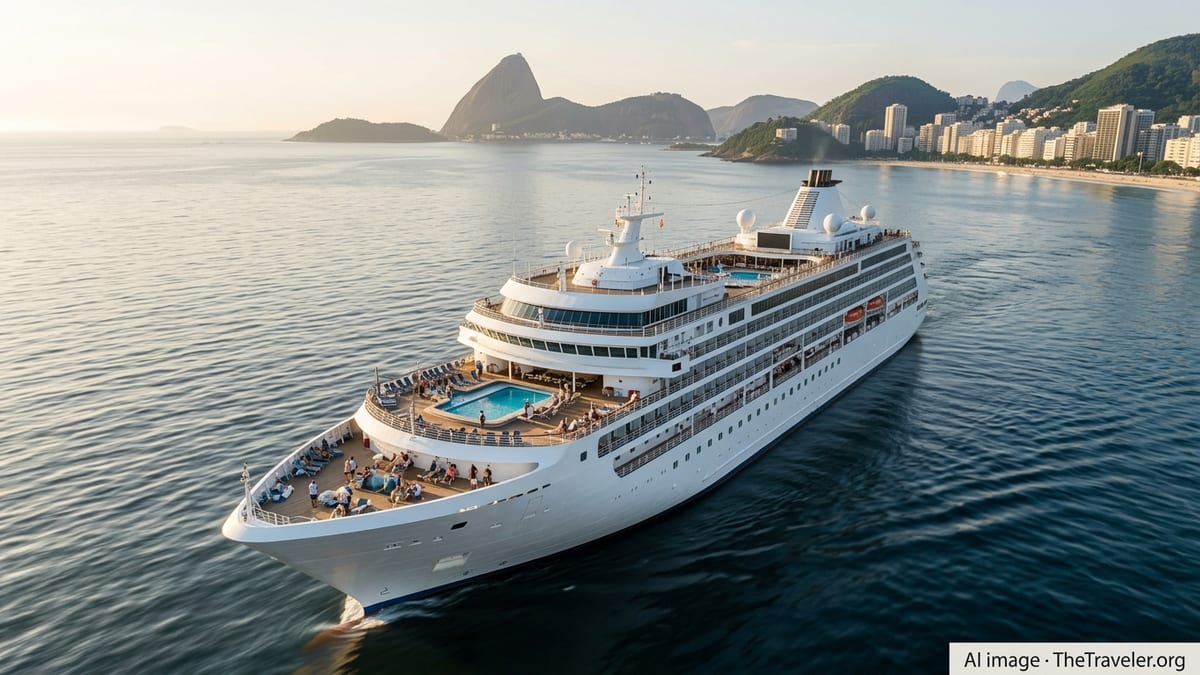
The Buenavista will serve as the backbone of Corazul’s Brazil operation in 2026-27. Cruise reference material and port forecasts list the ship at around 2,000 guests, with a maximum capacity just above 2,200 passengers across roughly 940 cabins. The vessel, originally built for the British market and most recently operating as Piano Land for a China based operator, is being refreshed for its new Iberian focused role.
Trade publications describe the Buenavista as a mid size ship with multiple pools, several restaurants and bars, and family oriented public spaces. This scale is considered attractive for Brazilian ports that already handle large contemporary ships but still value vessels that can access a wide range of berths and anchorages.
Port call forecasts in Spain and the Caribbean point to a deployment pattern in which Buenavista operates Mediterranean sailings from Barcelona starting in July 2026, shifts to a Caribbean homeport in La Romana in October, and then continues south toward Brazil for the regional summer. This stepwise repositioning mirrors strategies used by other lines to keep a single ship operating in warm weather year round.
Language, Culture and Onboard Experience
Information released through Corazul’s marketing materials and reported by travel media emphasizes that Spanish will be the primary onboard language, with Portuguese and English also used among crew and in guest services. Shore excursions are planned to be conducted in Spanish, which is intended to provide a familiar environment for the brand’s core Iberian and Latin American clientele.
The concept is positioned around family and multigenerational travel, with programming and entertainment adapted to Spanish speaking audiences. Reports indicate that dining, music and activities will reflect Iberian and Latin cultural references, while also incorporating regional touches when the ship is based in destinations such as Brazil.
For Brazilian travelers, this approach is expected to deliver a different flavor from the large international brands that currently dominate the market. Public descriptions of the product suggest that Portuguese speaking guests will find menus, announcements and service increasingly accessible, even as Spanish remains the default language framework onboard.
Sales Channels and Market Impact for 2026-27
According to cruise business coverage, Corazul is adopting a distribution model focused entirely on travel agencies, with no direct to consumer sales. The company has highlighted a business to business strategy in Europe, where cabin inventory is offered exclusively through trade partners, a structure that is expected to extend to Brazil for the 2026-27 season.
Ticket sales for the brand’s broader program opened in early February 2026, covering Mediterranean, Caribbean and South American itineraries. As Brazilian voyages for late 2026 and early 2027 go on sale, local travel agencies are expected to play a central role in packaging cruises with flights and pre or post stays in key gateway cities such as São Paulo and Salvador.
Market analyses in Brazilian travel media point out that Corazul’s arrival will modestly increase the number of beds available in coastal itineraries during the 2026-27 season. While the Buenavista is smaller than some megaships already operating in the region, its language specific positioning and tailored itineraries are seen as broadening choice for both domestic and regional travelers considering a cruise holiday in Brazil.