

The Ionian islands of Corfu, Zakynthos and Kefalonia offer a very different Greek experience to the whitewashed drama of the Aegean. Lush green hills, Venetian fortresses, vineyards and soft-sand bays make this corner of western Greece a favorite with European holidaymakers, but choosing between the three can be surprisingly difficult.
Each island has its own character, crowd and price point, and the best choice depends on whether you care more about nightlife or nature, easy logistics or wild scenery, sandy family beaches or cinematic coves.
First Impressions: What Each Island Is Really Like
Corfu is the all rounder. One of Greece’s most populated islands, it combines a UNESCO listed old town, resort strips, quiet hill villages and a huge variety of beaches. The island is known for its deep green interior, cypress groves and olive trees, and a strong Venetian and British legacy that shows in fortresses, mansions and even cricket pitches. Its scale and infrastructure mean you can choose almost any style of holiday here, from budget party weeks in Kavos to slow travel in a stone house in the north.
Zakynthos, sometimes called Zante, feels more compact and more obviously “holiday island.” It has long sandy beaches, a busy resort scene in pockets and famous coastal scenery. The island’s best known image is Navagio, or Shipwreck Beach, a sheer walled cove with turquoise water and a rusting freighter in the sand. Today, safety concerns mean visitors can admire Navagio from the sea and cliff viewpoints rather than setting foot on the sand, but the wider island still offers accessible beaches, boat trips and lively resorts geared heavily to summer tourism.
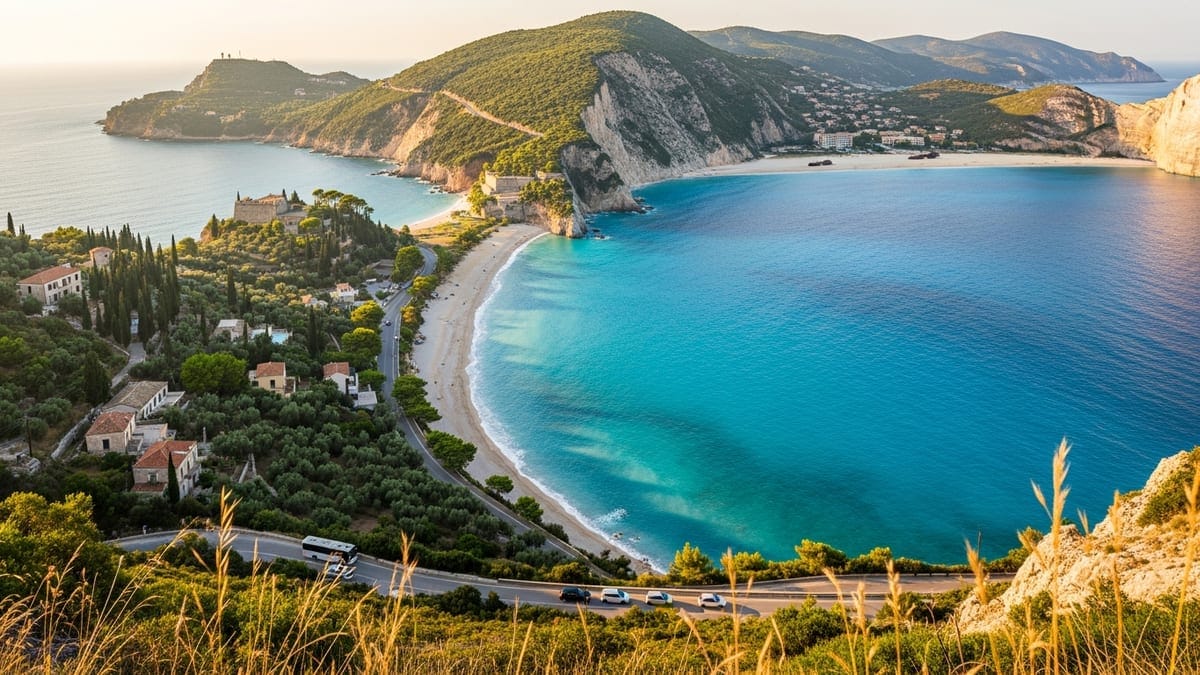
Kefalonia is the largest and, in mood, the quietest of the three. Mountainous and spread out, it attracts travelers who are happy to rent a car and explore rather than stay put in a single resort. Its coastline is dotted with coves and sea caves, including Myrtos Beach, one of Greece’s most photographed bays, and Melissani Cave with its blue lake. The inland scenery is just as striking, with Mount Ainos National Park and vineyards producing the local Robola wine. Holidaymakers generally come here for scenery, relaxation and independent exploration rather than clubbing.
In short, if Corfu is the social extrovert of the group and Zakynthos the flashy younger sibling, Kefalonia is the laid back, outdoorsy one. All three share the Ionian’s signature clear water and gentle climate, but the way you experience them differs significantly.
Getting There, Getting Around and Ease of Travel
All three islands are relatively easy to reach from mainland Europe. Corfu and Zakynthos in particular are served by a wide range of seasonal direct flights from European cities in addition to connections via Athens. Kefalonia’s airport has grown its route network but still has fewer flights than Corfu, which is among the busiest in the Ionian. For travelers coming from North America, a connection in a major European hub or in Athens is standard, so ease of access often comes down to how many seasonal routes are running from that hub to each island in your travel month.
Once you arrive, Corfu is the simplest island to navigate if you do not want to drive. Public buses radiate from Corfu Town to many of the key resorts and villages, and because the island is fairly populous, taxi and transfer services are widely available. That said, Corfu’s interior is hilly and roads can be narrow, so hiring a car still unlocks far more beaches and small coves than relying on buses alone.
Zakynthos is more car dependent. There is a basic bus system linking Zakynthos Town and larger resorts, but if you want to explore the cliffs of the northwest, the Vassilikos peninsula or smaller inland villages, a rental car or scooter makes a real difference. Boat trips are a major part of getting around the coast as well, particularly for reaching the Blue Caves, turtle nesting areas and the bay beneath Shipwreck Beach, where regulations now keep boats offshore while still allowing views.
Kefalonia rewards confident drivers the most. Distances are longer, and the road network wraps around mountains and deep bays. Public buses do run between Argostoli, Lixouri, Sami and key villages, but frequencies are limited outside peak season and they are not designed as a sightseeing network. Most visitors hire a car for at least part of their stay, often basing themselves in one area such as Argostoli’s bay or in Fiskardo or Assos and doing day trips. Ferries connect Kefalonia with Ithaki and the mainland, so island hopping by car is feasible if you plan ahead.
Beaches and Sea: From Iconic Coves to Family Friendly Sands
Beaches are where the three islands show their biggest contrasts. Corfu’s coastline is extremely varied. On the west coast you find long sandy bays backed by dunes and cliffs, such as Glyfada, Issos and Halikounas, which suit families and watersports. The northeast has pebble coves like Barbati and Kassiopi, good for snorkeling and boat hire. Paleokastritsa combines dramatic rocky headlands, monastery views and multiple small bays with boat trips to nearby caves. There are also quieter, lesser known coves accessible via dirt tracks or short hikes, such as Rovinia or Porto Timoni, which appeal to more adventurous travelers.
Zakynthos is famous for its visuals. Navagio’s cliff ringed cove remains one of the most photographed scenes in Greece, but for safety reasons access to the actual beach is closed for the foreseeable future due to rockfall risk. Boat tours now typically enter the bay under controlled conditions, staying at a distance from shore, while visitors can admire and photograph the wreck from an upgraded clifftop viewpoint.
Elsewhere on the island, Laganas Bay, Kalamaki and Tsilivi offer long sandy beaches with shallow water ideal for families, though parts of Laganas in particular are heavily developed. Around the Vassilikos peninsula you find a string of smaller, greener beaches that feel more natural while still having tavernas and loungers.
Kefalonia’s beaches are about drama and color. Myrtos, on the northwest coast, is a sweeping arc of bright white pebbles beneath towering cliffs, with a striking gradient of blue water that changes with the light. It is beautiful but can have waves and deep water, so it is less suited to small children than some sandy bays. Nearby Assos and Fiskardo combine harborfront swimming spots with easy access to tavernas.
Antisamos near Sami is another photogenic pebble bay with a backdrop of hills, while Xi in the south offers reddish sand and shallower water. The variety is high, but many of Kefalonia’s best beaches require a drive on winding roads, making the experience feel more like a day trip than a casual stroll down from your hotel.
If your priority is a huge choice of gentle, easy access family beaches, Corfu or Zakynthos will probably suit you better. If you want a handful of standout, dramatic coves to explore by car, Kefalonia has the edge.
Vibe, Nightlife and Who Each Island Is Best For
For nightlife and a highly social scene, Corfu and Zakynthos are the frontrunners. On Corfu, Kavos at the southern tip has long been known for high energy clubs and bars that run late into the night, drawing younger travelers in search of big nights out. Farther north, resorts such as Sidari provide a softer but still lively mix of cocktail bars, music venues and late opening spots. Corfu Town itself offers a more cosmopolitan evening scene, with wine bars, rooftop terraces and waterfront cafés that appeal to couples and older visitors as well as younger groups.
Zakynthos has its own party reputation centered around Laganas, where the main strip fills in high season with bars, nightclubs and sports pubs. This area is strongly geared to budget package holidays for younger groups. Outside Laganas the atmosphere steps down several notches. Tsilivi and Argassi, for example, offer a blend of family oriented tavernas, beach bars and a few late night venues without feeling as intense as Laganas. For many visitors, this mix of one clearly defined party zone and several more relaxed resort areas is an advantage, allowing travelers to choose the tempo they prefer.
Kefalonia’s nightlife is comparatively understated. Argostoli, the capital, has a pleasant evening promenade and a scattering of cocktail bars and cafés, and Fiskardo’s harborfront restaurants stay busy well into the night in summer. However, you are unlikely to find huge nightclubs or the kind of densely packed bar strips that characterize parts of Corfu and Zakynthos. This is an island where the evening focus tends to be on long dinners, seaside drinks and perhaps live music in a taverna, rather than clubbing.
When matching travelers to islands, broad patterns emerge. Corfu works well for mixed groups where some people want nightlife and others want quiet bays or cultural sights, because you can base yourself in different areas and still access the rest of the island with relative ease. Zakynthos suits beach focused travelers, including younger visitors and families, who like the idea of boat trips, sea caves and at least the option of a night out. Kefalonia is particularly attractive to couples, photographers, hikers and independent travelers who are happy renting a car and prioritizing scenery over bars.
Culture, Scenery and Things To Do Beyond the Beach
Corfu offers the richest urban and cultural hit of the three. Corfu Town is a major draw, with its twin Venetian fortresses, pastel neoclassical buildings and narrow lanes full of cafés, churches and small museums. The town’s historic core is a UNESCO World Heritage site, and you can easily spend several days just wandering, shopping and exploring.
Beyond the capital, there are traditional villages in the hills, monasteries with sea views and palaces such as Achilleion, once the retreat of Empress Elisabeth of Austria. Corfu also has a deep culinary tradition influenced by Venice, including dishes like pastitsada and sofrito, which you will see on menus across the island.
Zakynthos has a smaller main town, largely rebuilt after a mid twentieth century earthquake, with a central square, waterfront promenade and a handful of museums and churches. The island’s cultural weight today is more closely tied to its nature and coastal scenery.
Turtle conservation is a key theme: parts of Laganas Bay are protected nesting areas for endangered loggerhead turtles, and responsible turtle spotting boat trips are a major attraction. Inland, you can explore vineyards, olive groves and small villages, but most visitors divide their time between beaches, boat excursions and casual evening walks in the main town or resorts.
Kefalonia blends striking natural sights with low key historic villages. Argostoli has a compact but pleasant center with a main square, seafront and museum, and you can often spot sea turtles near the harbor early in the morning. The island’s highlights, however, are spread out. Melissani Cave, with its collapsed roof and blue water, is a unique boat ride experience. Drogarati Cave offers stalactites and a cool escape from the heat.
Assos and Fiskardo are much photographed for their pastel houses and Venetian remnants, and Mount Ainos National Park provides hiking trails and panoramic views when visibility is good. Literary travelers sometimes come drawn by the island’s association with the novel and film “Captain Corelli’s Mandolin,” which helped put Kefalonia on the broader tourist map.
All three islands offer boat trips, sea kayaking, snorkeling and some diving, but Corfu and Kefalonia are especially appealing if you enjoy combining coastal scenery with walking or driving through varied landscapes. Zakynthos is strongest when it comes to sea caves and coastal viewpoints, while Corfu leads on urban charm and Kefalonia on grand vistas and caves.
Costs, Crowds and When To Go
Prices on all three islands vary widely depending on how and when you travel, but there are some consistent patterns. Corfu, as a well established destination with a wide range of accommodations, offers everything from simple studio apartments to high end resorts and villas. In peak months of July and August, demand is high and popular areas can book out far in advance, but the large supply also means you can sometimes find late deals in less central locations. Eating out ranges from budget friendly gyros spots to fine dining in Corfu Town and upscale resort restaurants.
Zakynthos tends to lean slightly more toward budget and mid range tourism, particularly in resort areas dominated by package deals from European tour operators. This can make it attractive for families and younger groups watching their budget, though prices for well reviewed, small scale accommodation in quieter corners of the island have risen in recent years as travelers seek alternatives to the busy central resorts. Boat trips and excursions are competitively priced, but you should factor in the cost of at least one or two organized outings if you want to see the Blue Caves, turtle habitats or the bay at Shipwreck Beach.
Kefalonia, while not necessarily expensive compared with some Aegean islands, often comes out slightly pricier than Zakynthos for similar standards of lodging, in part because it targets a market that is prepared to rent cars and stay in smaller hotels or villas rather than large resort complexes. Eating out is broadly comparable in cost to Corfu and Zakynthos, but self catering visitors can take advantage of local markets and bakeries, especially if they are staying in villa accommodation with kitchens. Car hire is a more essential line in the budget here than on Corfu, where public transport can cover more of the basics.
In terms of timing, all three islands operate on a broadly similar seasonal pattern. The busiest period is late June through August, when temperatures are highest, school holidays are in full swing and nightlife is at its most intense. May, early June, September and early October are often the sweet spot for travelers who want warm seas and quieter beaches.
In recent years, there has been increased attention on over tourism in some Greek islands, pushing a number of travelers to consider lesser known Ionian destinations and to travel earlier or later in the season. Kefalonia has particularly benefited from this shift, attracting visitors who might once have defaulted to better known hotspots but are now actively seeking more space and a calmer feel.
Corfu vs Zakynthos vs Kefalonia by Travel Style
For first time visitors to Greece who want a simple, flexible introduction to island life without too many logistical hurdles, Corfu is often the safest choice. Its airport has frequent seasonal flights, the main town is atmospheric and easy to enjoy without a car, and there are resort areas tailored to families, couples or party focused groups. Travelers who like to mix culture, shopping, good food, beach days and nightlife over the course of one trip generally find Corfu’s variety ideal.
If your idea of a perfect holiday is about lounging on long sandy beaches, taking boat trips to sea caves, snorkeling in clear water and perhaps having a few big nights out, Zakynthos is a strong contender. It is particularly appealing to younger travelers and families who want soft sand and shallow water. The closure of direct access to Shipwreck Beach shifts the emphasis a little away from “that one must see spot” toward a broader appreciation of the island’s coastline, but for most beach lovers the combination of accessible sands and dramatic cliffs still delivers a memorable experience.
Kefalonia shines for travelers who do not mind a bit of driving and prefer scenic diversity over resort convenience. Road trippers, photographers and those who enjoy discovering small cafés and viewpoints as they go are well served here. A typical week might involve basing in one village, taking day trips to Myrtos, Assos, Melissani and Mount Ainos, and perhaps adding a boat hop to Ithaki. If you are looking for something quieter than Corfu but with more varied landscapes than many smaller islands, Kefalonia is hard to beat.
For families with small children, the choice may come down to how much you want to move around. Corfu offers a mix of easily reached sandy beaches and child friendly resorts plus the bonus of Corfu Town for stroller friendly walks. Zakynthos provides very gentle, shallow bays in places like Kalamaki and parts of Laganas, but you will want to choose resorts carefully to avoid the more full on party zones. Kefalonia can work beautifully for families who are comfortable driving, as many of its best beaches are worth the effort, but the steep roads and pebbly shores at marquee spots make it less effortless with toddlers than the broad sands of the other two islands.
The Takeaway
Choosing between Corfu, Zakynthos and Kefalonia is less about which island is objectively “best” and more about which one best matches how you like to travel. All three deliver the core Ionian promise of clear water, olive clad hills and long summer evenings in waterfront tavernas. The differences lie in scale, mood and how much infrastructure surrounds those experiences.
Corfu is the most versatile: a place where history, nightlife, family resorts and quiet coves coexist, and where you can dial your holiday up or down depending on where you stay. Zakynthos offers an easygoing blend of sandy beaches, boat trips and a defined party strip for those who want it, with the iconic outline of Shipwreck Beach now best seen from boats and cliffs rather than its closed sands. Kefalonia is the connoisseur’s choice, a larger and more spacious island where dramatic bays, caves and mountain views reward travelers willing to explore beyond a single resort.
If you value choice and cultural depth, Corfu is likely your best bet. If soft sand, sea caves and a youthful buzz appeal most, Zakynthos may suit you better. If grand scenery, calmer evenings and road trip days sound ideal, Kefalonia is the island to aim for. Whichever you choose, planning around your own priorities and travel season will help turn a beautiful Ionian backdrop into a trip that genuinely feels like it was made for you.
FAQ
Q1. Which island is best for a first time visitor to Greece?
For a first time visitor, Corfu is usually the easiest recommendation. It combines an atmospheric old town, a wide range of beaches, good public transport and plenty of accommodation options at different price points, so you can get a broad taste of Greek island life without complex logistics.
Q2. Is Shipwreck Beach on Zakynthos open to visitors?
Access to the actual sand at Shipwreck Beach remains closed due to ongoing safety concerns about rockfalls from the surrounding cliffs. However, boat tours still enter the bay under controlled conditions so you can view the cove and shipwreck from the water, and a clifftop viewpoint allows you to see the scene from above.
Q3. Which island has the best nightlife?
Corfu and Zakynthos are both strong for nightlife, but in slightly different ways. Corfu has the Kavos strip for high energy clubbing as well as more refined bars in Corfu Town and other resorts, while Zakynthos concentrates its loudest nightlife in Laganas, with quieter family resorts elsewhere. Kefalonia is generally much calmer at night.
Q4. Do I need to rent a car on these islands?
You can get by without a car on Corfu if you base yourself near Corfu Town or in a well connected resort, as buses and taxis are widely available. On Zakynthos a car or scooter is very useful for reaching viewpoints and quieter beaches. On Kefalonia, renting a car is strongly recommended if you want to see more than your immediate surroundings.
Q5. Which island is best for families with young children?
Corfu and Zakynthos are generally the most straightforward for families with small children. Both offer long, shallow sandy beaches and plenty of family friendly accommodations. Kefalonia can also be excellent for families, but its longer driving distances and steeper, pebbly beaches at some famous spots mean it suits families comfortable with more active days out.
Q6. How do costs compare between Corfu, Zakynthos and Kefalonia?
All three islands offer a range of prices, but Zakynthos often has the most budget friendly package deals, especially in its main resorts. Corfu has a huge spectrum from simple studios to luxury hotels. Kefalonia can be slightly more expensive for similar standards of lodging and typically involves budgeting for car hire, but day to day costs such as eating out are broadly comparable.
Q7. Which island is least crowded in summer?
Kefalonia generally feels less crowded than Corfu and Zakynthos because it is larger and more spread out, with fewer dense resort strips. That said, popular spots like Myrtos Beach and Fiskardo still get busy in peak season. Traveling in late spring or early autumn reduces crowd levels on all three islands.
Q8. Are these islands good for hiking and outdoor activities?
Yes, particularly Corfu and Kefalonia. Corfu has a long distance footpath across the island and numerous shorter coastal and village walks, while Kefalonia offers trails in Mount Ainos National Park and scenic routes around its bays and headlands. Zakynthos has some rewarding coastal walks and viewpoints, but overall focuses more on sea based activities like boat trips and snorkeling.
Q9. Can I visit more than one of these islands on the same trip?
It is possible to combine islands, but it takes planning. Ferries link Kefalonia and Zakynthos in season, and both connect to the mainland, while Corfu sits farther north with its own mainland links. Most travelers find it simpler to pair one Ionian island with time in Athens or on the mainland, but if you have two weeks or more and check ferry schedules carefully, a multi island itinerary can work well.
Q10. Which island is the most romantic for couples?
All three can be romantic, but Kefalonia and Corfu stand out. Kefalonia’s combination of dramatic viewpoints, quiet coves and pretty villages like Assos and Fiskardo makes it a favorite for couples seeking peaceful scenery. Corfu offers that plus the added charm of Corfu Town’s lanes and fortresses. Zakynthos can be romantic too, especially around the Vassilikos peninsula, but some central resorts feel more party oriented than intimate.