

More news on this day
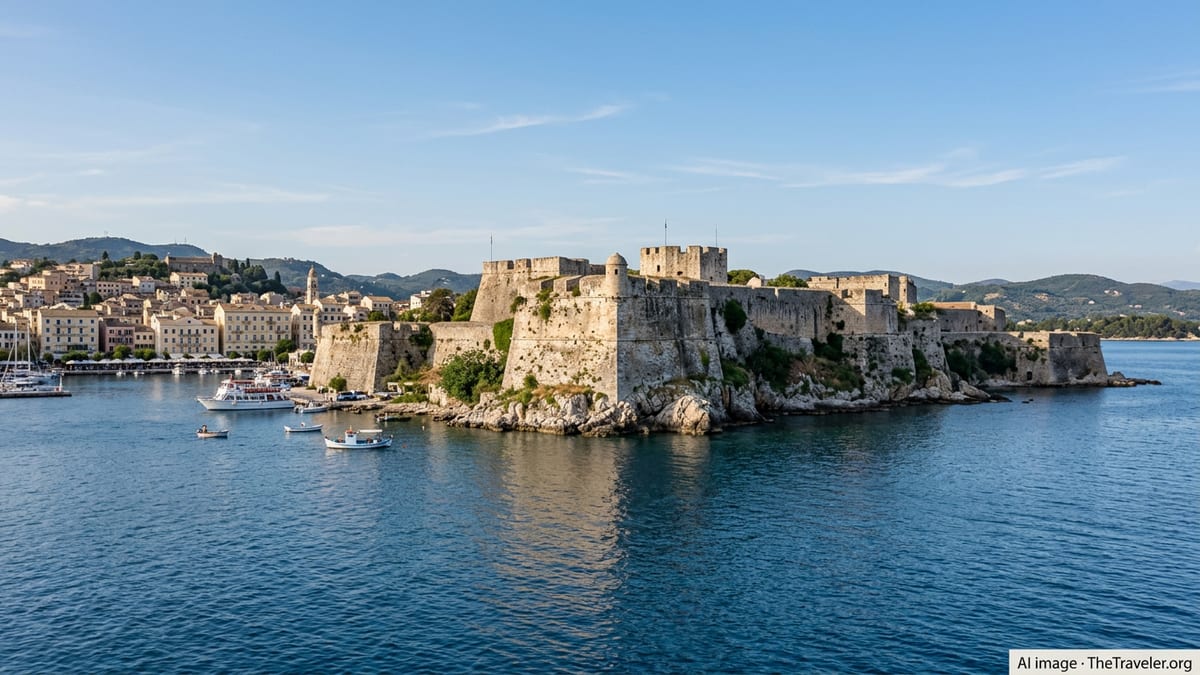
Perched on a rocky peninsula at the eastern edge of Corfu Town, the Old Fortress continues to attract a steady flow of visitors in 2026, capitalizing on the island’s wider tourism boom and its reputation as one of the Ionian Sea’s most striking historic landmarks.
Get the latest news straight to your inbox!
Historic Citadel Anchors a Growing Tourism Landscape
The Old Fortress, occupying a naturally fortified headland that once formed the medieval heart of Corfu, is a focal point for visitors drawn to the island’s layered past. Publicly available information from Greece’s culture authorities describes how the site commands sea routes between the Adriatic and the Ionian, a position that helped shape Corfu’s strategic importance for centuries.
The complex seen today largely dates from the period of Venetian rule between the late 14th and late 18th centuries, when Corfu became a frontline bastion against Ottoman expansion. Archival material notes that Venetian engineers reshaped earlier Byzantine defenses into a sophisticated system of bastions, dry moats and sea walls, giving the fortress much of its current form.
Later, under British administration in the 19th century, elements of the fortifications were modernized and adapted to new military technology. Public records indicate that several older works were demolished at that time, while new barracks and other facilities were added, leaving a layered ensemble that now draws architecture enthusiasts, military-history buffs and casual sightseers alike.
The fortress also benefits from Corfu Town’s recognition as a UNESCO World Heritage site, which highlights the island’s ensemble of Venetian, French and British-era buildings. Heritage documentation emphasizes the Old Fortress as a defining landmark of the historic skyline, helping to keep it firmly on the itinerary of organized tours and independent travelers.
Visitor Numbers Rise with Corfu’s Cruise and Air Traffic
The Old Fortress has been one of the principal beneficiaries of Corfu’s surging visitor numbers, particularly from the cruise sector. Recent analyses of cruise tourism in Greece show that Corfu ranks among the country’s leading ports by arrivals and receipts, with the island accounting for a notable share of national cruise revenue in 2024.
Local port statistics and industry reports for 2025 and 2026 indicate that Corfu is transitioning from a highly seasonal stop to a near year-round cruise destination. Forecasts for 2026 point to hundreds of scheduled calls and close to one million cruise passengers, underscoring the port’s growing role in the eastern Mediterranean market. For many of these passengers, the Old Fortress is within a short transfer of the terminal, often serving as their first encounter with the island.
At the same time, Corfu International Airport continues to post strong traffic, especially from major European markets such as the United Kingdom and Germany. Aviation data shows that charter and low-cost carriers feed a steady stream of beach holidaymakers and city-break visitors into Corfu Town, where the fortress is visible from the seafront promenades and easily reached on foot.
Together, these trends help sustain daily visitor flows through the Old Fortress precinct for most of the year. On peak summer days, large tour groups share the paths and ramparts with independent travelers and local residents, while the shoulder seasons of spring and autumn are drawing increasing attention from visitors seeking milder weather and fewer crowds.
Architecture, Views and Cultural Programming Drive Appeal
Once inside the fortified perimeter, visitors encounter a mix of massive stone bastions, surviving military buildings and open courtyards. Heritage descriptions highlight features such as the central esplanade, underground passages, sea-facing gun placements and the remains of older defensive works that reveal the evolution of fortification design from the Byzantine through to the British period.
The fortress is also known for its panoramic views across the old town, the modern harbor and the straits toward the Albanian coast. Travel reporting and visitor feedback frequently point to these vistas as a primary reason to climb the ramparts, with many referring to the site as one of Corfu’s most photogenic locations, particularly in the soft light of late afternoon.
Several historic structures inside the compound have been adapted for cultural uses in recent decades. Publicly available information indicates that parts of the fortress host exhibitions, concerts and seasonal events, integrating the monument into Corfu’s broader cultural calendar. These activities help maintain local engagement with the site and provide reasons for repeat visits beyond the standard sightseeing circuit.
For many travelers, the combination of monumental stonework, maritime setting and active cultural programming reinforces the Old Fortress as more than a static relic. The site operates as a lived urban space that connects the island’s past and present, offering both quiet corners and animated public gatherings depending on the time of day and season.
Conservation Efforts and Visitor Management in Focus
As visitor numbers grow, the long-term conservation of the Old Fortress and the quality of the visitor experience have become ongoing priorities. Documentation from Greek cultural authorities outlines periodic restoration and stabilization works aimed at addressing erosion, weathering and past structural damage to walls and buildings.
These efforts form part of broader initiatives linked to the safeguarding of Corfu’s historic center as a World Heritage property. Publicly available planning and management documents emphasize the need to balance tourism with preservation, recommending measures such as careful control of new constructions around the core monument and regular maintenance of historic masonry and drainage systems.
Recent years have also seen increased attention on accessibility and safety. Visitor information materials highlight signposted routes, improved lighting in key areas and restricted access to certain fragile sections of the walls. These adjustments are designed to protect vulnerable structures while allowing the majority of the fortress to remain open for exploration.
At the same time, discussions around sustainable tourism in Greece more broadly, including new levies on high-impact tourism segments in some island destinations, are influencing how sites like the Old Fortress plan for the future. Analysts note that heritage attractions associated with popular cruise ports face particular pressure during peak days, prompting interest in spreading visits across the day and encouraging longer stays on the island.
Strategic Position in Corfu’s Tourism Future
The enduring popularity of the Old Fortress positions it at the center of Corfu’s tourism identity. Destination marketing materials consistently feature the citadel’s profile alongside the pastel-colored streets of the old town and the island’s beaches, underlining its role as both a symbol and a practical anchor for urban tourism.
Industry observers suggest that Corfu’s efforts to extend its visitor season and diversify its tourism offer will continue to rely on cultural and historical assets such as the fortress. The site’s visibility from arriving ships and aircraft, as well as from the seafront promenades, makes it a natural starting point for itineraries that combine heritage, gastronomy and coastal excursions.
For travelers, this means that the Old Fortress is likely to remain a core stop on any visit to Corfu, whether as a brief shore excursion or part of a longer stay. As Greece’s overall tourism numbers reach new records and the Ionian islands draw a greater share of attention, the centuries-old stronghold above Corfu’s harbor continues to assert itself as one of the Mediterranean’s most compelling historic fortifications.