

More news on this day
Coronado officials have extended a major beach closure as sewage-contaminated water continues to drift north from the Tijuana River, keeping large stretches of shoreline off limits and heightening concerns over public health, tourism and military readiness.
Get the latest news straight to your inbox!
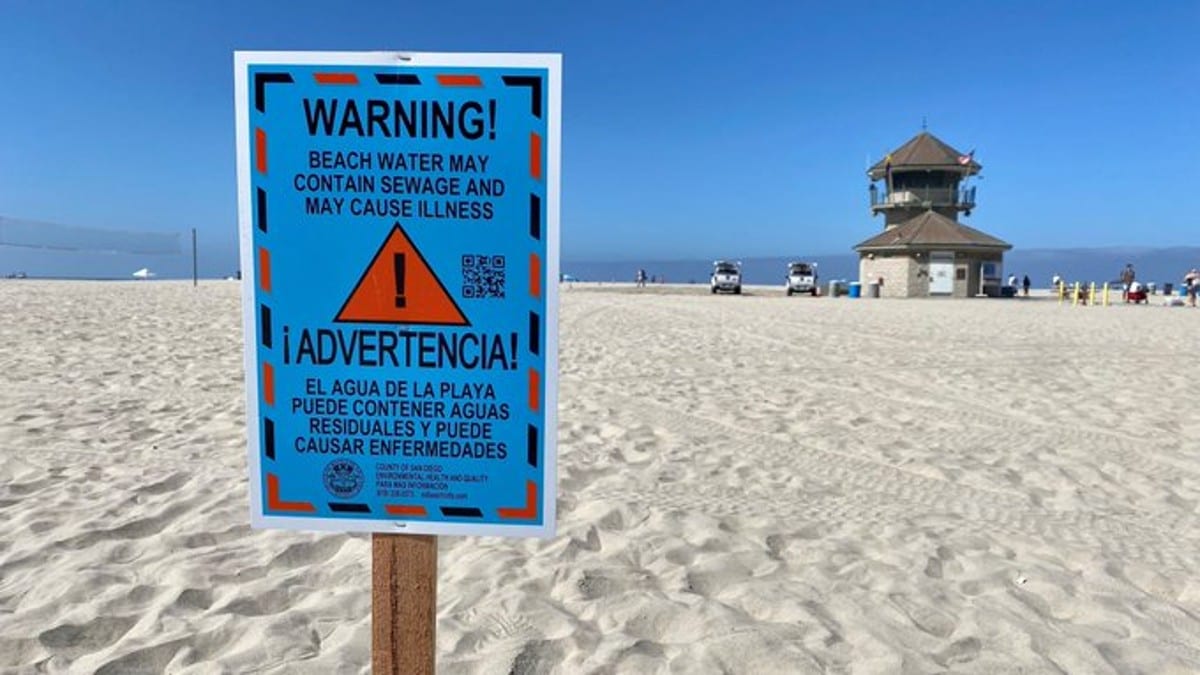
Image by Times of San Diego
Closure Extension Keeps Parts of Coronado Shoreline Off Limits
Recent updates to regional beach status reports indicate that the closure affecting portions of the Coronado shoreline remains in place, with authorities opting to extend the restrictions rather than risk reopening too soon. Water quality sampling has continued to show elevated contamination linked to sewage-laden flows moving north from the U.S. border region, prompting an ongoing prohibition on water contact in the affected zone.
Publicly available information shows that warning signs for sewage contamination remain posted along closed sections of beach, advising residents and visitors to avoid swimming, surfing and other contact with ocean water. The extension follows a pattern of prolonged closures in South Bay coastal communities in recent years, as chronic pollution from the Tijuana River watershed repeatedly pushes bacteria levels above state health standards.
According to regional data compiled over the last several seasons, Coronado beaches have been closed a substantial share of days due to poor water quality traced to cross-border sewage flows. The latest extension underscores how even short-term improvements in testing results can be quickly reversed by new pulses of polluted runoff, especially after storms or infrastructure failures south of the border.
Source of Contamination Tied to Tijuana River Crisis
Reports from local and state agencies attribute the continuing closure in Coronado to sewage impacts tied to the long-running pollution crisis in the Tijuana River. When heavy rains or system breakdowns overwhelm wastewater infrastructure in northern Baja California, untreated or partially treated sewage is carried through the river channel toward the Pacific, where currents can transport contamination north along the San Diego County coastline.
Published coverage and technical documents describe billions of gallons of polluted water crossing the border over the past several years, with beach closures stretching from Imperial Beach up through Silver Strand and Coronado. The problem has become so persistent that regional leaders have characterized it as an environmental and public health emergency, citing repeated violations of water quality standards and increasing frustration in affected communities.
The extended closure in Coronado reflects the way these cross-border flows can impact areas far from the river mouth. Once in the ocean, plumes of contamination often move with prevailing currents and wind patterns, making it difficult to predict precisely when conditions at any single beach will improve enough to safely reopen for recreation.
Health Risks and Impacts on Coastal Recreation
Health advisories connected to the Coronado closure warn that exposure to sewage-contaminated water can lead to a range of gastrointestinal, respiratory and skin illnesses. Public health guidance generally recommends avoiding any direct contact with ocean water in posted areas, including swimming, wading and surfing, and advises people to keep children and pets away from the surf zone while restrictions are in place.
For residents and visitors, the extended closure cuts into one of the region’s signature coastal experiences, limiting access to a shoreline that is typically a major draw for beachgoers, joggers and families. Surf classes, recreational events and informal gatherings all depend on predictable access to clean water, and each additional day of closure contributes to a sense of disruption for locals who rely on the beach as a daily amenity.
Businesses that serve beach visitors also feel the effects. Hotels, vacation rentals, restaurants and surf-related retailers depend heavily on the perception of Coronado as a pristine, family-friendly destination. When contamination warnings remain in effect, prospective travelers may opt for alternative coastal communities, while day visitors from around the San Diego region may shift their outings to beaches farther north that remain open.
Military Training and Economic Stakes for Coronado
Coronado’s shoreline is not only a visitor attraction but also a critical training environment for the U.S. Navy, including elite special operations units based at Naval Amphibious Base Coronado. Publicly available reports and prior federal reviews have highlighted how frequent contamination events and closures complicate planning for water-based training, forcing schedule changes, relocations or adjustments in how exercises are conducted.
Extended closures and poor water quality raise concerns about potential health impacts for service members routinely exposed to surf conditions, as well as about the long-term reliability of local waters as a training asset. When contamination is present, the Navy may need to move training to other locations or compress activities into shorter windows when water quality improves, adding logistical complexity and cost.
For the broader Coronado economy, the combination of tourism disruption and military training challenges adds to the stakes of the ongoing sewage crisis. Local governments in the region have repeatedly pointed to losses in visitor spending, hospitality revenue and associated tax collections tied to prolonged beach closures, arguing that the situation harms residents and businesses far beyond the immediate impact zone at the water’s edge.
Regional Response and Long-Term Fixes Under Debate
In response to the continuing pollution and the latest closure extension in Coronado, regional leaders have renewed calls for accelerated investment in cross-border wastewater infrastructure. Letters, resolutions and policy statements from recent years describe a push for expanded treatment capacity, upgraded pumping stations and improved maintenance on both sides of the border to reduce the volume of sewage that reaches coastal waters.
Public documents show that funding commitments have begun to flow toward key projects, including modernization of facilities overseen by the International Boundary and Water Commission and related agencies. However, local leaders have emphasized in their published correspondence that current appropriations still fall short of what is needed to fully address chronic system failures and anticipated population growth in the Tijuana region.
Environmental advocates, civic groups and municipal officials continue to press state and federal partners for a comprehensive solution that would substantially curtail sewage discharges before they reach the ocean. Until major upgrades come online and demonstrate consistent performance, beachgoers in Coronado and neighboring communities are likely to see continued cycles of closure extensions whenever water quality monitoring detects renewed contamination in the surf.