

The cost of living gap between Dubai, Abu Dhabi, and Sharjah has widened over the past few years as rents and everyday prices have adjusted at different speeds in each city. For professionals and families evaluating a relocation within the United Arab Emirates, understanding how monthly expenses differ across these three emirates is central to assessing net disposable income, savings potential, and long-term affordability. This briefing compares the core cost-of-living components in Dubai, Abu Dhabi, and Sharjah with a focus on rent, utilities, groceries, transport, and typical monthly budget ranges in 2025–2026.
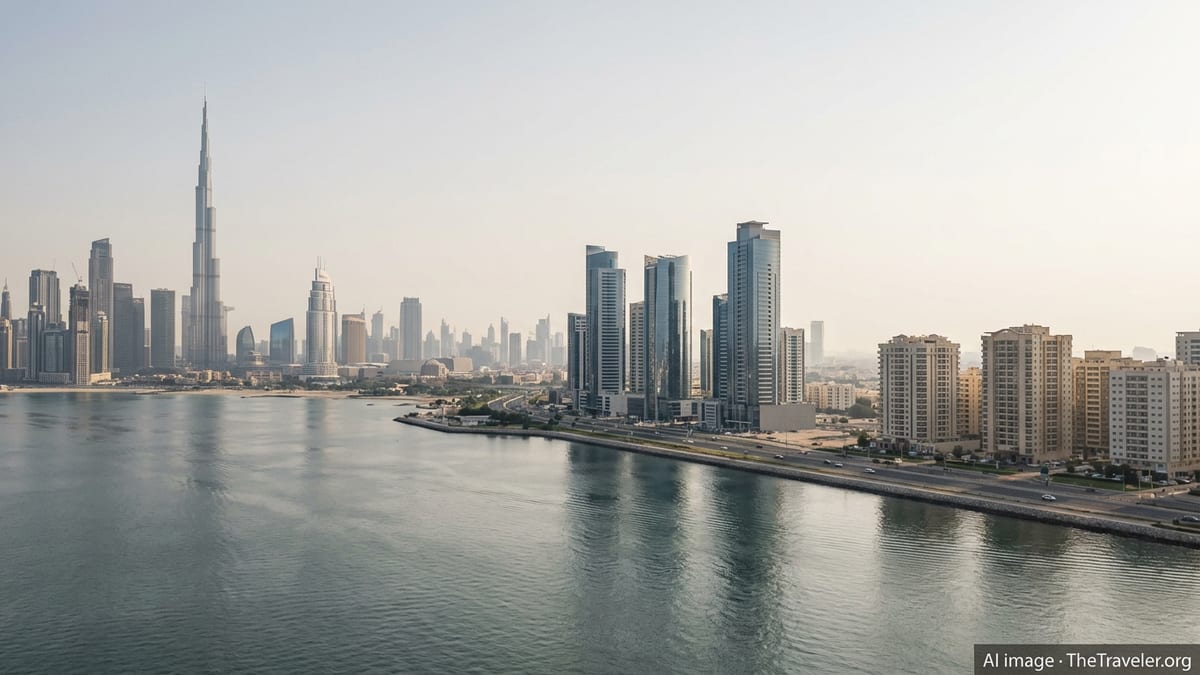
Overall Cost of Living Profile: Three Tiers of Expense
Across most benchmarks, Dubai remains the most expensive of the three cities, followed closely by Abu Dhabi, while Sharjah continues to position itself as the more affordable alternative. Recent cost-of-living comparisons and relocation guides consistently place Dubai at the top of UAE price indices, with Abu Dhabi close behind and Sharjah scoring materially lower on rent, groceries, and discretionary spending.([dubaitoolkit.com](https://dubaitoolkit.com/dubai-abu-dhabi-sharjah-cost-comparison/?utm_source=openai))
High-level composite estimates suggest that a single person’s typical monthly expenses excluding rent average around 7,000 to 7,500 AED in Dubai, 5,500 to 6,500 AED in Abu Dhabi, and approximately 3,000 to 3,500 AED in Sharjah, reflecting cheaper everyday consumption as well as lower housing-linked service costs in Sharjah.([dubaitoolkit.com](https://dubaitoolkit.com/dubai-abu-dhabi-sharjah-cost-comparison/?utm_source=openai))
For families, total household budgets diverge more strongly because accommodation and schooling choices amplify the cost differentials. A mid-range expatriate household in Dubai may easily operate with total spending (including rent) in the 15,000 to 25,000 AED per month band, while an equivalent standard of living in Abu Dhabi typically runs 10 to 20 percent lower, and Sharjah can undercut Dubai by 25 to 35 percent for similar space and consumption patterns, particularly when leveraging its lower residential rents and cheaper groceries.([dubaitoolkit.com](https://dubaitoolkit.com/dubai-abu-dhabi-sharjah-cost-comparison/?utm_source=openai))
These tiers are reinforced by moderate but persistent inflation in the UAE, with consumer price growth in the 1.5 to 3 percent range in recent years. As housing makes up a large share of the local price basket, sharper rent increases in Dubai and Abu Dhabi have translated into a higher effective cost-of-living climb in those markets than in Sharjah, though Sharjah has also seen notable rent steps in some districts.([khaleejtimes.com](https://www.khaleejtimes.com/business/economy/uae-inflation-holds-steady-amid-global-uncertainty-gcc-follows-suit?utm_source=openai))
Housing and Rent: The Main Driver of Cost Differences
Housing is the single largest differentiator between the three cities. Recent 2025 rental benchmarks for apartments show typical monthly ranges as follows for mainstream urban locations: Dubai studios around 3,500 to 6,000 AED, one-bedroom units 5,500 to 9,000 AED, and three-bedroom apartments 12,000 to 25,000 AED. Abu Dhabi broadly tracks slightly below these levels, at around 3,000 to 5,000 AED for studios, 5,000 to 8,000 AED for one-bedrooms, and 11,000 to 20,000 AED for three-bedrooms. Sharjah remains materially lower, with studios at roughly 2,000 to 3,500 AED, one-bedrooms 3,000 to 5,000 AED, and three-bedrooms 7,500 to 12,000 AED per month.([sapphirespring.ae](https://sapphirespring.ae/apartments-for-rent-in-uae/?utm_source=openai))
These monthly figures align with annual ranges published in real estate and relocation guides, where mid-market one-bedroom apartments in Sharjah are often listed at 25,000 to 40,000 AED per year versus 55,000 to 75,000 AED in Abu Dhabi and significantly higher averages in central Dubai districts. In percentage terms, Sharjah’s typical apartment rents can be 30 to 50 percent lower than equivalent units in central Dubai, while Abu Dhabi tends to sit around 5 to 15 percent below Dubai for similar stock, depending on district and building age.([estatemagazine.ae](https://estatemagazine.ae/average-rental-prices-in-uae-cities/?utm_source=openai))
Market commentary in late 2024 and 2025 indicates that rent inflation has been strongest in prime Dubai neighborhoods, driven by population growth and limited immediate supply, with Dubai apartment rent indices recording around 10 percent annual growth in some quarters. Abu Dhabi has also seen robust rental increases, especially on Reem Island and other high-demand areas, while Sharjah, though starting from a lower base, has experienced double-digit rent hikes on renewal in some zones.([propertyfinder.ae](https://www.propertyfinder.ae/blog/wp-content/uploads/2024/05/MW-UAE-Q1-2024-Final.pdf?utm_source=openai))
For relocating employees, corporate housing policies that fix a maximum housing allowance will stretch furthest in Sharjah, somewhat less so in Abu Dhabi, and least in Dubai. Where commuting arrangements are feasible, a pattern has emerged of workers choosing to live in Sharjah while working in Dubai to arbitrage the rent differential, fully aware that this may involve longer travel times and higher transport costs.([dubaitoolkit.com](https://dubaitoolkit.com/dubai-abu-dhabi-sharjah-cost-comparison/?utm_source=openai))
Utilities and Household Services
Basic utilities, including electricity, water, and cooling, are broadly comparable across the three cities as tariff structures are regulated at emirate level and heavily influenced by air conditioning usage, which is significant in the UAE climate. For a typical one- to two-bedroom apartment, monthly utility costs commonly range between 400 and 800 AED in Dubai and Abu Dhabi and slightly lower in Sharjah, often in the 350 to 700 AED range for similar apartment sizes.([dubaitoolkit.com](https://dubaitoolkit.com/dubai-abu-dhabi-sharjah-cost-comparison/?utm_source=openai))
Differences arise mainly from building efficiency, metering practices, and the inclusion or exclusion of chiller charges in the rent. Newer, better insulated buildings with central district cooling can offer more predictable bills, while older stock may see wider seasonal swings. In practice, a tenant moving from Dubai to Sharjah in like-for-like accommodation will often see utility bills fall modestly rather than dramatically, as much of the cost relates to climate rather than local pricing policy.
Internet and mobile connectivity costs show less variation between the three emirates because services are provided by the same national operators under federal oversight. A standard high-speed home internet package typically falls in the 300 to 450 AED per month range in all three cities, and post-paid mobile plans with moderate data allocations generally add 150 to 300 AED per month per line, with occasional corporate discounts available to employees.([dubaitoolkit.com](https://dubaitoolkit.com/dubai-abu-dhabi-sharjah-cost-comparison/?utm_source=openai))
Domestic help, such as part-time cleaning, is widely available in all three emirates, with hourly rates that are broadly aligned. Minor cost advantages can exist in Sharjah where service providers may price slightly below equivalent offerings in Dubai’s premium neighborhoods, but these differences are incremental compared with the rent gap.
Groceries, Food, and Everyday Consumption
Grocery costs display a clearer split, with Sharjah regularly cited as offering 15 to 25 percent savings on supermarket baskets compared with Dubai and a modest discount compared with Abu Dhabi. Relocation cost comparisons highlight that shopping at large hypermarkets in Sharjah can lower monthly food expenses by around one-fifth versus Dubai, with Abu Dhabi generally positioned in between.([dubaitoolkit.com](https://dubaitoolkit.com/dubai-abu-dhabi-sharjah-cost-comparison/?utm_source=openai))
For a single person, monthly grocery spending in Dubai commonly sits in the 1,200 to 1,800 AED band depending on diet and shopping habits, while similar consumption might cost 1,000 to 1,500 AED in Abu Dhabi and 800 to 1,300 AED in Sharjah. A family of four buying a mix of local and imported goods may spend 2,500 to 3,500 AED in Dubai, 2,200 to 3,200 AED in Abu Dhabi, and roughly 2,000 to 3,000 AED in Sharjah, assuming mainstream supermarket chains and some price sensitivity.([dubaitoolkit.com](https://dubaitoolkit.com/dubai-abu-dhabi-sharjah-cost-comparison/?utm_source=openai))
Dining out follows a similar pattern. Entry-level meals at cafeterias and local restaurants are broadly aligned across the cities, often in the range of 15 to 30 AED per basic meal, but mid-range dining in Dubai typically commands a premium, with average restaurant prices estimated to be higher than Abu Dhabi and materially above Sharjah. A mid-range restaurant dinner might average 100 to 150 AED per person in Dubai, with Abu Dhabi slightly lower on average and Sharjah often offering 10 to 20 percent cheaper options for comparable venues.([emirates-online.net](https://www.emirates-online.net/English/location/fujairah/living-costs-in-dubai?utm_source=openai))
Household consumables, personal care items, and basic pharmaceuticals are similarly priced at the federal level, though Dubai’s concentration of premium retail formats can slightly elevate the overall basket for consumers who favor international brands and mall-based shopping. Cost-conscious residents in Dubai often moderate this by sourcing staples from discount or Sharjah-based hypermarkets.
Transport and Commuting Costs
Public transport and fuel prices are regulated nationally, so base transport costs are relatively similar across Dubai, Abu Dhabi, and Sharjah. However, the structure and availability of public transport differ, which can influence overall mobility spending. Dubai has the most extensive metro and tram network, enabling some residents in central districts to rely heavily on public transport, with monthly costs typically in the 300 to 500 AED range for regular users. Abu Dhabi and Sharjah rely more on buses and taxis, resulting in a higher dependence on private vehicles for mid- to upper-income residents.([dubaitoolkit.com](https://dubaitoolkit.com/dubai-abu-dhabi-sharjah-cost-comparison/?utm_source=openai))
Vehicle ownership costs, including fuel, insurance, and maintenance, are comparable across emirates. Fuel is relatively inexpensive by international standards, but parking costs and congestion can be higher in Dubai’s central areas. Residents who live in Sharjah and work in Dubai often accept longer commute times of 45 to 90 minutes each way, trading additional fuel, toll, and time costs for lower rent. For these commuters, monthly transport costs can rival or exceed 1,000 AED, particularly when factoring in Salik tolls and vehicle wear.([dubaitoolkit.com](https://dubaitoolkit.com/dubai-abu-dhabi-sharjah-cost-comparison/?utm_source=openai))
On a pure cost basis, someone able to live and work entirely within Sharjah or Abu Dhabi without cross-emirate commuting will generally face lower transport outlays than a Dubai resident who owns a car and also uses paid parking and toll routes frequently. Conversely, a Dubai resident in a metro-served district who does not own a car can compress transport spending to levels similar to or below other emirates.
Ride-hailing fares and traditional taxi tariffs are aligned across the market, with minor differences in minimum fares and per-kilometer rates between emirates that have limited impact on annual budgets unless ride-hailing is a primary transport mode.
Illustrative Monthly Budgets by City
The following simplified ranges, based on recent relocation guides and rental benchmarks, illustrate indicative monthly cost-of-living bands for a single professional and a family of four in each city. These scenarios assume a mid-market standard of living, private rental housing, and mixed use of home cooking and dining out. Actual costs vary significantly by neighborhood, lifestyle, and housing choice.([dubaitoolkit.com](https://dubaitoolkit.com/dubai-abu-dhabi-sharjah-cost-comparison/?utm_source=openai))
For a single professional in Dubai, an indicative budget might be: shared accommodation, utilities, transport, and groceries at roughly 4,000 to 6,000 AED per month at the low end, rising to 8,000 to 11,000 AED when renting a private one-bedroom and maintaining moderate discretionary spending. In Abu Dhabi, comparable living standards could be achieved in the 5,000 to 9,000 AED band, reflecting slightly lower rents and somewhat cheaper everyday spending.([emirates-online.net](https://www.emirates-online.net/English/location/fujairah/living-costs-in-dubai?utm_source=openai))
For a family of four, Dubai budgets cluster in the 15,000 to 25,000 AED range for those renting a two- to three-bedroom apartment in a mid-market district and controlling discretionary expenses. In Abu Dhabi, equivalent families often operate in the 13,000 to 22,000 AED bracket, aided by lower rents for similar-sized units. Sharjah offers the broadest opportunity for savings, where families can sometimes compress total monthly spending into the 10,000 to 18,000 AED range by selecting competitively priced housing and leveraging lower grocery and local service costs.([estatemagazine.ae](https://estatemagazine.ae/average-rental-prices-in-uae-cities/?utm_source=openai))
An important observation is that while Dubai salaries often price in a premium to reflect higher living costs, this premium may not fully offset the rent delta for larger family accommodation. In contrast, employees who can secure Dubai or Abu Dhabi salary scales while living in Sharjah can materially increase their net savings rate, though at the cost of longer commutes.
The Takeaway
For relocation planning, the cost-of-living hierarchy between the three cities is clear: Dubai is the most expensive overall, followed by Abu Dhabi, with Sharjah as the more affordable alternative. The most significant differences arise in the housing market, where Sharjah’s rents can be 30 to 50 percent lower than comparable Dubai units and Abu Dhabi typically sits 5 to 15 percent below Dubai for similar properties. Everyday expenses such as groceries, dining, and basic services track this pattern but with smaller percentage gaps.
Professionals and employers assessing relocation options should model scenarios that separate housing, utilities, groceries, and transport to understand which components are driving total monthly costs, then layer in realistic assumptions about commuting patterns and lifestyle choices. For individuals who prioritize space and lower fixed expenses, Sharjah can deliver the strongest savings, particularly when salary packages are set at Dubai or Abu Dhabi market levels. Those who assign higher value to reduced commuting time and extensive urban amenities may accept Dubai’s cost premium as a trade-off for convenience.
Abu Dhabi often represents a middle ground, combining a relatively high standard of living and strong professional opportunities with slightly lower living costs than Dubai. Over the medium term, moderate inflation and ongoing residential construction may adjust relative rent pressures in all three markets, but the current three-tier structure is likely to remain a defining feature of cost-of-living comparisons within the UAE.
FAQ
Q1. Which city is the most expensive to live in: Dubai, Abu Dhabi, or Sharjah?
Dubai is generally the most expensive overall, followed closely by Abu Dhabi, while Sharjah remains significantly more affordable, especially in terms of residential rents and groceries.
Q2. How much cheaper is rent in Sharjah compared with Dubai?
Sharjah apartment rents are often around 30 to 50 percent lower than comparable units in central Dubai, depending on neighborhood, building age, and amenities.
Q3. Are everyday groceries much cheaper in Sharjah and Abu Dhabi than in Dubai?
Groceries in Sharjah are typically 15 to 25 percent cheaper than in Dubai, with Abu Dhabi prices usually sitting slightly below or broadly similar to Dubai but above Sharjah.
Q4. Does Abu Dhabi offer a meaningful cost-of-living advantage over Dubai?
Yes. Abu Dhabi often provides housing and everyday costs that are roughly 10 to 20 percent lower than Dubai for a similar standard of living, though exact savings vary by area.
Q5. Are utility costs very different between the three cities?
Utility tariffs are broadly comparable across the three emirates, so differences in monthly bills are usually modest and driven more by building efficiency and usage than by city.
Q6. How do transport costs compare between Dubai, Abu Dhabi, and Sharjah?
Base transport and fuel prices are similar nationwide, but Dubai’s metro can lower costs for some residents, while cross-emirate commuting from Sharjah can increase monthly transport spend.
Q7. Is it financially advantageous to live in Sharjah and work in Dubai?
Many residents do this to benefit from lower Sharjah rents while earning Dubai salaries, accepting longer commutes and somewhat higher fuel and toll costs in exchange for higher savings.
Q8. For a single professional, which city offers the best balance of salary and living costs?
Dubai often offers higher salaries but also higher expenses; Abu Dhabi can provide a better cost-to-salary balance, while Sharjah offers the lowest costs but fewer top-tier positions.
Q9. For families, how large is the monthly budget difference between Dubai and Sharjah?
For a family of four in mid-market housing, total monthly spending in Sharjah can be roughly 25 to 35 percent lower than in Dubai for a comparable lifestyle, mainly due to cheaper housing.
Q10. Are cost-of-living differences likely to change significantly in the near term?
With UAE inflation projected to remain moderate, major shifts are unlikely in the short term, although localized rent changes may narrow or widen existing gaps in specific neighborhoods.