

Evaluating the cost of living in Germany for a couple requires more than headline averages. Prices vary significantly between large cities and smaller towns, and everyday expenses such as rent, groceries and transport behave quite differently from many other countries. The following briefing provides a structured, data-informed overview of typical monthly costs for two adults living together in Germany, designed to support relocation planning and early budgeting.
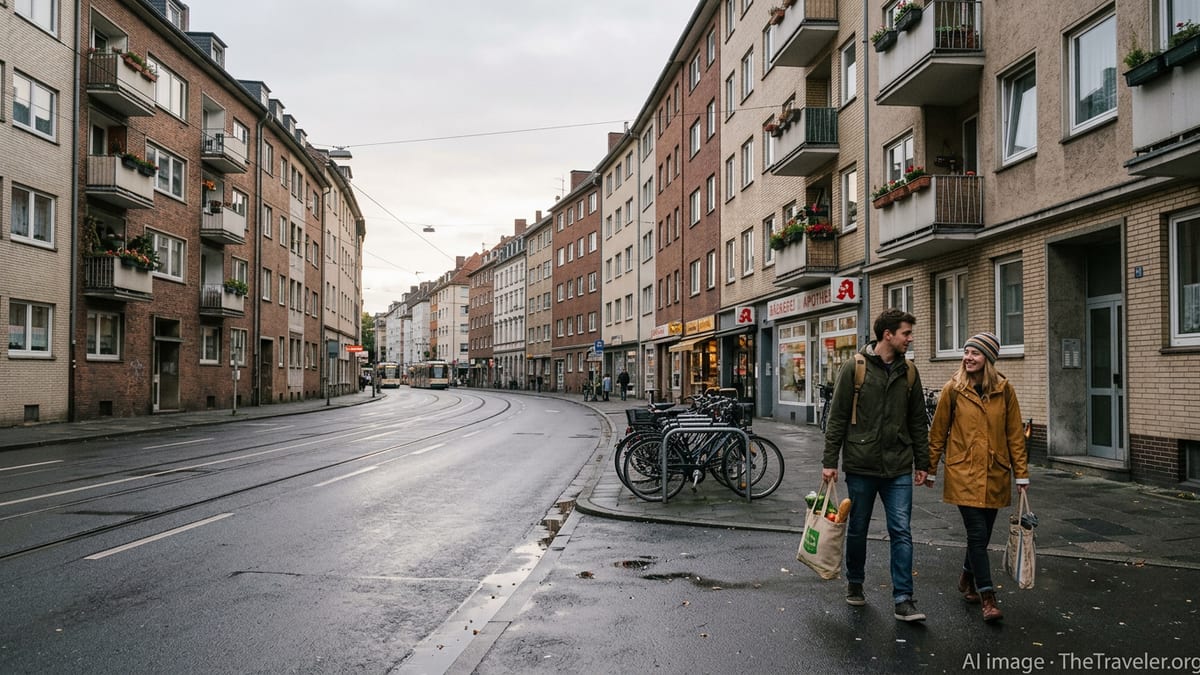
Cost of Living Overview for Couples in Germany
Most international cost benchmarks indicate that overall consumer prices in Germany are mid-range within Western Europe, generally lower than in Switzerland or the Nordic countries, but higher than in many Southern and Eastern European states. Within Germany, however, there is a wide internal spread: cities such as Munich, Frankfurt, Stuttgart, Hamburg and parts of the Rhine-Main region are significantly more expensive than medium-sized cities and many eastern regions.
As a working planning range, a couple renting a one-bedroom or compact two-bedroom apartment in an urban area can expect a total monthly budget roughly within three broad bands, excluding income tax and social contributions:
• Lower-cost regional city or small town: approximately 2,200 to 2,800 EUR per month for a modest but comfortable lifestyle.
• Major city but not premium district: approximately 2,800 to 3,600 EUR per month, assuming careful spending and average dining out.
• High-cost city and central districts: 3,600 EUR per month and above, largely driven by higher rents and services.
These ranges assume two adults sharing housing, without children, and include rent, utilities, groceries, mandatory health insurance contributions for those paying privately, public transport, mobile and internet, and a modest leisure and clothing budget. Lifestyle choices, frequent dining out or high levels of travel can increase costs significantly beyond these bands.
Housing Costs and Their Impact on a Couple’s Budget
Housing is typically the single largest cost item in a couple’s German budget. Rents vary sharply by city, district and property condition. For relocation planning, it is useful to distinguish between net cold rent (basic rent) and additional costs (Nebenkosten) which cover building charges and some utilities. Many advertised rents in Germany quote only the cold rent; the warm rent (including charges and heating) is the true monthly outlay.
As an indicative range for a couple renting on the open market:
• Smaller cities and many eastern regions: a modern one-bedroom or small two-bedroom apartment might cost in the region of 650 to 1,000 EUR warm per month.
• Large cities outside prime districts: 1,000 to 1,600 EUR warm is a common planning range for a one-bedroom or modest two-bedroom.
• High-demand inner-city areas in Munich, Frankfurt, Hamburg, Stuttgart, Cologne or Düsseldorf: it is prudent to plan for 1,600 to 2,200 EUR warm or more for a centrally located, good-quality apartment.
For budgeting, couples should also factor in one-off housing costs such as the purchase of a fitted kitchen (often not included), basic furniture and deposits of typically three months’ cold rent, although these are not recurring monthly expenses. On an ongoing basis, rent plus building charges typically represent 30 to 50 percent of a couple’s total monthly spending, depending on location and lifestyle.
Utilities, Communications and Household Running Costs
Beyond rent and building service charges, couples in Germany usually pay separately for electricity and may have additional contracts for gas if individual heating is installed. In many apartments, central heating and water are billed through building charges, but electricity is almost always contracted directly with a provider.
For two adults in a typical apartment, a reasonable monthly planning range is:
• Electricity: approximately 80 to 140 EUR per month, depending on apartment size, energy efficiency and usage.
• Heating and hot water (if not fully included in building charges): an additional 50 to 120 EUR per month on average over the year, with higher bills in winter and lower in summer.
• Broadcasting fee (a mandatory household media contribution): around 18 to 20 EUR per month per household.
Telecommunications costs are relatively predictable. A standard home internet and landline package in urban areas often ranges from 30 to 50 EUR per month. Mobile phone contracts for two adults can add 40 to 100 EUR per month in total, depending on data volume and whether handset subsidies are included. Basic household items such as cleaning products, toiletries and minor replacements typically add another 60 to 120 EUR per month for a couple, depending on brand preferences.
Groceries, Food and Dining Out for Two Adults
Germany offers a wide spread of food retail options, from discount supermarket chains to higher-end organic and specialty stores. Couples who rely predominantly on discount and mainstream supermarkets and cook at home will see significantly lower monthly costs than those who regularly shop in organic or specialty outlets or eat out frequently.
As an indicative range, a couple cooking at home most of the week can often keep monthly grocery spending around 350 to 550 EUR, assuming a balanced diet with occasional alcoholic beverages and branded items. Use of organic supermarkets, increased meat or fish consumption, and premium or imported products can move this figure closer to 600 to 800 EUR per month.
Dining out adds noticeably to the budget. In many German cities:
• An inexpensive restaurant meal may cost around 12 to 18 EUR per person, excluding drinks.
• Mid-range restaurants with two courses and non-alcoholic drinks commonly range from 25 to 40 EUR per person.
• Coffee in a café often costs around 3 to 4 EUR, while a beer in a bar or casual restaurant commonly ranges from 3.50 to 5.50 EUR.
A couple that dines out several times a week, orders regular takeaway meals or frequently visits cafés and bars should expect to allocate an additional 150 to 400 EUR per month for food and drink outside the home. In major cities with higher price levels and a tendency to socialize through dining and drinks, this line item can easily grow beyond that range.
Transport, Mobility and Everyday Movement Costs
Public transport is widely used in German cities and can be a cost-effective mode of mobility for couples, particularly if at least one partner does not own a car. Integrated regional ticket systems often allow unlimited travel within defined zones, and many areas offer discounted monthly passes or job tickets through employers.
As a planning range, monthly public transport passes for one adult in a typical German city or regional network often range from 60 to 100 EUR, though high-demand metropolitan regions or wider tariff zones can be somewhat higher. For a couple without access to employer-subsidized tickets, a joint monthly allocation of 120 to 220 EUR is a reasonable starting assumption.
Car ownership increases monthly mobility costs significantly. When factoring in fuel, insurance, vehicle tax, parking and maintenance, operating a single compact car can easily reach 300 to 500 EUR per month over the year, not including depreciation. In large cities where parking is scarce, additional residential parking permits or garage space may further raise costs.
Many couples in central districts opt for a mixed model: primarily public transport, supplemented by occasional car sharing or rental, as well as cycling. In these scenarios, total monthly mobility spending can often be contained within 150 to 300 EUR for two adults, provided no privately owned car is maintained.
Health Insurance, Personal Care and Discretionary Spending
Health insurance in Germany is typically organized through statutory or private schemes tied to employment status and income, and contributions are often deducted at source rather than paid directly from the monthly household budget. However, for some internationally mobile professionals, freelancers or those without employer coverage, out-of-pocket health insurance payments are a material cost component and can range from a few hundred to well over a thousand euros per month for two adults. Because this depends heavily on individual status and coverage, couples should model health insurance costs separately from general living expenses.
Personal care and wellness costs for a couple typically include haircuts, basic cosmetic products, pharmacy items not reimbursed by insurance and occasional fitness or sports club membership. In many German cities, a basic gym membership can fall in the 20 to 40 EUR per person per month range, though premium clubs or specialized studios are higher. A realistic allocation for personal care and wellness might fall between 80 and 250 EUR per month for two adults, depending on preferences.
Discretionary spending on clothing, entertainment, streaming subscriptions, minor electronics and local domestic travel is highly lifestyle-dependent. Couples that are cost conscious but still active socially may plan for 150 to 300 EUR per month in this category. Those with more frequent entertainment, hobbies requiring equipment or regular weekend trips can see this figure increase to 300 to 600 EUR per month or more.
It is also advisable to incorporate a modest contingency buffer for irregular expenses such as small medical co-payments, gifts, repairs and administrative fees. An additional 100 to 200 EUR per month set aside for such items helps stabilize the budget and avoid surprises.
Sample Monthly Budget Scenarios for Couples
The following simplified examples illustrate how monthly living costs in Germany for a couple can differ by location and lifestyle. These are indicative scenarios rather than precise prescriptions, and they exclude income tax and pension contributions.
Scenario 1: Cost-conscious couple in a mid-sized city
• Warm rent (1-bedroom): 850 EUR
• Electricity and utilities top-up: 120 EUR
• Internet and two mobile contracts: 90 EUR
• Groceries, mainly discount supermarkets: 420 EUR
• Limited dining out and cafés: 120 EUR
• Public transport passes for both: 150 EUR
• Personal care and gym: 120 EUR
• Clothing, entertainment, small trips: 180 EUR
• Miscellaneous and contingency: 150 EUR
Total approximate monthly budget: 2,200 EUR
Scenario 2: Professional couple in a large city
• Warm rent (1–2 bedroom, non-prime district): 1,400 EUR
• Electricity and utilities top-up: 150 EUR
• Internet and two mobile contracts: 110 EUR
• Groceries mixed supermarket usage: 520 EUR
• Regular dining out and takeaway: 280 EUR
• Public transport for both: 200 EUR
• Occasional car sharing or rental: 80 EUR
• Personal care and fitness: 200 EUR
• Clothing, entertainment, streaming: 260 EUR
• Miscellaneous and contingency: 200 EUR
Total approximate monthly budget: 3,400 EUR
Scenario 3: High-income couple in a premium urban area
• Warm rent (2-bedroom, central high-demand area): 2,000 EUR
• Electricity and utilities top-up: 180 EUR
• Internet and enhanced mobile plans: 140 EUR
• Groceries with higher organic share: 700 EUR
• Frequent dining out and socializing: 500 EUR
• Public transport plus one compact car: 500 EUR
• Personal care, wellness and sports: 350 EUR
• Clothing, entertainment, subscriptions: 400 EUR
• Miscellaneous and contingency: 250 EUR
Total approximate monthly budget: 5,020 EUR
These examples highlight how housing, transport choices and dining habits are central levers for adjusting a couple’s monthly cost of living in Germany. Couples willing to compromise on location and car ownership while cooking at home more frequently typically achieve significantly lower budgets.
The Takeaway
For relocation decision making, the cost of living in Germany for a couple is best viewed as a range rather than a fixed figure. A modest but comfortable lifestyle in a mid-sized city can often be sustained around 2,200 to 2,800 EUR per month, while larger cities and premium locations can push typical monthly costs into the 3,400 to 5,000 EUR range and beyond, particularly once higher rent, car ownership and more frequent dining out are included.
Couples assessing a potential move should therefore concentrate on three major budget drivers: the city and district chosen, expectations for housing size and quality, and preferred mobility and dining patterns. By modeling realistic scenarios using the categories outlined above, it is possible to create decision-grade budgets that reflect both current German price levels and individual lifestyle preferences, reducing the risk of underestimating the true monthly cost of living.
FAQ
Q1. What is a realistic minimum monthly budget for a couple in Germany?
A realistic minimum for a couple in a lower-cost city, sharing a modest apartment and spending carefully, is often around 2,000 to 2,200 EUR per month, excluding income tax.
Q2. How much should a couple expect to pay in rent each month?
Most couples can expect warm rent between 650 and 1,000 EUR in smaller cities and 1,000 to 2,000 EUR in larger or high-demand cities, depending on size and location.
Q3. Are groceries in Germany expensive for two people?
Groceries are moderate by Western European standards. A couple cooking at home most of the time typically spends about 350 to 550 EUR per month, with higher costs for organic or premium products.
Q4. How do transport costs affect a couple’s monthly budget?
Couples relying on public transport may spend around 120 to 220 EUR per month, while owning a car can raise monthly mobility costs to 300 to 500 EUR or more.
Q5. How much do utilities and internet cost for a couple in Germany?
Electricity, heating top-ups and the broadcasting fee combined often fall between 150 and 260 EUR per month, with home internet and mobile plans adding roughly 70 to 150 EUR.
Q6. Is dining out regularly in Germany a major cost driver?
Yes. Regular restaurant visits, takeaway meals and café spending can add 150 to 400 EUR per month or more for a couple and significantly increase total living costs.
Q7. How much should be allocated for leisure and personal spending?
Many couples allocate 150 to 300 EUR per month for clothing, entertainment and local trips, with higher amounts needed for more active social lives or expensive hobbies.
Q8. Do health insurance payments significantly affect the couple’s cost of living?
They can. For those paying health insurance directly rather than via payroll, monthly contributions for two adults may range from a few hundred to well over a thousand euros.
Q9. Are there significant regional differences in living costs within Germany?
Yes. Rents and services are generally highest in cities like Munich, Frankfurt and Hamburg and lower in many mid-sized cities and eastern regions, affecting overall monthly budgets.
Q10. How much contingency should a couple include in their German budget?
It is prudent to reserve 100 to 200 EUR per month for irregular costs such as small medical co-payments, gifts, repairs and administrative or banking fees.